Wiesbaden
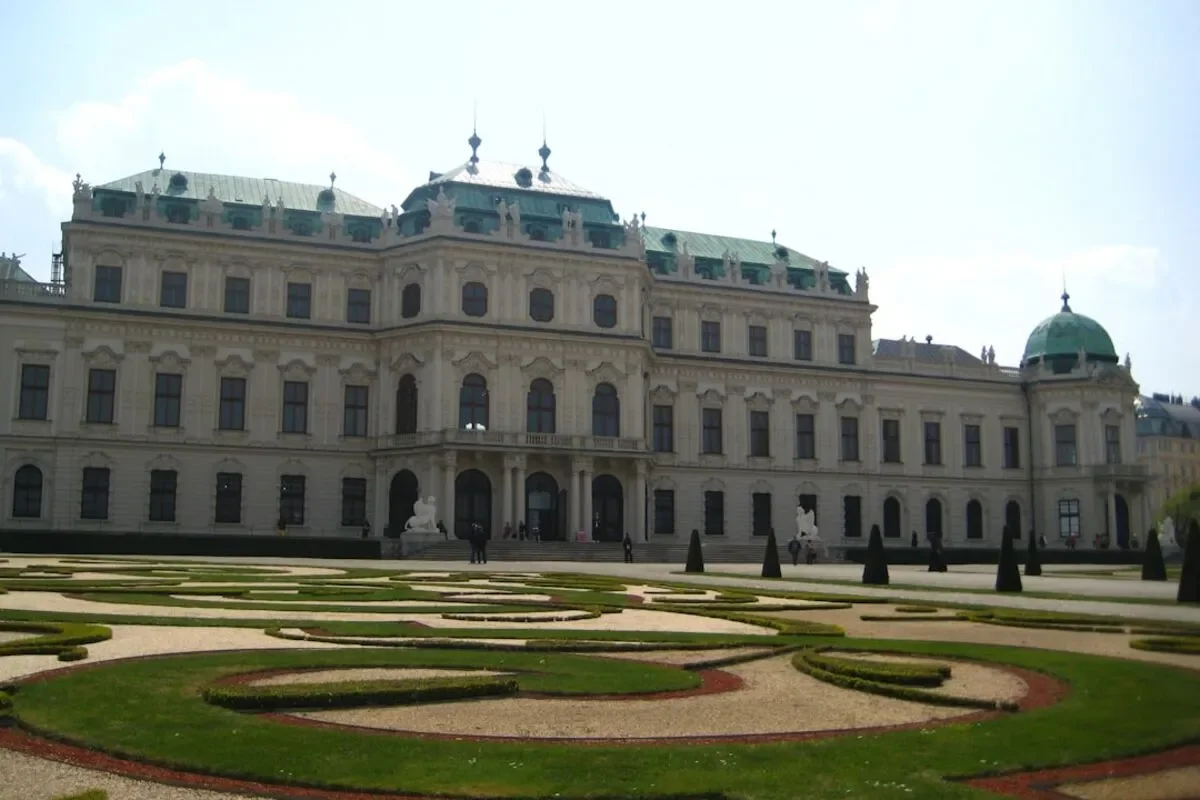
Wiesbaden is the capital of Hesse and one of Europe’s oldest spa towns. It grew around 26 thermal springs that have supplied hot mineral water since Roman soldiers bathed here in the first century. The city sits about 30 minutes by rail from Frankfurt Airport, making it one of the easiest cultural day trips in the Rhine-Main region.
A well-planned Wiesbaden itinerary combines a thermal bath, the Kurhaus quarter, the Neroberg funicular, and an afternoon in the Rheingau wine region, all reachable without a car. That mix sets the city apart from a standard old-town visit.
The springs still reach roughly 66°C (151°F) at the Kochbrunnen fountain in the center of town. Visitors like Goethe, Dostoyevsky, and Brahms came to enjoy the 19th-century resort architecture built around them. Much of it remains in daily use as a theater, casino, and working bathhouse.
Key Takeaways
- Wiesbaden pairs Roman-era thermal springs with a largely intact 19th-century spa quarter, all walkable from the main station.
- Regional trains and S-Bahn lines connect the city to Frankfurt Airport, Mainz, and the Rheingau vineyards in under an hour.
- Two days allow for a spa visit, the Neroberg and Biebrich sights, and a Rhine-side wine excursion to Rüdesheim.
What Is Wiesbaden Known For?
Wiesbaden is known for thermal water, resort architecture, and its role as the seat of Hesse‘s state government. The city’s identity rests on three layers: Roman bathing infrastructure, a Belle Époque spa boom that drew European aristocracy, and its present-day function as an administrative and cultural capital of roughly 290,000 people.
From Roman Baths to a Nineteenth-Century Spa Resort
Roman troops established a settlement here around AD 6 and named it Aquae Mattiacorum, “waters of the Mattiaci,” after the local Germanic tribe. Fragments of that period survive, including the Heidenmauer (Heathen’s Wall) and the reconstructed Roman gate near the old town.
The modern city took shape in the 1800s, when the Duchy of Nassau developed Wiesbaden as a resort. By 1900, it welcomed more visitors than almost any German city, and 27 springs were in use. Fifteen still operate today.
How the Kurhaus Shaped the City’s Social Life
The Kurhaus Wiesbaden, completed in 1907, remains the social anchor of the city. Kaiser Wilhelm II laid its foundation, and the building still houses the Spielbank Wiesbaden casino, concert halls, and a colonnaded façade facing the lawn known as the Bowling Green.
Behind it stretch the Kurpark and, a short walk south, the Warmer Damm park with its pond and mature trees. Wilhelmstraße, the boulevard along the park’s edge, combines Art Nouveau and Historicist façades with the city’s most expensive shops.
Where Wiesbaden Sits Between Frankfurt, Mainz, and the Rhine
Wiesbaden lies on the north bank of the Rhine River, directly across from Mainz and about 40 km west of Frankfurt am Main. The two capitals face each other across the water, linked by the Theodor-Heuss-Brücke and frequent S-Bahn service.
That location places Wiesbaden at the eastern edge of the Rheingau, the wine district that runs west along the river toward Rüdesheim.
Which Sights Should You Prioritize in the City?
Prioritize the Kurhaus quarter, the Marktplatz, and the Neroberg. Together, they cover the spa era, the historic core, and the best city view. Museum Wiesbaden and Biebrich Palace deserve a second day, especially for travelers interested in painting or Baroque architecture.
Kurhaus, Kurpark, and the Casino Quarter
Start at the Bowling Green, the rectangular lawn with two fountains framed by the Kurhaus and the colonnades. The Kurhaus interior welcomes non-gamblers during the day, and the Muschelsaal (Shell Hall) is the most elaborate room.
The Hessisches Staatstheater (Hesse State Theatre) stands immediately west, with a neo-Baroque foyer that ranks among the finest theater interiors in Germany. The Kurpark behind the Kurhaus follows an English landscape design and includes a boating pond.
Marktplatz, Marktkirche, and the Old Town Hall
The Marktplatz holds three buildings worth attention. The Marktkirche (Market Church), finished in 1862 in red brick with five towers, is Nassau’s principal Protestant church and the tallest structure in the old town at 98 meters.
Opposite stands the Altes Rathaus (Old Town Hall) from 1610, the oldest surviving building in central Wiesbaden. The Tourist Information office operates at Marktplatz 1.
From here, Kirchgasse and Langgasse form the main pedestrian shopping route. They run down toward Bahnhofstraße and the station.
Museum Wiesbaden and the Cultural District
Museum Wiesbaden holds one of the largest collections of works by Alexej von Jawlensky, the Russian Expressionist who lived in the city from 1921 until his death. Its natural history wing was fully redesigned in 2019 and covers geology and zoology across two floors.
The museum sits on Wilhelmstraße near the Warmer Damm, within a five-minute walk of the theater and the Kurhaus. Kaiser-Friedrich-Ring loops around the western edge of the district.
Neroberg, the Nerobergbahn, and the Russian Orthodox Church
The Nerobergbahn, a water-ballast funicular built in 1888, climbs the Neroberg hill in about three minutes. It uses no motor. The descending car fills with water and pulls the ascending car up, a system that has run in its original form for more than a century. It operates seasonally, roughly April through October.
At the summit are the Opelbad, a 1934 Bauhaus-style outdoor pool with a panorama over the Rhine plain, and a temple viewpoint facing the Taunus hills.
Just below stands the Russian Orthodox Church of Saint Elizabeth, known locally as the Griechische Kapelle (Greek Chapel). Duke Adolf of Nassau built it in 1855 as a mausoleum for his wife Elizabeth Mikhailovna, who died at 19. Its five gilded domes are visible from much of the city.
Biebrich Palace on the Rhine
Schloss Biebrich, a Baroque palace completed in 1744, sits directly on the Rhine about 4 km south of the center. It served as the residence of the princes of Nassau and now houses state offices, so interior access is limited to events.
The grounds are free and open, with a large English landscape park behind the building and a riverside promenade in front. Bus lines from the center reach it in about 15 minutes.
Where Can You Experience Wiesbaden’s Thermal-Water Culture?
Three places give direct access to the thermal water: the Kochbrunnen fountain for drinking, the Kaiser-Friedrich-Therme for historic bathing, and Thermalbad Aukammtal for a modern spa day. All draw from the same sodium-chloride springs that made the city a treatment destination.
Kochbrunnen and the City’s Drinking Springs
The Kochbrunnen (“boiling spring”) is the city’s most productive source, delivering water at about 66°C. It surfaces in a small pavilion on Kranzplatz, a few minutes north of the Marktplatz.
A drinking fountain there dispenses the water free of charge. It’s salty and strongly mineral, with a high iron content that stains the stonework orange. Locals drink it in small quantities, but it isn’t a refreshment.
The nearby Nassauer Hof hotel draws on its own thermal source for guest facilities.
Kaiser-Friedrich-Therme and Traditional Bath Etiquette
The Kaiser-Friedrich-Therme, opened in 1913, is an Irish-Roman bath in Art Nouveau style with an Iranian-Russian steam bath, a caldarium, and a marble hot-air room. It stands on the site of a Roman bathhouse.
Bathing is textile-free throughout, following standard German practice. Visitors bring a bathrobe and towel or rent them on site. They undress in the changing area and carry the towel to sit on in the saunas. People keep their voices low in the sauna rooms.
The facility sets a minimum age of 16, and certain days are reserved for women only. Travelers unfamiliar with the convention will find the broader norms explained in coverage of German sauna and wellness culture.
Thermalbad Aukammtal and Modern Wellness Options
Thermalbad Aukammtal offers indoor and outdoor thermal pools at around 32°C, plus a separate sauna garden with several cabins. Swimwear is required in the pool area and prohibited in the sauna zone, the usual split at German thermal baths.
It sits in the Aukamm valley on the northeast side of the city, reachable by ESWE bus in about 12 minutes from the center. Families use it more than the Kaiser-Friedrich-Therme, which admits adults only.
Prices and opening hours change seasonally, so confirm both before planning a visit around a specific time slot.
How Do You Get Around Wiesbaden and Arrive From Frankfurt?
Rail is the practical choice for arrival, and the compact center means most visitors walk once they get there. Wiesbaden Hauptbahnhof sits about 10 minutes on foot from the Marktplatz, and all local transport runs on a single regional fare system.
Frankfurt Airport to Wiesbaden by Rail
Regional Express trains RE 2 and RE 3 run directly from the Frankfurt Airport regional station (Regionalbahnhof) to Wiesbaden Hauptbahnhof in about 30 to 40 minutes with no changes. Fares run roughly €5 to €10 one way.
The S8 and S9 S-Bahn lines cover the same route with more stops, taking closer to 45 minutes. Both leave from the airport’s regional platforms, not the long-distance station. Trains run from early morning until around midnight.
Travelers connecting through Frankfurt Airport can buy tickets from ticket machines on the platform or through the RMV and DB apps.
Wiesbaden Hauptbahnhof and Regional Connections
Wiesbaden Hauptbahnhof is a terminus station from 1906, with a domed hall and 11 tracks. All trains reverse direction here, which is worth knowing when choosing a seat.
Deutsche Bahn operates regional services west into the Rheingau and east toward Frankfurt. Long-distance ICE trains stop at Wiesbaden less often than at Frankfurt or Mainz, so many onward journeys involve a short connection.
Bahnhofstraße runs from the station toward the Kurhaus quarter, a walk of about 12 minutes.
Using RMV Tickets, S-Bahn Lines, and ESWE Buses
All buses and trains in the city operate under RMV (Rhein-Main-Verkehrsverbund), the regional transport network. One ticket covers the whole journey, including transfers between train and bus.
ESWE Verkehr runs the city bus network, which is the main way to reach Biebrich, Aukammtal, and the Nerobergbahn base station. Wiesbaden has no tram or subway system.
The S1, S8, and S9 lines link the city to Mainz, Frankfurt, and the airport. The Wiesbaden Card, sold at the Tourist Information office, bundles local transport with museum discounts for a fixed period.
Travel Times for Mainz, Frankfurt, Cologne, and Darmstadt
| Destination | Typical rail time | Change required |
|---|---|---|
| Mainz | 10–15 min | No |
| Frankfurt (Main) Hbf | 35–45 min | No |
| Frankfurt Airport | 30–40 min | No |
| Darmstadt | 55–70 min | Usually one |
| Cologne | 1 h 45 min – 2 h 15 min | Usually one, via Mainz or Frankfurt |
Times vary by service and time of day. Check the current schedule before traveling, since regional timetables change twice a year.
How Should You Plan Your Time, Food, and Day Trips?
One day covers the spa quarter and old town. Two days let you add Neroberg, Biebrich, and a half-day in the Rheingau. May, June, and September offer the best mix of mild weather and open seasonal attractions.
A One-Day and Two-Day Wiesbaden Itinerary
Day one: Walk from the station up Bahnhofstraße to the Bowling Green and Kurhaus. Continue through the Kurpark, then head west to the Marktplatz and Marktkirche.
Stop at the Kochbrunnen on Kranzplatz, then spend the afternoon at the Kaiser-Friedrich-Therme or Museum Wiesbaden.
Day two: Take the bus to the Nerobergbahn, ride up for the view, and visit the Russian Orthodox Church on the way back down. After lunch, head to Schloss Biebrich and the Rhine promenade, or take a regional train west into the Rheingau.
Reserve spa and theater tickets in advance for weekends.
When Is the Best Time to Visit Wiesbaden?
Late spring and early autumn suit the city best. The Nerobergbahn and Opelbad run from roughly April to October, while Rheingau wine festivals cluster in August and September during harvest season.
July averages around 25°C (77°F) during the day. Winter brings cold, gray weather, although the thermal baths and Christmas market give the season its own appeal. Broader seasonal planning for the country is covered in guidance on the best time to visit Germany.
Rheingau Riesling, Wine Tasting, and Hessian Food
The Rheingau is one of Germany’s 13 official wine regions and is dominated by Riesling, which accounts for close to 80% of plantings. South-facing slopes above the Rhine produce dry and off-dry wines with high acidity.
You can taste wines at estates in Eltville, Kiedrich, and Rüdesheim. Most are reachable by regional train from Wiesbaden Hauptbahnhof in 15 to 30 minutes.
In the city, look for Handkäs mit Musik (a sour-milk cheese with onions), Grüne Soße (a cold herb sauce served with potatoes and eggs), and Apfelwein (apple wine), the Hessian tart cider served in ridged glasses.
Day Trips to Rüdesheim, the Middle Rhine Valley, and Koblenz
Rüdesheim am Rhein is 30 minutes away by regional train and marks the start of the UNESCO-listed Middle Rhine Valley. A cable car there climbs to the Niederwald Monument, where you get a broad view over the vineyards and river bend.
From Rüdesheim, passenger boats run downstream past castles and the Lorelei rock toward Koblenz. The full-day trip takes around five hours by boat. Everything About Germany’s Middle Rhine coverage documents the Rhine Valley’s castles and vineyards in detail.
Shorter options include Mainz, 15 minutes away, for the Gutenberg Museum and Romanesque cathedral. Idstein, a half-timbered town in the Taunus, lies about 40 minutes north.
Baden-Baden, Germany’s other major spa city, lies roughly two and a half hours south for travelers comparing thermal bath traditions.
Seasonal Events and the Wiesbaden Christmas Market
The Sternschnuppenmarkt (“shooting star market”) fills the Schlossplatz and Marktplatz from late November to late December. Around 130 stalls stand beneath decorated arches, and the market takes its name from the star motifs on its lily-topped canopies.
In May and June, the Internationale Maifestspiele brings opera and theater productions to the Hessisches Staatstheater. The Rheingau Musik Festival runs from late June through September at venues including Schloss Johannisberg and Kloster Eberbach.
Rheingau wine festivals and Wiesbaden Wine Week in August fill the Schlossplatz with regional producers pouring wine by the glass.
Frequently Asked Questions
Is Wiesbaden worth visiting for a day trip from Frankfurt?
Yes. Direct trains take 35 to 45 minutes, and you can comfortably fit the Kurhaus, Marktplatz, Kochbrunnen, and one museum or thermal bath into a single day. The center is compact enough to explore on foot without using local transport.
What is Wiesbaden most famous for?
Wiesbaden is best known for its 26 thermal springs and 19th-century spa architecture, particularly the Kurhaus and Spielbank Wiesbaden casino. It’s also the capital of Hesse and the gateway to the Rheingau wine region.
How do I travel from Frankfurt Airport to Wiesbaden?
Take the RE 2 or RE 3 regional train from the airport’s regional station directly to Wiesbaden Hauptbahnhof. The ride takes 30 to 40 minutes and costs about €5 to €10.
The S8 and S9 S-Bahn lines serve the same route with more stops and take around 45 minutes.
How many days do you need in Wiesbaden?
One day covers the main city sights, while two days allow for Neroberg, Biebrich Palace, and a thermal bath visit without rushing. Add a third day if you plan a Rheingau wine excursion or a Rhine boat trip toward Koblenz.
When is the best time to visit Wiesbaden?
May, June, and September offer mild weather, with the Nerobergbahn and Opelbad in operation. August and September also bring Rheingau wine festivals. From late November through December, the Sternschnuppenmarkt Christmas market fills the city center.
💡 Essential Travel Tips
Explore the historic Old Town (Altstadt) on foot and use the local S-Bahn/U-Bahn network.
🥨 Local Insights & Food Culture
Purchase a 24-hour transit day pass (Tageskarte) for unlimited city travel.
🎟️ Top Activities & Experiences in Wiesbaden
Discover curated walking tours, museum passes, and authentic experiences in Wiesbaden with instant confirmation.