Frankfurt Airport (ARRAY)
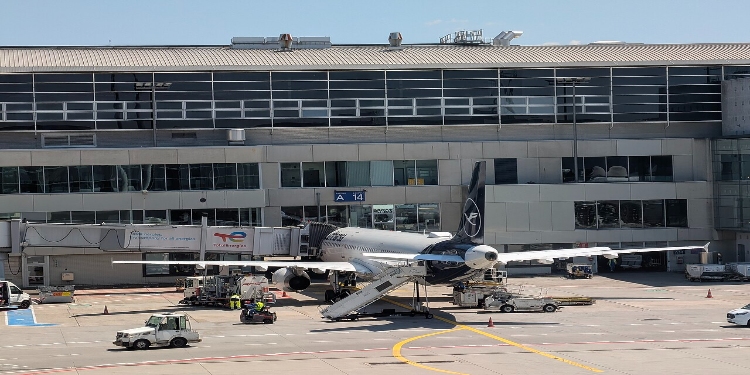
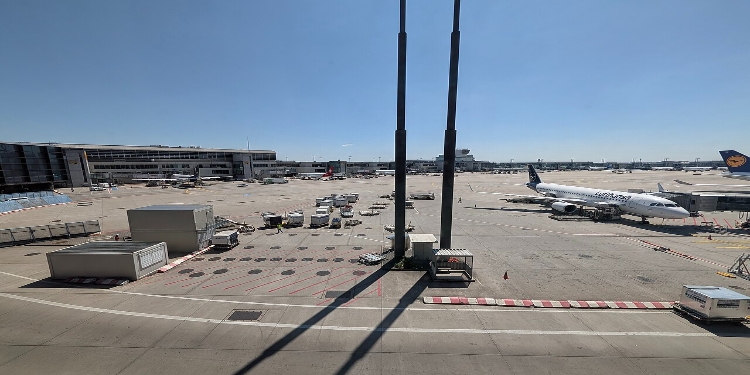
Frankfurt Airport (FRA) is Germany’s largest airport and the sixth busiest in Europe by passenger volume, handling 63.2 million passengers in 2025. Operated by Fraport AG, it is above all a transfer hub — nearly half of everyone who passes through never leaves the airport — and in April 2026 it gained a third terminal that changed how the whole site is navigated.
Frankfurt Airport at a Glance
| Detail | Figure |
|---|---|
| IATA / ICAO code | FRA / EDDF |
| Operator | Fraport AG |
| Passengers, 2025 | 63.2 million, up 2.6% year-on-year |
| European ranking | Sixth by passenger volume |
| Global ranking | 22nd busiest worldwide in 2024 |
| Transfer share | 48.7% of all passengers |
| Terminals | Three (T1, T2, T3) |
| Busiest single day, 2025 | 3 August, with 221,360 passengers |
| All-time busiest day | 30 June 2019, with 241,228 passengers |
Two figures explain most of what makes FRA distinctive. The transfer share of 48.7% means the airport is engineered around connections rather than origin-and-destination traffic, which is why the walking distances and monorail matter so much. And in 2025, 76% of passengers travelled for private reasons — up sharply from 64.6% in 2019, a lasting shift in the mix since the pandemic.
Passenger numbers are still recovering: 2025’s total sits around 90% of the 2019 level, roughly 10.5% below the pre-pandemic peak.
The Three Terminals
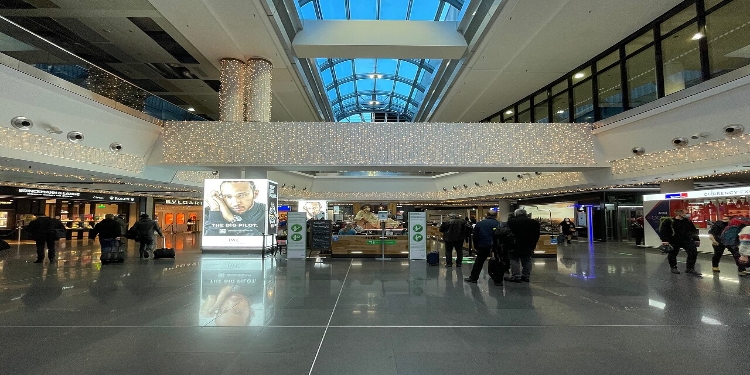
Until 2026, Frankfurt ran on two terminals. Terminal 3 was inaugurated on 22 April 2026 and began operations the following day, with airlines moving across in four waves that finished on 9 June 2026.
| Terminal | Concourses | Notes |
|---|---|---|
| Terminal 1 | A, B, C, Z | The Lufthansa and Star Alliance home; contains both train stations |
| Terminal 2 | D, E | The older secondary terminal, linked to T1 by SkyLine and shuttle bus |
| Terminal 3 | G, H, J | Opened 2026 with three piers; capacity for 19 million passengers, expandable to 25 million |
Terminal 3 sits on the southern side of the airfield, physically separate from the T1/T2 complex, with its own access roads and a large parking garage. The practical consequence is that a T3 departure or arrival is not a short walk from the trains — budget for the monorail transfer.
Getting Between Terminals
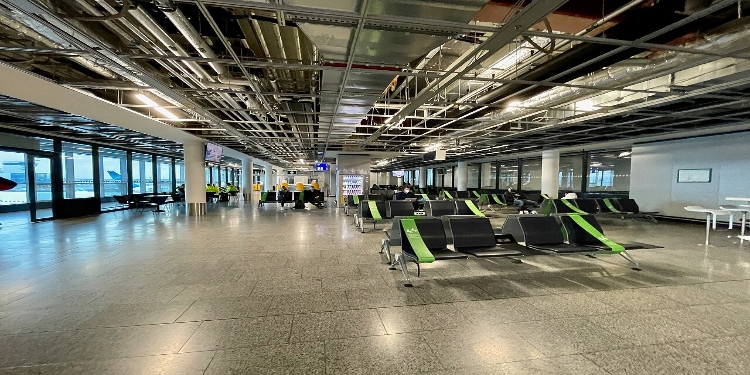
The SkyLine automated monorail is the primary link across the site, and it is free. Terminal 3 is reached by SkyLine in roughly 10 to 15 minutes; follow signs marked “Terminal 3 G, H, J”.
Two Train Stations, Not One
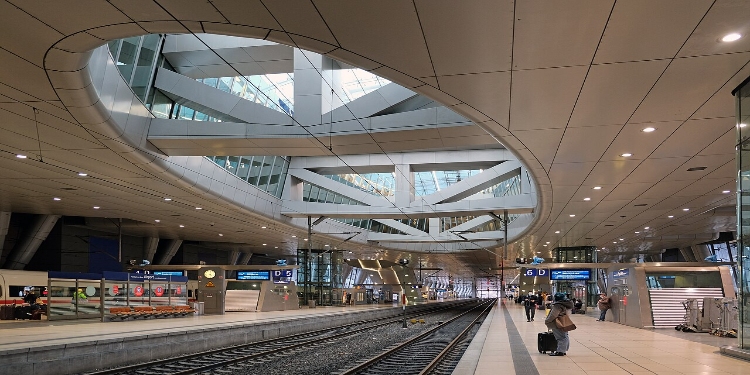
This is the single most common source of confusion at FRA. Frankfurt Airport has two separate railway stations, both accessed through Terminal 1, and boarding at the wrong one means missing your train.
| Fernbahnhof (long-distance) | Regionalbahnhof (regional) | |
|---|---|---|
| German name | Frankfurt am Main Flughafen Fernbahnhof | Frankfurt am Main Flughafen Regionalbahnhof |
| Services | IC and ICE high-speed trains, 14 intercity routes | S-Bahn S8 and S9, plus RB58, RE59, RE2, RE3 |
| Destinations | Cologne, Stuttgart, Berlin, Vienna, Amsterdam, Brussels | Frankfurt city, Offenbach, Hanau, Aschaffenburg, Rüsselsheim, Mainz, Wiesbaden |
| Location | Connected to T1 via a footbridge from Level 3 | Beneath Terminal 1, on Floor 0 |
A useful physical cue once you’re inside: regional trains arrive upstairs in the main part of the station, while S-Bahn services come in downstairs.
Reaching Frankfurt City Centre
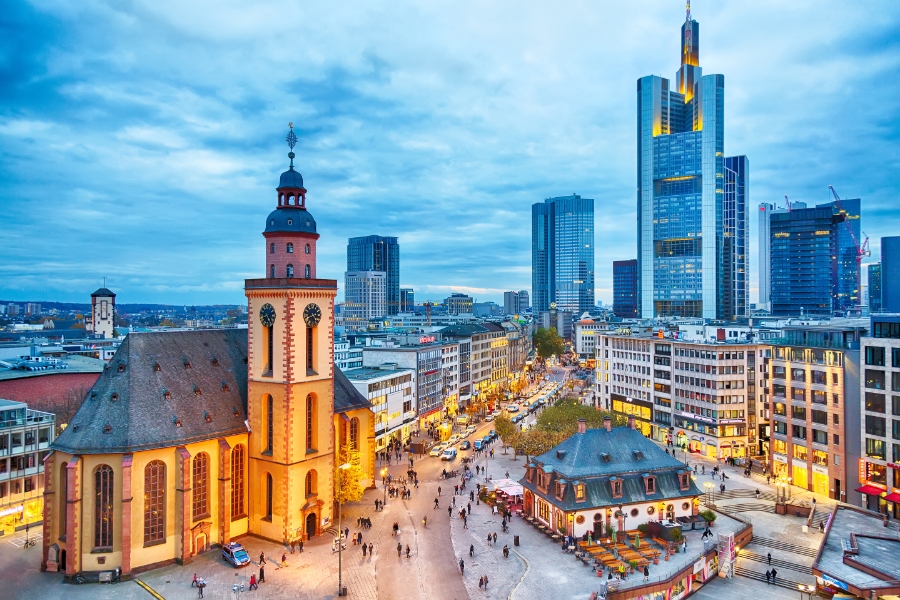
The fastest and cheapest route into the city is the S-Bahn. Take the S8 or S9 eastbound from the Regionalbahnhof and you’ll reach central Frankfurt in under 20 minutes — the journey to Frankfurt Hauptbahnhof takes about 12 minutes.
- From Terminal 1, head to Floor 0 and follow signs for Regionalbahnhof. From Terminal 2, take the free shuttle bus or SkyLine to T1 first.
- Board an eastbound S8 or S9. Regional Express services RE2 and RE3 also run as far as Frankfurt Hauptbahnhof.
- Get off at Hauptbahnhof, Taunusanlage, Hauptwache, or Konstablerwache depending on where you’re staying.
Coming the other way, board a westbound S8 or S9 at any of those four central stations and alight at Frankfurt Flughafen Regionalbahnhof, then head upstairs into Terminal 1. Note that some airport-to-city itineraries sold as through tickets use the S-Bahn for the airport leg even when the rest of the journey is on an ICE.
Onward Travel Across Germany and Europe
Frankfurt’s real advantage over other German airports is the long-distance rail station. Fourteen ICE routes call there, giving direct connections to Cologne, Stuttgart, Bonn, Berlin, and international destinations including Vienna, Amsterdam, and Brussels — no change in central Frankfurt required.
For anyone landing at FRA and heading elsewhere in Germany, this often makes the train faster door to door than a connecting flight. From Terminal 1, take the footbridge from Level 3 to the Fernbahnhof; from Terminal 2, shuttle to T1 and take the escalators up to the same footbridge.
Practical Tips for FRA
- Confirm your terminal before you leave home. With three terminals now in operation and the T3 airline moves only completed in June 2026, older guides and saved bookmarks may be wrong.
- Add buffer time for T3. The SkyLine ride alone is 10 to 15 minutes, before queues and walking within the terminal. >Know which station you need. Fernbahnhof for ICE and IC, Regionalbahnhof for S-Bahn and regional services — they are not interchangeable.
- Avoid early August if you can. The busiest day of 2025 fell on 3 August, with over 221,000 passengers.
- Use a single RMV ticket. S-Bahn and regional trains from the airport are integrated into the regional transport network covering the whole Frankfurt area.
Frequently Asked Questions
How many passengers use Frankfurt Airport?
Frankfurt Airport handled 63.2 million passengers in 2025, an increase of 2.6% on 2024. That places it sixth in Europe by passenger volume, and it was the 22nd busiest airport worldwide in 2024.
How many terminals does Frankfurt Airport have?
Three. Terminal 1 houses concourses A, B, C and Z, Terminal 2 houses D and E, and Terminal 3 — which opened in 2026 — houses G, H and J.
When did Frankfurt Airport Terminal 3 open?
It was inaugurated on 22 April 2026 and began operations on 23 April 2026. Airlines moved across in four waves, with the transition completed on 9 June 2026.
How do you get from Frankfurt Airport to the city centre?
Take the S8 or S9 S-Bahn eastbound from the Regional Station beneath Terminal 1. The journey to central Frankfurt takes under 20 minutes, with Frankfurt Hauptbahnhof reached in about 12 minutes.
What is the difference between the two Frankfurt Airport train stations?
The Fernbahnhof, or Long-Distance Station, serves IC and ICE high-speed trains on 14 intercity routes. The Regionalbahnhof, or Regional Station, serves S-Bahn lines S8 and S9 plus regional trains RB58, RE59, RE2 and RE3. Both are accessed through Terminal 1.
How do you get to Terminal 3 at Frankfurt Airport?
Take the SkyLine monorail, which reaches Terminal 3 in approximately 10 to 15 minutes. Follow signs marked “Terminal 3 G, H, J”.
How do you transfer between Terminal 1 and Terminal 2?
Use the free SkyLine monorail or the yellow shuttle bus that stops in front of Terminal 2. Both transfers are free of charge.
Which cities have direct trains from Frankfurt Airport?
The long-distance station offers direct ICE and IC services to destinations including Cologne, Stuttgart, Bonn, Berlin, Vienna, Amsterdam and Brussels.
Is Frankfurt Airport mainly a transfer hub?
Yes. In 2025, 48.7% of all passengers were transferring rather than starting or ending their journey at Frankfurt, which shapes the airport’s layout and connection infrastructure.
What is the busiest day at Frankfurt Airport?
The busiest day of 2025 was 3 August, with 221,360 passengers. The all-time record was 30 June 2019, when 241,228 passengers passed through.