Frankfurt am Main
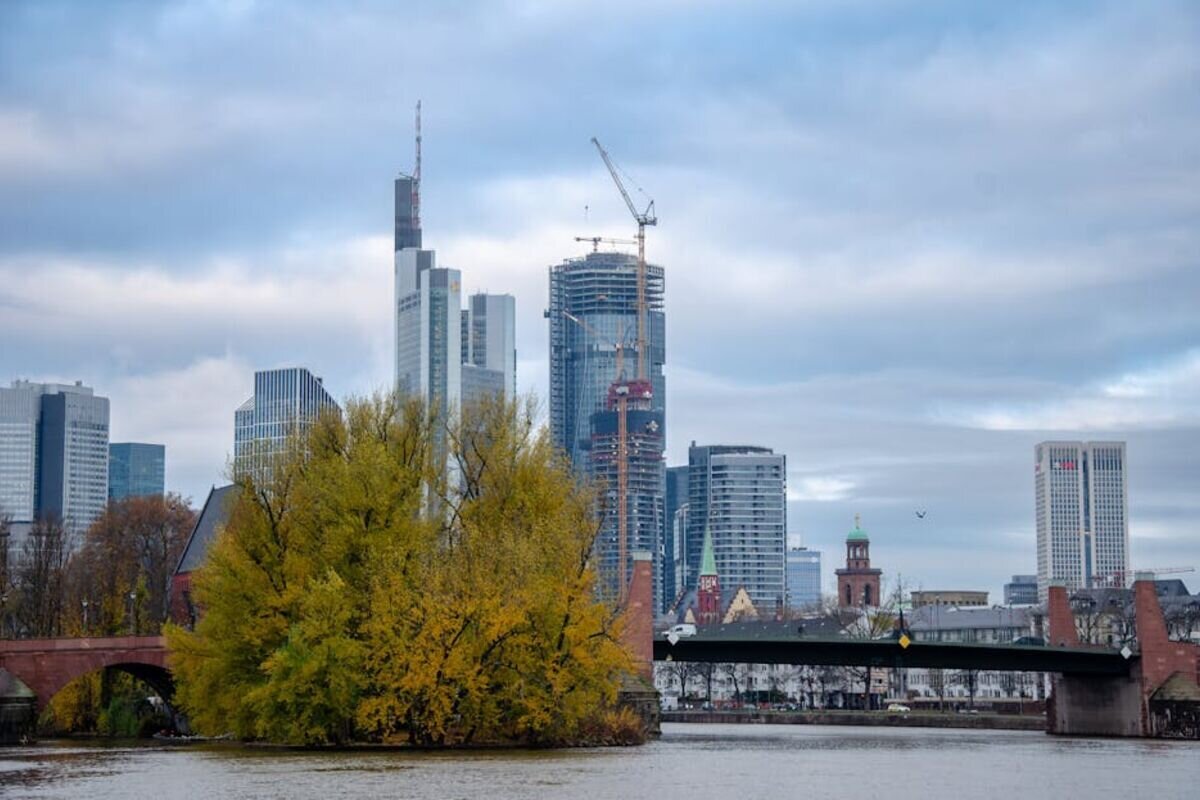
Welcome to Frankfurt am Main
Germany's financial powerhouse surprises visitors with its intimate charm despite hosting Europe's banking elite. Frankfurt's gleaming skyscrapers earn it the nickname 'Mainhattan,' while its cobblestone old town and world-class museums reveal deeper cultural treasures. The city serves as both a global business hub and a gateway to the romantic Rhine valley.
Frankfurt at a Glance
| Detail | Info |
|---|---|
| Country | Germany (Hesse state) |
| Population | ~775,000 (fifth-largest German city) |
| Language | German (English widely spoken in tourist areas) |
| Currency | Euro (€) |
| Time Zone | CET (UTC+1) / CEST (UTC+2 in summer) |
| Airport | Frankfurt Airport (FRA) — one of Europe's busiest |
| Main Train Station | Frankfurt Hauptbahnhof |
| Best Time to Visit | May–September; late November for Christmas markets |
Top Attractions in Frankfurt
Frankfurt packs more into its compact centre than most visitors expect. From its medieval Römerberg square and Gothic cathedral to one of Europe's densest museum strips and a skyline you can ascend for free on a clear afternoon, the city rewards exploration at every turn.
Römerberg — The Historic Heart
Römerberg is Frankfurt's most iconic public square and the undisputed starting point for any visit to the old town (Altstadt). The square is dominated by the Römer, Frankfurt's city hall since 1405, whose three stepped gables have appeared on postcards for centuries. Destroyed in World War II, the surrounding half-timbered buildings were meticulously reconstructed stone by stone, and the result is one of Germany's most photographed medieval streetscapes. At the square's centre stands the Fountain of Justice (Gerechtigkeitsbrunnen), and the adjoining Alte Nikolaikirche adds a further layer of medieval atmosphere. Allow at least 45 minutes to explore the square and the narrow lanes running off it toward the reconstructed Dom-Römer quarter (the Neue Altstadt), which opened in 2018 and added 35 historically inspired buildings to the neighbourhood.
Kaiserdom St. Bartholomäus
Rising above the rooftops just east of Römerberg, the Imperial Cathedral of Saint Bartholomew (Kaiserdom) is Frankfurt's largest religious building and one of the most significant Gothic structures in Germany. Between 1356 and 1792, ten Holy Roman Emperors were crowned here, making it the symbolic centre of German imperial history. The cathedral's 95-metre sandstone tower can be climbed for panoramic views over the Altstadt — a far less crowded alternative to the Main Tower. Inside, look for the Maria-Schlaf-Altar (a 15th-century carved altarpiece) and the preserved skull relic of St. Bartholomew. Admission to the cathedral itself is free; the tower charges a small fee.
Main Tower — Skyline Views
At 200 metres, the Main Tower is the only Frankfurt skyscraper with a publicly accessible observation platform. Located in the Innenstadt banking district, its 56-floor ascent delivers the city's best 360-degree panorama — Taunus hills to the north, Odenwald to the south, and the Main river winding through the entire scene. The outdoor platform is open daily and tickets cost around €9 for adults in 2026. Visit at golden hour for dramatic light over the skyline or after dark to see the city illuminated. The ground-floor restaurant and rooftop bar are popular with Frankfurt's after-work crowd.
Museumsufer — Europe's Museum Mile
The Museumsufer (Museum Embankment) stretches for two kilometres along the south bank of the Main River and concentrates 13 major museums within walking distance of each other — one of the densest museum districts anywhere in Europe. The anchor institution is the Städel Museum (Schaumainkai 63), which holds 700 years of European art including masterworks by Vermeer, Rembrandt, Botticelli, and Monet. Adult admission is €16; Thursday evenings the museum stays open until 21:00 and is noticeably quieter. Further along the embankment you'll find the German Film Museum (€7), the German Architecture Museum (€9), the Museum of Applied Arts (€12), and the Liebieghaus Sculpture Collection (€10). Cross from the Altstadt via the Eiserner Steg (Iron Footbridge) — a three-minute walk that also delivers some of Frankfurt's most-photographed river views. Each year in late August, the Museumsufer Festival draws millions of visitors for open-air concerts and free museum entry along the embankment.
Goethe House Museum
The birthplace of Johann Wolfgang von Goethe — Germany's most celebrated literary figure — survives in the Innenstadt just a few minutes' walk from Römerberg. The Goethe House Museum (Großer Hirschgraben 23) has been meticulously restored to its 18th-century appearance and takes visitors through the four floors where the writer spent his formative years. The adjoining Freies Deutsches Hochstift gallery holds one of Germany's finest collections of German Romanticism. Tickets cost €10 for adults. Audio guides are available in English and provide essential context for the period furnishings and artworks displayed throughout.
Senckenberg Natural History Museum
The Senckenberg Naturmuseum is Germany's second-largest natural history museum and houses one of the largest dinosaur exhibitions in Europe. Full-scale mounted skeletons — including a Diplodocus and a Triceratops — fill the ground floor halls and immediately impress visitors of all ages. The museum also holds significant palaeobotanical, geological, and anthropological collections. Entry is €12 for adults. It sits in Frankfurt's Westend district on Senckenberganlage and is easily reached by U-Bahn (Bockenheimer Warte, lines U6/U7).
Kleinmarkthalle — Frankfurt's Food Hall
Tucked behind the Zeil shopping street, the Kleinmarkthalle (Hasengasse 5–7) is Frankfurt's beloved covered market and one of the best food halls in Germany. Around 150 vendors fill the three-level hall with fresh meat, artisanal cheeses, handmade pasta, regional wines, spices, exotic fruits, and freshly baked goods. Come hungry: the market's upper wine bar and the deli counters are ideal for a stand-up lunch. The hall is open Monday to Friday 8:00–18:00 and Saturday 8:00–16:00. It is free to enter and embodies Frankfurt's cosmopolitan but grounded character better than almost any other single location.
Palmengarten Botanical Garden
Opened in 1871, the Palmengarten is the largest botanical garden in Germany and a sanctuary of calm within the city. The 22-hectare grounds arrange plants geographically, so visitors move from a tropical glasshouse filled with palms and orchids to alpine rockeries and a Japanese garden within a single afternoon. In summer, open-air concerts fill the rose garden on weekends. Admission is €7 for adults; the garden is located in the Westend district near the Bockenheimer Landstraße tram stop.
European Central Bank
Frankfurt is home to the European Central Bank (ECB), the institution that governs monetary policy for the eurozone. The ECB's dramatic twin-tower headquarters in the Ostend district — designed by Viennese architects Coop Himmelb(l)au and completed in 2015 — incorporates the neo-baroque Grossmarkthalle, a 1928 wholesale market hall, as its base. The building is not publicly accessible inside, but the distinctive silhouette and the large euro sign sculpture outside have become landmarks in their own right. The nearby Euro sculpture in front of the ECB's old Eurotower is a favourite photo spot.
Frankfurt's Neighbourhoods
Frankfurt's character changes dramatically from one district to the next. Understanding the neighbourhoods helps you decide where to stay, eat, and spend your evenings.
| Neighbourhood | Character | Best For |
|---|---|---|
| Altstadt / Römerberg | Medieval old town, historic squares, tourist centre | First-timers, sightseeing |
| Sachsenhausen | Apfelwein taverns, Museumsufer, relaxed riverside | Cultural dining, museum hopping |
| Innenstadt | Banking towers, Zeil shopping, Kleinmarkthalle | Shopping, business, central access |
| Westend | Grand townhouses, embassies, fine dining | Luxury stays, quiet evenings, Palmengarten |
| Bahnhofsviertel | Diverse, edgy, international street food, nightlife | Budget travellers, bars, multicultural food |
| Bornheim | Relaxed neighbourhood cafés, Berger Straße market strip | Local atmosphere, repeat visitors |
| Nordend | Brunch spots, independent boutiques, café culture | Weekend explorers, young professionals |
Food and Drink in Frankfurt
Frankfurt has a food identity that is simultaneously deeply local and genuinely international. The dish most associated with the city — Frankfurter Grüne Soße (green sauce) — is made from seven fresh herbs and served cold over hard-boiled eggs or boiled beef. It is a Hessian staple and holds Protected Geographical Indication status in Germany. The city's other culinary signature is Apfelwein (apple wine), a slightly tart, low-alcohol cider served in the traditional blue-painted Bembel stoneware jug.
Apfelwein Culture in Sachsenhausen
The Alt-Sachsenhausen district, south of the Main River, is the spiritual home of Frankfurt's Apfelwein culture. Wooden pine-branch wreaths (Strauß) hung above tavern doors signal that Apfelwein is served inside. Classic addresses include Wagner (Schweizer Straße 71), Dauth-Schneider (Neuer Wall 5–7), and Zum Gemalten Haus (Schweizer Straße 67). Order your Apfelwein saurer Most (straight), mixed with carbonated water (Gespritzter), or sweetened with lemonade (Süßgespritzter). A traditional meal of Handkäse mit Musik — marinated sour cheese with onions and caraway vinaigrette — alongside your Apfelwein is the definitive Frankfurt experience.
Dining by Neighbourhood
| Neighbourhood | Food Identity | Price Range |
|---|---|---|
| Sachsenhausen | Apfelwein, traditional Hessian, first-timer classics | €–€€ |
| Innenstadt / Altstadt | Upscale German, modern European brasseries | €€–€€€ |
| Bahnhofsviertel | International, affordable, diverse — Vietnamese to Persian | € |
| Westend | Fine dining, modern European, Michelin-level | €€€–€€€€ |
| Bornheim | Relaxed bistros, neighbourhood cafés, weekend brunch | €–€€ |
| Nordend | Artisan coffee, brunch, independent kitchens | €–€€ |
Frankfurt Sausages
Despite lending its name to the Frankfurter Würstchen eaten worldwide, Frankfurt itself no longer produces significant quantities of the thin pork sausage under that designation — EU protected status means the original can only come from the Frankfurt region. You'll find them served in pairs from street vendors and market stalls, eaten with a dab of mustard and a crusty roll. The Kleinmarkthalle is one of the best places in the city to try an authentic version.
Where to Stay in Frankfurt
Frankfurt offers accommodation across every budget, with prices running higher than the German average due to demand from business travellers attending Messe Frankfurt trade fairs. Booking well in advance is especially important during the Frankfurt Book Fair (October) and the Automechanika trade show, when hotels city-wide sell out and rates spike sharply.
| Neighbourhood | Price per Night | Best For |
|---|---|---|
| Altstadt / Römerberg | €120–€220 | Sightseeing, first visits, walking access to Römerberg |
| Sachsenhausen | €90–€180 | Best balance of atmosphere, access, and value |
| Westend | €150–€350 | Quiet luxury, embassies, proximity to Palmengarten |
| Bahnhofsviertel | €70–€140 | Budget travellers, easy transport to airport |
| Bornheim / Nordend | €80–€160 | Local neighbourhood feel, repeat visitors |
Getting to Frankfurt
By Air
Frankfurt Airport (FRA) is one of the busiest international airports in Europe and serves as the primary hub for Lufthansa. It operates two terminals and, crucially, two distinct train stations: the Regionalbahnhof (for S-Bahn city trains and regional express services) and the Fernbahnhof (for high-speed ICE, IC, and EC long-distance trains). First-time visitors frequently confuse the two. To reach the city centre, go to the Regionalbahnhof and take either the S8 or S9 S-Bahn — these run every 15 minutes throughout the day and reach Frankfurt Hauptbahnhof in approximately 11 minutes and Hauptwache (the city-centre shopping hub) in around 16 minutes. A single adult ticket costs approximately €6.30 in 2026. The RMVgo app handles ticket purchase with English-language support and PayPal payment.
By Train
Frankfurt Hauptbahnhof is one of Germany's busiest rail junctions and connects the city to the national high-speed ICE network. Journey times from major cities: Berlin 4 hours, Munich 3 hours 15 minutes, Cologne 1 hour 15 minutes, Hamburg 3 hours 40 minutes, Amsterdam 3 hours 30 minutes, Paris 3 hours 50 minutes. The station itself sits at the western edge of the city centre, roughly 20 minutes on foot from Römerberg or a quick hop on U-Bahn lines U4 or U5 to Römer stop.
Getting Around Frankfurt
Frankfurt's public transport network is integrated under the RMV (Rhein-Main-Verkehrsverbund) system, meaning a single ticket covers S-Bahn, U-Bahn, trams, and buses. The best strategy for visitors is simple: walk for the Altstadt and riverside; use the U-Bahn for fast cross-city journeys; use trams for Sachsenhausen, the Museumsufer, and local districts; and reserve the S-Bahn primarily for the airport and regional connections.
-
>S-Bahn: Suburban rail connecting the airport, Hauptbahnhof, Hauptwache, Konstablerwache, and regional towns. Lines S8 and S9 are the most useful for visitors.
>U-Bahn: Six metro lines for fast movement inside the city. Lines U4 and U5 are particularly useful from Hauptbahnhof to the Altstadt.
>Trams: Surface lines serving Sachsenhausen, the museum embankment, Bornheim, and Nordend — areas the U-Bahn doesn't directly reach.
>Buses: Fill gaps in the network for specific neighbourhood destinations.
>Single ticket: Approximately €2.75 for a standard adult journey; short-hop Kurzstrecke (under 2 km) costs €1.85.
>Day ticket: The best value if you make more than two journeys in a day.
>App: Download the RMVgo app for route planning, English-language support, and paperless tickets.
Best Day Trips from Frankfurt
Frankfurt's position at the crossroads of Germany's rail network makes it an outstanding base for day trips. The Rhine Valley, Heidelberg, and the Taunus hills are all within 45–90 minutes by regional train.
| Destination | Travel Time | Highlight |
|---|---|---|
| Heidelberg | ~1 hour by train | Renaissance castle, Neckar River old town — the most rewarding single day trip |
| Rhine Valley / Rüdesheim | ~45 min by regional train | UNESCO World Heritage gorge, castle-lined river cruise, vineyard slopes (April–October) |
| Wiesbaden | ~40 min by S-Bahn | Belle Époque spa city, Wilhelmstraße shopping, Neroberg hill views |
| Rothenburg ob der Tauber | ~2.5 hours by train | Best-preserved medieval town in Germany, Romantic Road |
| Mainz | ~40 min by S-Bahn | Gutenberg Museum, Rhine waterfront, Dom cathedral |
The classic Rhine Valley day trip runs from Frankfurt Hauptbahnhof to Rüdesheim (approximately €12–18 round trip on a regional train), where you board a KD Rhine cruise ship downstream past the Lorelei rock, castle-studded hillsides, and UNESCO-protected vineyard terraces. Cruise duration is approximately 3–4 hours to St. Goar or Koblenz, and return trains run reliably throughout the afternoon. Check current schedules at kdrhein.de. The season runs April through October.
Rhine Valley Day Trip from Frankfurt with River Cruise Option
ℹ️ Operator may substitute a historic castle visit for the boat cruise in low season or during extreme water levels.
We may earn a commission when you book through these links, at no extra cost to you.Best Time to Visit Frankfurt
May through September offers the best combination of warm weather, long daylight hours, and outdoor dining. The Museumsufer Festival in late August is the city's largest open-air cultural event, drawing over three million visitors to the riverbanks with free museum access, live music, and food stalls. Spring (April–May) is particularly pleasant with the Palmengarten in bloom and fewer crowds than summer. Late November through December brings Frankfurt's famous Christmas markets, centred on Römerberg — among the oldest and most atmospheric in Germany. October is the month of the Frankfurt Book Fair, the world's largest trade fair for the publishing industry, which makes hotel availability tight but adds an exciting intellectual energy to the city.
Frankfurt Travel Tips
-
>Museum card: The Frankfurt Card (1-day €11.50, 2-day €15.50) covers unlimited public transport and 50% discounts at 30+ museums — excellent value if you plan a museum-heavy itinerary.
>Free sights: The ECB exterior, Eiserner Steg bridge, Römerberg square, riverfront promenades, and the exterior of the Commerzbank Tower cost nothing. Several museums offer free admission on the last Saturday of the month.
>Airport confusion: Always use Frankfurt Airport Regionalbahnhof, not the Fernbahnhof, to reach the city by S-Bahn. The platforms are separate buildings; follow signs for 'Regionalbahnhof' from arrivals.
>Trade fair dates: Check the Messe Frankfurt calendar before booking. Hotels during major fairs (Book Fair, IAA, Automechanika) cost two to three times normal rates.
>Walking distances: The core sights — Römerberg, Kaiserdom, Goethe House, Eiserner Steg, and the Museumsufer — are all within a 20-minute walk of each other. A good pair of shoes covers most of central Frankfurt comfortably.
>Sachsenhausen evenings: Cross the Eiserner Steg after dinner for the classic Frankfurt evening experience: Apfelwein, outdoor benches, and the illuminated skyline reflected in the Main.
>Language: German is the official language, but English is widely spoken in tourist areas, restaurants, and public transport. Download a translation app for menus in traditional Apfelwein taverns.
>Tipping: Round up to the nearest euro or add 5–10% for good service at restaurants. Tipping is appreciated but less ritualistic than in the US.
Suggested Itineraries
One Day in Frankfurt
Start at Römerberg and spend the morning exploring the Altstadt, Dom-Römer quarter, and the Kaiserdom tower. Mid-morning, duck into the Kleinmarkthalle for coffee and a snack. Walk the riverfront east to the Eiserner Steg, cross to Sachsenhausen, and spend the afternoon at the Städel Museum. Return via the footbridge for golden-hour views of the skyline, then head to the Main Tower observation deck before dinner in Alt-Sachsenhausen with Apfelwein and Handkäse.
Two Days in Frankfurt
Follow the one-day itinerary, then on day two visit Goethe House in the morning, explore the Senckenberg Natural History Museum in the afternoon, and finish with a stroll through the Palmengarten before dinner in the Westend or Nordend neighbourhood. Consider an early evening at a rooftop bar or a riverside café on the Schaumainkai.
Three Days and Beyond
After two days in the city, use day three for the Rhine Valley cruise from Rüdesheim or a train to Heidelberg for its Renaissance castle and Altstadt. Visitors with more time can explore Berger Straße in Bornheim (Frankfurt's most authentic neighbourhood shopping street), the Frankfurt Zoo (one of Europe's oldest, open 365 days a year), or the Taunus hills for a half-day hike above the city.
Frequently Asked Questions
How many days do you need in Frankfurt?
Two full days cover the major highlights — Römerberg, Kaiserdom, Städel Museum, Goethe House, and Sachsenhausen. Three days allow a more relaxed pace and a day trip to the Rhine Valley or Heidelberg. If you are purely in transit, the Altstadt and Main Tower can be seen in a half-day from the airport.
Is Frankfurt worth visiting as a tourist?
Yes. Frankfurt is consistently underrated as a tourist destination. Beyond its financial reputation, the city holds 35 museums along a single riverside stretch, a beautifully reconstructed medieval old town, one of Germany’s most celebrated art collections at the Städel, and a unique apple-wine culture in Sachsenhausen that you won’t find anywhere else.
What is Frankfurt famous for?
Frankfurt is famous for its banking skyline (nicknamed ‘Mainhattan’), the Römerberg medieval square, the Städel Museum, Goethe’s birthplace, the Frankfurt Book Fair, Apfelwein (apple wine), and Frankfurter Würstchen sausages. It also hosts the European Central Bank and Frankfurt Airport, one of Europe’s busiest hubs.
What is the best way to get from Frankfurt Airport to the city centre?
Take the S8 or S9 S-Bahn from Frankfurt Airport Regionalbahnhof to Hauptbahnhof (11 minutes) or Hauptwache (16 minutes). Trains run every 15 minutes throughout the day. A single adult ticket costs approximately €6.30 in 2026. Buy tickets from machines at the Regionalbahnhof or use the RMVgo app.
When is the best time to visit Frankfurt?
May through September offers the best weather and the most outdoor activities, including the Museumsufer Festival in late August. Late November to December is ideal for Frankfurt’s Christmas markets at Römerberg. Avoid October if you want affordable hotels, as the Frankfurt Book Fair fills the city.
What is Apfelwein and where should I try it?
Apfelwein is Frankfurt’s traditional apple wine — a slightly tart, low-alcohol cider served in a blue-painted Bembel stoneware jug. The best place to try it is in the Alt-Sachsenhausen district, at taverns such as Wagner, Dauth-Schneider, or Zum Gemalten Haus. Order it with Handkäse mit Musik (marinated sour cheese with onion vinaigrette) for the full local experience.
Notable Figures Associated with Frankfurt am Main
- Johann Wolfgang von Goethe — Historical legacy, birthplace, and memorials in the city.
💡 Essential Travel Tips
Explore the historic Old Town (Altstadt) on foot and use the local S-Bahn/U-Bahn network.
🥨 Local Insights & Food Culture
Purchase a 24-hour transit day pass (Tageskarte) for unlimited city travel.
🎟️ Top Activities & Experiences in Frankfurt am Main
Discover curated walking tours, museum passes, and authentic experiences in Frankfurt am Main with instant confirmation.