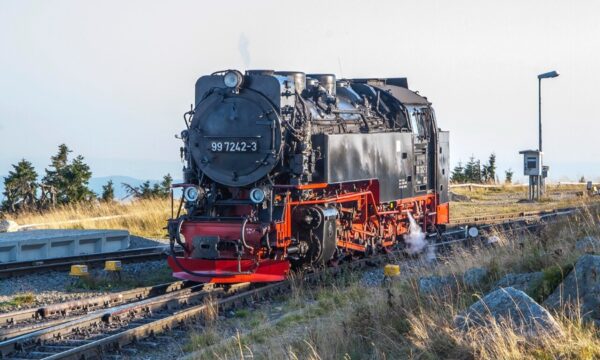
Brocken Mountain
The mystical Brocken is shrouded in mist and legend, accessible by historic steam train,…
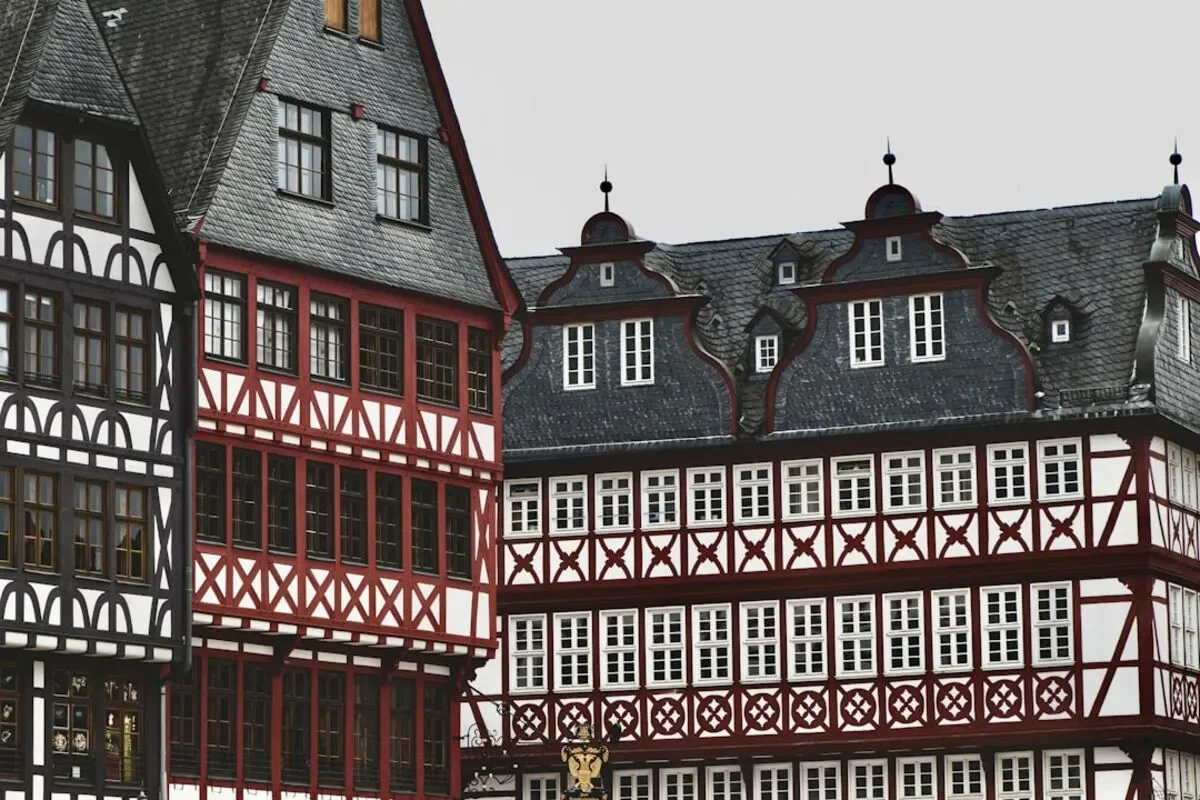
Goslar is a town of about 50,000 people in Lower Saxony, on the northern edge of the Harz Mountains. Three of its assets carry UNESCO World Heritage status: the historic Old Town, the Rammelsberg ore mine, and the Upper Harz Water Management System.
That combination is unusual. Few European towns preserve the political center, the industrial source of its wealth, and the engineering that powered it all within a few kilometers of one another.
The town was founded in the 10th century and served as a favored residence of the Holy Roman Emperors for roughly three centuries. Silver and other ores from Rammelsberg paid for that imperial presence.
A well-planned Goslar travel guide should treat the Kaiserpfalz, the mine, and the Harz landscape as one connected story, because the ore under the mountain is the reason the emperors came at all.
Around 1,500 half-timbered houses survive in the Altstadt (Old Town), most of them within a compact walking radius. Beyond the town walls, the Harz National Park, the Brocken summit, and the ski slopes of Hahnenklee sit within a short drive or bus ride.
Goslar matters because ore made it rich, and wealth made it politically central. Between 1009 and 1253, the town functioned as a working seat of imperial power.
After the emperors withdrew, mining income sustained Goslar as a Free Imperial City with Hanseatic trade connections.
Mining at the Rammelsberg mountain began around 968. It continued without interruption until 1988, meaning the site saw more than a thousand years of continuous extraction.
The mountain yielded silver, copper, lead, and zinc. Silver from Goslar was struck into the Otto-Adelheid pennies, the earliest hard evidence of the region’s mining industry.
Smelting work drew skilled tradesmen from outside Saxony. They settled on the hill still called the Frankenberg, and the district keeps that name today.
Emperor Henry III made Goslar the center of his empire. During his 17-year reign, he held court here 18 times, often staying for months.
Conrad II laid the foundation stone of the Imperial Palace in 1025. Henry IV was born in Goslar on 11 November 1050.
After Henry III died in 1056, workers buried his heart in the town’s Church of St. Simon and St. Jude. Later emperors came often too: Henry IV visited 30 times, and Henry V held six imperial diets here.
Medieval writers called the resulting complex of palace, collegiate church, and town the “Rome of the North.”
When imperial visits ended in 1253, Goslar’s merchants took over. A town council, first recorded in 1219, pushed steadily for control of the mining rights.
Goslar became a Free Imperial City, answerable to the emperor alone, and joined the Hanseatic League trading network. Its long-running conflict was with the neighboring Dukes of Brunswick, who wanted Rammelsberg for themselves.
That struggle ended badly for Goslar in 1552, when the town lost control of the mine and its surrounding forests.
The Reformation reached Goslar in the 1520s and reshaped its churches. Several medieval religious buildings were later demolished or converted.
Goslar escaped serious bombing in World War II. That helps explain why so much of its medieval fabric survives intact.
UNESCO inscribed the Old Town and Rammelsberg Mine in 1992. The Upper Harz Water Management System, a network of ponds, ditches, and tunnels built to drive mine machinery, was added as an extension in 2010.
Goslar’s core attractions cluster tightly: the Kaiserpfalz sits at the southern edge of the Old Town, the Marktplatz forms the commercial heart, and Rammelsberg lies about 20 minutes’ walk uphill.
Museum and church opening hours shift by season, so confirm them before you plan a day around any single site.
The Kaiserpfalz (Imperial Palace) is the largest surviving Romanesque secular building in Germany. Construction began under Conrad II in 1025.
Its centerpiece is the Reichssaal, an enormous hall covered in 19th-century historical paintings that trace German imperial history. The neighboring Ulrich Chapel holds a sarcophagus containing Henry III’s heart.
The Huldigungssaal (Hall of Homage) sits in the Rathaus on the Marktplatz. This small late-Gothic room was painted from floor to ceiling around 1500, and access is limited and ticketed separately.
The Marktplatz is framed by the late-Gothic Rathaus (town hall), the Kaiserworth guild house of 1494, and the Marktbrunnen, a bronze fountain topped by a golden eagle.
The fountain’s lower basin dates to the 12th century and is one of the oldest of its kind in Germany.
A Glockenspiel on the treasury building opposite the Rathaus performs four times daily. Moving figures illustrate the history of Rammelsberg mining.
The Marktkirche of St. Cosmas and Damian anchors the north side of the square. Its twin towers are unequal in height, a result of later rebuilding.
Inside are 13th-century stained-glass windows and a bronze baptismal font from 1573. Visitors can climb the north tower for a view across the Old Town roofs toward Rammelsberg.
The Rammelsberg Museum and Visitor Mine occupies the industrial buildings left standing when extraction stopped in 1988.
Underground tours run on set schedules and cover different themes: the medieval Roeder galleries with their waterwheels, and the 20th-century ore-processing plant reached by mine train.
Temperatures underground stay near 12°C year-round, so bring a jacket. Tour availability varies by day and season, and some routes involve stairs and narrow passages.
Booking ahead is sensible in summer.
The Goslarer Museum holds the Krodo Altar, an 11th-century bronze altar that is the only surviving item of its kind from the imperial period.
The Mönchehaus Museum shows contemporary art in a half-timbered house from 1528. It also administers the Kaiserring, an annual art prize whose past recipients include Henry Moore, Joseph Beuys, and Gerhard Richter.
The Frankenberg Church preserves Romanesque work in the old miners’ quarter. The Neuwerkkirche and the church holding the Great Holy Cross almshouse complex round out the religious sites.
For fortifications, the Zwinger is a squat 16th-century artillery tower with walls six meters thick, now housing a late-medieval museum.
The Breites Tor is the surviving remnant of the town’s most heavily built gate. A separate Tin Figure Museum displays historical scenes in miniature.
Goslar’s Altstadt covers roughly the same footprint it did in the 12th century, so a full circuit on foot takes a few hours at a relaxed pace.
Around 1,500 half-timbered houses stand within the old walls, and the streets remain largely cobbled.
Start at the Marktplatz, then walk south along Hoher Weg toward the Kaiserpfalz. Pass the Great Holy Cross almshouse and the Goslarer Museum on the way.
From the palace grounds, follow the line of the old wall east toward the Breites Tor, then loop back through Frankenberger Plan.
Allow two to three hours for the full loop with stops. Cobblestones are uneven throughout, so sturdy shoes make a practical difference.
The Schuhhof is the oldest square in Goslar, ringed by timber-framed houses and reached through narrow passages off the Marktplatz.
Worthstraße and the surrounding lanes show the town’s carved facade work at its densest: painted beams, carved rosettes, and inscriptions naming builders and dates.
The Kaiserworth on the Marktplatz, built in 1494 as a cloth merchants’ guild hall, carries a row of stone emperor figures on its facade. It operates today as a hotel.
The Frankenberg district, west of the center, housed the mine workers and smelters. Its houses are smaller and plainer than the merchant buildings downtown.
From here, a marked path climbs toward Rammelsberg, about a 20 to 30 minute walk from the Old Town. A local bus also serves the museum entrance.
The walk passes remnants of ore-processing terraces, which makes the connection between town and mountain easier to read.
Staying inside the Altstadt puts every major sight within a 10-minute walk, and several hotels occupy restored timber-framed buildings.
Properties near Goslar Station suit travelers arriving by train who plan day trips into the Harz, since regional buses depart from the station forecourt.
Larger wellness hotels sit on the outskirts and near Hahnenklee. That works better for visitors with a car and an interest in skiing or hiking.
For broader guidance on choosing bases across the country, planning a trip to Germany covers the general logic.
Goslar sits at the northern gateway to the Harz, and the mountains begin immediately south of town. The Brocken, Harz National Park trails, and the ski area at Hahnenklee are all reachable within an hour.
Hahnenklee-Bockswiese is a mountain district of Goslar, about 15 kilometers south of the town center at roughly 560 meters elevation.
Its landmark is the Gustav-Adolf-Stabkirche, a Norwegian-style stave church built in 1908 from wood without nails.
The Bocksberg cable car carries passengers to the 727-meter summit, where a summer toboggan run and marked hiking trails start. Operating times change with the season.
Harz National Park protects around 247 square kilometers of spruce forest, moorland, and rocky outcrops. The Brocken, at 1,141 meters, is its high point.
Marked trails start directly from Goslar, including routes toward Bad Harzburg and the Okertal valley with its granite formations.
The Brocken can be reached on foot from Torfhaus, about 8 kilometers each way, or by the narrow-gauge Brockenbahn steam railway from Wernigerode.
Germany’s wandern-hiking-culture/” rel=”noopener” target=”_blank”>wandern hiking culture is visible here in the density of waymarked paths and the Harzer Wandernadel stamp system.
The Harz offers marked mountain-bike routes and downhill trails, with Bocksberg among the better-known descents.
Winter sports center on Hahnenklee’s Bocksberg slopes. The area has a chairlift, several lifts, and floodlit night skiing. Snow reliability varies from year to year, and artificial snowmaking covers part of the area.
Cross-country skiing tracks run around Torfhaus and Clausthal-Zellerfeld. Sledding hills operate near most Harz villages when conditions allow.
Bad Harzburg is 15 minutes by train. It’s known for its thermal baths, a cable car to the Großer Burgberg, and a treetop walkway.
Wernigerode, about 45 minutes by rail, sits in Saxony-Anhalt. It combines a colorful timber-framed center with a hilltop castle and the Brockenbahn terminus.
Clausthal-Zellerfeld, in the Upper Harz, holds the largest wooden church in Germany and a mining museum tied directly to the Upper Harz Water Management System.
Goslar Station connects to Hannover, Braunschweig, and Göttingen in about an hour. The Old Town starts a 10-minute walk from the platforms. Timetables, museum hours, and mine tour schedules shift seasonally, so verify them close to your travel dates.
Regional trains serve Goslar Station from several directions:
| From | Approximate rail time |
|---|---|
| Hannover | 1 hr 10 min |
| Braunschweig (Brunswick) | 45 min |
| Wernigerode | 45 min |
| Hildesheim | 35 min |
| Wolfsburg | 1 hr 25 min |
Göttingen and Celle connect with one change. From Berlin, count on roughly three and a half hours, changing in Braunschweig or Hannover.
By car, Goslar sits near the B6 and B82, about an hour from the A7 motorway. Hannover Airport is the closest major hub, with rail connections through Hannover Hauptbahnhof.
Walking covers nearly everything. Large parts of the Altstadt are closed or restricted to cars, and the distance from the station to the Kaiserpfalz is under two kilometers.
Local buses connect the center with Rammelsberg, Hahnenklee, and outlying districts. Regional buses to Torfhaus and other Harz points depart from the station.
Parking garages ring the Old Town. Driving inside the historic core is impractical because of the narrow cobbled lanes.
May through September brings the most reliable weather for hiking and the longest museum hours. July and August are the busiest months.
Late spring and early autumn balance mild conditions with thinner crowds. Autumn color in the Harz peaks in October.
Winter suits visitors interested in the Christmas market or skiing at Hahnenklee, though some attractions reduce their hours. Broader seasonal patterns across the country are covered in the guide to the best time to visit Germany.
Harz cooking is hearty: game dishes, Harzer Käse (a sharp, low-fat sour-milk cheese), and grilled Bratwurst sold from market stalls.
Gose is a top-fermented, slightly salty and sour wheat beer named after the Gose river that runs through Goslar. It later became associated with Leipzig, but the style originated here and still appears in several local pubs.
The Goslar Christmas Market fills the Marktplatz from late November through late December. An adjoining Weihnachtswald (“Christmas forest”) adds illuminated spruce trees. It ranks among the more atmospheric markets described in the ultimate German Christmas market guide.
One day: Marktplatz and Glockenspiel in the morning, Kaiserpfalz before lunch, Rammelsberg underground tour in the afternoon.
Two days: Add the Goslarer Museum for the Krodo Altar, the Mönchehaus Museum, the Zwinger, and a full Altstadt walking loop through Schuhhof and Worthstraße.
Three days: Use day three for the Harz. Take the Bocksberg cable car at Hahnenklee, hike a National Park trail, or ride the train to Wernigerode for the castle and Brockenbahn.
Goslar also works as a base for a longer Harz week. It pairs naturally with other historic towns covered among the 15 best places to visit in Germany.
Yes, particularly for travelers interested in medieval architecture, imperial history, or industrial heritage. Around 1,500 half-timbered houses survive in the Old Town, and three UNESCO-listed assets sit within a few kilometers of each other. The town also serves as a practical entry point to the Harz Mountains.
One full day covers the Marktplatz, Kaiserpfalz, and a Rammelsberg Mine tour. Two days allow a slower Altstadt walk plus the Goslarer Museum and Mönchehaus Museum. Three days lets you add a Harz excursion such as Hahnenklee, the Brocken, or Wernigerode.
Yes. The Rammelsberg Museum and Visitor Mine offers guided underground tours covering both the medieval water-powered galleries and the 20th-century ore-processing works. Tours run on fixed schedules that vary by season, so check current times and book ahead during summer.
Regional trains reach Goslar Station from Hannover in about 1 hour 10 minutes, Braunschweig in 45 minutes, and Hildesheim in 35 minutes. From Berlin, expect around three and a half hours with one change. The Old Town begins roughly a 10-minute walk from the station.
May through September usually brings the most dependable weather for exploring the Old Town and hiking in the Harz Mountains. Late spring and early autumn offer milder crowds with similar conditions. December attracts visitors to the Christmas market on the Marktplatz, though some museums keep shorter hours during winter.
Explore the historic Old Town (Altstadt) on foot and use the local S-Bahn/U-Bahn network.
Purchase a 24-hour transit day pass (Tageskarte) for unlimited city travel.
Discover curated walking tours, museum passes, and authentic experiences in Goslar with instant confirmation.