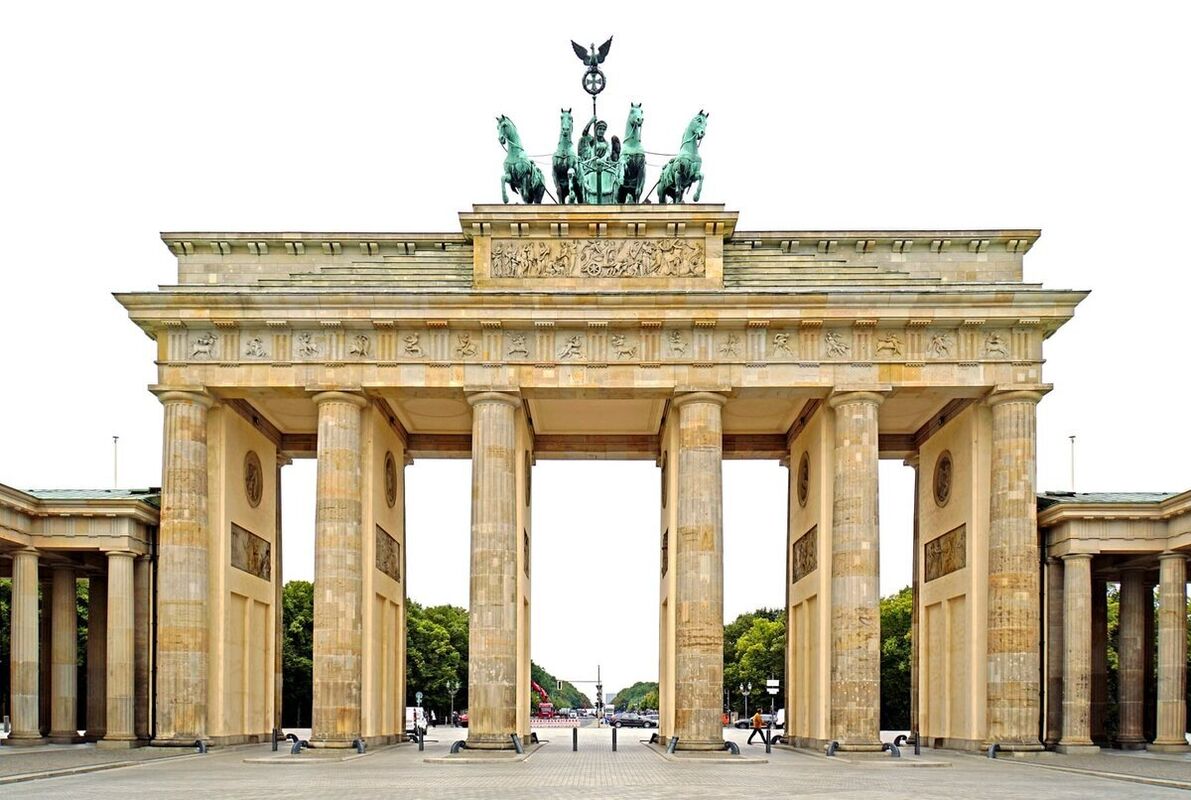
Brandenburg Gate
The Brandenburg Gate is an 18th-century neoclassical monument in Berlin, one of the best-known…
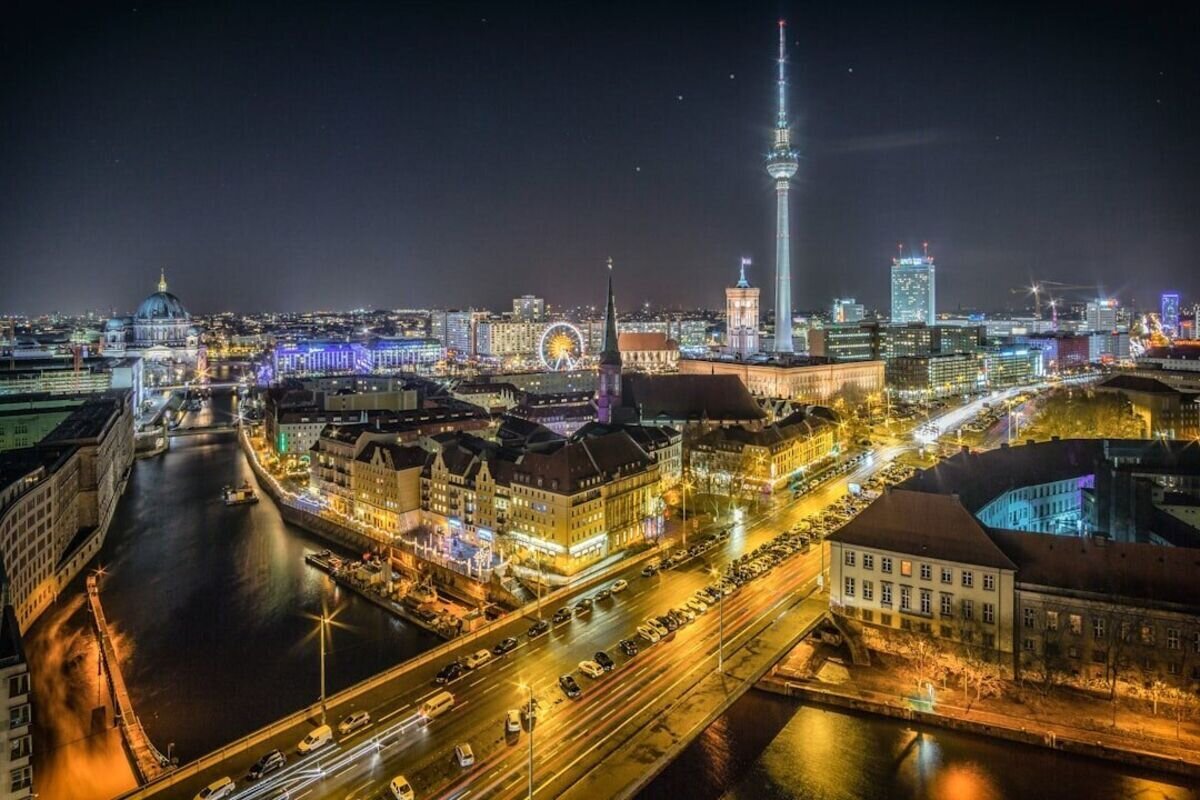
Berlin is Germany’s capital and largest city, home to roughly 3.8 million residents and around 10 million visitors each year. It covers 892 square kilometers, so the sights you want to see can sit far apart, and a little planning can save you hours.
A well-planned three to four days covers Berlin’s core: the Brandenburg Gate and Reichstag, Museum Island, at least two Berlin Wall sites, and one or two neighborhoods where people live rather than sightsee. The rest of your time belongs to whatever pulls you in: nightlife, food markets, parks, or a day trip to Potsdam.
What makes this city different from other European capitals is that its history remains visible on the street. A double row of cobblestones marks where the Wall once stood, while bullet-scarred facades sit beside glass towers. Once you understand how the East/West split shaped the map, grouping your days becomes much easier.
ℹ️ Expert guided historical orientation; public memorials and gates remain free.
We may earn a commission when you book through these links, at no extra cost to you.Berlin’s headline attractions sit in three loose clusters: the government and Brandenburg Gate area, Museum Island and Alexanderplatz just east of it, and Wall-era sites along the River Spree in Friedrichshain and Kreuzberg. Walking between the first two takes about 25 minutes, so you can cover plenty on foot before getting on a train.
The Brandenburg Gate is Berlin’s best-known landmark, a neoclassical arch built in the late 18th century that stood inside the Wall’s death strip for 28 years. It’s open 24/7 and free to visit, and it tends to be quietest before 9 a.m.
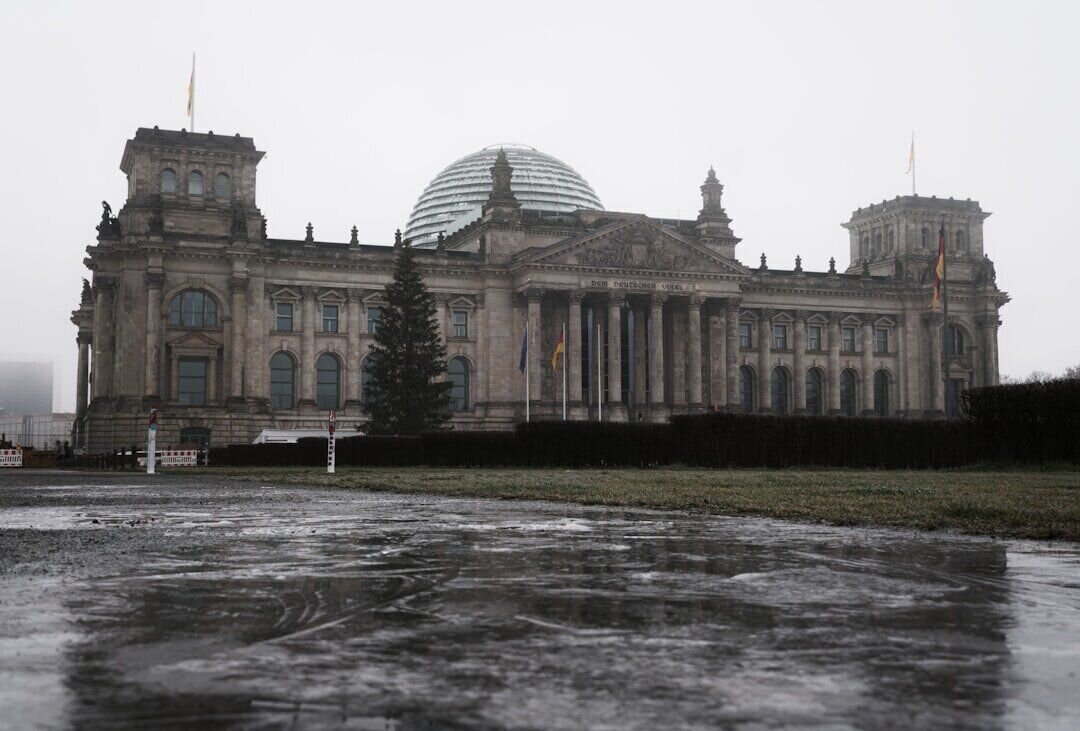
A few minutes north stands the Reichstag building, home of the German parliament. Norman Foster designed its glass dome. Entry is free, but you must register online in advance and bring photo ID, and slots fill weeks ahead in summer.
The surrounding government quarter includes the Federal Chancellery and a riverside walkway along the Spree. It’s one of the few places where new Berlin architecture and Cold War geography sit side by side.
ℹ️ Scenic river sightseeing option; features German/English live guiding.
We may earn a commission when you book through these links, at no extra cost to you.Museum Island (Museumsinsel) is a UNESCO World Heritage Site with five major museums, including the Pergamonmuseum, the Neues Museum with the bust of Nefertiti, and the Alte Nationalgalerie. Parts of the Pergamonmuseum are closed for long-term renovation, so check current access before you go.
A combined day ticket covers all open houses on the island and costs far less than separate entries. Berlin has around 170 museums in total, so pick two or three rather than attempting a marathon.
The Berliner Dom, or Berlin Cathedral, faces the museums across the Lustgarten. Climbing its dome takes 270 steps and gives you a close view over the island and Alexanderplatz.
Alexanderplatz is East Berlin’s old central square, dominated by the 368-meter Fernsehturm (TV Tower), the tallest structure in Germany. The observation deck and rotating restaurant offer the clearest single overview of the city’s layout, which can be useful on a first day.
ℹ️ Non-refundable in provider listing; verify cancellation terms before booking.
We may earn a commission when you book through these links, at no extra cost to you.Tiergarten is Berlin’s largest inner-city park, with 210 hectares of woodland and lawns stretching west from the Brandenburg Gate. The Victory Column (Siegessäule) stands at its center, and the paths make a pleasant walk toward Charlottenburg.
Potsdamer Platz was flattened in the war, split by the Wall, and rebuilt in the 1990s as a cluster of high-rises. Original Wall segments stand outside the S-Bahn entrance.
The East Side Gallery is a 1.3-kilometer stretch of the Berlin Wall along Mühlenstraße, painted by artists from around the world in 1990. It’s the longest surviving section of the Wall and is free and open at all hours.
At its eastern end stands the Oberbaumbrücke, a double-deck brick bridge from 1896 that carries the U1 line above and traffic below. It links Friedrichshain and Kreuzberg, and it served as a pedestrian border crossing during the division.
Come at sunset for the view west along the Spree. The riverside path here is one of the city’s better free walks.
Tempelhofer Feld is a former airport turned public park, where you can walk or cycle along the old runways. At 355 hectares, it’s bigger than Central Park, and entry is free.
Treptower Park holds the Soviet War Memorial, a vast site commemorating Red Army soldiers who died in the 1945 Battle of Berlin. Approach it as a cemetery, because that’s what it is.
Other options away from the center:
For techno history, the Berghain club sits in a former power plant in Friedrichshain, and its door policy is famously unpredictable. Berlin’s electronic scene traces back to the Love Parade, which grew out of the city’s post-reunification years.
Berlin runs one integrated transport network through BVG (Berliner Verkehrsbetriebe), so one ticket works across U-Bahn, S-Bahn, trams, buses, and some ferries. Most visitors stay within fare zones A and B and never need a car.
The U-Bahn (Untergrundbahn) is the underground metro, with nine lines marked U1 through U9 on blue signs. Trains run every 4 to 8 minutes during the day.
The S-Bahn (Stadtbahn) is the suburban rail network, marked with a white S inside a green circle. It covers longer distances, including the Ringbahn loop around the inner city and the line out to the airport.
Both run all night on Fridays and Saturdays. On weeknights, night buses marked N fill the gap between roughly 1 a.m. and 4 a.m.
Berlin uses three concentric fare zones:
| Zone | Covers | Who needs it |
|---|---|---|
| A | City center inside the Ringbahn | All central sightseeing |
| B | Out to the city limits | Grunewald, Spandau, Wannsee |
| C | Surrounding Brandenburg | BER airport, Potsdam, Sachsenhausen |
An AB ticket covers almost everything most visitors do. Buy ABC only on days when you travel to the airport or out to Potsdam. Riding into zone C with an AB ticket counts as fare evasion.
Single tickets, day tickets, and multi-day passes are sold at machines in every station, at BVG counters, and through the BVG app. Jelbi is BVG’s separate app for shared bikes, scooters, and car sharing.
Paper tickets bought from a machine must be validated in the small red or yellow stamping box on the platform before you board. Tickets bought in the app are already valid. Berlin has no ticket barriers, but plain-clothes inspectors check regularly, and the fine for riding without a valid ticket is €60.
The Berlin WelcomeCard bundles unlimited travel with discounts of up to 50% at many attractions. It’s sold in AB and ABC versions for 48 hours up to six days. It pays off if you use transport several times a day and visit paid sights.
Berlin is flat, and central Mitte is comfortably walkable. Cycling is popular, with protected lanes on many main roads and rental bikes available across the city.
Trams run mainly in the former East: Prenzlauer Berg, Friedrichshain, and parts of Mitte. The M10 and M1 lines are useful for reaching bars and markets that sit between U-Bahn stops.
Rideshare and taxis work fine, but they cost far more than a €3.80 single AB ticket. Fares and app pricing change, so confirm current rates before you travel.
Berlin has 12 districts, and the ones that matter for a short visit sit in a band running east to west: Charlottenburg, Mitte, Kreuzberg, Neukölln, Friedrichshain, and Prenzlauer Berg. Each has its own food scene, price level, and pace, and the old East/West line still shapes how they feel.
Mitte means “middle,” and it holds the Brandenburg Gate, Museum Island, Alexanderplatz, and Unter den Linden. Staying here puts most landmarks within a 20-minute walk.
Hotel prices run highest in Mitte, and restaurants closest to the sights cater to tourists. Walk five minutes north into the Scheunenviertel for better food at fairer prices.
Kreuzberg is Berlin’s best-known multicultural district, shaped by Turkish and Middle Eastern communities that settled here from the 1960s. The döner kebab in its modern form was created in Berlin, and Kreuzberg’s stands, along with its falafel shops, remain a reason to visit on their own.
Neukölln, just south, has become the center of Berlin’s newer bar and cafe scene. Both districts are dense, loud, and lively into the early hours.
Try currywurst at least once: chopped sausage with curried tomato sauce, invented in Berlin in 1949.
Charlottenburg was West Berlin’s commercial heart during the division and keeps a calmer, more traditional feel. Kurfürstendamm, known as the Ku’damm, is the main shopping street.
Schloss Charlottenburg, an 18th-century palace with baroque gardens, is the district’s main sight. The Kaiser Wilhelm Memorial Church nearby was left partly ruined as a war memorial.
Friedrichshain, in the former East, holds the East Side Gallery, Karl-Marx-Allee’s Soviet-era architecture, and much of the club scene. Listings sites such as Resident Advisor carry current event schedules.
Prenzlauer Berg, north of Mitte, has restored 19th-century apartment blocks, playgrounds, and quiet cafes. Families and older visitors tend to prefer it, and it’s one of the easier areas for sleeping.
Three local gathering spots repay a slow afternoon:
Berlin’s event calendar adds more: the Karneval der Kulturen street parade at Pentecost, Berlin Pride (Christopher Street Day) in July, and the Berlinale film festival in February.
Less than 5% of the original 155-kilometer barrier survives. What remains is scattered across several sites, each showing a different part of the story. Four locations cover the essentials: the East Side Gallery for art, Bernauer Straße for how the border worked, Checkpoint Charlie for the Cold War standoff, and Topography of Terror for the Nazi era that preceded it.
This 1.3-kilometer painted section along the Spree is the longest continuous piece of Wall still standing. Artists from 21 countries painted it in 1990, months after the border opened.
The murals were restored in 2009 and are repainted as needed. It’s an open-air site, free at any hour, and busiest around midday.
The Berlin Wall Memorial on Bernauer Straße gives the clearest picture of how the border actually functioned. A preserved 60-meter stretch shows both walls, the death strip between them, and a guard tower.
An observation platform looks down into the reconstructed border strip. The Documentation Center and outdoor exhibition are free, and the site includes the Chapel of Reconciliation and a memorial window listing those who died at the Wall.
Bernauer Straße was where residents jumped from apartment windows in 1961 as the border was sealed. Signs mark the locations of buildings that once stood there.
Checkpoint Charlie was the Allied crossing point between East and West Berlin and the site of a 1961 standoff between American and Soviet tanks. Today, a replica guardhouse stands in a commercial setting, so treat it as a quick stop.
Five minutes away, Topography of Terror occupies the former site of the Gestapo and SS headquarters. Its free indoor and outdoor exhibitions document the Nazi state apparatus, and a long stretch of original Wall runs along the property’s edge.
Nearby, the Memorial to the Murdered Jews of Europe covers 19,000 square meters with 2,711 concrete slabs. The underground information center holds the names and stories of victims. Across the city, small brass Stolpersteine set into the pavement mark the last freely chosen homes of people deported and murdered by the Nazi regime.
East Germany, formally the DDR (Deutsche Demokratische Republik), existed from 1949 to 1990, and East Berlin was its capital. The Wall went up on August 13, 1961, and fell on November 9, 1989, after a press conference misstatement sent crowds to the crossing points.
Germany reunified on October 3, 1990, which is now a national holiday. The DDR Museum near the Berliner Dom covers daily life in the East, and the Stasi Museum in Lichtenberg occupies the former secret police headquarters.
ℹ️ Museum admission ticket; outdoor Berlin Wall memorials nearby remain free.
We may earn a commission when you book through these links, at no extra cost to you.Deeper background on the country’s regions and history is collected on Everything About Germany’s Berlin section and across its wider Germany travel guide.
Berlin has one airport, one main train station, and one central coach terminal. All three connect to the city by rail within 30 to 45 minutes. Budget travelers should plan around €80 to €120 per day, including a mid-range hotel bed, food, transport, and one paid attraction.
Berlin Brandenburg Airport (BER) opened in 2020 and sits about 18 kilometers southeast of the center, in fare zone C.
The Airport Express (FEX) runs to Berlin Hauptbahnhof in roughly 30 minutes, twice an hour. The S9 and S45 S-Bahn lines are slower but more frequent, while regional RE7 and RB14 trains also serve the terminal.
You need an ABC ticket for any of these, currently €4.70 for a single. The station sits directly beneath Terminal 1. Taxis to Mitte take 40 minutes or more, depending on traffic.
Berlin Hauptbahnhof is Germany’s largest crossing station, with ICE high-speed services to Hamburg in about 1 hour 45 minutes and to Munich in around 4 hours. It has two levels of platforms, shops, and direct U5, S-Bahn, and tram connections.
Long-distance coaches use the ZOB (Zentraler Omnibusbahnhof) in Charlottenburg. FlixBus operates most routes, and BlaBlaCar Bus serves some international destinations. Both cost less than trains, though they’re slower.
May, June, and September offer the best balance of weather and crowds, with daytime highs around 20 to 24°C and long daylight hours.
July and August are warmest and busiest, with peak hotel rates. Winter runs cold and gray, with highs near 3°C, but Christmas markets from late November through December fill squares across the city. Everything About Germany’s Christmas market guide covers what to expect nationwide.
Berlin also hosts major events year-round, including the BMW Berlin Marathon in September and IFA at the exhibition grounds.
Germany is in the Schengen Area. US citizens can visit for up to 90 days in any 180-day period without a visa. The EU’s Entry/Exit System (EES) records biometric data for non-EU travelers at the border, so allow extra time at passport control. Check current rules before booking.
Practical points worth knowing:
More general preparation advice is collected in Everything About Germany’s first-time visitor tips and its budget travel guide.
Potsdam is the easiest day trip, 25 minutes by S7 or regional train from central Berlin, in fare zone C. Sanssouci Palace and its terraced gardens, built for Frederick the Great, are a UNESCO World Heritage Site, and the Cecilienhof hosted the 1945 Potsdam Conference.
ℹ️ Timed Sanssouci entry; verify which palaces are open on your visit date.
We may earn a commission when you book through these links, at no extra cost to you.Sachsenhausen Memorial in Oranienburg, a former concentration camp, is about 45 minutes north by S1. Entry is free, and guided tours run daily.
Lake Wannsee in the southwest offers swimming and boat trips in summer. For destinations further afield, Everything About Germany’s 15 best places to visit in Germany sets out options by region.
Three full days cover the main landmarks, Museum Island, and two Berlin Wall sites at a reasonable pace. Four or five days let you add neighborhood time, a second museum cluster, and a day trip to Potsdam. Two days is possible, but it forces you to skip most museums.
Berlin is one of the cheaper major Western European capitals. Expect €80 to €120 per day for a mid-range trip, or €50 to €60 when staying in hostels and eating street food. Museum entry runs €10 to €20, a döner costs around €6 to €8, and a beer in a bar is €4 to €6.
English is widely spoken in Berlin, especially by younger people and anyone working in hotels, restaurants, museums, or transport. You can plan an entire trip without German. Learning u0022bitte,u0022 u0022danke,u0022 and u0022Entschuldigungu0022 is still appreciated, particularly outside the tourist center.
Berlin has low rates of violent crime by international standards, and most central areas feel comfortable at night. Pickpocketing is the main risk, especially around Alexanderplatz, Warschauer Straße, and on busy U-Bahn lines. Keep bags closed, and don’t carry phones in back pockets when you’re in a crowd.
Explore the historic Old Town (Altstadt) on foot and use the local S-Bahn/U-Bahn network.
Purchase a 24-hour transit day pass (Tageskarte) for unlimited city travel.

Discover curated walking tours, museum passes, and authentic experiences in Berlin with instant confirmation.