Düsseldorf Airport (ARRAY)
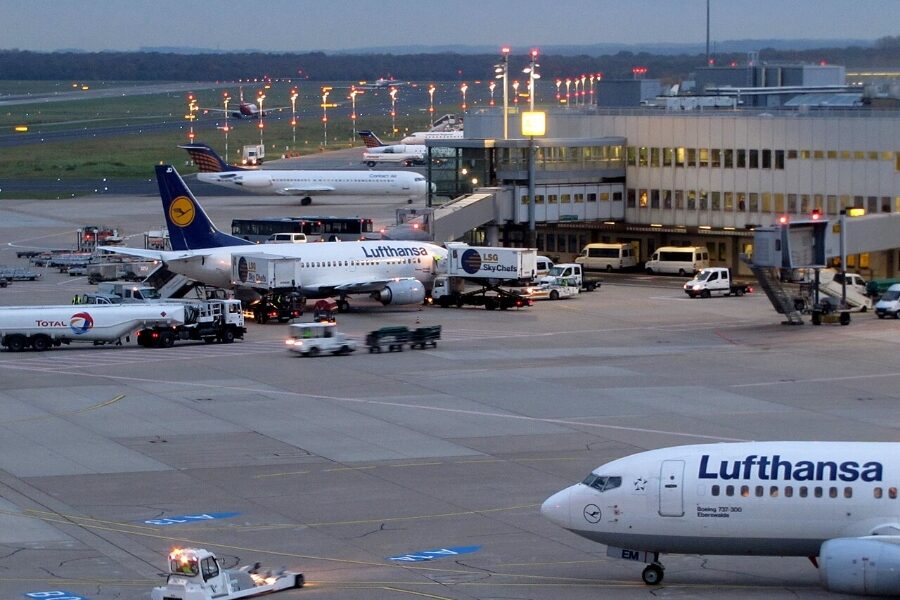
Düsseldorf Airport (IATA: DUS, ICAO: EDDL) serves Düsseldorf, the capital of North Rhine-Westphalia, and the wider Rhine-Ruhr region. Known in German as Flughafen Düsseldorf, it was called Düsseldorf International Airport until March 2013. In 2025, it handled roughly 21 million passengers, ranking among Germany’s busiest airports.
The airport sits in Lohausen, about 6 kilometers (roughly 4 miles) north of the city center. Its short distance from downtown, along with a rail station on the airport grounds, makes DUS a practical entry point for travelers heading to Düsseldorf, Cologne, Essen, Duisburg, and dozens of other cities in Germany’s largest metropolitan area.
Travelers who understand three things at DUS move through it quickly: which of the three concourses (A, B, or C) their airline uses, whether their flight is Schengen or non-Schengen, and whether they need the SkyTrain to reach the S-Bahn station. Those choices shape nearly every arrival and departure at the airport.
Terminal assignments, lounge access rules, parking prices, and flight schedules change. Verify them on the official Düsseldorf Airport website and with the operating airline before the day of travel.
Key Takeaways
- DUS sits 6 km north of Düsseldorf in Lohausen, with one curved terminal building split into concourses A, B, and C.
- The SkyTrain links the terminal to the airport rail station. From there, S-Bahn and long-distance trains reach Düsseldorf Hauptbahnhof in about 11 to 13 minutes.
- Confirm lounge access, terminal assignments, and disruption information, including during a Streik, or strike, directly with the airport and airline before departure.
Where Is DUS and What Area Does It Serve?
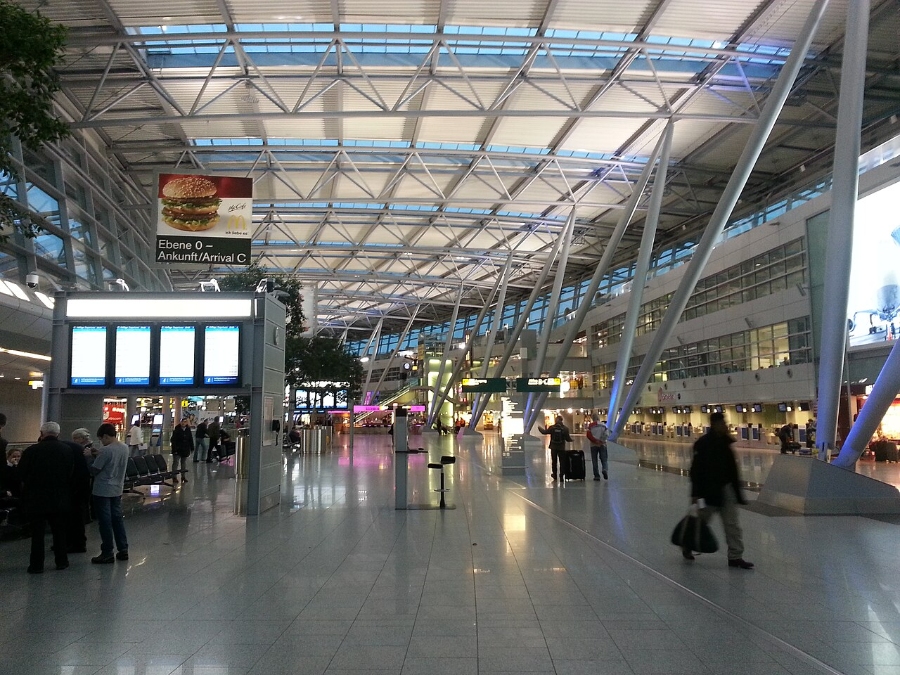
Düsseldorf Airport occupies a site in Lohausen, a district on Düsseldorf’s northern edge. It serves as the main air gateway for North Rhine-Westphalia, supporting both a dense metropolitan population and business travel linked to the region’s industrial and trade-fair economy.
Location in Lohausen and Distance From Central Düsseldorf

The airport lies roughly 6 to 7 kilometers north of Düsseldorf’s city center. A taxi or private car can reach the Altstadt (Old Town) in about 15 minutes when traffic is light.
Rail is faster and more predictable. Trains from the airport station reach Düsseldorf Hauptbahnhof (main railway station) in 11 to 13 minutes.
Düsseldorf Airport Address and Essential Identifiers
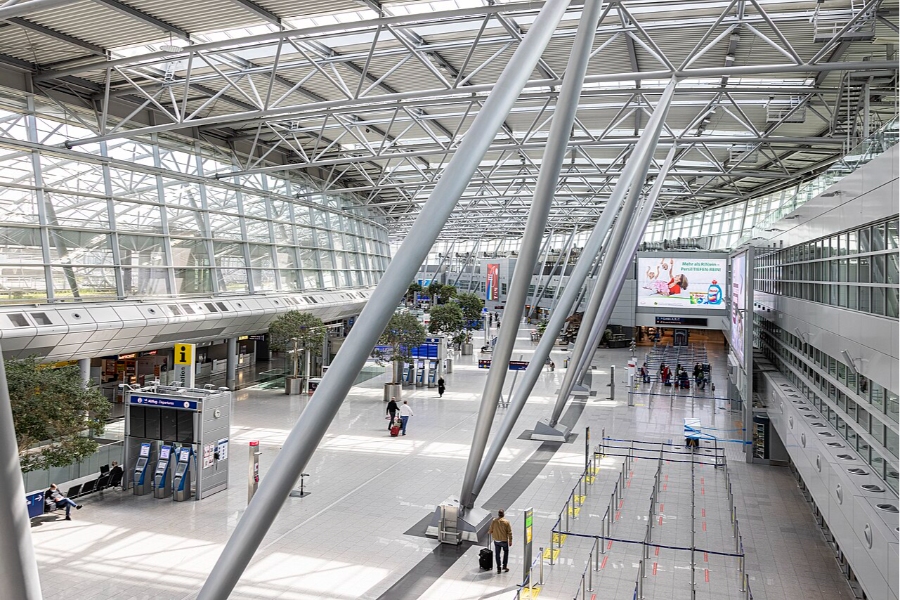
Travelers entering the airport into a navigation app or booking form need these details:
- Address: Flughafenstraße 105, 40474 Düsseldorf, Germany
- IATA code: DUS
- ICAO code: EDDL
- German name: Flughafen Düsseldorf
- Former name: Düsseldorf International Airport (until March 2013)
- State: North Rhine-Westphalia (Nordrhein-Westfalen)
Why the Airport Matters to the Rhine-Ruhr Region
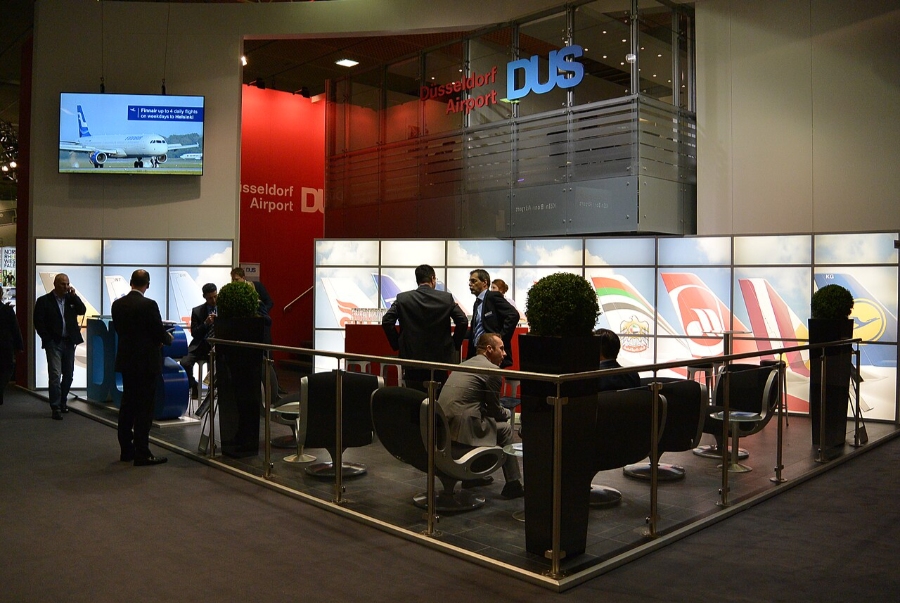
Rhine-Ruhr is Germany’s largest metropolitan region, covering Düsseldorf, Cologne, Essen, Dortmund, Duisburg, and Bochum. DUS is the region’s largest airport, offering more than 100 destinations through a mix of full-service carriers, leisure airlines, and long-haul operators.
For visitors continuing to the Middle Rhine Valley or the historic centers of Cologne and Düsseldorf, the airport often marks the start of a rail journey rather than the final destination. Everything About Germany covers those onward destinations in more depth, including Cologne’s Gothic cathedral and the UNESCO-listed Middle Rhine landscape.
How DUS Compares With Frankfurt Airport and Airport Weeze
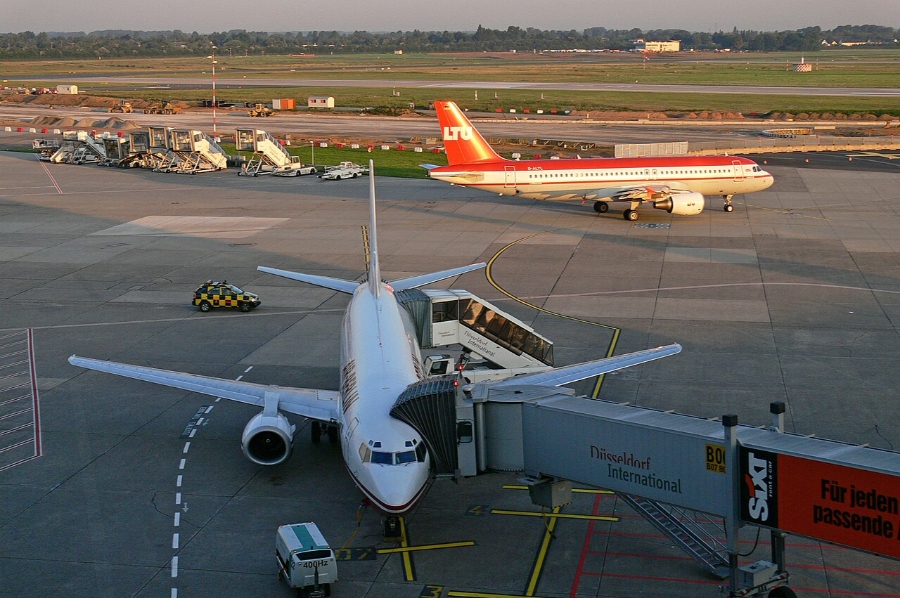
Frankfurt Airport (FRA) is Germany’s largest hub, with many more intercontinental routes and a dedicated long-distance rail station. DUS carries fewer passengers, but it sits much closer to its city center and handles a broad European and holiday network.
Airport Weeze (NRN), about 80 kilometers northwest, is marketed as a Düsseldorf-area option. In reality, it’s a small low-cost airport with limited public transport.
| Düsseldorf (DUS) | Frankfurt (FRA) | Weeze (NRN) | |
|---|---|---|---|
| Distance to Düsseldorf center | ~6 km | ~230 km | ~80 km |
| Terminals / concourses | 3 concourses (A, B, C) | 2 terminals | 1 terminal |
| Long-haul network | Limited | Extensive | None |
| On-site rail station | Yes | Yes | No |
| Rail time to Düsseldorf Hbf | 11–13 min | ~85 min | Bus only |
How Are the Terminals and Departure Areas Organized?
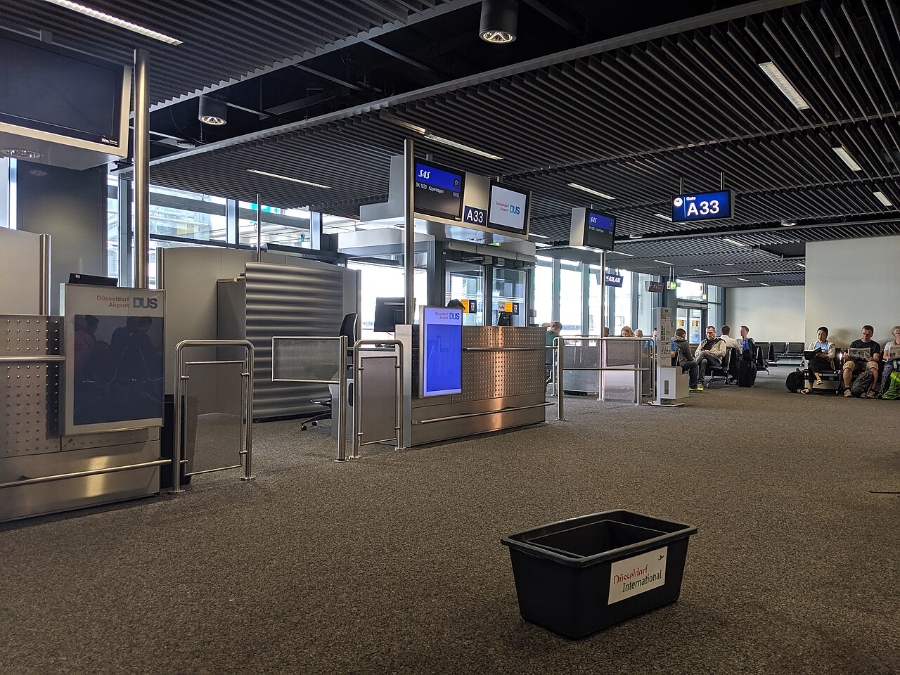
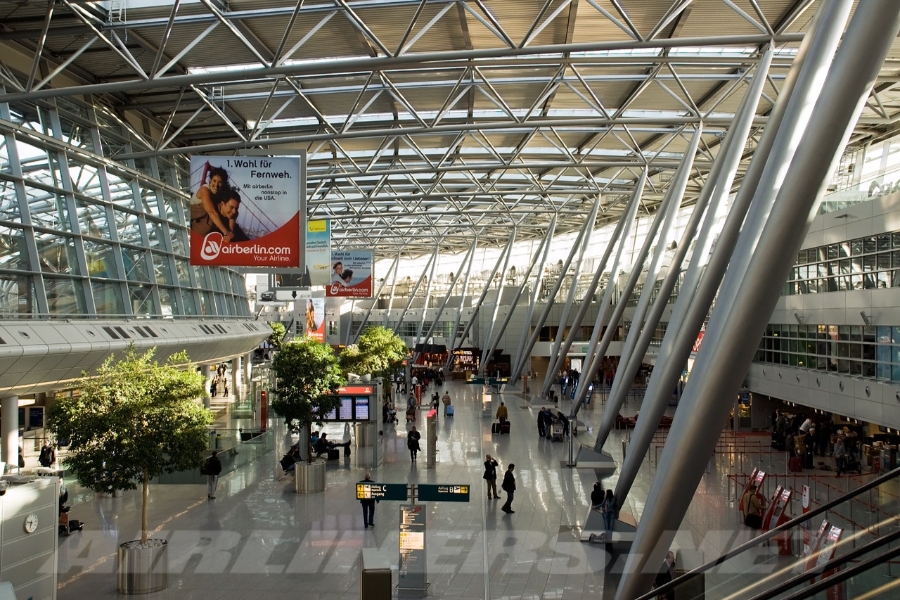
Düsseldorf Airport has one continuous curved terminal building divided into three concourses labeled A, B, and C. Arrivals are on Level 0, while departures are on Level 1.
The building is signed as three terminals, but passengers can walk between them inside the same structure. Schengen and non-Schengen boundaries divide the airside areas.
Terminal A: Lufthansa, Eurowings, and Star Alliance Services
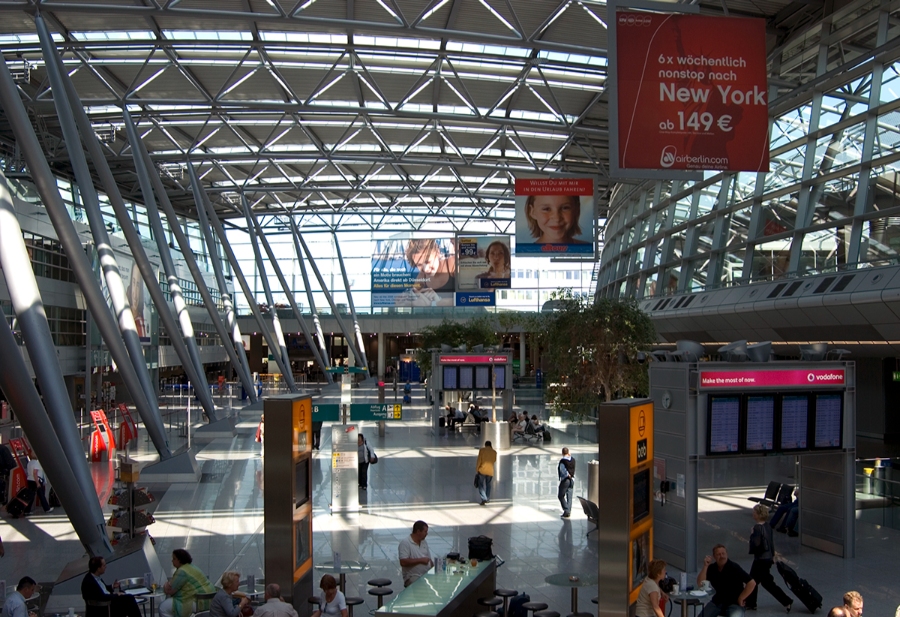
Terminal A handles Lufthansa and most Star Alliance partners, along with some Eurowings flights. Eurowings uses DUS as a major base, and its departures appear across more than one concourse depending on the route and season.
Austrian Airlines, Turkish Airlines, and Aegean Airlines have all operated from this side of the building. Check the departure boards or your airline’s confirmation, since assignments can shift.
Terminal B: European and Partner-Airline Departures
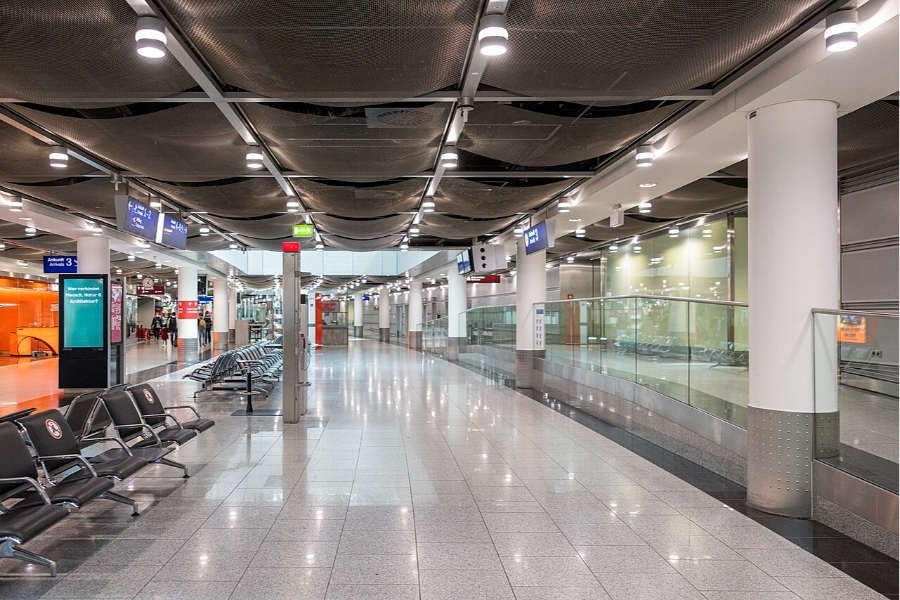
Terminal B serves a mix of European carriers and airline alliance partners. Air France, KLM, Delta Air Lines, and other SkyTeam members have used this concourse, alongside oneworld carriers such as British Airways, Finnair, Iberia, and Aer Lingus.
Leisure and charter operators, including Condor, Corendon Airlines, Sundair, Air Serbia, and Air Cairo, also appear here seasonally.
Terminal C: Non-Schengen Flights and Long-Haul Facilities
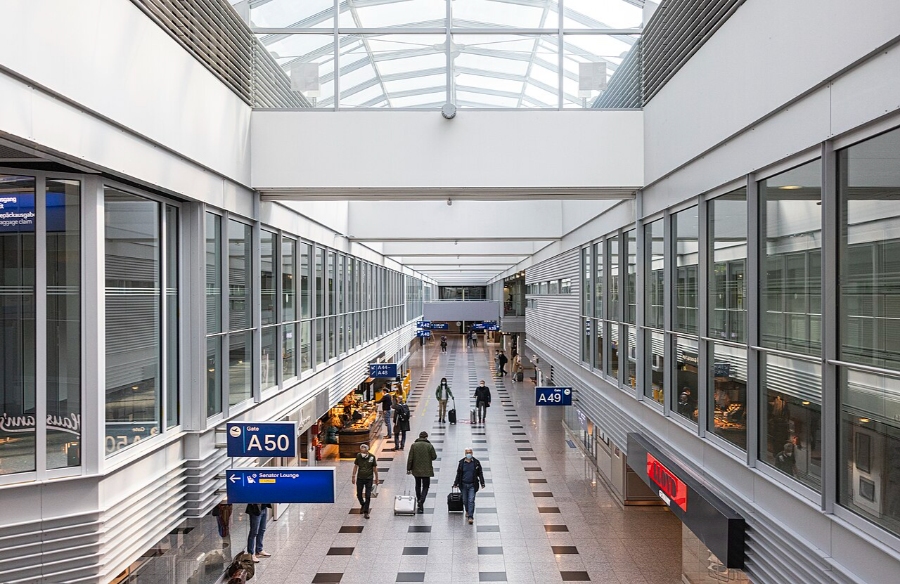
Terminal C is the primary area for non-Schengen departures, meaning flights leaving the passport-free Schengen travel zone. Passengers here pass border control (Passkontrolle) before reaching the gate.
Long-haul carriers such as Emirates and Etihad Airways have operated from Terminal C. The Muslim prayer room is located airside in pier C on the Departure Level.
How to Read Your Boarding Pass and Reach the Correct Gate

Gate numbers at DUS begin with the concourse letter: A gates in Terminal A, B gates in Terminal B, and C gates in Terminal C. Security control (Sicherheitskontrolle) is located on the Departures Level at each pier, so passengers must clear screening at the correct concourse.
Steps to take on arrival at the terminal:
- Check your boarding pass for the gate letter, not the airline’s usual terminal.
- Confirm the gate on the departure screens, since gates can change.
- Enter security at the matching pier (A, B, or C).
- Allow extra time if your gate is in C and you must clear passport control.
Runways, Aircraft Operations, and the Airbus A380 Position
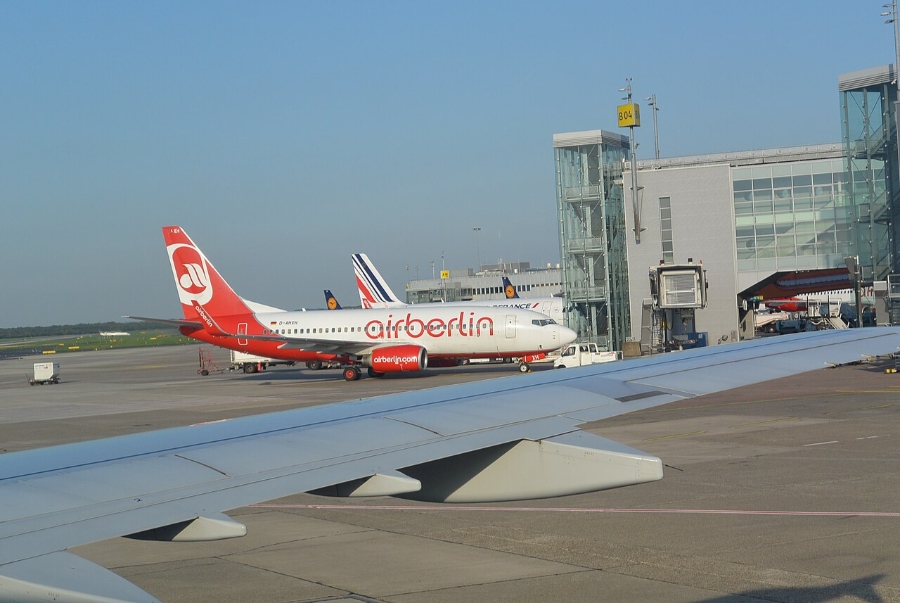
The airport operates two parallel runways. Its infrastructure can accommodate widebody aircraft, including Airbus A380 services during periods when carriers such as Emirates scheduled the type to Düsseldorf.
The now-defunct Air Berlin used DUS as a principal base before ceasing operations in 2017. Eurowings absorbed much of its former capacity.
How Do You Travel Between the Airport and Düsseldorf?
Rail is the fastest and cheapest way to travel between Düsseldorf Airport and the city. Trains reach Düsseldorf Hauptbahnhof in 11 to 13 minutes for around $2 to $4.
Most travelers reach those trains using the SkyTrain, an automated people mover that links the terminal to the airport’s long-distance railway station.
Using the SkyTrain to Düsseldorf Airport Station
The SkyTrain is an elevated automated shuttle connecting the terminal areas with the railway station on the eastern edge of the airport grounds. Its stations serve the airport train station, parking garages 4 and 5, terminal areas A and B, and terminal area C.
The ride takes only a few minutes. Passengers holding a valid rail ticket to or from the airport station generally don’t pay a separate SkyTrain fare, though the airport publishes current conditions.
S-Bahn and Regional Rail Connections to the Hauptbahnhof
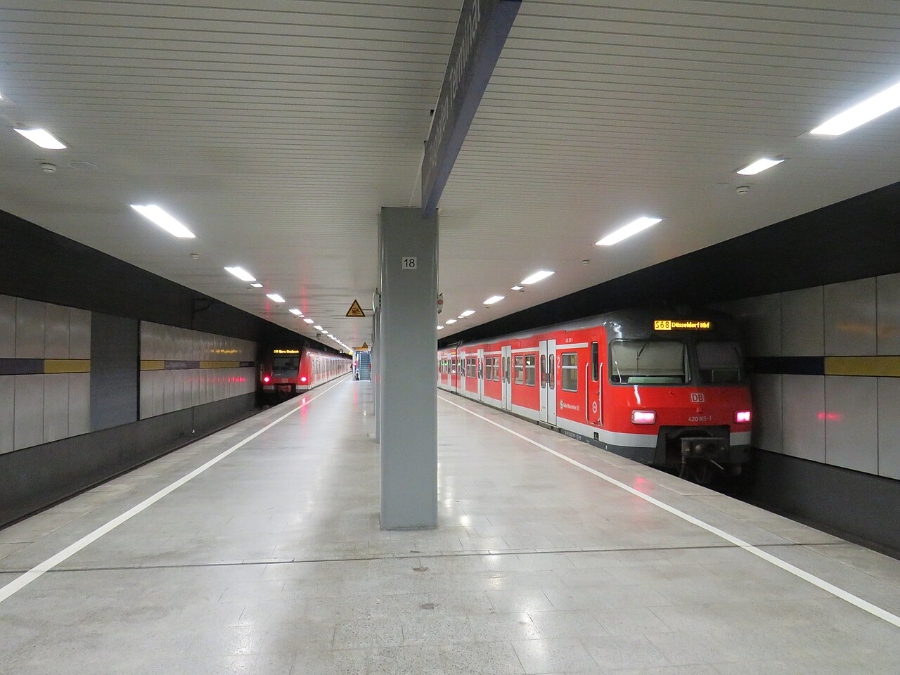
Two rail options exist, and the difference matters because it affects how far you walk.
- S11 (S-Bahn): departs from the Düsseldorf Flughafen Terminal station on the Underground Level directly below the terminal, with no SkyTrain needed. It runs to Düsseldorf Hauptbahnhof and onward toward Cologne.
- Düsseldorf Flughafen station: the larger station reached by SkyTrain, served by regional trains (RE/RB) and long-distance ICE and IC services.
Regional trains from the main station reach the Hauptbahnhof in about 11 minutes.
Taxis, Car Hire, and Driving via the A44
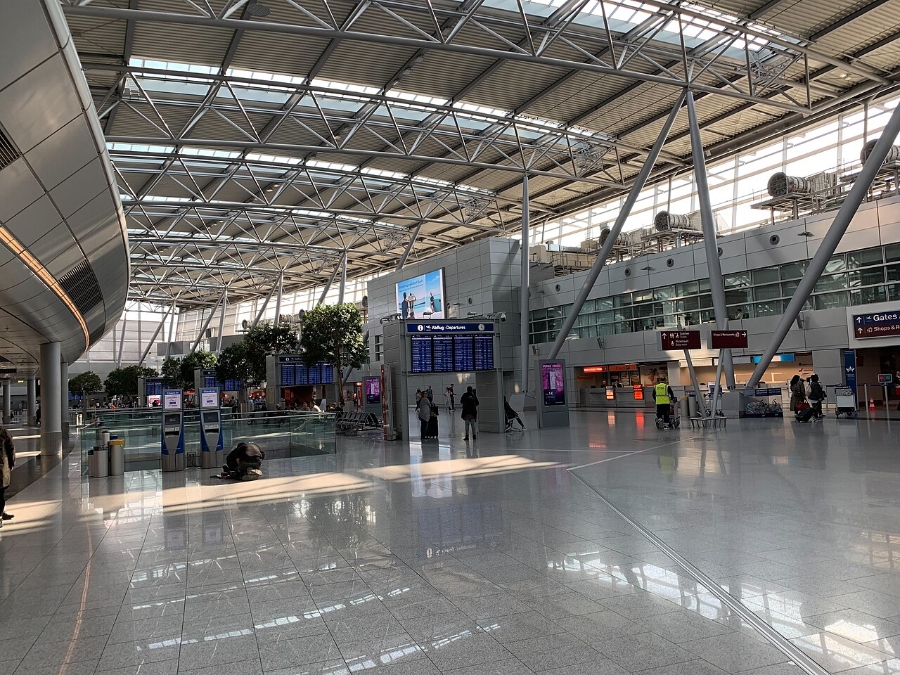
Taxis wait at the Arrivals Level in front of the terminal, while ride-hailing services use a designated pickup area on the same level. A trip to the city center takes roughly 15 minutes without heavy traffic.
The airport connects to the A44 motorway, which links to the A52 and A3 for onward driving. Rental car counters are on the Arrivals Level, and the car rental center sits in a designated parking garage within walking distance of the terminal.
Rail Connections for Cologne, Essen, and the Wider Region

Direct trains from the airport station reach Cologne, Essen, Duisburg, and Dortmund without changing in Düsseldorf. Long-distance ICE services also stop here, connecting to Frankfurt, Hamburg, and Berlin.
Everything About Germany’s regional coverage of Cologne and the Rhine Valley is useful when planning what to do at the other end of that train ride.
What Facilities Can Travelers Use Before Departure or After Arrival?
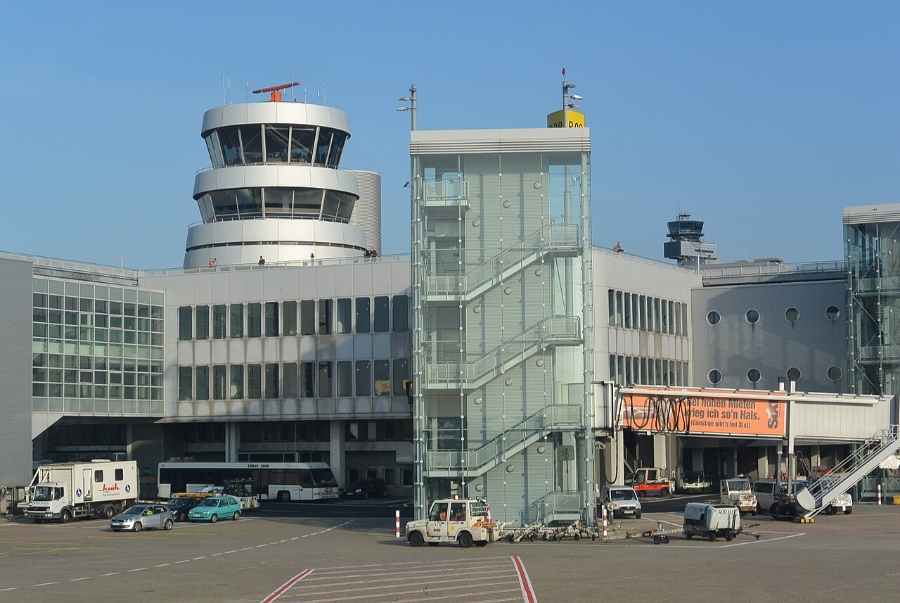
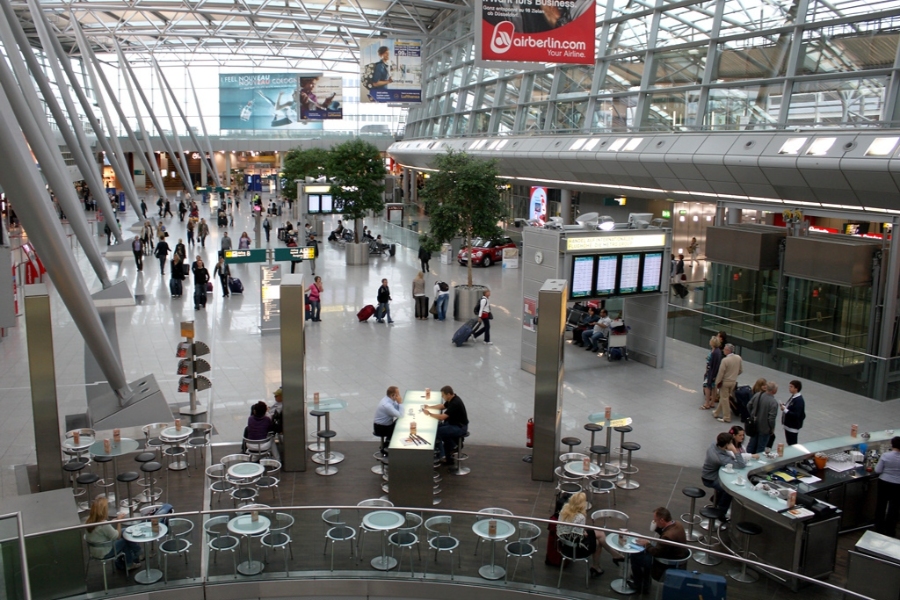
Düsseldorf Airport brings together shops, restaurants, cash machines, and lounges in the public and airside areas of one terminal building. Lounges are available in all three piers.
Free Wi-Fi covers the airport. Hotels sit directly in front of the terminal and in the nearby Airport City business district.