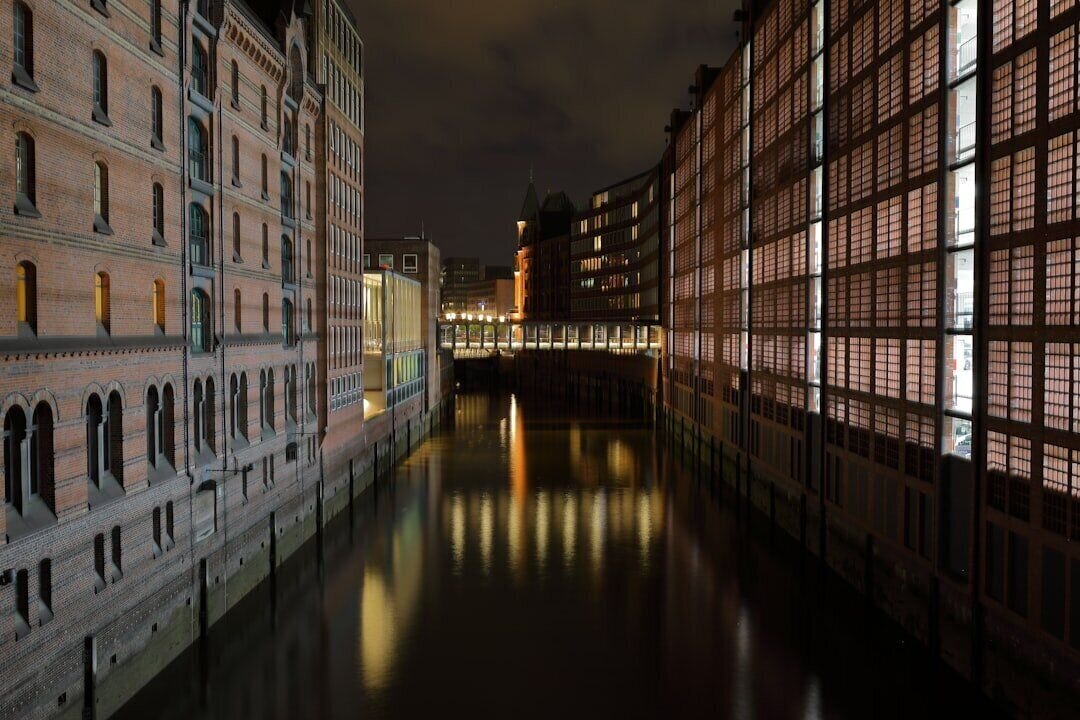
Speicherstadt Hamburg
The Speicherstadt represents the world's largest unified historic warehouse complex, spanning 260,000 square meters…
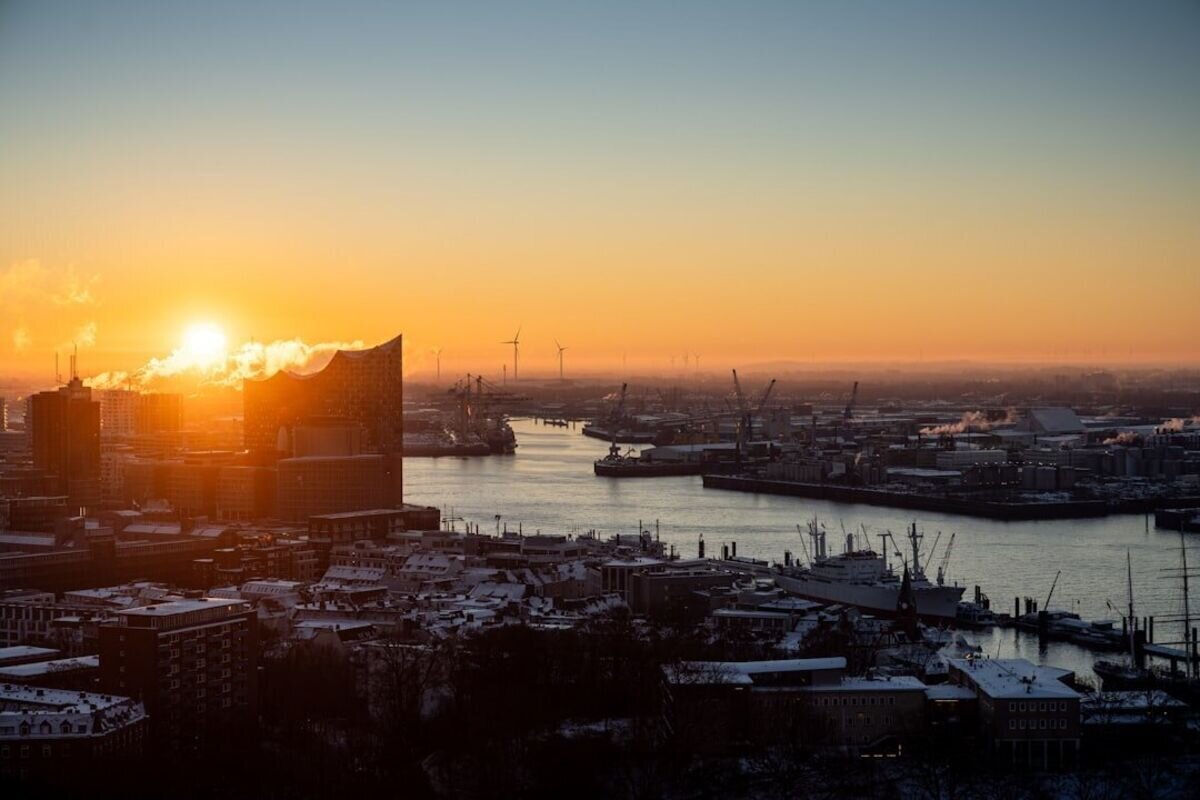
Hamburg sits on the River Elbe about 100 kilometers upstream from the North Sea. It’s Germany’s second-largest city and one of its 16 federal states. Its official name, the Free and Hanseatic City of Hamburg (Freie und Hansestadt Hamburg), records centuries of trading independence that still shape the streets visitors walk today.
A first visit works well in two days: one for the historic core, the UNESCO-listed Speicherstadt, and the harbor, and a second for the Alster lakes, the western districts, and an evening in St. Pauli. Add a third day if a trip to the Altes Land orchards or the medieval salt town of Lüneburg appeals.
What separates Hamburg from Berlin or Munich is water. Canals cut through the warehouse district, ferries run on regular transit tickets, and the Port of Hamburg still handles container traffic within sight of the concert hall. Those working waterways explain the city’s architecture, food, and much of its music history.
Hamburg rewards travelers who want a large European city built around water rather than a single historic center. Its port geography, centuries as a self-governing trading city, and music and warehouse architecture give it a character distinct from other German destinations.
Hamburg lies in northern Germany on the River Elbe, roughly 100 kilometers from where the river meets the North Sea. That distance matters: it’s far enough inland for shelter, yet close enough for seagoing ships to reach the quays.
Tidal water reaches the city, so the Elbe rises and falls at the harbor walls. The Alster, a tributary dammed in the 13th century, forms two lakes in the middle of town. That’s why Hamburg has both a maritime edge and calm inland water within a short walk of the Rathaus (city hall).
Hamburg joined the Hanseatic League, the medieval trading network of northern European ports, and later held status as a Free Imperial City answerable only to the emperor. Local merchants ran their own affairs, and that habit of self-government carried into the modern era, when Hamburg became a federal state in its own right.
The nickname Tor zur Welt (Gateway to the World) comes from this trading role. Like Lübeck and Bremen, Hamburg built civic wealth on shipping. The Kontorhäuser (merchant office buildings) of the 1920s show how that trade continued into the industrial century.
The Port of Hamburg, one of Europe’s largest, defines the city’s public image. Visitors also come for the Elbphilharmonie concert hall, the red-brick Speicherstadt warehouses, and the Reeperbahn’s music venues.
Comparisons help with planning. Hamburg has more canals than Amsterdam and a cycling-friendly flatness closer to Copenhagen. It also offers a slower pace than Berlin and a very different food and drink culture from Munich. Everything About Germany covers how these regional differences developed across the country’s 16 states.
Hamburg’s core sights cluster along the Elbe and the Alster, so visitors can cover most of them on foot with short transit hops. The warehouse district, concert hall plaza, model railway attraction, and baroque church tower form the practical shortlist.
The Speicherstadt (warehouse city) is the world’s largest warehouse complex built on timber-pile foundations. Construction began in 1883, using red brick and neo-Gothic details. UNESCO inscribed it as a World Heritage Site in 2015 together with the neighboring Kontorhaus District.
That district’s centerpiece is the Chilehaus, a 1920s office building with a sharp, prow-shaped corner. Walking the canals between the two districts takes about an hour, and the bridges offer the clearest views.
South and east, HafenCity is an ongoing redevelopment of former port land into housing, offices, and public promenades. Construction continues in sections, so parts of the quarter still function as building sites.
ℹ️ Live commentary in German with multilingual audio app included. Canal route depends on tide.
We may earn a commission when you book through these links, at no extra cost to you.The Elbphilharmonie opened in 2017 on top of a 1960s cocoa warehouse. Its glass upper section rises above the brick base, with the Plaza, an open viewing level 37 meters up, sitting between the two.
Plaza access is separate from concert tickets, and entry requires a timed ticket during busy periods. Check the concert hall’s official booking page before arriving, since capacity rules can change.
Miniatur Wunderland, inside a Speicherstadt warehouse, is the world’s largest model railway exhibition and one of Hamburg’s most visited attractions. Advance timed tickets are close to essential, and a full visit takes two to three hours.
The International Maritime Museum occupies the Kaispeicher B warehouse and holds nine floors of shipping history. It suits travelers who want context for the working harbor outside.
The Alster splits into the Binnenalster (Inner Alster), ringed by the city center, and the much larger Außenalster (Outer Alster Lake), circled by a path of roughly 7.4 kilometers. The full loop takes about two hours at a steady walking pace.
St. Michaelis Church, known locally as the Michel, is Hamburg’s landmark baroque church. Its tower platform sits 82 meters up, reached by lift or 452 steps, and looks directly over the port.
For the harbor itself, HVV ferry line 62 from Landungsbrücken runs on a standard transit ticket and passes container terminals and shipyards.
Hamburg’s districts differ sharply in age, income, and atmosphere, from the shopping streets of the Altstadt to the villa slopes of Blankenese. Choosing two or three to explore properly gives a better sense of the city than simply crossing off individual sights.
The Altstadt (old town) holds the Rathaus, merchant courtyards, and the Nikolai memorial, a bombed church tower left standing as a war memorial. Very little medieval fabric survives because fire in 1842 and bombing in 1943 destroyed most of it.
Mönckebergstraße, the main shopping street, runs from the Hauptbahnhof (main train station) to the Rathaus. The Neustadt to the west has the Michel, quieter lanes, and the Portuguese quarter near the harbor.
St. Pauli grew outside the old city walls as a district for trades that merchants kept at arm’s length, and it remains Hamburg’s entertainment quarter. The Reeperbahn, its main street, mixes theaters, clubs, bars, and the licensed sex trade.
The Beatles played roughly 280 nights across Hamburg clubs between 1960 and 1962, including the Indra and the Kaiserkeller on Große Freiheit. Live music continues across dozens of small venues, and the district is busiest late on Friday and Saturday nights.
The Schanzenviertel around Sternschanze station is a dense grid of independent shops, cafés, and the Rote Flora squat, with a history of political activism. Eimsbüttel next door is residential and calmer, making it popular with families.
St. Georg, east of the Hauptbahnhof, combines Lange Reihe’s restaurants with the city’s main LGBTQ+ scene. Blankenese, 30 minutes west by S-Bahn, climbs the Elbe slope in the Treppenviertel (stairway quarter), a network of stairs and lanes, with ferry links across to Finkenwerder.
Hamburg suits a two- to three-night stay, best booked for May through September when daylight lasts longer and outdoor terraces open. Transport, ticketing, lodging areas, and food traditions are the four decisions that shape the trip.
June to August brings the warmest weather, with average highs near 22°C, along with the largest crowds and highest hotel rates. May and September offer milder conditions with fewer visitors.
Winter is grey and wet, with rain possible in any month. December brings Christmas markets across the city, including the market in front of the Rathaus.
Hamburg Airport connects to the Hauptbahnhof by S-Bahn line S1 in about 25 minutes. Long-distance trains reach Berlin in under two hours.
Public transit runs under the HVV network, covering U-Bahn (subway), S-Bahn (suburban rail), buses, and harbor ferries on one ticket. The HVV app handles route planning and mobile tickets, while a day ticket starts around €8.20. The city is flat, so cycling and walking work well over short distances.
The Hamburg Card bundles unlimited HVV travel within the chosen zone with discounts at around 150 attractions, tours, and restaurants. It pays off when a visitor uses transit several times a day and enters at least one or two paid sights.
Travelers staying in the center and walking most routes get better value from a plain HVV day ticket. Compare current card prices on Hamburg’s official tourism site before buying, and see our notes on visiting Germany on a budget for wider cost planning.
ℹ️ City transit and discount card, not universal free attraction admission. Non-refundable.
We may earn a commission when you book through these links, at no extra cost to you.The Neustadt and the area around the Hauptbahnhof put most sights within walking distance and offer the fastest transit links. HafenCity has modern hotels beside the water, though fewer everyday shops are nearby.
St. Pauli and the Schanzenviertel suit travelers who want nightlife on the doorstep and don’t mind street noise. St. Georg balances central access with lower rates than the harbor front.
Northern German cooking here leans on fish and preserved ingredients. These are the staples worth trying:
| Dish | What it is |
|---|---|
| Fischbrötchen | Fish sandwich with pickled or fried fish in a bread roll |
| Labskaus | Corned beef, potato, and beetroot hash, served with egg and herring |
| Finkenwerder Scholle | Pan-fried plaice with bacon |
| Aalsuppe | Sweet-and-sour soup, traditionally made with vegetables and fruit |
| Franzbrötchen | Cinnamon pastry, Hamburg’s own bakery item |
| Rote Grütze | Red berry compote, served with cream or vanilla sauce |
Two events dominate the calendar. The Hafengeburtstag (Hamburg Port Anniversary) takes place each May and marks the port’s 1189 founding charter with ship parades.
In September, the Reeperbahn Festival fills St. Pauli venues with hundreds of concerts.
Two full days cover the port, the warehouse district, the city center, and one residential neighborhood without rushing. The route below assumes a base near the Hauptbahnhof or Neustadt, plus heavy use of HVV ferries and the U-Bahn.
Start at the Rathaus and walk south through the Altstadt to the Nikolai memorial, then cross into the Speicherstadt. If a model railway appeals to the group, give Miniatur Wunderland a pre-booked morning slot.
Continue through the Kontorhaus District to the Chilehaus, then head east into HafenCity and up to the Elbphilharmonie Plaza. End the afternoon at Landungsbrücken with ferry line 62 toward Finkenwerder, and eat a Fischbrötchen at the piers.
Walk the Binnenalster and part of the Außenalster shore in the morning, roughly an hour along the western bank. Climb the Michel tower afterward for the port view that ties the two days together.
Take the S-Bahn west to Blankenese for the Treppenviertel and Elbe beach, or the U-Bahn to Sternschanze for shops and lunch. Reserve the evening for St. Pauli, where small venues host live music most nights.
ℹ️ German-only live commentary in retrieved listing; atmospheric evening cruise.
We may earn a commission when you book through these links, at no extra cost to you.The Altes Land, a fruit-growing region across the Elbe, is reachable by ferry and bus. It looks especially striking during blossom season in late April and early May.
Lüneburg, a former salt-trading Hanseatic town, sits 30 minutes south by regional train. The North Sea and Baltic Sea coasts are both within about two hours by train, with Lübeck a common pairing.
A Germany itinerary linking Hamburg with Bremen works well for travelers focused on the north. One note for American visitors: the hamburger’s name traces to Hamburg emigrants, though the city itself serves few of them.
Two days covers the Speicherstadt, the Elbphilharmonie Plaza, the Rathaus area, an Alster walk, and one evening in St. Pauli. A third day allows time for Blankenese, a museum, or a trip to Lüneburg or the Altes Land.
Hamburg is known for the Port of Hamburg, its Hanseatic trading history, and the red-brick Speicherstadt warehouse district. It is also tied to Beatles history through the band’s 1960 to 1962 residencies in St. Pauli clubs.
The HVV network covers U-Bahn, S-Bahn, buses, and harbor ferries on a single ticket, with day tickets starting around €8.20. The city center is flat and compact enough for walking and cycling to handle most short trips.
May through September brings the mildest weather and longest daylight, with July and August the warmest and busiest. December suits travelers who want Christmas markets and don’t mind cold, wet conditions.
Yes. UNESCO inscribed the Speicherstadt and the adjacent Kontorhaus District, including the Chilehaus, as a World Heritage Site in 2015. The designation recognizes the warehouse complex built from 1883 and the 1920s office architecture beside it.
Explore the historic Old Town (Altstadt) on foot and use the local S-Bahn/U-Bahn network.
Purchase a 24-hour transit day pass (Tageskarte) for unlimited city travel.


Discover curated walking tours, museum passes, and authentic experiences in Hamburg with instant confirmation.