Hamburg Airport (ARRAY)
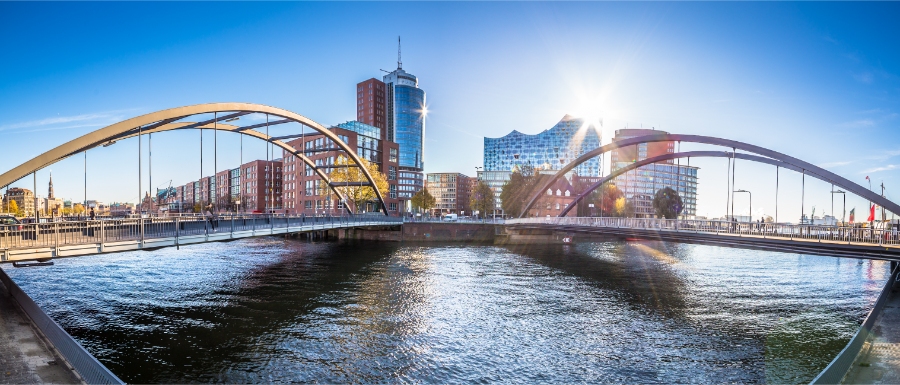
Hamburg Airport, officially Hamburg Airport Helmut Schmidt (IATA: HAM, ICAO: EDDH), is the international commercial airport serving Hamburg, Germany’s second-largest city. It sits 8.5 kilometers (5.3 miles) north of the city center in the Fuhlsbüttel quarter and has operated on the same site since 1911.
Travelers arriving at HAM can reach Hamburg Hauptbahnhof (main train station) in about 25 minutes on the S-Bahn S1, which departs from a station directly beneath Terminal 1. That connection shapes much of the planning on flight day, from when to leave a hotel to whether renting a car makes sense.
The airport handled around 14.83 million passengers in 2024, with roughly 55 airlines linking Hamburg to about 120 direct destinations in some 40 countries. Two terminals connect through the central Airport Plaza, keeping the layout compact. Once passengers know their airline’s building, finding their way around usually takes only a few minutes.
Key Takeaways
- HAM is a two-terminal airport in Fuhlsbüttel, 8.5 km north of central Hamburg, named after former chancellor Helmut Schmidt.
- The S-Bahn S1 runs from beneath Terminal 1 to Hamburg Hauptbahnhof in roughly 25 minutes for a few euros.
- Security, shops, and the terminal link all sit in the Airport Plaza between Terminal 1 and Terminal 2.
What Is the Airport’s Name, Location, and Role?

The airport’s full German name is Flughafen Hamburg “Helmut Schmidt.” It serves as northern Germany’s largest international commercial airport and the country’s fifth largest. Its location in Fuhlsbüttel puts it within the city boundary, a short train ride from the harbor, Speicherstadt, and the Hamburg city-state’s main districts.
Why Is It Also Called Hamburg-Fuhlsbüttel Airport?

Fuhlsbüttel is the northern Hamburg quarter where the airfield was founded in 1911. The name Hamburg-Fuhlsbüttel Airport remained in use for most of the twentieth century, and locals and older signs still use Fuhlsbüttel as shorthand.
The S-Bahn station serving the terminals is called Hamburg Airport (Fuhlsbüttel), so both names remain part of everyday travel.
What Do the HAM and EDDH Codes Mean?

HAM is the three-letter IATA code used on tickets, baggage tags, and departure boards. EDDH is the four-letter ICAO code used by air traffic control and flight-planning systems.
Passengers searching for flights should use HAM. The ED prefix in EDDH simply identifies the airport as German.
Who Was Helmut Schmidt?

Helmut Schmidt served as Chancellor of West Germany from 1974 to 1982 and lived in Hamburg throughout his life. The airport took his name in November 2016, a year after his death.
His reputation as a crisis manager during Hamburg’s 1962 North Sea flood made the dedication especially meaningful locally. Readers exploring German political figures will find that his career remained closely tied to the city.
How Does It Differ From Hamburg Finkenwerder Airport?

Hamburg Finkenwerder Airport (XFW/EDHI) is an Airbus industrial airfield south of the Elbe. It handles aircraft production, test flights, and deliveries, but not scheduled passenger service.
All commercial arrivals and departures for the region use HAM in Fuhlsbüttel.
How Are Terminal 1, Terminal 2, and the Airport Plaza Arranged?

The airport occupies one large building divided into three connected sections: Terminal 1, the Airport Plaza in the middle, and Terminal 2. Check-in counters sit on the departures level, while arrivals and baggage claim are on the ground floor. The central security checkpoint is in the Plaza.
Which Terminal Should Passengers Use?

Terminal 1 handles Lufthansa and most full-service carriers, along with several international airlines. It contains concourses A and B. Terminal 2 serves mainly Eurowings and other low-cost operators.
Boarding passes and airline confirmations show the correct terminal. Since both buildings connect through the Plaza, arriving at the wrong one costs a few minutes rather than a missed flight.
Where Are Check-In, Security Check, and Gates Located?

Check-in desks line the first floor of each terminal. Passengers then walk toward the Airport Plaza, where the central security checkpoint leads into the gate areas.
Hamburg Airport offers a free, bookable time slot for the Slot&Fly lane in Terminal 1, which can shorten the checkpoint wait. After security, signs direct passengers to piers serving both terminals.
Where Do Arriving Passengers Find Baggage Claim?

Baggage claim occupies the ground floor of both terminals, below the check-in halls. Arriving passengers descend from the gate level, pass through the baggage hall, and exit into the public arrivals area.
The S-Bahn station entrance is a short walk from arrivals in Terminal 1.
What Shops, Food, and Passenger Services Are Available?

The Airport Plaza contains most retail and dining options, with more outlets in each terminal and in the area beyond security. Typical services include:
- Cafés, bakeries, and sit-down restaurants
- Duty-free and fashion retail
- Pharmacy, banking, and currency exchange
- Lost property, information desks, and family facilities
- Car rental counters and left-luggage services
How Do Arrivals and Departures Work?

Arrivals and departures at HAM use two terminals and one shared security checkpoint. The airport publishes live status on its own flight boards, while around 55 airlines operate services ranging from short European hops to long-haul flights.
Where Can Travelers Check Live Flight Status?

Hamburg Airport publishes live arrival and departure information on its official website and on screens throughout both terminals. Airline apps also show gate changes and boarding times for individual bookings.
Terminal facilities, opening hours, and shop listings are separate from live flight data. On travel day, passengers should check the flight board rather than rely on a general airport guide.
How Early Should Passengers Arrive for Security?

Two hours before departure is the usual recommendation for flights within the Schengen Area. During the morning and late-afternoon peaks, allow two and a half hours. Long-haul and non-Schengen flights also need the longer window because of passport control.
Booking a free Slot&Fly time slot in Terminal 1 can make the checkpoint wait less uncertain.
What Should Travelers Do During Delays, Cancellations, or Disruptions?

Contact the operating airline first. The carrier handles rebooking, meal vouchers, and hotel accommodation, while EU Regulation 261/2004 covers compensation rights for flights departing from Hamburg.
Keep boarding passes and written confirmation of the delay reason. Information desks in the Plaza can point passengers toward airline service counters.
Which Airlines Commonly Serve Hamburg?

Eurowings uses Hamburg as a hub, and Condor treats it as a focus city. Other regular operators include:
| Network carriers | Low-cost and leisure | Regional and long-haul |
|---|---|---|
| Lufthansa, Air France, British Airways | easyJet, Ryanair, Norwegian Air Shuttle | Emirates, China Eastern Airlines |
| Austrian Airlines, Brussels Airlines | SunExpress, Condor | Icelandair, airBaltic |
| Scandinavian Airlines, Croatia Airlines | Eurowings | Aer Lingus |
Air Berlin, once a major presence at HAM, ceased operations in 2017. Eurowings absorbed much of its former route network.
How Do You Travel Between the Airport and Central Hamburg?

The S-Bahn S1 is the fastest and cheapest link to the city, covering the 8.5 kilometers to Hamburg Hauptbahnhof in roughly 25 minutes. Taxis, rental cars, and pre-booked transfers take a similar amount of time outside rush hour, but they cost considerably more.
How Does the S-Bahn S1 Connect to Hamburg Hauptbahnhof?

The S1 station lies directly beneath Terminal 1, reached by escalator from the arrivals level. Trains run every 10 minutes during the day.
A single adult ticket costs a few euros within the HVV (Hamburger Verkehrsverbund, the regional transport association) fare zone. Trains continue past Hauptbahnhof toward Jungfernstieg and the Elbe suburbs, so most central hotels are reachable without a change. Visitors staying several days often find the Hamburg CARD cheaper than single fares because it covers buses, trains, and ferries across the HVV network. Once in the city, that same ticket reaches attractions such as Miniatur Wunderland Hamburg in Speicherstadt.
When Is a Taxi or Car Rental the Better Choice?

A taxi makes sense for late-night arrivals, groups with heavy luggage, or destinations away from an S-Bahn stop. Ranks sit directly outside arrivals in both terminals.
Car rental suits travelers heading beyond the city, toward the North Sea coast, Lübeck, or the Baltic. Rental desks are in the Airport Plaza, with pickup in the parking structures.
What Should Drivers Know About Car Parks and Drop-Off Areas?

Drivers approach via the A7 motorway, exit at Schnelsen Nord, and then follow the Airport Bypass and Zeppelinstrasse. Multi-storey car parks serve both terminals directly.
Reserving a space online in advance secures a lower rate than driving up. Short-term drop-off zones sit in front of the departures level and have time limits.
How Can Visitors Continue to Other German Cities?
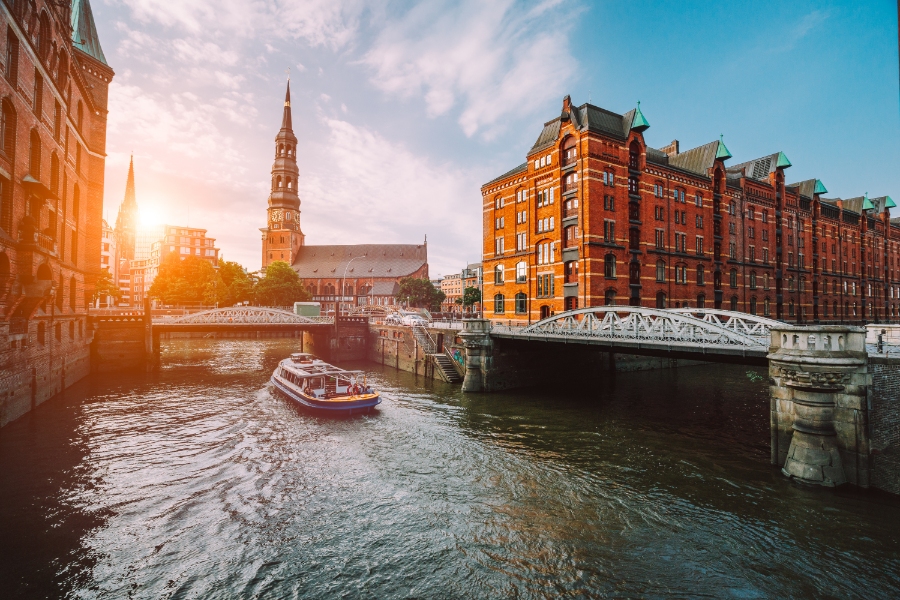
Hamburg Hauptbahnhof is the main rail gateway. ICE high-speed services reach Berlin in under two hours, and Frankfurt or Munich in roughly four and six hours respectively. Domestic flights connect HAM with Frankfurt Airport and Munich Airport for onward long-haul connections.
For northern regional trips, Hannover Airport and rail links southward work well for travelers building a wider German itinerary. Route-planning ideas across the country appear in the Germany travel guide from Everything About Germany.
What Should Travelers Know About Operations and History?

Hamburg Airport began operating in 1911 as a Zeppelin base and has stayed at its original Fuhlsbüttel site ever since. That makes it the oldest airport still operating as a major scheduled-airline gateway. Today, the site covers about 5.7 square kilometers and has two runways and two terminals.
How Old Is the Airport?
Local investors founded the Hamburger Luftschiffhallen GmbH (Hamburg Airship Hangar Company) on January 10, 1911, setting aside roughly 45 hectares of grassland near the village of Fuhlsbüttel. The hangar opened in 1912, and airships took off from what is now the apron.
Scheduled flights resumed in 1919. In 1920, KLM launched the first international route, linking Rotterdam, Amsterdam, Hamburg, and Copenhagen. Exactly 241 passengers traveled that year.
What Runways and Taxiways Support Flight Operations?

The airport operates two intersecting runways, with a taxiway network connecting both terminals to the piers and apron stands. From 2001 to 2009, the HAM21 modernization program rebuilt the passenger facilities and added the rail station and multi-storey parking.
Hamburg became a certified Airbus A380 destination on October 29, 2018, when the first scheduled Emirates A380 landed.
How Busy Is the Airport?

Around 14.83 million passengers used Hamburg Airport in 2024, making it Germany’s fifth-busiest airport. Roughly 55 airlines serve about 120 direct destinations in some 40 countries, while a single connection can reach more than 1,000 destinations.
Passenger numbers peaked at more than 17 million in 2019.
What Are Its Environmental Goals?

Hamburg Airport operates under a night-flight restriction. Scheduled departures and arrivals are limited after 23:00 local time, with exceptions only for delays. The airport aims for CO2-neutral ground operations and has invested in electric ground-handling equipment and noise-monitoring stations across nearby neighborhoods.
The airport publishes aircraft-noise data and complaint procedures for residents in Fuhlsbüttel, Langenhorn, and Norderstedt.
Frequently Asked Questions

What is Hamburg Airport called?
Its official name is Hamburg Airport Helmut Schmidt, in German Flughafen Hamburg “Helmut Schmidt.” It was formerly known as Hamburg-Fuhlsbüttel Airport, and the codes HAM and EDDH both refer to the same airport.
How do I get from Hamburg Airport to Hamburg Hbf?
Take the S-Bahn S1 from the station directly beneath Terminal 1. The ride to Hamburg Hauptbahnhof takes about 25 minutes. Trains run every 10 minutes during the day, and a single adult HVV ticket costs a few euros. A taxi takes roughly 25 to 30 minutes on the same route.
Which terminal is used for departures at Hamburg Airport?
Both Terminal 1 and Terminal 2 handle departures, with check-in on the first floor of each. Terminal 1 serves Lufthansa and most full-service carriers, while Terminal 2 mainly serves Eurowings and low-cost airlines. All departing passengers pass through the central security checkpoint in the Airport Plaza.
How can I check Hamburg Airport arrivals and departures?
Live arrivals and departures appear on the airport’s official flight board and on screens throughout both terminals. Airline apps provide gate and boarding updates for individual bookings. Static airport guides, including a Hamburg Airport map or address listing, won’t show same-day changes.
Is Hamburg Airport open 24 hours?
The terminals remain accessible around the clock, but flight operations face nighttime restrictions, with scheduled movements limited after 23:00. Check-in counters, security, shops, and food outlets follow the daily flight schedule and close overnight. Passengers with very early departures should check their airline’s counter opening times in advance.