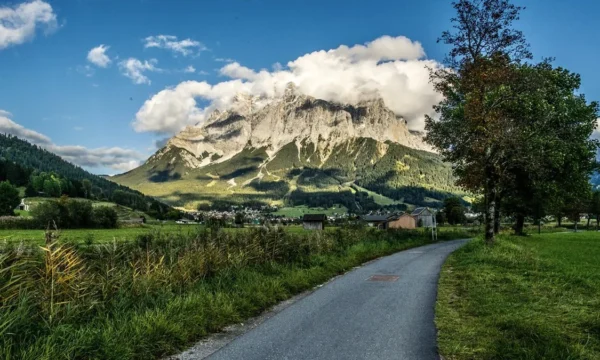
Zugspitze
The Zugspitze is Germany's highest peak at 2,962 meters above sea level, located on…
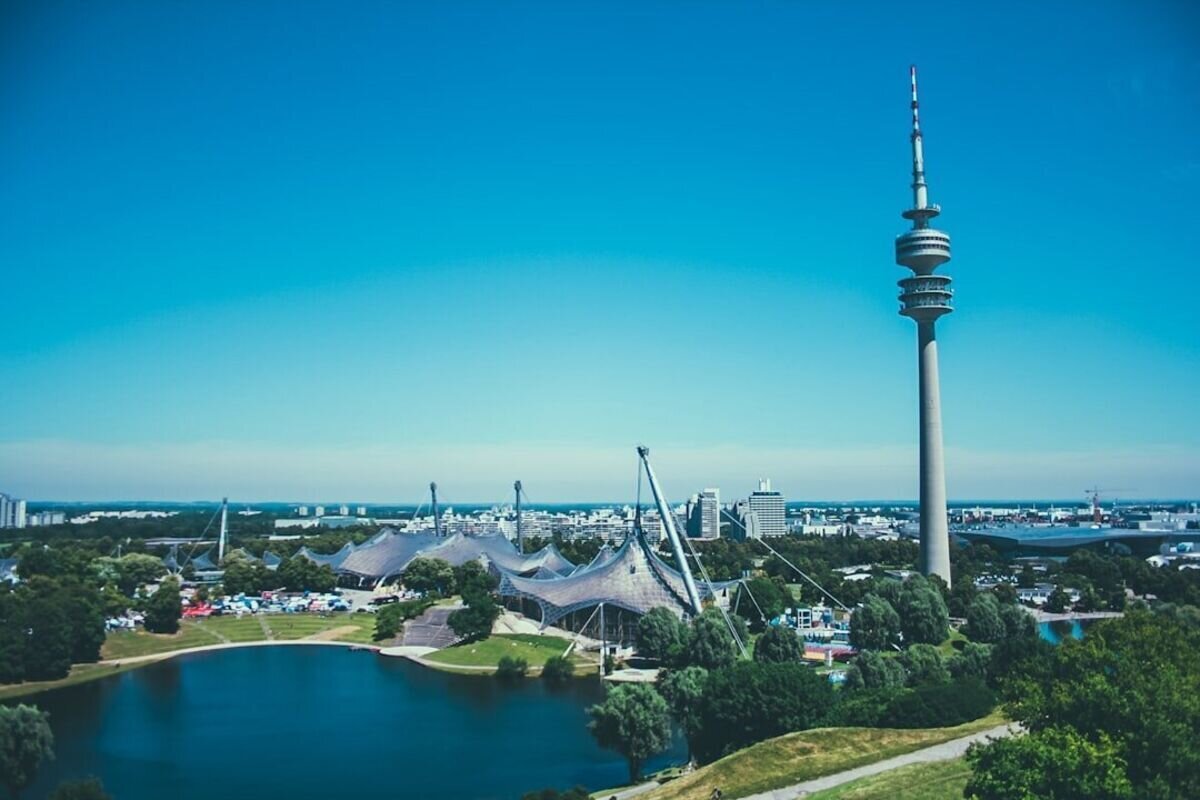
Munich is Germany’s third-largest city and the undisputed cultural and economic capital of Bavaria. It is a place where centuries-old beer halls operate in the shadow of corporate headquarters, where Gothic churches face sleek modernist museums, and where the Alps are visible on clear days from the city centre. This guide covers everything you need to plan a confident, rewarding trip — from first-time essentials and Oktoberfest logistics to neighbourhood breakdowns, day trips, and practical transport advice.
Bavaria’s crown jewel masterfully balances Alpine traditions with metropolitan sophistication. Munich captivates visitors with its blend of lederhosen and luxury, where ancient beer halls neighbour high-tech headquarters. The city’s architectural splendour ranges from Gothic churches to modern Olympic venues, all set against the dramatic backdrop of the distant Alps. With over 80 museums, more than 40 parks, and some of Germany’s finest food and drink, Munich rewards travellers of every taste, pace, and budget.
Marienplatz is Munich’s historic central square and the natural starting point for any visit. The Neues Rathaus (New Town Hall), completed in 1908, dominates the north side with its neo-Gothic façade and famous Glockenspiel carillon, which performs daily at 11 a.m. and noon (and again at 5 p.m. from March to October). The 32 life-size figures re-enact two stories from Munich’s 16th-century history — the Schäfflertanz and a jousting tournament. Climb the Alter Peter church tower (299 steps, €5) for the best panoramic view in the city centre. The square also marks the entrance to the pedestrianised shopping zone along Kaufingerstraße and Neuhauser Straße.
The Munich Residenz is the former royal palace of the Wittelsbach monarchs and the largest city palace in Germany. Spread across ten courtyards and containing over 130 showrooms, it charts six centuries of Bavarian history from medieval treasury pieces through Renaissance state rooms to Napoleonic-era formal apartments. Admission to the palace museum is €9; the Treasury, containing the crown jewels of the Bavarian kings, costs an additional €9, or €14 for a combined ticket. Plan for at least two hours. The adjoining Cuvilliés Theatre is one of the finest Rococo court theatres in Europe and is open to visitors when not in use for performances.
ℹ️ 2.5-hour guided royal palace tour; verify language and ticket inclusions.
We may earn a commission when you book through these links, at no extra cost to you.The Englischer Garten stretches 3.7 kilometres north from the city centre and, at 375 hectares, is one of the world’s largest urban parks — significantly bigger than New York’s Central Park. It is entirely free to enter and open around the clock. Key points of interest include the Chinese Tower beer garden (one of Munich’s best-loved), the Japanese Tea House on its island, the Greek Monopteros temple with panoramic views, and the Eisbach wave at the southern entrance — a standing artificial wave where surfers ride year-round, one of Munich’s most photographed daily spectacles. The park also contains several smaller beer gardens and broad meadows ideal for picnics in summer.
Nymphenburg Palace, located four kilometres west of the centre, was the summer residence of the Bavarian royal family from 1701. The main building and its formal baroque gardens are impressive in scale, but it is the smaller pleasure palaces within the grounds that tend to delight most: the Amalienburg hunting lodge, with its extraordinary Silver Hall, and the Pagodenburg, which reflects the 18th-century European fascination with East Asian aesthetics. The palace complex is also home to the Marstallmuseum (royal carriages and sleighs) and the Museum Mensch und Natur. Admission to the main palace varies by season; the park itself is free. Note that buildings are not fully heated in winter — dress in warm layers for cold-weather visits.
A five-minute walk from Marienplatz, the Viktualienmarkt is Munich’s premier open-air market and a daily ritual for locals since 1807. Around 140 stalls sell fresh produce, artisan cheeses, freshly baked pretzels, sausages, spices, and flowers. At its centre sits a rotating beer garden open from spring to late autumn, which cycles through Munich’s six major breweries roughly every six weeks — making it an excellent place to sample different local beers alongside freshly prepared Bavarian snacks. The market operates Monday through Saturday; most stalls close early on Saturday afternoon.
ℹ️ Evening tasting tour with traditional beer hall visits; age 18+ for beer tastings.
We may earn a commission when you book through these links, at no extra cost to you.Munich has over 80 museums and galleries, concentrated partly in the Kunstareal (Art Quarter) district near Maxvorstadt. This makes it one of the densest museum districts in Europe. A practical tip: state-run museums — including the Pinakotheks, the Glyptothek, and the Museum Brandhorst — charge just €1 admission on Sundays, making them exceptional value on those days.
| Museum | Focus | Admission | Time Needed | €1 Sunday? |
|---|---|---|---|---|
| Deutsches Museum | Science and technology | €15 | 3–4 hours (half to full day) | No |
| Alte Pinakothek | Old Master paintings (Rubens, Dürer, Raphael) | €7 | 2–3 hours | Yes |
| Neue Pinakothek | 19th-century art | Closed (renovation) | — | — |
| Pinakothek der Moderne | Modern and contemporary art, design, architecture | €10 | 2–3 hours | Yes |
| Museum Brandhorst | Post-war and contemporary art (Cy Twombly, Warhol) | €7 | 1.5–2 hours | Yes |
| Glyptothek | Ancient Greek and Roman sculpture | €6 | 1.5–2 hours | Yes |
| BMW Museum | Automotive history and design | €10 | 2 hours | No |
| Munich Residenz | Royal palace rooms, treasury, Cuvilliés Theatre | €9–€14 | 2–3 hours | No |
Situated on its own island in the Isar River, the Deutsches Museum is the world’s largest science and technology museum, with around 73,000 exhibits spread across 79 departments. Highlights include a working coal mine in the basement, original examples of early aircraft, a planetarium, and interactive demonstrations on everything from optics to nuclear physics. Admission is €15; a full visit realistically requires three to four hours, though an entire day can be spent here. It is one of the few Munich museums that does not offer the €1 Sunday discount.
The three Pinakothek museums form the core of the Kunstareal and can be visited across one or two days. The Alte Pinakothek is the single most important art collection in Munich, with works by Dürer, Rubens, Raphael, and Rembrandt. The Pinakothek der Moderne occupies a striking modernist building and houses four separate collections covering art, design, architecture, and works on paper under one roof. The Neue Pinakothek is currently closed for major renovation and will not reopen during 2026. Both open museums charge just €1 on Sundays, making Sunday the best day to visit if you are on a tight budget.
Oktoberfest is the world’s largest folk festival and one of Munich’s defining institutions. The 191st Oktoberfest runs from Saturday, September 19 to Sunday, October 4, 2026 — a total of 16 days on the Theresienwiese festival grounds, roughly 15 minutes on foot from Munich Hauptbahnhof. The festival traditionally draws around six million visitors annually from across Germany and the world.
The festival opens on Saturday, September 19 with the Procession of the Breweries and Festival Hosts beginning at 10:45 a.m., followed by the ceremonial first tapping of the keg at the Festhalle Schottenhamel tent at noon by Munich’s Lord Mayor — the moment the festival officially begins. The Sunday following opening day features the Trachten- und Schützenzug, a parade of thousands of Bavarian folklorists, marksmen, and traditional costumes through the city centre. Family Days with reduced prices for rides and food run on September 22 and September 29. The festival closes on October 4 with a gun salute at the Bavaria statue at noon.
Oktoberfest’s 14 large tents and 21 smaller tents are run by Munich’s six main breweries: Augustiner, Hofbräu, Paulaner, Spaten, Hacker-Pschorr, and Löwenbräu. Each tent has its own atmosphere and capacity. Reserved seating (with mandatory table service and drink minimums) fills months in advance for weekends — popular tents like Hofbräu-Festzelt and Käfer-Wiesn-Schänke are often fully booked by April or May. Unreserved standing space becomes available when the tents open each morning, but queues form early on weekends and the tents often reach capacity before noon. For first-timers, arriving before 10 a.m. on a weekday substantially improves access. The beer served is exclusively Oktoberfest-brewed Märzenbier, served in one-litre Mass steins at prices typically in the €16–€17 range in 2026.
ℹ️ Hosted experience package. General entry to festival grounds and tents is free.
We may earn a commission when you book through these links, at no extra cost to you.Each tent maintains a live brass or mixed band throughout the day. The musical culture blends traditional Bavarian drinking songs — most importantly Ein Prosit der Gemütlichkeit, which is played every 15 to 20 minutes and triggers a collective toast — with modern German Schlager (Helene Fischer’s Atemlos durch die Nacht is ubiquitous), and international anthems like Country Roads and Sweet Caroline. The sparkler-lit finale song Sierra Madre signals closing time in many tents. The ritual of Gemütlichkeit — loosely translated as a warm, convivial ease — is communicated as much through this shared musical experience as through the beer itself.
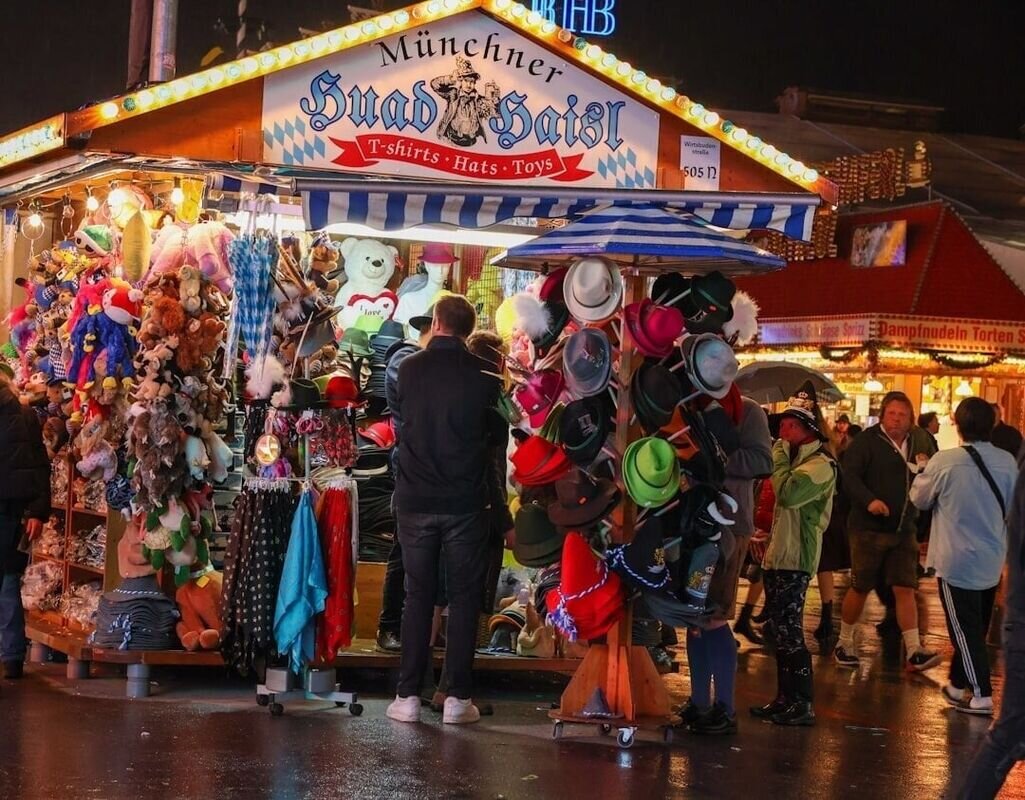
Traditional dress is welcome but not required. Many visitors rent or buy Bavarian costume: Dirndl (traditional dress for women) and Lederhosen (leather breeches for men) are widely available at Munich shops and markets. Wearing traditional dress is viewed positively inside the tents and helps create the festival atmosphere. Comfortable shoes are essential — the grounds cover a large area and tent floors can be wet and crowded.
Munich’s beer culture predates modern Germany as a political entity. The city is home to six major breweries — Augustiner, Hofbräu, Paulaner, Spaten, Hacker-Pschorr, and Löwenbräu — each operating flagship venues in the city. Traditional outdoor beer gardens, defined by long shared wooden tables under chestnut trees, are a uniquely Bavarian institution: centuries-old law granted Bavarians the right to bring their own food to beer gardens (though not their own drinks), and this tradition survives at many establishments today.
| Venue | Type | Address | Best Known For |
|---|---|---|---|
| Hofbräuhaus | Beer hall | Platzl 9, Altstadt | World-famous, capacity 1,000+, live music, tourist landmark |
| Augustiner-Großgaststätte | Beer hall | Neuhauser Str. 27, Altstadt | Superb Schweinsbraten, excellent house beer, local atmosphere |
| Augustiner-Keller | Beer garden / hall | Arnulfstraße 52, near Hauptbahnhof | 5,000-seat chestnut garden, beer tapped from wooden barrels |
| Schneider Bräuhaus | Beer hall | Tal 7, Altstadt | Wheat beer specialists, traditional Weisswurst, historic interior |
| Viktualienmarkt Beer Garden | Beer garden | Viktualienmarkt 3, Altstadt | Rotating brewery, central location, ideal for a quick Maß |
| Chinesischer Turm | Beer garden | English Garden | Largest beer garden in the English Garden, brass bands at weekends |
| Wirtshaus an der Au | Wirtshaus (tavern) | Lilienstraße 51, Au-Haidhausen | Outstanding Bavarian classics, reservation recommended |
| Hackerhaus | Beer hall / Wirtshaus | Sendlinger Straße 14, Altstadt | Heritage dating to the 15th century, traditional Hacker-Pschorr beer |
The Hofbräuhaus is the most internationally recognised, and its size and energy are genuinely impressive — though its clientele skews heavily tourist. For a more local atmosphere with equally strong food and beer, Augustiner-Großgaststätte on Neuhauser Straße and Schneider Bräuhaus on Tal both deliver excellent Schweinsbraten, Weißwurst, and house beer in rooms full of Munich regulars. The Augustiner-Keller, with 5,000 seats under chestnut trees and beer tapped directly from wooden barrels, is a candidate for Munich’s finest beer garden experience.
Munich’s traditional food culture centres on generous portions, pork in many forms, and the expectation that food and beer belong together. These are the dishes worth seeking out:
For Weißwurst breakfast, Bratwurstherzl near the Viktualienmarkt is Munich’s most reliable address. For the full Bavarian beer hall experience with a local crowd, Augustiner-Großgaststätte and Schneider Bräuhaus consistently outperform the Hofbräuhaus in food quality and atmosphere. The Wirtshaus an der Au in Haidhausen is consistently praised for seasonal Bavarian menus with careful kitchen execution — reservations are recommended, especially on weekends. For those exploring Schwabing, Görreshof offers quietly excellent Bavarian classics in a neighbourhood setting.
Munich also supports a strong contemporary and international dining scene. The Glockenbach neighbourhood holds the densest concentration of independent cafés and international restaurants, while Haidhausen has emerged as the city’s most interesting neighbourhood for independent food operators. For fine dining, Munich holds several Michelin-starred restaurants: Atelier (Hotel Bayerischer Hof), Tantris (Schwabing), and Werneckhof represent the city’s highest culinary register.
Munich is officially divided into 25 boroughs (Stadtbezirke), but visitors will find that roughly eight to ten central neighbourhoods hold the greatest appeal. The city radiates outward from the medieval Altstadt, with the Isar River running north to south through its eastern half, creating a natural division between the western core and the quieter residential east.
| Neighbourhood | Vibe | Best For | Good Base to Stay? |
|---|---|---|---|
| Altstadt-Lehel | Historic, central, polished | First-timers, sightseeing on foot | Yes — most convenient, priciest |
| Maxvorstadt | Academic, museum-rich, café culture | Museum visitors, culture seekers | Yes — relaxed, well-priced |
| Schwabing | Bohemian, leafy, café-led | Park lovers, longer stays, families | Yes — relaxed and well-connected |
| Glockenbachviertel | Trendy, diverse, lively | Nightlife, foodies, younger travellers | Yes — buzzy, walkable to centre |
| Haidhausen | Village-like, quiet, residential | Couples, families, slow mornings | Yes — calm but close in |
| Ludwigsvorstadt | Central, transit-oriented | Oktoberfest visitors, budget stays | Yes — best for Theresienwiese access |
| Bogenhausen | Upmarket, leafy, embassy district | Business travellers, luxury stays | Yes — quiet and prestigious |
| Nymphenburg | Residential, palace-adjacent | Families, repeat visitors | Yes — peaceful, good for longer stays |
Munich’s Christmas market season runs from late November through Christmas Eve, with over two dozen individual markets spread across the city. The Christkindlmarkt on Marienplatz, established in the 14th century, is the historic centrepiece — a 300-stall market selling traditional wooden crafts, glass ornaments, nutcrackers, and Lebkuchen (gingerbread) beneath a backdrop of the illuminated Neues Rathaus. Essential drinks include Glühwein (mulled red wine) and Feuerzangenbowle (punch with a flaming rum-soaked sugarloaf). The Medieval Market at Wittelsbacher Platz offers an atmospheric alternative with fire performers and period costumes. The Schwabing Christmas Market on Münchner Freiheit is the most village-like and locals’ favourite. Arrive on weekday evenings to avoid peak weekend crowds.
Neuschwanstein Castle is Bavaria’s most iconic landmark and one of the most photographed buildings in the world. Built by King Ludwig II from 1869, it served as the inspiration for Disney’s Sleeping Beauty Castle. Combined with Linderhof Palace — Ludwig’s intimate personal retreat with formal French gardens and a spectacular grotto — this makes the most rewarding full-day excursion from Munich. The combined journey runs approximately 10.5 hours door-to-door from Munich city centre. By public transport: take the regional train from Munich Hauptbahnhof towards Füssen (~2 hours), then bus #73 or #78 to Hohenschwangau (~8 minutes). Organised day tours from Munich Karlsplatz 21 are also widely available and include transport, guided entry to both castles, and return transfer. Book Neuschwanstein tickets online in advance — on-site sales are limited.
ℹ️ Organized transport from Munich; castle interior tickets depend on selected option.
We may earn a commission when you book through these links, at no extra cost to you.ℹ️ Includes castle entrance fees and luxury coach transport; compare exact inclusions.
We may earn a commission when you book through these links, at no extra cost to you.The Dachau Concentration Camp Memorial Site is the most historically significant half-day trip from Munich. Dachau, opened in March 1933, was the first Nazi concentration camp and served as a model for those that followed. The memorial site contains the original prisoner barracks (two reconstructed), the roll call square, the crematorium, and a comprehensive museum documenting the camp’s history across its 12 years of operation. Admission is free; audio guides cost €4.50 and guided tours €3.00. Take the S2 S-Bahn from Munich Hauptbahnhof to Dachau station (~25 minutes), then bus 726 (~10 minutes) to the memorial. The site is open Tuesday through Sunday, 9 a.m. to 5 p.m. Allow 2.5 to 4 hours. The visit requires emotional preparation; it is an important and sobering experience rather than standard tourism.
Mozart’s birthplace and one of Central Europe’s best-preserved baroque cities, Salzburg is just 90 minutes from Munich by direct train (roughly hourly from Hauptbahnhof). The Altstadt is a UNESCO World Heritage Site, centred on Getreidegasse, Domplatz, and the fortress Hohensalzburg above. Highlights include the Mozart Birthplace Museum, the Mirabell Gardens (used in The Sound of Music), and the Cathedral with its ornate Baroque interior. A return rail ticket costs around €30–€50; book in advance for the best fares. A day trip allows enough time to walk the Altstadt, visit one or two museums, and eat lunch.
At 2,962 metres, Zugspitze is Germany’s highest peak and offers an extraordinary combination of Alpine panoramas and easy access. Take the Bayerische Zugspitzbahn train from Munich Hauptbahnhof to Garmisch-Partenkirchen (~1.5 hours), then the Zugspitzbahn mountain railway or cable car to the summit. On clear days the view extends into four countries: Germany, Austria, Switzerland, and Italy. The summit has a glacier, restaurants, and an observation platform. Allow a full day. Costs vary by season; expect around €60–€75 for the mountain railway ticket from Garmisch. Snow is possible even in summer at the summit — bring an extra layer.
Starnberger See is the closest large lake to Munich, just 30 kilometres south and reachable in 35 minutes on the S6 S-Bahn. The lake is 20 kilometres long and offers swimming, boat hire, and cycling along its shores. The town of Starnberg on the north shore has cafés, a small waterfront promenade, and views across the water to the Alps. This is where Munich residents escape on summer weekends — arrive early on hot days to find space on the grassy lakeshore. The full loop of the lake by bike is around 50 kilometres.
Munich’s public transport network — the MVV — is one of Germany’s most comprehensive urban systems, combining U-Bahn (metro, 8 lines), S-Bahn (suburban rail, 8 lines radiating from the central Stammstrecke tunnel), trams, and buses into a single ticketing system. Tickets are valid across all modes within the same fare zone and time window. The central zone is Zone M; nearly all tourist sites fall within it.
| Ticket | Price (Zone M) | Best For |
|---|---|---|
| Single ticket (Einzelfahrkarte) | €3.90 | One or two journeys |
| Day ticket (Tageskarte) | €9.20 | More than two journeys in a day |
| Group day ticket | €18.40 | Up to 5 people travelling together |
| Short-distance ticket (Kurzstreckenticket) | €1.90 | Up to 2 U/S-Bahn stops or 4 bus/tram stops |
Tickets are available from yellow machines at U-Bahn and S-Bahn stations. Some machines are cash-only or coin-only; the MVV app provides a reliable cashless alternative (registration required). Always validate (entwerten) paper tickets in the blue stamping boxes before boarding — unmarked tickets are treated as invalid by inspectors. Munich’s old town and most of the centre is highly walkable and fully pedestrianised in its shopping core; cycling is also practical on the city’s extensive bike lane network. Taxis are cream-coloured, can be hailed on the street, and charge a minimum fare of just under €5.
Munich has accommodation across all price brackets, with hotels concentrated around the Hauptbahnhof (main train station) for budget options and in Altstadt-Lehel for premium addresses. Prices spike dramatically during Oktoberfest — book at minimum six months ahead for festival dates. The table below matches common traveller profiles to the best areas.
| Traveller Type | Best Area | Notes |
|---|---|---|
| First-time visitor | Altstadt-Lehel | Maximum walkability, most expensive |
| Museum and culture focus | Maxvorstadt | Mid-range prices, Pinakotheks on doorstep |
| Oktoberfest attendee | Ludwigsvorstadt | 15-minute walk to Theresienwiese; book extremely early |
| Budget traveller | Near Hauptbahnhof | Best price-to-location ratio |
| Couples and foodies | Glockenbachviertel | Trendy neighbourhood, lively evenings |
| Families | Haidhausen or Nymphenburg | Quieter streets, green space nearby |
| Luxury traveller | Altstadt or Bogenhausen | Mandarin Oriental Munich a flagship choice |
Begin at Marienplatz for the 11 a.m. Glockenspiel performance, then walk to the Viktualienmarkt for a Weißwurst breakfast or a mid-morning snack. Tour the Munich Residenz in the late morning (allow two hours). In the afternoon, head to the English Garden: walk north to the Monopteros temple, pass the Chinese Tower beer garden, and finish at the Eisbach wave. Evening dinner and beer at Augustiner-Großgaststätte or Schneider Bräuhaus.
Use the three-day structure above, then add a dedicated fourth day for either Dachau Concentration Camp Memorial (morning, half day) combined with the Deutsches Museum (afternoon), or a second day trip to Salzburg or the Zugspitze. The combination of Neuschwanstein plus Salzburg — each on its own day — represents the most popular four-day extension.
Oktoberfest 2026 runs from Saturday, September 19 to Sunday, October 4, 2026 — 16 days on the Theresienwiese in Munich. The official opening ceremony takes place at noon on September 19 when the Lord Mayor taps the first keg at the Schottenhamel tent.
Two to three full days covers the core sights comfortably: the Old Town, Residenz, English Garden, and a beer hall on day one; a palace or museum day on day two; and a day trip to Neuschwanstein or Salzburg on day three. Add a fourth day for Dachau, the Deutsches Museum, or the Zugspitze.
First-time visitors should stay in Altstadt-Lehel for maximum walkability. Budget travellers save the most near Hauptbahnhof. Oktoberfest attendees should book in Ludwigsvorstadt, closest to Theresienwiese. Foodies and younger travellers do well in Glockenbachviertel.
The essential Bavarian dishes are Weißwurst (white veal sausage with sweet mustard), Schweinshaxe (pork knuckle), Schweinebraten (roast pork), Obatzda (seasoned cheese spread), and Dampfnudel (steamed dumplings). All pair with Munich’s six major brewery beers, best sampled from traditional beer halls or beer garden taps.
No. The Neue Pinakothek is closed in 2026 for major renovation. The Alte Pinakothek and Pinakothek der Moderne are both open and offer €1 admission on Sundays.
Take the regional train from Munich Hauptbahnhof towards Füssen (approximately 2 hours, roughly hourly). From Füssen, take bus #73 or #78 to Hohenschwangau (about 8 minutes). Book Neuschwanstein entry tickets online in advance — on-site availability is limited. Organised day tours from Munich Karlsplatz are also available.
Explore the historic Old Town (Altstadt) on foot and use the local S-Bahn/U-Bahn network.
Oktoberfest Musical Culture: The world's largest beer festival features a unique soundtrack blending traditional Bavarian drinking songs (Ein Prosit), modern German Schlager (Atemlos durch die Nacht), and international rock anthems (Country Roads, Sweet Caroline). Over 6 million visitors experience the ritual of Gemütlichkeit through music - from the clockwork toasting of Ein Prosit every 15-20 minutes to the sparkler-lit farewell of Sierra Madre. Beer Gardens: Traditional outdoor spaces with chestnut trees, long wooden tables, and brass bands. English Garden: One of the world's largest urban parks with beer gardens and surfers on the Eisbach wave. Christmas Markets: Historic Christkindlmarkt at Marienplatz with traditional crafts, mulled wine, and gingerbread.
Oktoberfest Music Etiquette: Learn "Ein Prosit" - you'll sing it 30+ times per day. Stand and raise your stein during toasts. The "OOH! AAH!" in Hey Baby and "BAH! BAH! BAH!" in Sweet Caroline are mandatory. Evening shift at 6 PM brings modern party music. Final night's Sierra Madre with sparklers is deeply emotional - even locals cry.



Discover curated walking tours, museum passes, and authentic experiences in Munich with instant confirmation.