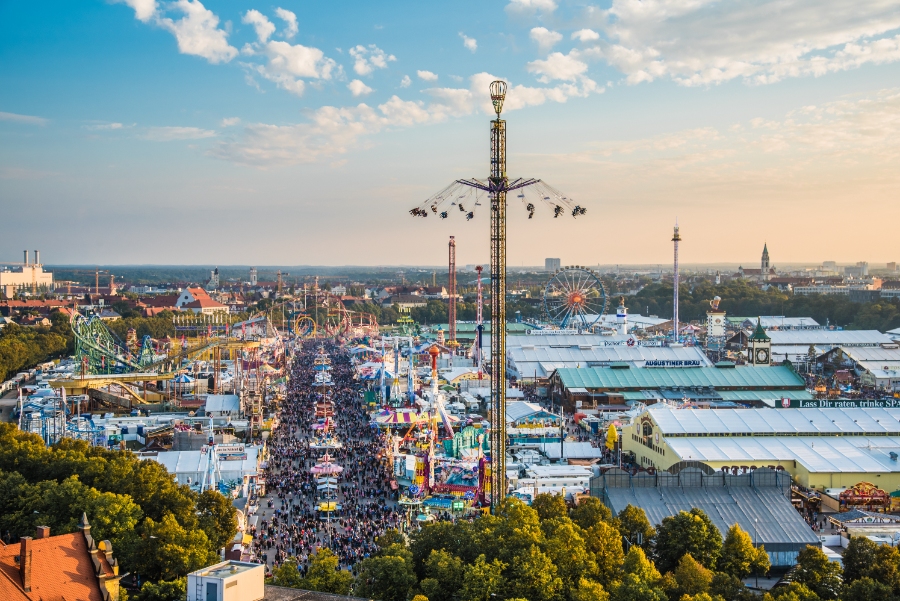
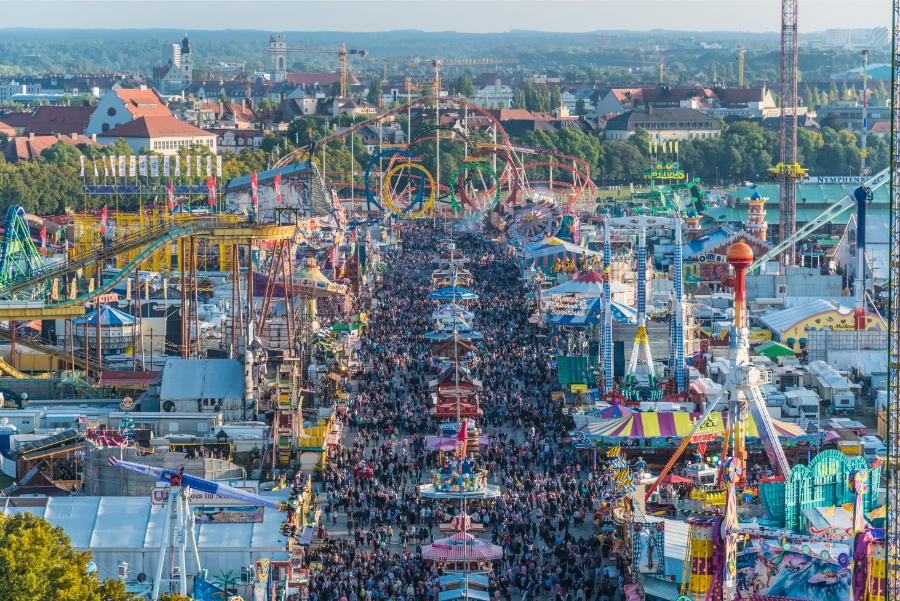
Oktoberfest is the world’s largest beer festival and folk festival, drawing roughly six to seven million visitors each year to Munich, Bavaria. The 191st edition runs from Saturday, 19 September to Sunday, 4 October 2026 on the Theresienwiese. From its royal wedding origins to its status as a global phenomenon, the Wiesn is the clearest expression of Bavarian culture, hospitality and hosting tradition anywhere in the world.
Oktoberfest 2026 at a glance
| Detail | 2026 information |
|---|---|
| Dates | Saturday, 19 September – Sunday, 4 October 2026 |
| Edition | 191st Oktoberfest |
| Length | 16 days |
| Location | Theresienwiese, Munich |
| Entry fee | None — the grounds are free to enter |
| Beer price (Maß) | €14.80 – €15.90 |
| Opening ceremony | Mayor taps the first keg at Schottenhamel, 19 September, 12:00 |
The History of Oktoberfest
Royal Beginnings (1810)
Oktoberfest began on 12 October 1810 as a celebration of the marriage between Crown Prince Ludwig of Bavaria — later King Ludwig I — and Princess Therese of Saxe-Hildburghausen. Munich’s citizens were invited to festivities on the fields in front of the city gates, capped by a horse race on 17 October. Those fields were named Theresienwiese (“Therese’s Meadow”) in her honour, a name locals still use today, usually shortened to “Wiesn.”
Early Development (1811–1850)
The celebration was repeated annually, gradually evolving from a horse race into an elaborate folk festival.
- 1811: An agricultural show was added to promote Bavarian farming
- 1818: The first carousel and two swings were installed
- 1819: Munich’s city council took over event organisation
- 1835: Larger beer stands and serving tents began appearing
- 1850: The Bavaria statue was unveiled above the grounds
Industrial Age Expansion (1850–1914)
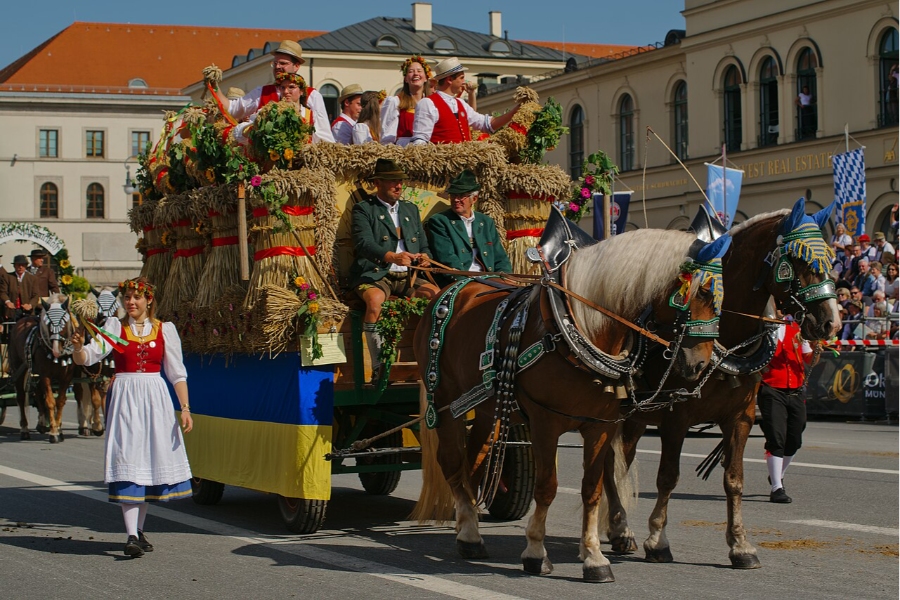
- 1872: The start date shifted into September for better weather, establishing the modern calendar
- 1880: Electric lighting was introduced across the grounds
- 1881: The first roast-chicken rotisserie opened, launching the Hendl tradition
- 1892: Glass beer mugs replaced earthenware steins
- 1896: The first large brewery-backed beer tents were built
Wars, Cancellations and Revival
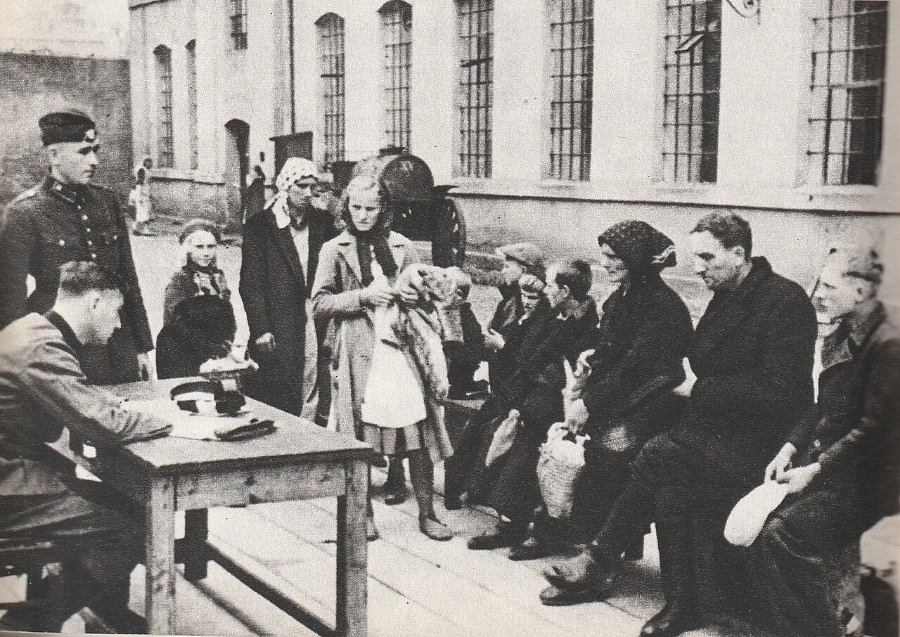
- 1914–1918: Cancelled during World War I
- 1919–1920: Smaller “autumn festivals” held instead
- 1939–1945: Cancelled during World War II
- 1946–1948: Gradually resumed as scaled-down festivals
- 1950: Full-scale Oktoberfest resumed, and Mayor Thomas Wimmer tapped the first keg — beginning the “O’zapft is!” tradition
- 1980: A bomb attack at the main entrance killed 13 people and led to permanent security changes
- 2020–2021: Cancelled during the COVID-19 pandemic, the first cancellations in 70 years
Dates, Hours and the Grounds
How the Dates Are Set
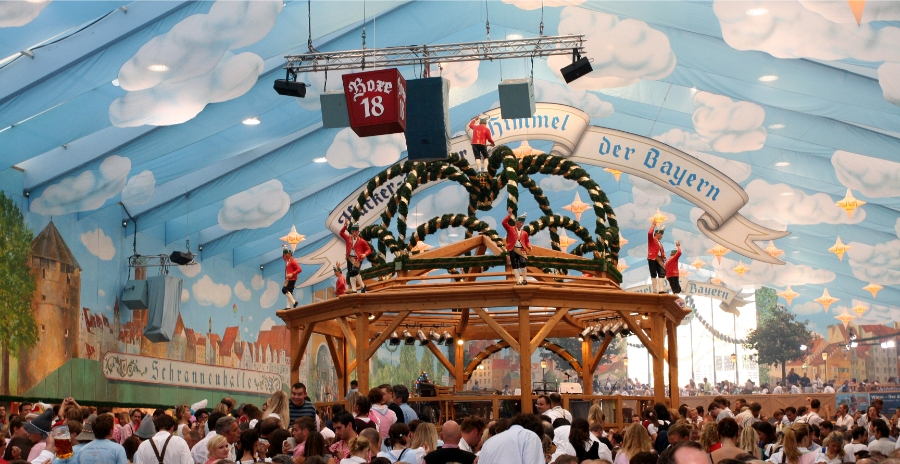
Despite the name, Oktoberfest is mostly a September festival. It runs from the Saturday after 15 September to the first Sunday in October, and is extended through 3 October — German Unity Day — when 1 or 2 October falls on a Sunday. That makes the festival either 16, 17 or 18 days long depending on the year.
- 2026 dates: 19 September – 4 October (16 days)
- Tent hours, weekdays: 10:00 – 23:30, with last beer service around 22:30
- Tent hours, weekends and holidays: 09:00 – 23:30
- Käfer Wiesn-Schänke and Weinzelt: Open later, until roughly 01:00
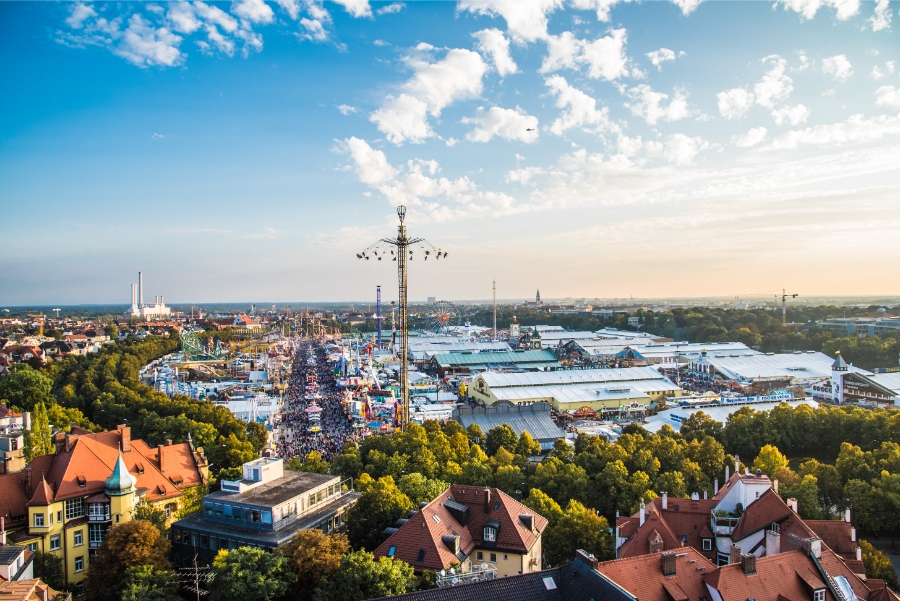
The Theresienwiese
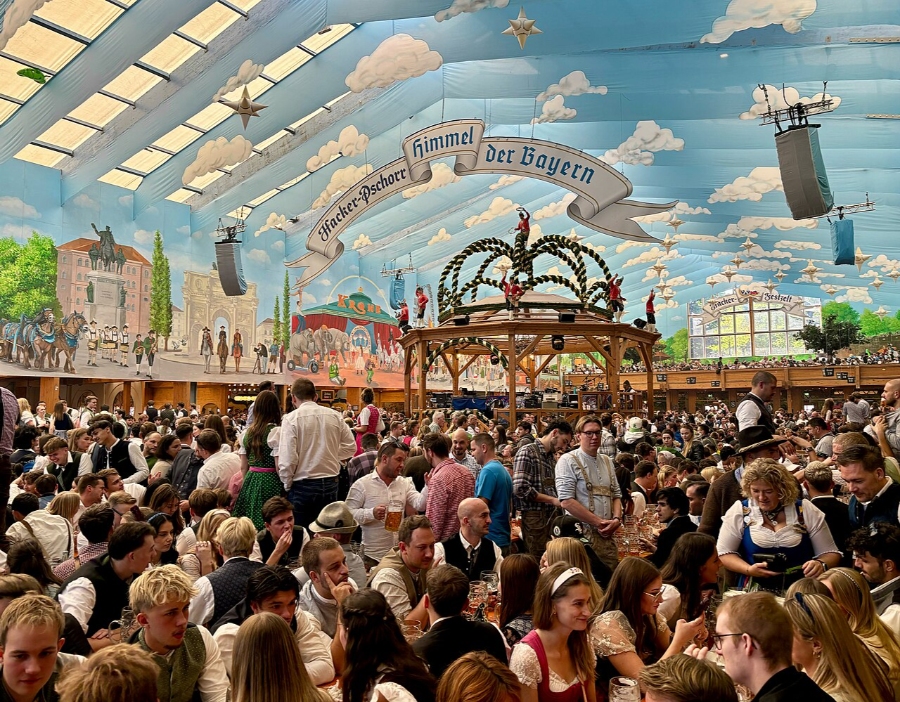
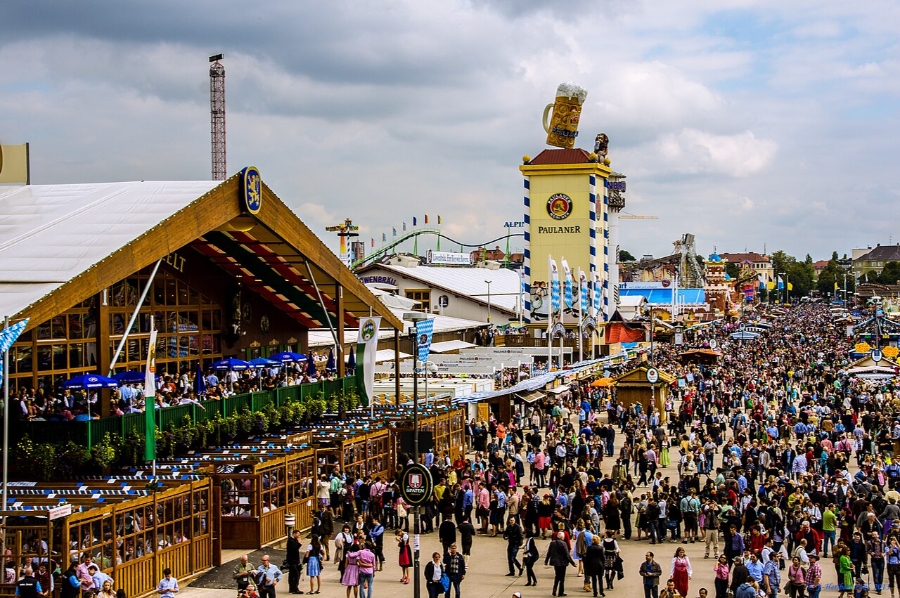
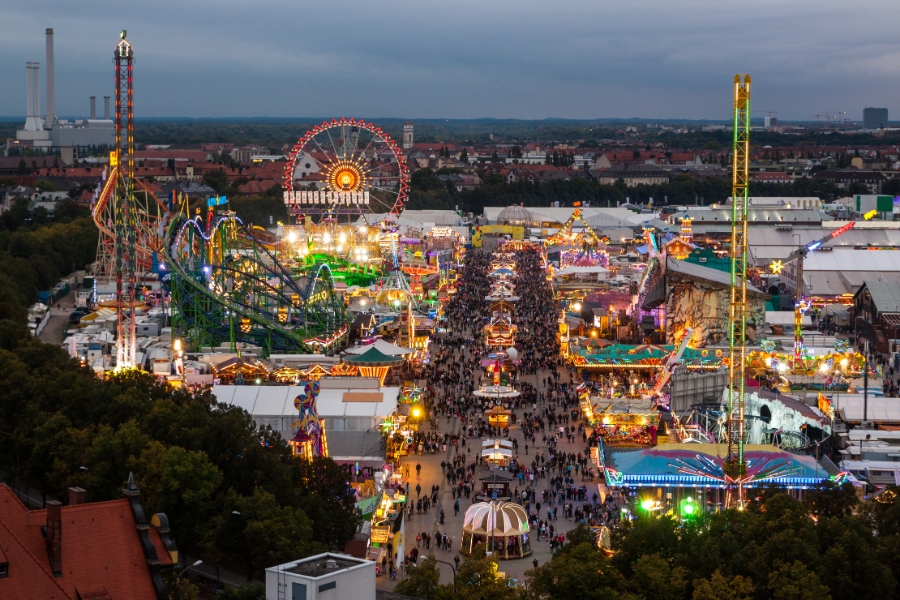
- Around 17 large beer tents: Each seating roughly 3,000–10,000 guests including beer gardens
- Roughly 20 smaller tents: Intimate venues with about 100–1,500 seats and specialised menus
- Oide Wiesn: A separate historic section with vintage rides and traditional music, charging a small entry fee
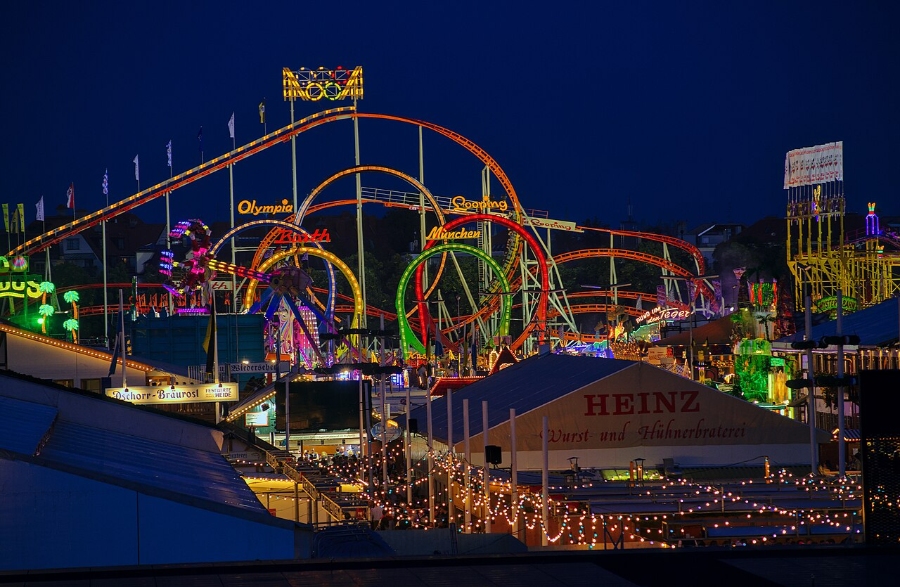
- Rides and attractions: Everything from the historic wooden toboggan to modern roller coasters
- Food and market stalls: Hundreds of vendors across the grounds
The Beer Tents
Hofbräu-Festzelt
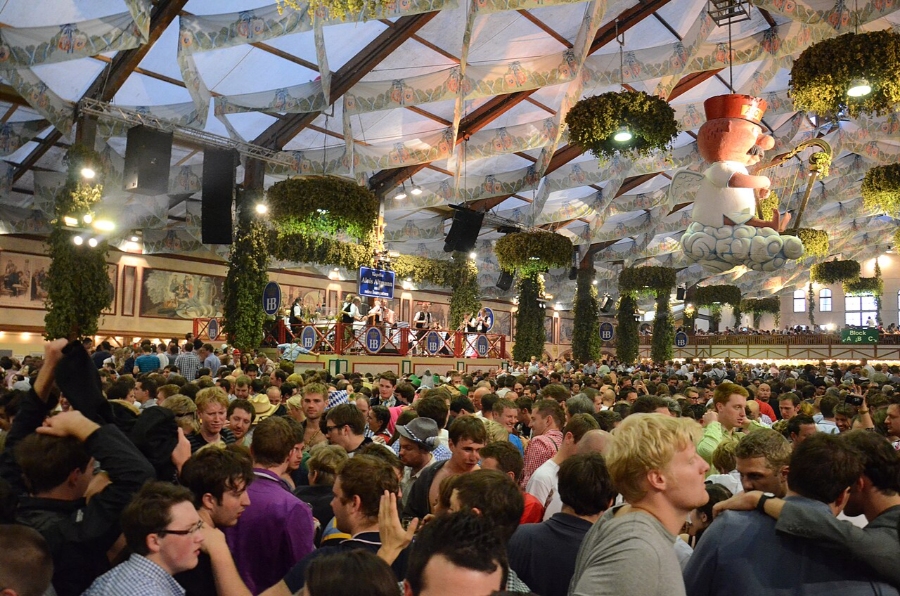
- Capacity: Roughly 10,000 including the beer garden
- Atmosphere: The most international tent, with a standing area in front of the band
- 2026 Maß price: €15.80
Augustiner-Festhalle
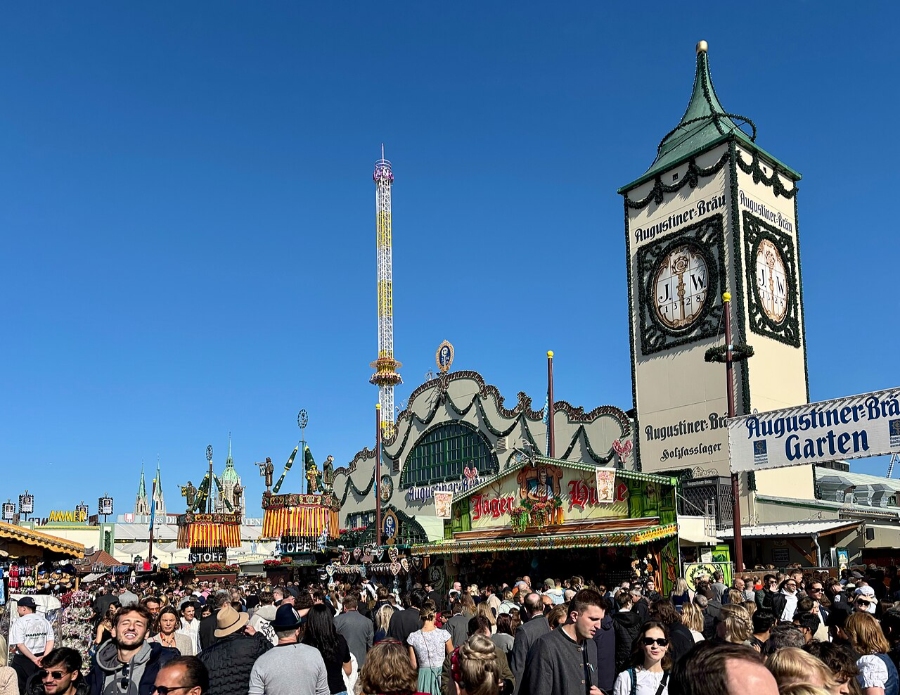
- Capacity: Around 8,500 including the garden
- Character: Widely considered the most traditional large tent
- Signature detail: Beer poured from wooden Hirschen barrels
- 2026 Maß price: €14.90 — the cheapest of the big tents
Schottenhamel-Festhalle
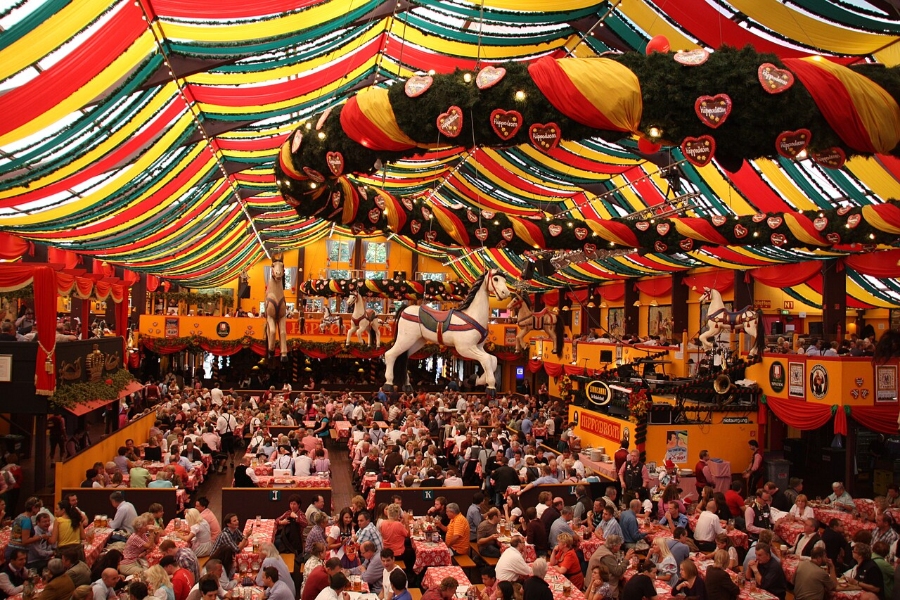
- Capacity: Roughly 10,000 including the garden
- Significance: Where Munich’s mayor taps the first keg at noon on opening day
- Crowd: Lively and notably younger
- 2026 Maß price: €15.80
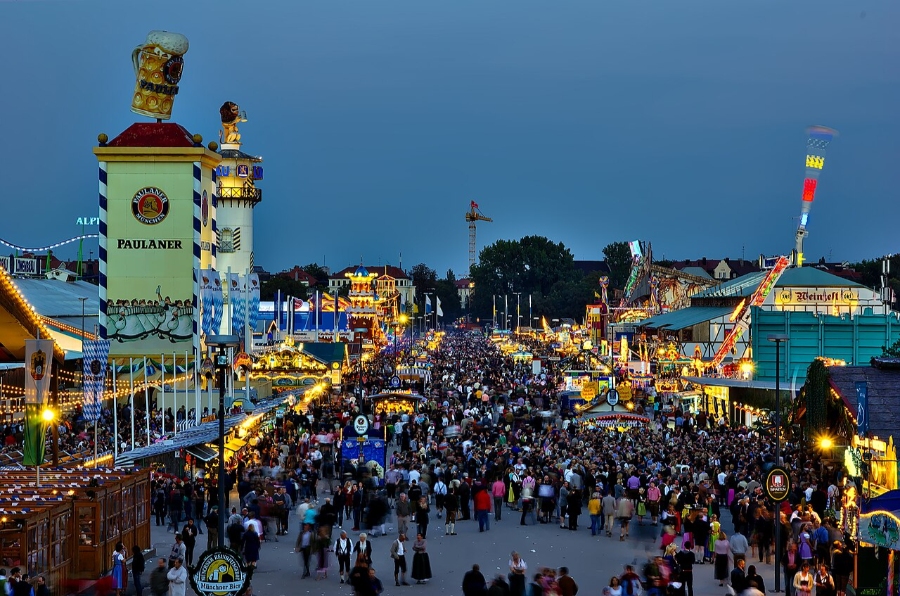
Löwenbräu-Festzelt
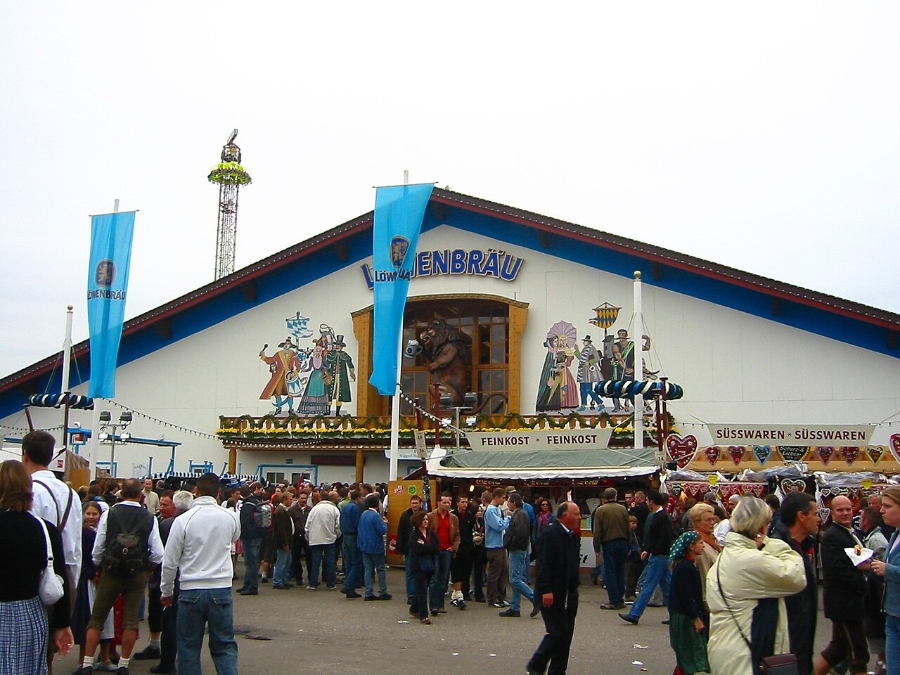
- Capacity: Around 8,500 including the garden
- Landmark: The roaring lion tower above the entrance
- Atmosphere: A solid mix of locals and visitors, family-friendly by day
- 2026 Maß price: €15.90
Smaller and Specialty Tents
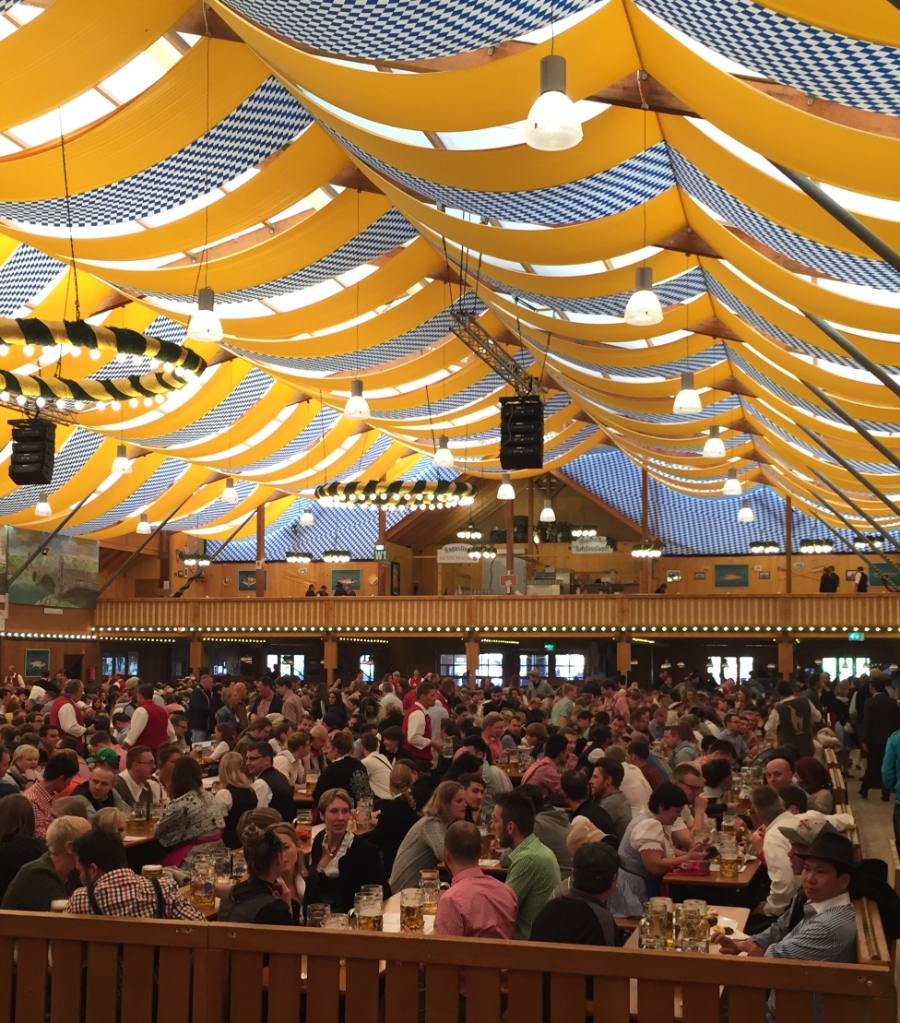
- Fischer-Vroni: Famous for Steckerlfisch — mackerel grilled on a stick over open coals
- Zur Bratwurst: A cosy stop built around grilled Nuremberg-style bratwurst
- Käfer Wiesn-Schänke: Upmarket, celebrity-heavy, and open later than the big tents
- Kufflers Weinzelt: Wine and sparkling wine, plus a wheat-beer Maß at €18.40 in 2026
- Familienplatzl: Family-oriented, with the cheapest Maß on the grounds at €14.80
Oktoberfest Beer Culture
The Six Official Breweries
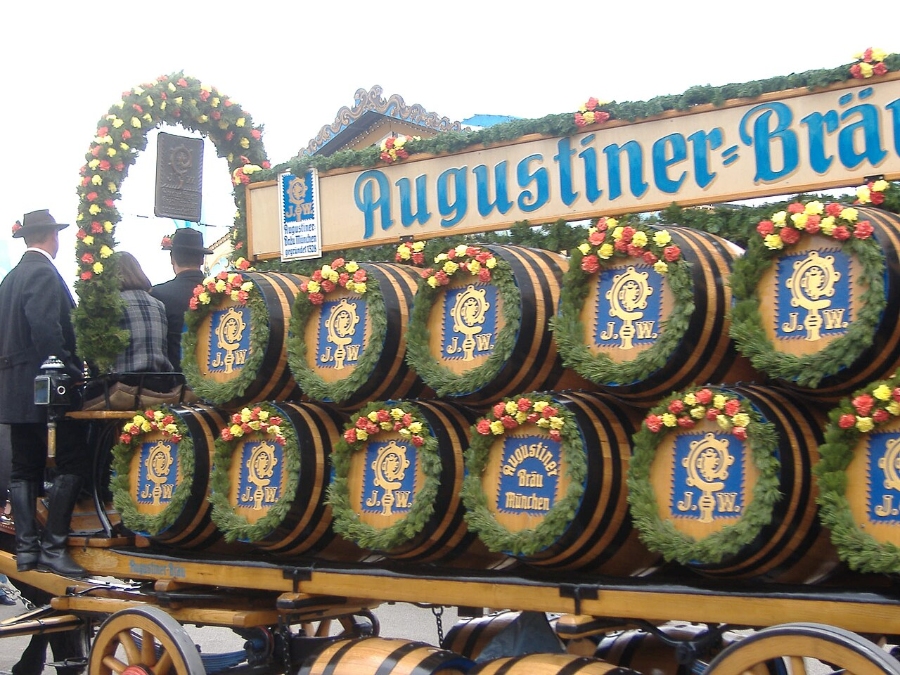
Only six Munich breweries may serve beer at Oktoberfest, and all must brew to the Reinheitsgebot within city limits.
| Brewery | Founded | Character |
|---|---|---|
| Augustiner-Bräu | 1328 | Munich’s oldest brewery; smooth, balanced Festbier from wooden barrels |
| Löwenbräu | 1383 | Historic brewery with a strong local following; light and crisp |
| Spaten | 1397 | Pioneer of the Märzen style under Gabriel Sedlmayr |
| Hacker-Pschorr | 1417 | Traditional Munich house; rich and full-bodied |
| Hofbräu München | 1589 | Former royal court brewery; robust and hoppier |
| Paulaner | 1634 | Rooted in monastic brewing; smooth and malt-forward |
What’s Actually in Your Maß
- Origins: Märzen was brewed in March (März) and lagered through summer, before refrigeration
- Today: Most tents pour a paler, brighter “Wiesnbier” or Festbier rather than a classic amber Märzen
- Strength: Typically 5.8–6.4% ABV, noticeably stronger than everyday Helles
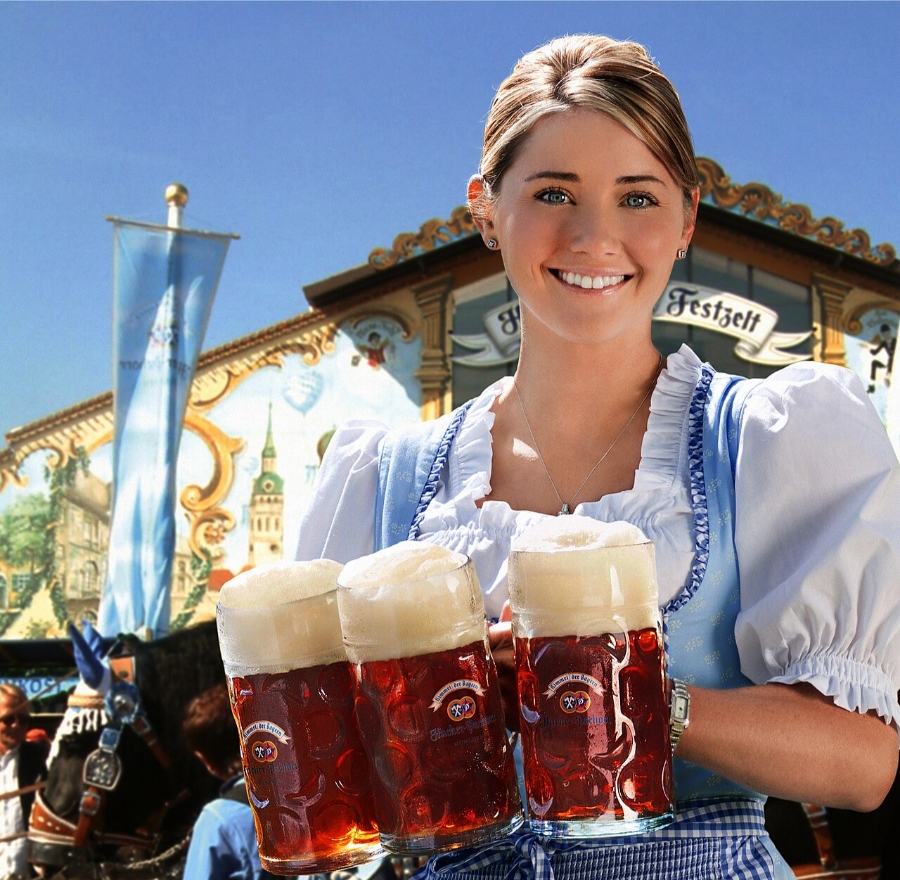
- Serving: Exclusively in one-litre Maß glasses, weighing about 2.3 kg when full
Beer Tent Etiquette
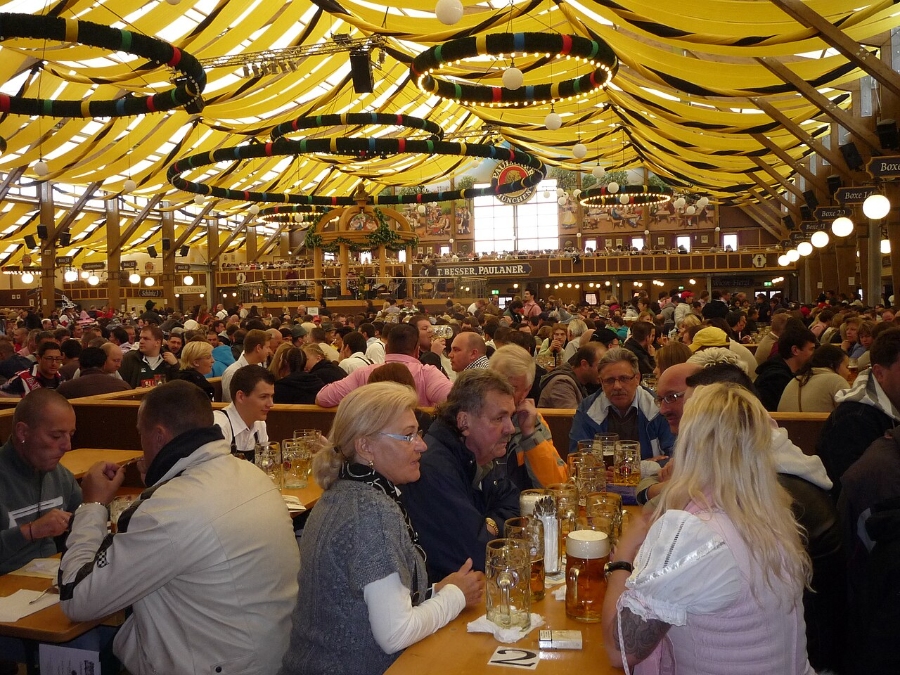
- Seating: Tables are communal; asking to join a half-empty bench is normal
- Service: Wait for your server, and never approach the bar
- Payment: Most large tents now take cards, but cash speeds things up and covers tips
- Tipping: Round up by roughly €1–2 per Maß; good tips get you served faster
- Toasting: Make eye contact on every “Prost,” and clink glasses at the base, not the rim
- Benches, not tables: Standing on a bench during a song is fine; standing on a table gets you removed
Traditional Bavarian Food
Signature Dishes
- Hendl: Spit-roasted half chicken, the single most ordered dish at the festival
- Schweinebraten: Slow-roasted pork with caraway, served with dumplings and dark gravy
- Schweinshaxe: Crackling-skinned roast pork knuckle, easily shareable
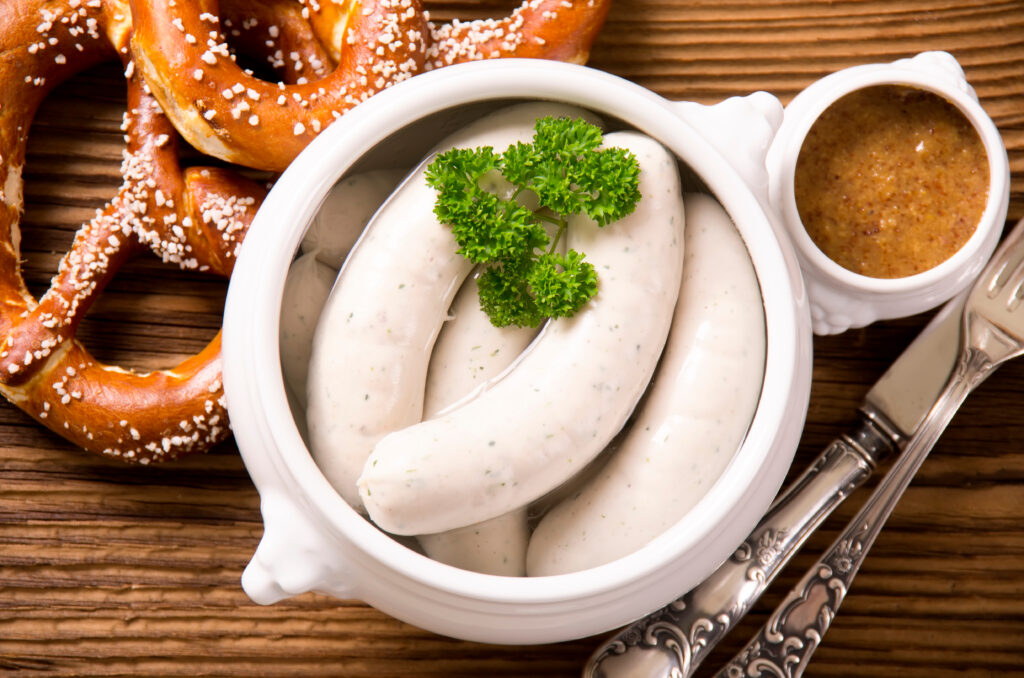
- Weißwurst: Veal and pork white sausage, traditionally eaten before noon with sweet mustard
- Leberkäs: Bavarian meatloaf that contains neither liver nor cheese
- Steckerlfisch: Whole mackerel grilled on a stick, best at Fischer-Vroni
Sides and Sweets
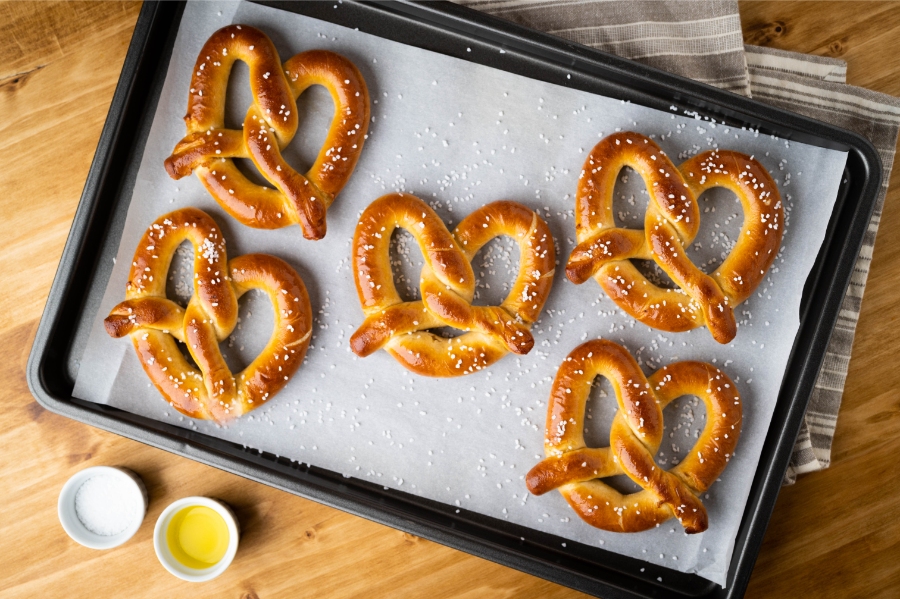
- Brezn: Oversized soft pretzels with coarse salt
- Obatzda: Camembert-based cheese spread with butter, onion and paprika
- Semmelknödel: Bread dumplings for soaking up gravy
- Radi: Spiral-cut salted white radish, a classic beer companion
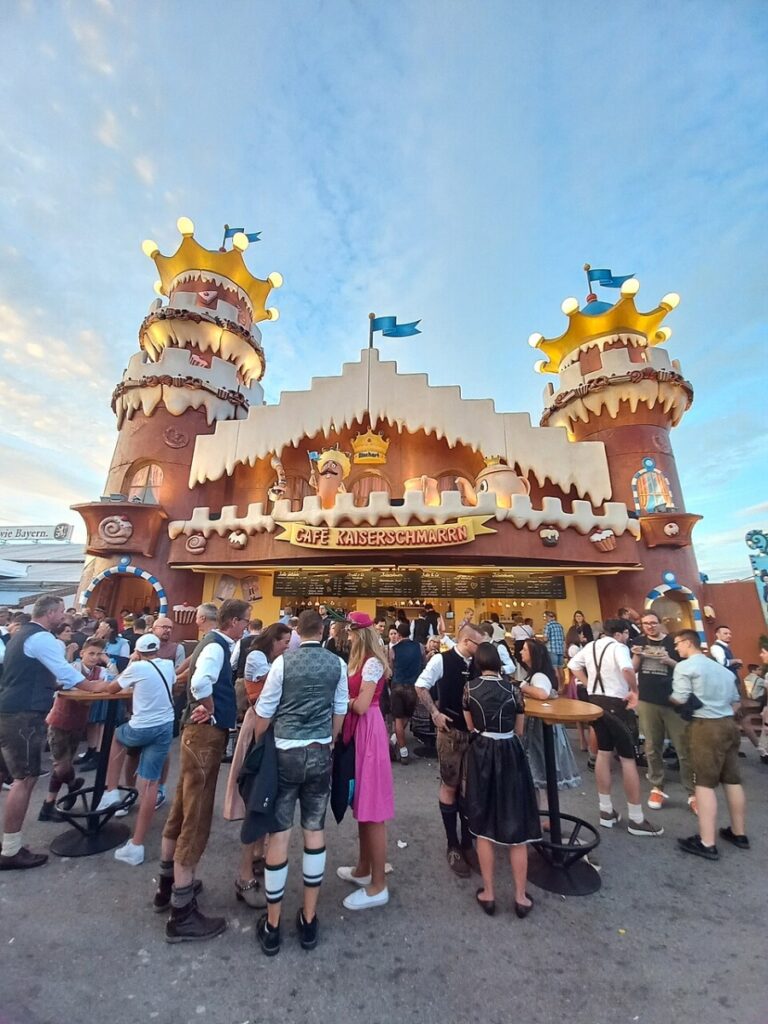
- Kaiserschmarrn: Shredded sweet pancake with apple or plum compote
- Lebkuchenherzen: Gingerbread hearts with iced messages, sold as souvenirs
Tracht: Dirndl and Lederhosen
The Dirndl
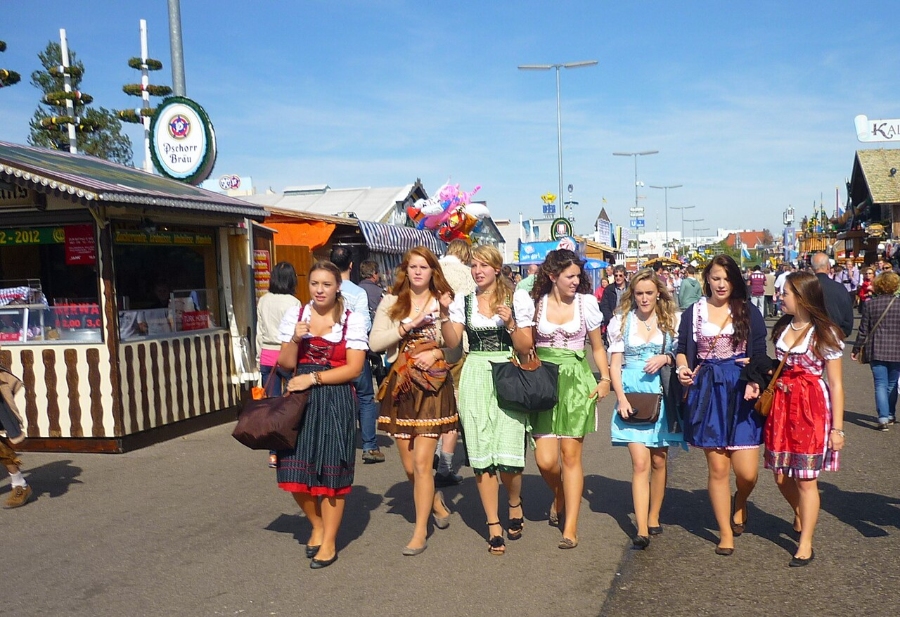
- Mieder: The fitted bodice, laced or buttoned
- Bluse: A short blouse worn underneath
- Rock: A full skirt, traditionally at or below the knee
- Schürze: The apron, tied with a bow
The apron bow is often described as a relationship code: right for taken, left for single, back for widowed or working staff. In practice this is informal folklore rather than a strict rule, and plenty of wearers simply tie it wherever it looks best — so don’t read too much into it.
Lederhosen
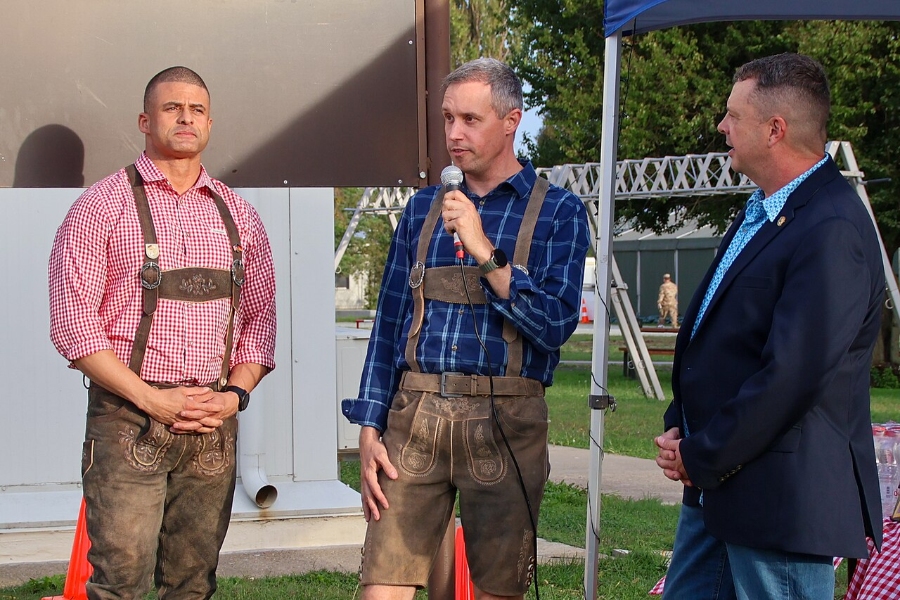
- Lederhosen: Deerskin or goat leather, short or knee-length (Bundhosen)
- Shirt: Plain white or blue-and-white checked
- Hosenträger: H-back suspenders, often embroidered
- Loferl: Calf warmers worn with traditional socks
- Haferlschuhe: Sturdy side-laced leather shoes
- Charivari: A decorative silver chain across the front flap
Quality Tracht is expensive but reusable; costume-shop imitations with novelty prints read as disrespectful to locals. Munich has plenty of rental shops if you’d rather not commit.
Music and Entertainment
Tent bands play traditional brass and folk music until around 18:00, when licensing allows louder amplified sets and the mood shifts sharply toward party mode. “Ein Prosit der Gemütlichkeit” is played on repeat and functions as the festival’s unofficial toast. Sing-alongs like “In München steht ein Hofbräuhaus,” “Fliegerlied,” “Country Roads” and “Sweet Caroline” appear in almost every tent’s rotation.
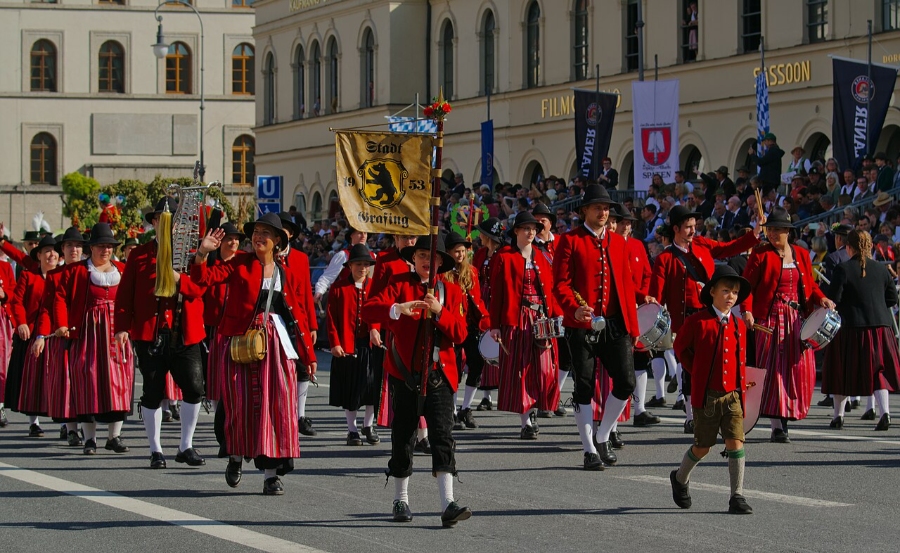
- Trachten- und Schützenzug: A costume and riflemen’s parade of thousands through the city centre on the first Sunday, 20 September 2026
- Landlords’ concert: Massed tent bands perform together beneath the Bavaria statue on the second Sunday
- Böllerschießen: Traditional gun salutes close the festival on the final day, 4 October 2026
- Schuhplattler: Bavarian slap-dance performances, most common in the Oide Wiesn
Planning Your Visit
Best Times to Go
- Weekday mornings: The best odds of walking into a large tent without a reservation
- Weekday afternoons: Busy but manageable, with full band atmosphere
- Weekend evenings: Tents routinely close their doors when full; a reservation is effectively mandatory
- Opening Saturday: Maximum energy, maximum crowds, and no beer served before noon
- Family Days: Discounted ride and food prices on designated Tuesdays until 18:00
- Final weekend: A local favourite, with the closing gun salute on Sunday
Reservations

- Cost: Reservations themselves are free, but require prepaid vouchers for beer and food
- Typical minimum: Two Maß plus half a chicken per person, per table of ten
- Booking window: Tents open requests in winter or early spring; most are gone by summer
- How to book: Directly with each tent’s own website — never through resellers charging entry fees
- Without a reservation: Around a third of every tent stays open for walk-ins, plus all beer gardens
🍺 Munich Beer Culture & Brewery Guided Tours
Popular Munich ActivityWant to understand 500 years of Bavarian brewing history before entering the tents? Join a top-rated Bavarian Beer and Food Culture Tour in Munich, or take a day trip to explore Neuschwanstein Castle.
*Affiliate notice: We may earn a commission from tours booked through these partner links at no additional cost to you.Getting There

- U-Bahn: U4 or U5 to Theresienwiese, or U3/U6 to Goetheplatz to avoid the worst crush
- S-Bahn: All lines to Hauptbahnhof, then a 10–15 minute walk
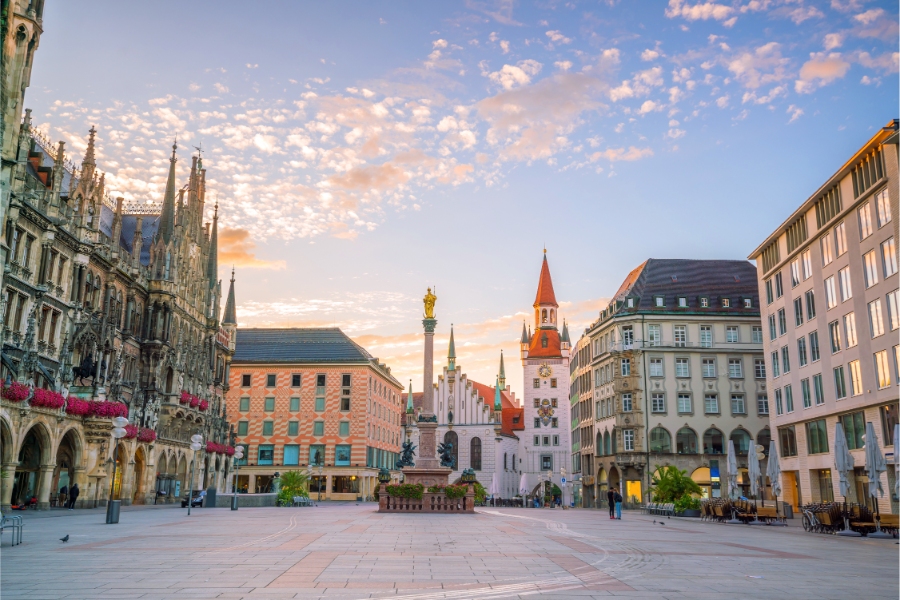
- On foot: About 20 minutes from Marienplatz
- By car: Not advisable — parking is minimal and drink-driving enforcement is strict
Accommodation
- Book early: Rates multiply during the festival; six to twelve months ahead is normal
- Ludwigsvorstadt and Isarvorstadt: Walking distance to the grounds
- Outer suburbs: Cheaper, with reliable late-night S-Bahn service
- Nearby cities: Augsburg, Ingolstadt and Rosenheim are all within an hour by train
🏨 Where to Stay in Munich for Oktoberfest
High Demand • Reserve EarlyHotel rooms within walking distance of Theresienwiese fill up 6–12 months in advance. We recommend checking rooms near Munich Central Station (Hauptbahnhof) with flexible cancellation on IHG Hotels & Resorts (Holiday Inn & Crowne Plaza Munich) or booking intercity train connections via Omio.
*Affiliate notice: We may earn a commission from hotel and ticket bookings made through these links at no extra cost to you.Budget Planning
2026 Beer Prices by Tent

| Tent | 2026 Maß | 2025 Maß |
|---|---|---|
| Augustiner-Festhalle | €14.90 | €14.50 |
| Fischer-Vroni | €15.75 | €15.40 |
| Hacker-Festzelt | €15.80 | €15.40 |
| Hofbräuhaus-Festzelt | €15.80 | €15.40 |
| Käfer Wiesn-Schänke | €15.80 | €15.40 |
| Marstall | €15.80 | €15.40 |
| Ochsenbraterei | €15.80 | €15.35 |
| Paulaner-Festzelt | €15.80 | €15.40 |
| Schottenhamel-Festhalle | €15.80 | €15.40 |
| Schützen-Festzelt | €15.80 | €15.40 |
| Armbrustschützen-Festzelt | €15.90 | €15.50 |
| Bräurosl | €15.90 | €15.40 |
| Löwenbräu-Festzelt | €15.90 | €15.40 |
| Kufflers Weinzelt (wheat beer) | €18.40 | €17.80 |
Typical Costs Beyond Beer
- Half Hendl: Roughly €16–20
- Schweinshaxe: Roughly €20–25
- Brezn: Roughly €6–8
- Non-alcoholic drinks: Roughly €5–10
- Rides: Roughly €5–12 per ride
- Realistic full day: €90–130 per person including two Maß, a main dish and a ride
Ways to Spend Less

- Drink at Augustiner or Familienplatzl: A euro cheaper per litre adds up fast
- Target Family Days: Reduced ride and food pricing on designated Tuesdays
- Share mains: Portions are genuinely large enough for two
- Eat outside, drink inside: Restaurants a few streets away cost far less
- Skip the reseller packages: Entry is free, so any “ticket” is just a repackaged voucher
Safety and Security
- Bag rules: Backpacks and bags over three litres are banned; use the paid left-luggage points
- Screening: Fenced grounds with controlled entrances and bag checks
- Emergency number: 112 anywhere in Germany
- On-site medical care: A staffed Aicher Ambulanz station treats thousands of cases per festival
- Lost & Found and Security Point: Located at the Service Centre; the Security Point offers support specifically for women and girls
- Pace yourself: A Maß of 6% Festbier is close to three standard drinks — eat and drink water between rounds
Oktoberfest Around the World

Munich’s festival has inspired hundreds of imitators, several of which claim to be the largest outside Bavaria. Kitchener-Waterloo in Canada, Blumenau in Brazil and Cincinnati in the United States each stake that claim under different measures of attendance. Villa General Belgrano in Argentina hosts a smaller but genuinely rooted celebration built around a German immigrant community.
What Munich retains is the combination the copies cannot reproduce: the original site, the six-brewery monopoly, purpose-built tents rebuilt every year, and a local population that actually attends in Tracht.
Sustainability at the Wiesn
- Green electricity: The festival runs on certified renewable power supplied by the city
- Reusable dishware: Disposable plates and cutlery have been banned since 1991
- Waste separation: Comprehensive on-site recycling and organic waste collection
- Organic and regional food: A growing share of tents hold organic certification for parts of their menu
- Public transport: The overwhelming majority of visitors arrive by U-Bahn, S-Bahn or on foot
Final Word Before You Go
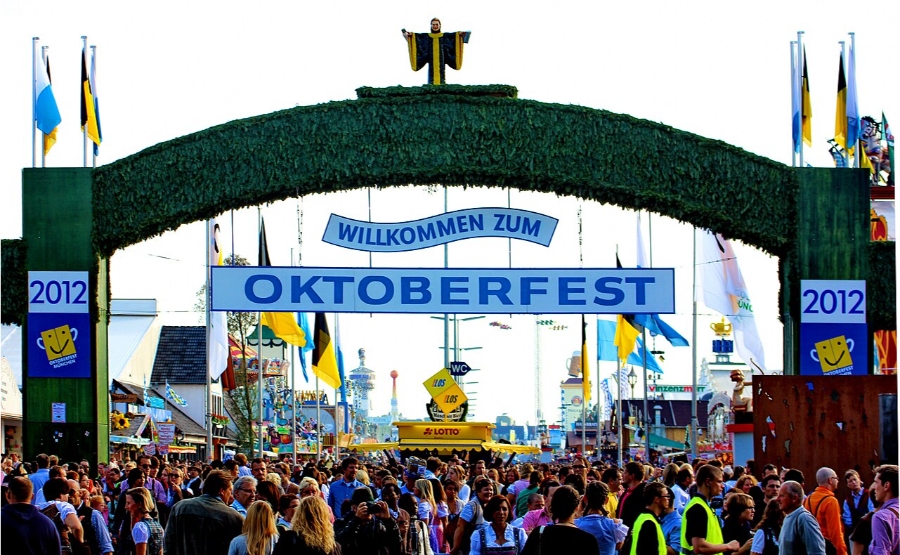
Oktoberfest works best when you treat it as a cultural festival that happens to serve extraordinary beer, rather than a drinking contest with decorations. Arrive early on a weekday, learn the eye-contact rule for toasting, eat properly, and spend at least an hour in the Oide Wiesn to see what the festival looked like before it went global. Prost!
Frequently Asked Questions
When is Oktoberfest 2026?
The 191st Oktoberfest runs from Saturday, 19 September to Sunday, 4 October 2026 on the Theresienwiese in Munich — 16 days in total. The mayor taps the first keg in the Schottenhamel tent at noon on 19 September, and no beer is served before that moment on opening day.
How much does a beer cost at Oktoberfest 2026?
A one-litre Maß costs between €14.80 and €15.90 in 2026, an average increase of 2.38 percent over 2025. Augustiner-Festhalle is the cheapest large tent at €14.90, while Armbrustschützen, Bräurosl and Löwenbräu top out at €15.90. The wheat-beer Maß in Kufflers Weinzelt costs €18.40.
Do I need a ticket to enter Oktoberfest?
No. Entry to the Theresienwiese and to all beer tents is free, and there is no such thing as an official Oktoberfest admission ticket. Anything sold as a u0022ticketu0022 is really a food and drink voucher package. The only paid-entry area is the Oide Wiesn, which charges a small fee.
Do I need a table reservation?
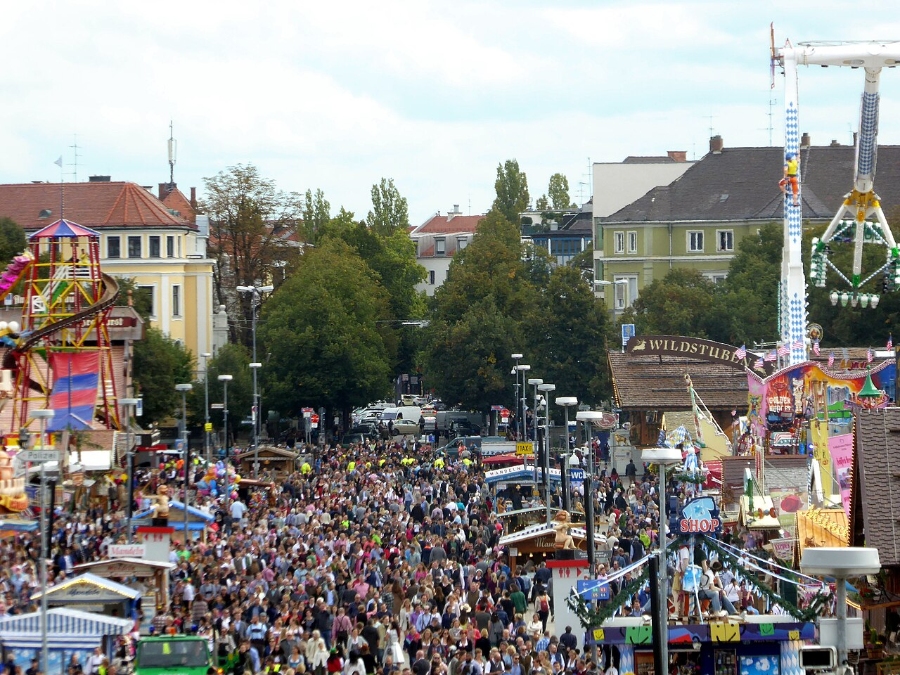
Reservations are close to essential for weekend evenings, when tents regularly close their doors once full. They are free to make but require prepaid vouchers, usually two Maß plus half a chicken per person for a table of ten. Book directly with each tent, typically in winter or early spring. Roughly a third of every tent stays open for walk-ins, and weekday mornings are easy without a booking.
How much beer is consumed at Oktoberfest?
Around 6.5 to 7 million litres are served over the 16 days. The average visitor drinks about one to two Maß, though the strength catches people out: at roughly 6 percent ABV, a single litre is close to three standard drinks.
What should I wear if I don’t own a dirndl or lederhosen?
Traditional Tracht is genuinely common but never required — smart casual clothing and comfortable shoes are perfectly fine. Munich has plenty of rental and mid-range retail options if you want the full experience. Avoid novelty costume-shop versions, which locals read as mocking rather than participating.
Which beer tent should I choose?
Augustiner-Festhalle is the most traditional and pours from wooden barrels; Hofbräu-Festzelt draws the most international crowd and has a standing area; Schottenhamel hosts the opening tapping and skews young; Löwenbräu is a balanced mix under its roaring lion tower. For something quieter, try Fischer-Vroni for grilled fish or Zur Bratwurst for sausage.
Is Oktoberfest suitable for children?
Yes, during daytime hours. Designated Family Days offer reduced ride and food prices until 18:00, and the Oide Wiesn is the most child-friendly part of the grounds. Tents become loud and heavily adult-oriented after the bands switch to amplified music around 18:00, so plan family visits for the afternoon.
How do I get to Oktoberfest from Munich city centre?
Take U-Bahn line U4 or U5 to Theresienwiese, or U3/U6 to Goetheplatz to sidestep the worst crowds. All S-Bahn lines stop at Hauptbahnhof, a 10–15 minute walk away, and Marienplatz is about 20 minutes on foot. Driving is a poor idea given minimal parking and strict drink-driving enforcement.
What food should I try at Oktoberfest?
Start with Hendl, the spit-roasted half chicken that is the festival’s most ordered dish. Other essentials are Schweinebraten with dumplings, Schweinshaxe, Weißwurst before noon with sweet mustard, Steckerlfisch at Fischer-Vroni, and a giant Brezn with Obatzda. Finish with Kaiserschmarrn. Portions are large and made for sharing.
Can I enjoy Oktoberfest without drinking alcohol?
Easily. Every tent serves alcohol-free beer, Spezi, water and juices, and the food, brass bands, folk dancing, parades and fairground rides stand on their own. The Oide Wiesn and the Trachten- und Schützenzug parade are highlights that have nothing to do with drinking.
What can I bring into the festival grounds?
Bags and backpacks over three litres in volume are banned, and the grounds are fenced with controlled, screened entrances. Use the paid left-luggage facilities near the entrances for anything larger. Outside food and drink are not permitted inside the tents.