Saarland
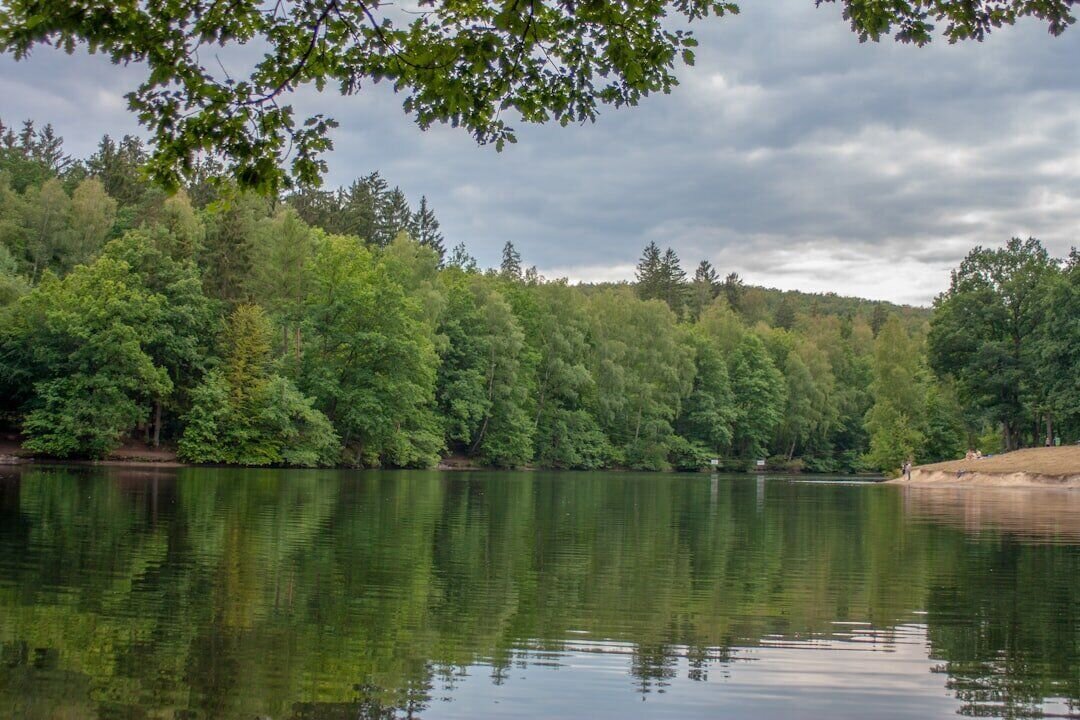
Saarland sits in Germany’s far southwest, bordered by France and Luxembourg, and that location shows on almost every street corner. A traveler exploring this region encounters a place where German order meets French joie de vivre, or joy of living, in food, architecture, and daily rhythm.
The Saar River cuts through wooded valleys that once powered a coal and steel economy. That industrial past now shapes museums, festivals, and the region’s identity.
The territory changed hands between Germany and France several times during the 20th century, and that history still appears in local dialect, cuisine, and place names. Visitors find a compact, walkable state where a morning at a Roman villa can end with dinner influenced by both German and French traditions.
Key Takeaways
- Saarland pairs French-influenced food and culture with German industrial history in a compact border region.
- The Saarschleife river bend and Völklinger Hütte ironworks anchor a trip that also includes hiking, cycling, and small-town wine culture.
- Saarbrücken and nearby towns connect easily by train or car to Luxembourg, France, and other German regions for day trips.
What Makes Saarland Distinct?
Saarland’s character comes from its position as a border region, shaped by repeated shifts in sovereignty and a coal-and-steel economy that has since diversified. Its identity remains tied to its geography: it sits between France, Luxembourg, and the German state of Rhineland-Palatinate, with old trade and cultural routes leading toward Metz, Nancy, and Strasbourg.
A Border Region Between France, Luxembourg, and Rhineland-Palatinate
Saarland covers about 2,571 square kilometers, making it Germany’s smallest Flächenland (area state, meaning a state that is not one of the city-states of Berlin, Hamburg, or Bremen). It borders the French region of Lorraine and Luxembourg, and lies close to Luxembourg City, Metz, and Nancy.
This location placed Saarland at the center of centuries of Franco-German exchange. Road and rail links still connect it easily with French and Luxembourgish cities, shaping local food, dialect, and everyday habits.
From the Treaty of Versailles to the Saar Protectorate
The Treaty of Versailles in 1919 placed Saarland under League of Nations administration, separating it from Germany after World War I. After World War II, it became the Saar Protectorate under French economic control, before a 1955 referendum returned it to West Germany in 1957.
That history helps explain why Saarland’s identity differs from those of neighboring German regions. Decades of shifting governance left a lasting French imprint on food, language, and civic life.
Coal, Steel, and a Changing Economy
Coal mining and steel built Saarland’s economy for more than a century, and closed mines and former steelworks now anchor its industrial heritage sites. The economy has since diversified into automotive components manufacturing and software development, reducing its dependence on heavy industry.
Local dialect, known as Saarländisch, reflects this layered history. It blends German grammar with French vocabulary absorbed through generations of cross-border contact.
Which Places Should You Prioritize?
Saarbrücken, the Saarschleife river bend, and the Völklinger Hütte ironworks form the core of a Saarland itinerary. Mettlach and the upper Saar Valley add a slower-paced extension.
Each destination reflects a different layer of the region’s history, from Baroque urban planning to Roman settlement and 20th-century industry.
Saarbrücken, Saarlouis, and the Urban Saar Valley
Saarbrücken, the state capital, mixes Baroque architecture with a compact museum scene along the Saar River. The Ludwigskirche, a Protestant church completed in 1762, anchors the historic Ludwigsplatz, while the city’s museums cover regional history, modern art, and industrial artifacts.
Saarlouis, about 20 kilometers northwest, was founded in 1680 by Louis XIV as a fortress town. Its star-shaped fortifications and Baroque palace layout still define the old town.
Both cities sit along the Saar River, which links a string of smaller industrial and market towns as it winds toward the Moselle.
Völklinger Hütte and Saarland’s Industrial Legacy
Völklinger Hütte, the former Völklingen ironworks, became a UNESCO World Heritage Site in 1994. It was the first industrial site to receive that designation without altering its original structures.
Visitors walk among preserved blast furnaces and ore bunkers, which now house an industrial museum and rotating art exhibitions. The site covers roughly 6 hectares of accessible grounds and gives a direct sense of the labor and engineering that powered Saarland’s economy for generations.
It sits in Völklingen, a short train ride or drive from Saarbrücken.
Saarschleife, Mettlach, and the Upper Saar
The Saarschleife, or Saar Loop, is the river’s sharpest bend, viewed from the Cloef viewpoint above the water. A treetop walk, the Saarschleife Baumwipfelpfad, extends over the forest canopy for closer views of the loop.
Mettlach, further upstream, is home to Villeroy & Boch, a ceramics manufacturer with a visitor center that traces its production history. Vineyards line the slopes near Perl, close to the Roman villa Borg, a reconstructed Roman Empire-era estate.
The villa shows how Roman settlers farmed and lived along the Saar centuries before Germany or France existed as nations.
Where Can You Hike, Cycle, and Spend Time Outdoors?
Saarland offers a dense network of marked hiking and cycling trails, river activities near the Saarschleife, and protected landscapes such as the Bliesgau Biosphere Reserve. Its compact size means most outdoor sites sit within an hour’s drive of Saarbrücken.
Saar Loop Viewpoints and River Activities
The Cloef viewpoint above the Saarschleife offers the clearest overview of the river’s bend. Visitors can reach it by taking a short walk from a nearby parking area.
Kayaking on the Saar River is available downstream from the loop, giving a lower-angle view of the same wooded slopes. The Saarschleife Baumwipfelpfad runs above the forest canopy near the viewpoint, extending the visit for travelers who want more time at the site.
Bliesgau Biosphere Reserve and the Hunsrück Hills
The Bliesgau Biosphere Reserve, centered near Blieskastel, protects a landscape of orchards, meadows, and small villages east of Saarbrücken. UNESCO recognizes it as a biosphere reserve for its balance of farming and conservation.
The Hunsrück hills extend along Saarland’s northern edge and offer steeper terrain for hikers and cyclists. They also include sections of the long-distance Saar-Hunsrück-Steig trail.
Caves, Lakes, and Gardens Beyond the Main Route
The Schlossberghöhlen, or Schlossberg Caves, in Homburg are red sandstone caves carved beneath the ruins of Hohenburg fortress. They rank among the largest man-made caves in Europe.
Merzig’s Garten der Sinne (Garden of the Senses) offers a smaller-scale stop focused on plants and quiet walking paths. Bostalsee, a reservoir near St Wendel, draws visitors for swimming and lakeside walks, while St Wendel’s Gothic basilica anchors a compact old town nearby.
These sites work well as stops between the Saarschleife and the Hunsrück region.
What Should You Eat and Drink in Saarland?
Saarland cooking relies on potatoes, grilled meats, and French-influenced techniques. The region also has a dense concentration of Michelin-starred restaurants for its size.
The state has more Michelin stars per capita than any other in Germany, reflecting both local agricultural quality and French culinary influence.
Grilled Specialties, Potato Dishes, and Bakery Traditions
Dibbelabbes, a baked dish of grated raw potato, leek, and bacon, is the region’s signature comfort food. People often serve it with apple sauce.
Schwenker, a grilled pork steak cooked on a swinging grill (Schwenkgrill), anchors backyard and festival cooking across the state. Lyoner, a mild boiled sausage, and Grumbeersalat (potato salad, from the dialect word Grumbeer for potato) appear on most home and restaurant menus.
Gefilde, a meat-and-potato dumpling dish, and Ringelweck, a ring-shaped roll, round out the traditional bakery and table staples.
French Influence and Fine Dining
French technique shows clearly in Saarland’s fine-dining scene, where chefs pair local produce with classic French preparation methods. Flammkuchen, a thin flatbread topped with cream, onion, and bacon, crosses the border directly from Alsace and Lorraine and appears on menus throughout the state.
This blend of home cooking and refined technique helps explain Saarland’s high number of Michelin stars per capita, a distinction tied to its cross-border culinary heritage.
Viez, Wine, and Seasonal Food Events
Viez, a dry, tart cider distinct from sweeter German apple ciders, is Saarland’s most distinctive regional drink. It also anchors an annual Viez Festival in the Saar Valley.
Riesling and other wines from vineyards near Perl and the Moselle Valley border benefit from the same slopes that support Saarland’s fruit orchards. Wine festivals run through late summer and early fall in towns along the Saar and Moselle, timed to harvest season.
These events combine tastings with regional food stalls serving Dibbelabbes, Schwenker, and Flammkuchen side by side.
When Should You Visit and How Do You Get Around?
Late spring through early fall suits hiking, cycling, and wine festivals, while December brings Christmas markets to Saarbrücken and smaller towns. Saarland’s compact size and rail connections make it practical to base yourself in one city and take day trips across three countries.
Best Seasons for Trails, Wine Festivals, and Christmas Markets
May through September offers the most reliable weather for hiking the Saar-Hunsrück-Steig and cycling routes along the river. Wine and Viez festivals cluster from late August through October, following harvest timing in the Saar and Moselle valleys.
Christmas markets open in late November in Saarbrücken and continue through December in smaller towns, adding indoor cultural events as outdoor activity slows. Cultural events and festivals run throughout the year in Saarbrücken’s museums and concert venues, including the Stummsche Reithalle, a former riding hall now used for events and exhibitions.
Traveling by Rail, Bus, and Car
Saarbrücken’s regional transit runs through the Saarländischer Verkehrsverbund (SaarVV), the state’s public transport network for buses and regional trains. TGV high-speed trains connect Saarbrücken directly to Paris, reflecting the region’s French ties.
Regional rail also links Saarbrücken to Trier, Koblenz, and Mainz within Germany. Saarbrücken Airport (SCN) offers limited regional flights, while Frankfurt-Hahn Airport (HHN) provides a nearby alternative for international connections.
Car travel remains the most flexible option for reaching smaller towns like Dillingen, Neunkirchen, and Mettlach, since not all of them sit directly on rail lines.
How to Plan Day Trips Across the Borders
Luxembourg (Lux) City sits under an hour from Saarbrücken by car or train, making it a practical day trip for travelers based in Saarland. Metz and Nancy in France are similarly close, reachable in under 90 minutes by road.
Trier, just across the Rhineland-Palatinate border, adds Roman-era sites to a Saarland itinerary without requiring an overnight stay. Fares, schedules, and border-crossing rail options change with provider updates, so checking current timetables before travel is worth the extra step.
Frequently Asked Questions
Is Saarland worth visiting?
Saarland rewards travelers interested in industrial history, Franco-German culture, and low-intensity outdoor activity. The region offers the Völklinger Hütte UNESCO site, the Saarschleife river bend, and a dense concentration of Michelin-starred restaurants in a compact area.
Its small size means a short trip can cover several distinct sights without long travel times between them.
Where is Saarland located in Germany?
Saarland sits in Germany’s southwest corner. France borders it to the south and west, while Luxembourg lies to the northwest. The German state of Rhineland-Palatinate borders it to the north and east, and the capital, Saarbrücken, sits directly on the French border.
What are the best places to visit in Saarland?
Saarbrücken, the Saarschleife river bend, and Völklinger Hütte form the core of most itineraries. For longer stays, Mettlach and Saarlouis add more variety. Together, these stops cover urban culture, natural scenery, and industrial heritage within a short drive of one another.
Was Saarland once a country?
Saarland functioned as a semi-autonomous territory rather than a fully independent country. It first came under League of Nations administration after the Treaty of Versailles, then became the French-administered Saar Protectorate after World War II.
A 1955 referendum led to its return to West Germany in 1957.
What language is spoken in Saarland?
Standard German is Saarland’s official language, although many residents speak Saarländisch, a regional dialect that combines German grammar with French vocabulary. Near the border, plenty of locals also speak French, reflecting centuries of cross-border contact.