Kassel
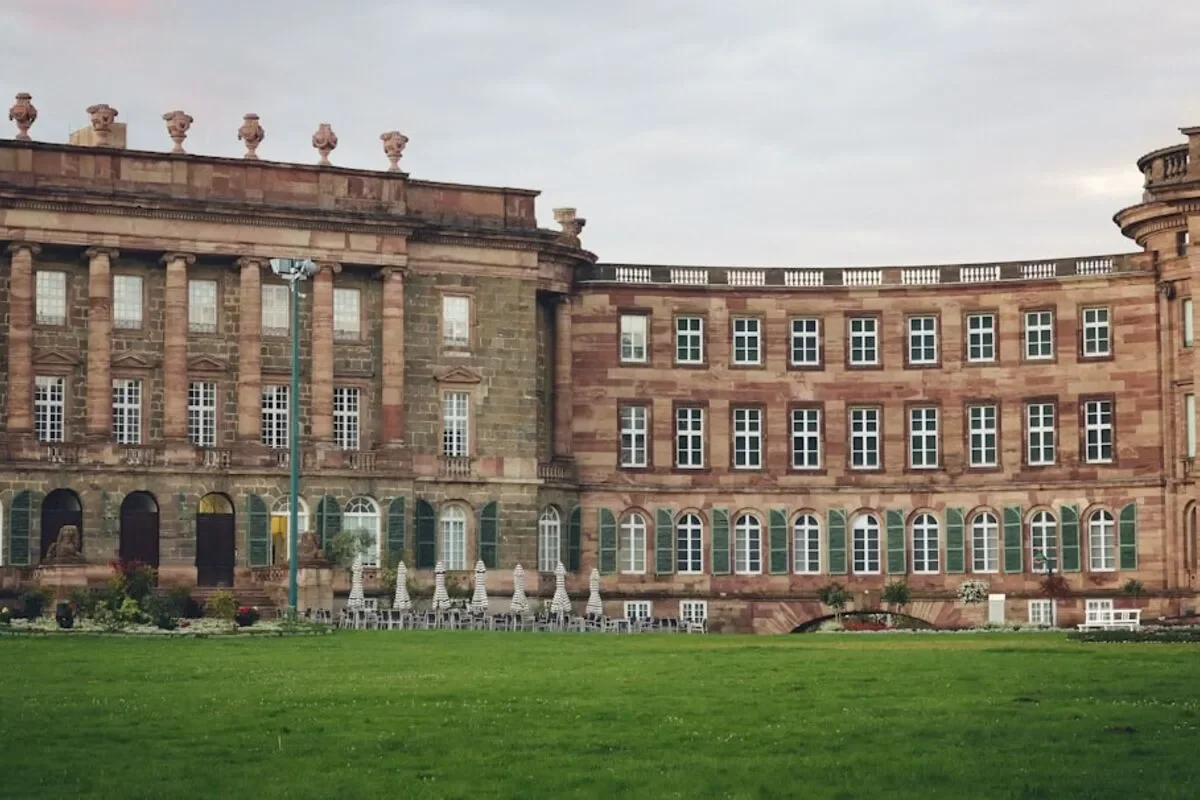
Kassel is a mid-sized city in the northern Hesse state of central Germany that punches far above its weight culturally. It is home to the Bergpark Wilhelmshöhe — the largest hillside park in Europe and a UNESCO World Heritage Site — as well as documenta, the world’s most important recurring contemporary art exhibition. Add the Brothers Grimm connection, a string of excellent museums, and easy rail access from Frankfurt, and Kassel becomes one of Germany’s most rewarding and underrated city-trip destinations.
Quick facts about Kassel
| Detail | Information |
|---|---|
| State | Hesse (Hessen), Germany |
| Population | Approx. 200,000 |
| UNESCO site | Bergpark Wilhelmshöhe (listed 2013) |
| Major event | documenta — world-leading contemporary art exhibition held every five years |
| Famous residents | Brothers Grimm (Jacob and Wilhelm) lived here 1798–1830 |
| Nearest major airport | Frankfurt Airport (approx. 2 hrs by ICE train) |
| Best time to visit | May–September for water displays; documenta years draw extra visitors |
Top things to do in Kassel
Bergpark Wilhelmshöhe and the Hercules monument
The Bergpark Wilhelmshöhe is the crown jewel of any visit to Kassel. Stretching across 2.4 square kilometres of forested hillside above the city, it is the largest hillside park in Europe and was inscribed as a UNESCO World Heritage Site in 2013. The park was laid out from the late 17th century onwards by the Landgraves of Hesse-Kassel and combines baroque water features, cascades, aqueducts, and romantic English-style landscaping in one sweeping composition.
At the very top of the park stands the Hercules monument — a colossal copper statue of the Greek hero mounted on an eight-sided pyramid and an octagonal substructure. The entire structure rises to around 71 metres and is visible from much of the city below. Climbing to the platform beneath Hercules rewards visitors with panoramic views over Kassel and the surrounding Hessian highlands. The statue has become the unofficial symbol of Kassel and appears on the city’s coat of arms.
Between May and early October, on selected Wednesday, Sunday, and holiday afternoons, the park stages its famous water displays. Water released from a reservoir near Hercules cascades down a series of terraced waterfalls, shoots through an aqueduct, and eventually feeds a 52-metre fountain in the lower park. The show takes roughly 70 minutes to travel the full length of the hillside and is one of the most impressive baroque spectacles in Germany. Check the Kassel tourist board website for the current water-display schedule before you visit.
Schloss Wilhelmshöhe and the State Art Collections
At the foot of the Bergpark sits Schloss Wilhelmshöhe, a neoclassical palace built in the early 19th century that served as a summer residence for the electors and later kings of the region. Today the palace houses the Gemäldegalerie Alte Meister — one of Germany’s finest old master painting collections — alongside an important antiquities department. Highlights include Rembrandt’s self-portraits, major works by Rubens, Dürer, and Cranach, and a remarkable collection of ancient Greek and Roman sculpture. The palace is also connected to the Kassel-Wilhelmshöhe high-speed rail station, making it the first landmark most train visitors encounter.
documenta — the world’s leading contemporary art exhibition
Few cities of Kassel’s size hold an event with documenta’s global cultural standing. Founded in 1955 by artist and art teacher Arnold Bode partly as a way to reconnect postwar Germany with modern and contemporary art that had been suppressed or destroyed under National Socialism, documenta takes place every five years and runs for approximately 100 days each time. Artists from across the world are invited to create and exhibit new work across multiple venues throughout Kassel, transforming the city into an open-air gallery of the most challenging and relevant art being made today.
The central venue is the Museum Fridericianum on Friedrichsplatz — one of the oldest public museums in Europe, built in 1779. Even outside documenta years the Fridericianum hosts ambitious contemporary art exhibitions, making it worth a visit at any time. The Neue Galerie, just a short walk away on Schöne Aussicht overlooking the Fulda river, holds the permanent documenta archive and rotating exhibitions of 20th-century and contemporary art from the State Art Collections of Kassel.
Grimmwelt Kassel — Brothers Grimm museum
Jacob and Wilhelm Grimm lived and worked in Kassel from 1798 to 1830, and it was here that they compiled and published the first editions of their celebrated fairy tales. The Grimmwelt (Grimm World) museum, which opened in 2015 in a boldly sculptural modern building on the Weinberg hill, tells the story of the Brothers Grimm through interactive exhibits, manuscripts, first editions, and installations inspired by German fairy tales including Cinderella, Rapunzel, and Hansel and Gretel. It is one of the best-presented literary museums in Germany and equally engaging for adults and children.
Kassel sits on the German Fairy Tale Route (Deutsche Märchenstraße), a tourism corridor that traces the locations associated with the Grimm brothers from Hanau (their birthplace) north through Hesse to Bremen. The city makes an ideal anchor point for exploring this route, particularly for families.
Karlsaue Park and the Fulda riverside
While Bergpark Wilhelmshöhe dominates the western edge of the city, the Karlsaue park spreads along the eastern bank of the Fulda river in the heart of Kassel. This baroque riverside park, laid out in the 17th century, features broad meadows, a rose garden, an orangery, and the artificial island of Siebenbergen with its botanical plantings. The Karlsaue is one of Kassel’s most-loved green spaces and frequently hosts outdoor events and documenta installations during exhibition years. A riverside walk along the Fulda connects the park to the city centre and makes for a pleasant early morning or evening stroll.
More museums worth visiting
- Museum für Sepulkralkultur — a unique museum dedicated to the culture of death, mourning, and remembrance; the only institution of its kind in the world and genuinely thought-provoking rather than morbid.
- Naturkundemuseum im Ottoneum (Natural History Museum Kassel) — Germany’s oldest permanent public museum building, dating to 1606, housing natural history collections including fossils, minerals, and zoological specimens.
- Hessisches Landesmuseum Kassel — the state museum covering local and regional history, decorative arts, and wallpaper (the museum holds one of the world’s most important wallpaper collections).
- Astronomisch-Physikalisches Kabinett — a fascinating collection of historic scientific instruments housed in the Orangerie in the Karlsaue park.
Getting to Kassel
Kassel is well connected by high-speed rail. The Kassel-Wilhelmshöhe station sits directly beside Schloss Wilhelmshöhe and is served by ICE trains from Frankfurt (approx. 1 hour 40 minutes), Hanover (approx. 45 minutes), and Berlin (approx. 2 hours 30 minutes). Note that the Kassel-Wilhelmshöhe station handles most long-distance services; the older Kassel Hauptbahnhof in the city centre handles regional routes. Kassel does not have its own international airport but is easily reached via Frankfurt Airport with a direct ICE connection.
By car, Kassel sits at the intersection of the A7 (north–south) and A44 motorways, making it accessible from all directions. Driving time from Frankfurt is roughly two hours, from Hamburg about three hours. Within the city, Kassel has a tram (Straßenbahn) network and regional buses. A tram line connects Kassel-Wilhelmshöhe station to Friedrichsplatz in the city centre and onwards to the Hauptbahnhof.
Best time to visit Kassel
Late spring through early autumn (May to September) is the best time to visit Kassel. During this period the Bergpark Wilhelmshöhe water displays run on scheduled days, the parks and gardens are at their most beautiful, and outdoor terraces open across the city. Documenta years — the exhibition runs every five years — draw large international crowds and offer an unparalleled experience of contemporary art in an urban setting. The next edition is worth checking in advance to plan around, as accommodation fills up quickly. Winter visits are quieter but the Hercules monument and Schloss Wilhelmshöhe remain accessible year-round.
Where to eat and drink in Kassel
Kassel’s food scene reflects its position as a Hessian university city — unpretentious, varied, and good value compared to Frankfurt or Berlin. The Obere Königsstraße and the streets around Friedrichsplatz in the city centre offer the highest concentration of restaurants, cafés, and bars. Local food staples worth trying include Ahle Wurst (a firm, aged pork sausage specific to northern Hesse), Bratwurst from market stalls, and hearty Hessian tavern food (Gasthausküche) featuring dishes like Grüne Soße (Frankfurt-style green herb sauce, popular across Hesse) and potato-based sides. Several wine bars and craft beer venues have opened in recent years, particularly around the Nordstadt neighbourhood, which also hosts independent boutiques and a strong café culture.
Where to stay in Kassel
Kassel’s hotels are spread between the city centre and the Wilhelmshöhe area near the station and palace. Staying near Kassel-Wilhelmshöhe station is convenient for day trips by ICE, for visiting the Bergpark on foot, and for accessing the tram into the centre. The city centre around Friedrichsplatz offers the most walkable access to documenta venues, the Grimmwelt, and the Karlsaue. Budget options are plentiful for a German city of this size; mid-range and boutique hotels are the dominant categories with a small number of four-star business hotels near the main transport hubs.
Day trips from Kassel
- Bad Wildungen — a handsome spa town with a Gothic church containing one of the finest 14th-century altarpieces in Germany, about 45 minutes south by car.
- Marburg — a beautifully preserved medieval university town with a hilltop castle and Germany’s oldest purely Gothic church, about one hour south by train.
- Sababurg — the “Sleeping Beauty Castle,” a ruined hilltop fortress set in ancient woodland said to have inspired the Grimm fairy tale, about 45 minutes northwest by car.
- Edersee — one of the largest reservoirs in Germany, offering boat trips, cycling, and the historic Eder dam famous from the World War II Dambusters raid, about one hour southwest.
- Hannoversch Münden — a perfectly preserved medieval half-timbered town at the confluence of three rivers, about 35 minutes northwest; a key stop on the German Fairy Tale Route.
Kassel and the Brothers Grimm
The Brothers Grimm — Jacob (1785–1863) and Wilhelm (1786–1859) — spent the most productive decades of their careers in Kassel. Working as librarians at the court library of the Elector of Hesse-Kassel, they collected and published the first volume of their Kinder- und Hausmärchen (Children’s and Household Tales) in 1812, followed by a second volume in 1815. The tales were not original inventions but rather scholarly transcriptions of oral folk traditions, many gathered from informants in and around Kassel. The Grimmwelt museum presents this history in full and includes original manuscripts and correspondence. A Grimm walking trail through the city marks key locations associated with their life and work.
Kassel in World War II
Kassel suffered severe destruction during World War II. The city was a major industrial and rail hub — home to Henschel locomotive and tank factories — making it a priority target for Allied bombing. The single most devastating raid came on the night of 22–23 October 1943, when a British bombing campaign killed approximately 10,000 residents and destroyed around 90 percent of the city centre within 90 minutes. Post-war reconstruction was largely utilitarian, which explains the relatively modest historic architecture in much of the inner city today. The decision to hold the first documenta exhibition in 1955 was partly a deliberate act of cultural rebuilding, using contemporary art to reconnect the reconstructed city with progressive thought and European cultural life.
Frequently asked questions
Is Kassel worth visiting?
Yes. Kassel offers a compelling combination of the UNESCO-listed Bergpark Wilhelmshöhe (the largest hillside park in Europe), the world-renowned documenta contemporary art exhibition, the Brothers Grimm Grimmwelt museum, and a cluster of excellent cultural institutions. It is far less crowded than Germany’s most-visited cities and gives good value for money.
How many days do you need in Kassel?
Two full days is a comfortable minimum: one day for the Bergpark Wilhelmshöhe, Schloss Wilhelmshöhe, and the Hercules monument, and a second day for the Grimmwelt, Museum Fridericianum or Neue Galerie, and the Karlsaue riverside. Three days allows for a more relaxed pace and at least one day trip into the surrounding Hessian countryside.
When do the Wilhelmshöhe water displays run?
The water displays in Bergpark Wilhelmshöhe run on selected Wednesdays, Sundays, and public holidays between May and early October. The show starts near the Hercules monument and takes around 70 minutes for the water to reach the lower park fountain. Check the official Kassel tourist board website for the exact schedule each season.
What is documenta in Kassel?
Documenta is a contemporary art exhibition held in Kassel every five years, typically running for around 100 days. First staged in 1955, it is considered the world’s most significant recurring contemporary art event. Installations and exhibitions are spread across multiple venues throughout the city, transforming Kassel into a global art destination during exhibition years.
How do I get from Frankfurt to Kassel?
The fastest and most convenient option is the ICE high-speed train from Frankfurt Hauptbahnhof or Frankfurt Airport directly to Kassel-Wilhelmshöhe station, which takes approximately 1 hour 40 minutes. Trains run frequently throughout the day. By car the journey takes approximately two hours via the A5 and A7 motorways.
What is the Brothers Grimm connection to Kassel?
Jacob and Wilhelm Grimm lived and worked in Kassel from 1798 to 1830, employed as court librarians for the Elector of Hesse-Kassel. During this time they compiled and published the first editions of their famous fairy tales. The Grimmwelt (Grimm World) museum on the Weinberg hill tells their story through original manuscripts, first editions, and interactive exhibits.
💡 Essential Travel Tips
Explore the historic Old Town (Altstadt) on foot and use the local S-Bahn/U-Bahn network.
🥨 Local Insights & Food Culture
Purchase a 24-hour transit day pass (Tageskarte) for unlimited city travel.
🎟️ Top Activities & Experiences in Kassel
Discover curated walking tours, museum passes, and authentic experiences in Kassel with instant confirmation.