Bratwurst
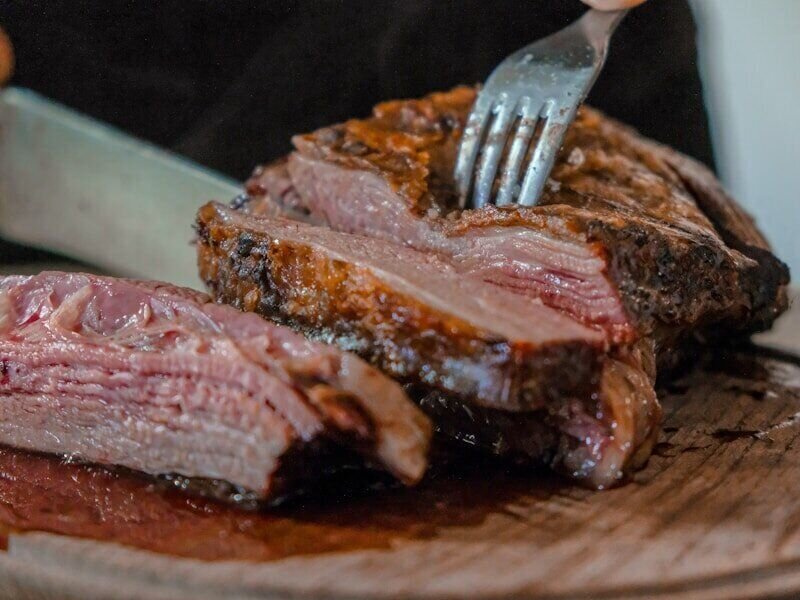
Few foods define Germany as instantly as the Bratwurst. Whether sizzling on a street-corner grill in Berlin, served with sauerkraut in a Franconian Gasthaus, or grilled over charcoal at a summer Grillfest, this humble sausage is a national institution with over 40 regionally protected varieties, a documented history stretching back more than 700 years, and an emotional pull that transcends class, region, and generation.
Historical Origins & Founding Lore
The word “Bratwurst” derives not from “braten” (to fry) as many assume, but from the Old High German “brät,” meaning finely chopped meat—combined with “Wurst” (sausage). The earliest documented reference appears in a 1313 city ledger from Nuremberg, making the Nürnberger Rostbratwurst one of the oldest named sausages in continuous production in Europe. Regensburg and Thuringia claim similarly ancient traditions, with the Thüringer Rostbratwurst referenced in a 1404 monastery document from Arnstadt that even lists an early recipe.
Medieval guild laws strictly regulated sausage-making, partly for food safety and partly to protect butchers’ livelihoods. In Nuremberg, legend holds that butchers made their sausages small enough to pass through a keyhole—smuggling food to a customer locked out after a tavern closure, or, in another version, to a prisoner. Whether true or tavern folklore, it explains why Nuremberg’s sausages remain famously petite compared to their thick Thuringian cousins.
Cultural Significance in German Daily Life & Society
Bratwurst is democratic food. It appears at Bundestag receptions and at street-market Imbiss stands with equal legitimacy. It’s the default centerpiece of the German Grillsaison (grilling season, roughly April to September), a fixture at football stadium kiosks, and an obligatory offering at Christmas markets, where the smell of frying sausage mingles with Glühwein and roasted almonds.
Politically, Bratwurst even has diplomatic weight: several EU-protected “geographical indication” (g.g.A.) statuses—held by Thüringer, Nürnberger, and others—mean only sausages made in the correct region, to the correct recipe, may legally bear that name. This is taken with total seriousness; it is agricultural law, not marketing.
Regional Variations & Local Twists Across Germany
- Thüringer Rostbratwurst — Long, coarse-grained, heavily seasoned with marjoram, caraway, and garlic; grilled over charcoal and served in a bread roll (“Brätel”).
- Nürnberger Rostbratwurst — Finger-sized, marjoram-forward, traditionally served “drei im Weggla” (three in a bun) or as “Sechs im Weckla” with mustard.
- Currywurst — Berlin’s 1949 invention: sliced Bratwurst doused in curry-spiced ketchup, sold at Imbiss stands citywide.
- Fränkische Bratwurst — Franconia’s coarser, garlic-and-lemon-zest version, often grilled over beechwood.
- Weisswurst — Bavaria’s pale veal-and-pork sausage, boiled not grilled, eaten only before noon (“Weisswurst darf den Mittag nicht hören”) with sweet mustard and pretzels.
- Currywurst-adjacent Bockwurst and Bratwurst-Kartoffel dishes — Northern German versions favoring finer grinds and milder spicing.
How It Is Made & Traditionally Grilled
Traditional Bratwurst uses coarsely or finely ground pork (sometimes blended with veal or beef), seasoned with marjoram, nutmeg, caraway, white pepper, and garlic, then packed into natural hog casings. Regional producers guard exact spice ratios as trade secrets. Grilling is traditionally done over charcoal or, in Franconia, beechwood embers, imparting a smoky crust while keeping the interior juicy. Proper technique demands turning frequently over moderate heat—burning the casing is considered an amateur’s mistake. Boiling (as with Weisswurst) is reserved for specific regional styles.
Accompaniments matter as much as the sausage itself: sauerkraut, Bratkartoffeln (fried potatoes), potato salad, or simply a crusty Brötchen with mustard—Senf, either sweet (süß) or sharp (scharf), depending on region.
Vocabulary, Idioms & Etiquette
- “Das ist mir Wurst” — literally “That’s sausage to me,” meaning “I don’t care.”
- Senf — mustard; ordering “mit Senf” is standard, and asking for none marks you as unusual.
- Brätel/Weckla/Brötchen — regional words for the bread roll served with the sausage.
- Eating etiquette: Bratwurst is finger food—no cutlery required at a street stand, though sit-down restaurants provide it.
- Never call it just “Wurst” when precision matters to a regional producer—locals take pride in naming the specific type correctly.
Where to Experience the Best in Germany
| Location | Experience | Approx. Price |
|---|---|---|
| Nuremberg, Bratwursthäusle | Historic Rostbratwurst grilled tableside since medieval times | €8–12 for 8–10 sausages |
| Weimar/Erfurt, Thuringia | Street stalls selling Original Thüringer Rostbratwurst | €2.50–4 per sausage |
| Berlin, Konnopke’s Imbiss | Legendary Currywurst stand since 1930 | €3–5 |
| Munich, Viktualienmarkt | Weisswurst with pretzel and sweet mustard | €4–7 |
| Christmas Markets nationwide (Nov–Dec) | Grilled Bratwurst rolls at nearly every market stall | €3–5 |
For the full ritual, visit during Grillsaison in a beer garden, or time a trip to a regional sausage festival such as Thuringia‘s Bratwurst-themed town fairs in summer. However you encounter it, approach the Bratwurst not as fast food but as a compressed lesson in German regional identity—one bite at a time.