Stuttgart Airport (ARRAY)
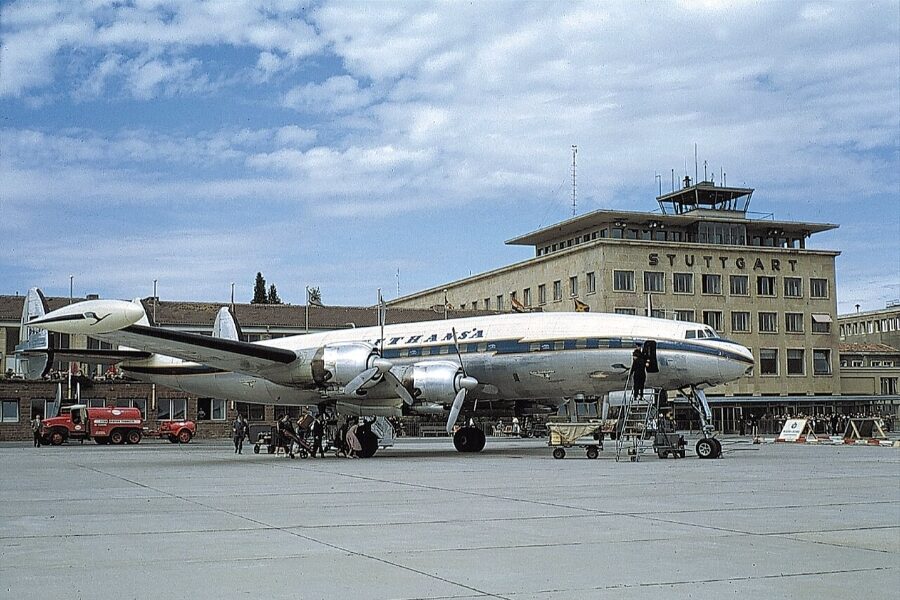
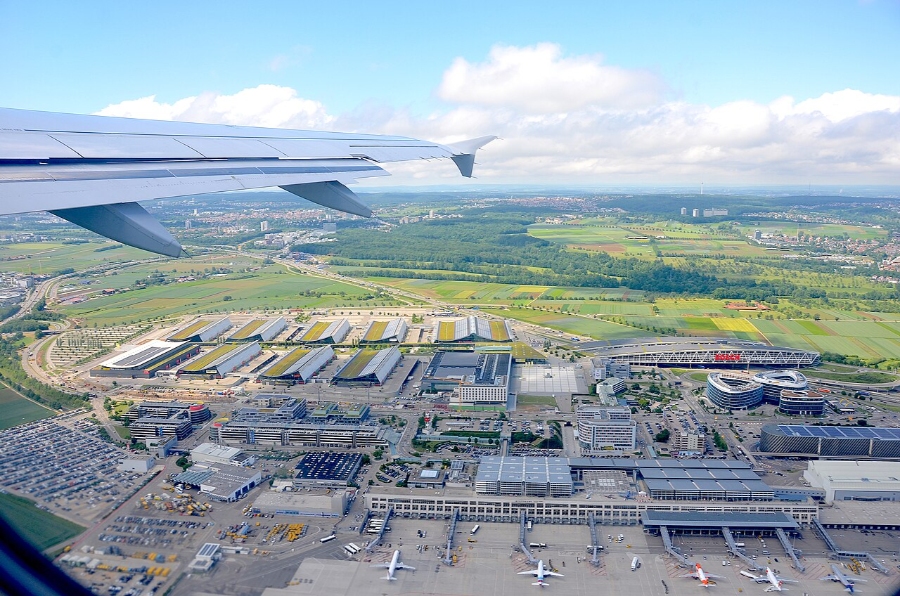
Flughafen Stuttgart (Stuttgart Airport), coded STR and EDDS, is the international airport serving Stuttgart, capital of Baden-Württemberg. It handled 11,832,634 passengers in its busiest recorded year, making it the sixth busiest airport in Germany, and it sits about 13 kilometers south of the city center on the Filder plateau.
The airport carries four passenger terminals inside one connected building, which keeps walking distances short. Its own S-Bahn station sits directly beneath the complex, linking the terminals to Stuttgart Hauptbahnhof (main train station) in roughly half an hour.
Travelers flying through STR can expect four side-by-side terminals, S-Bahn service to the city in about 27 minutes, nine on-site parking garages, and nonstop service to well over 100 destinations across Europe, North Africa, and the Middle East.
Key Takeaways
- STR sits 13 kilometers south of Stuttgart, between Leinfelden-Echterdingen and Filderstadt, and is named after former mayor Manfred Rommel.
- Terminals 1 through 4 stand in one linked building, so switching between them takes minutes on foot.
- Eurowings, Turkish Airlines, and Lufthansa anchor a route map that leans heavily toward European cities and Mediterranean holiday airports.
Where Is STR and What Area Does It Serve?

STR occupies land on the Filder plateau south of Stuttgart, straddling the municipal boundaries of Leinfelden-Echterdingen and Filderstadt. The airport functions as the primary air gateway for Baden-Württemberg, a state built around automotive manufacturing, trade fairs, and wine country.
Location Between Stuttgart, Leinfelden-Echterdingen, and Filderstadt
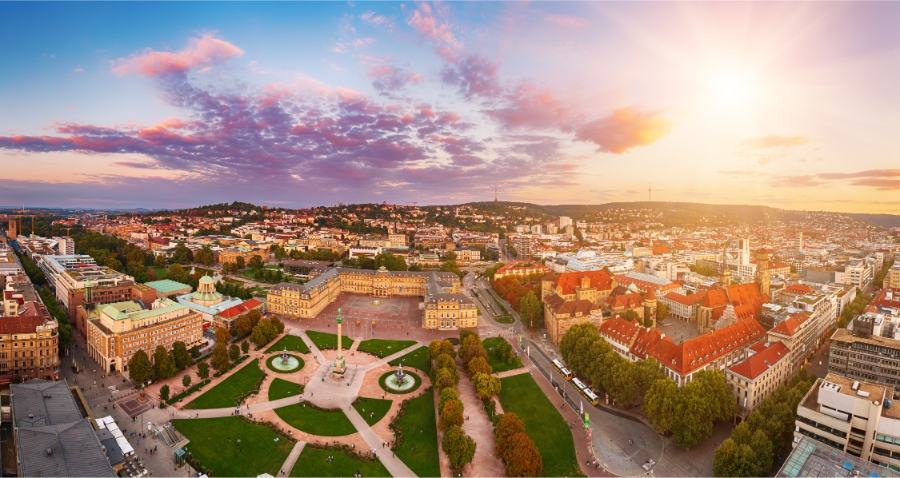
The terminals sit roughly 13 kilometers south of Stuttgart’s city center, at an elevation of about 1,276 feet.
- City center distance: approximately 13 km (about 8 miles)
- Neighboring towns: Leinfelden-Echterdingen and Filderstadt
- Adjacent site: the Stuttgart trade-fair grounds (Messe Stuttgart)
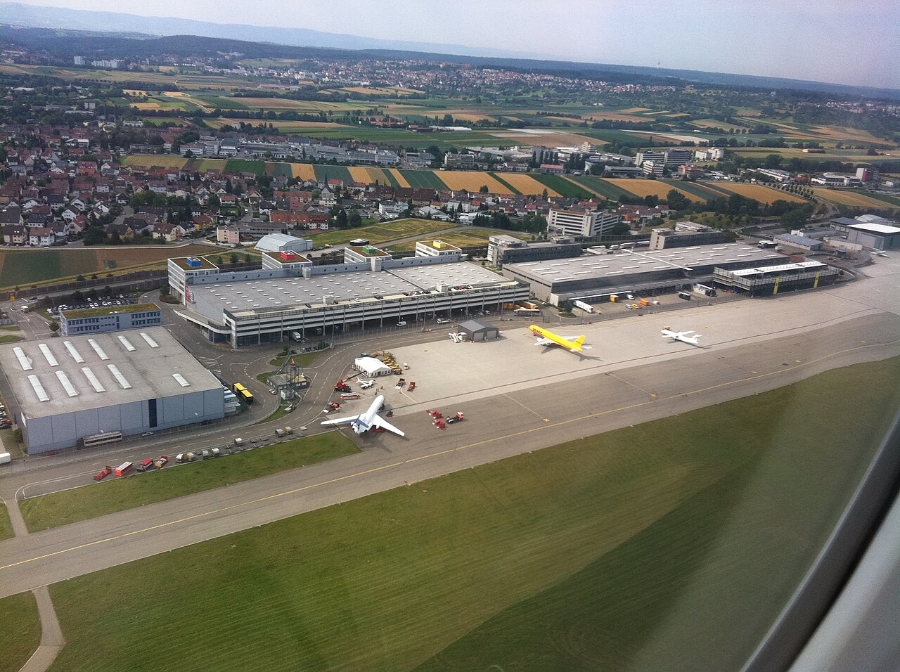
- Runway count: one
That trade-fair location matters for business travelers, since the exhibition halls stand within walking distance of the terminal building.
Airport Codes, Operator, and Regional Role

Two codes identify the airport: STR (IATA) and EDDS (ICAO). The airport is operated by Flughafen Stuttgart GmbH.
STR serves a catchment that reaches into the Black Forest, the Swabian Alb, and the Neckar valley. For visitors heading toward Baden-Württemberg wine villages or the Mercedes-Benz and Porsche museums in Stuttgart, it is the closest full-service airport.
From Böblingen Airport to Manfred Rommel Airport
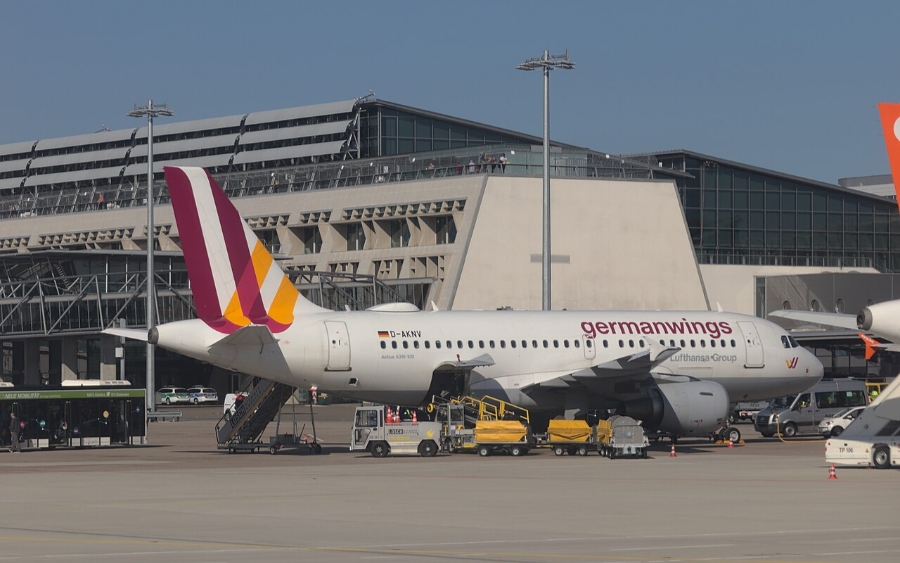
The site opened in 1938 as a replacement for Böblingen Airport, originally designed for just 150,000 passengers a year. Passenger volume today runs more than seventy times that figure.
After the Second World War, the United States Army controlled the field before civil aviation resumed. In 2014 the airport was named Stuttgart Airport Manfred Rommel, honoring the city’s former mayor, son of Erwin Rommel.
How Are the Terminals Organized?
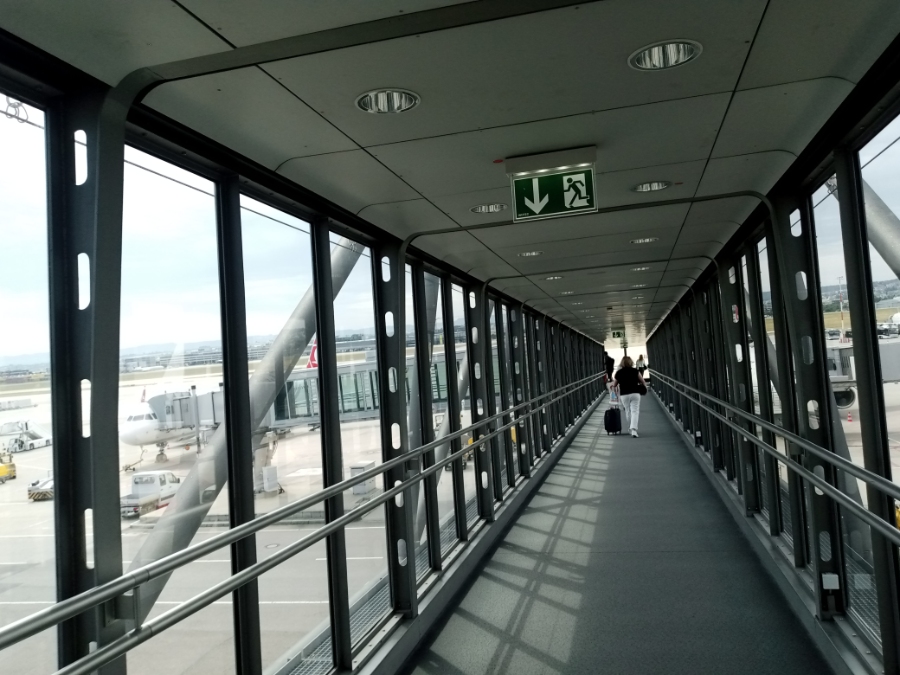
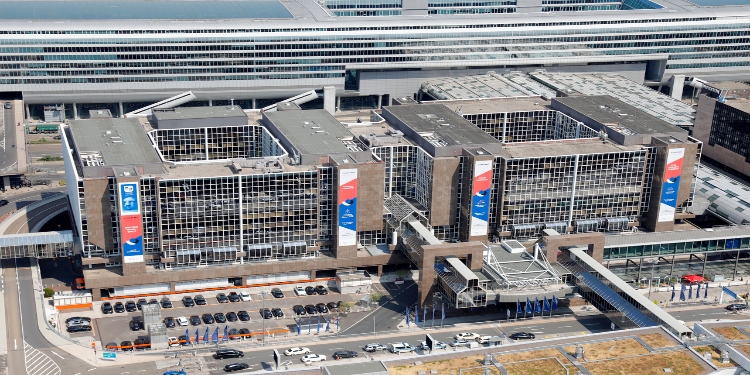
Stuttgart Airport uses four numbered terminals, and all of them sit side by side within a single connected building. A passenger who arrives at the wrong terminal walks a few minutes rather than taking a shuttle.
Terminal 1 and Terminal 3
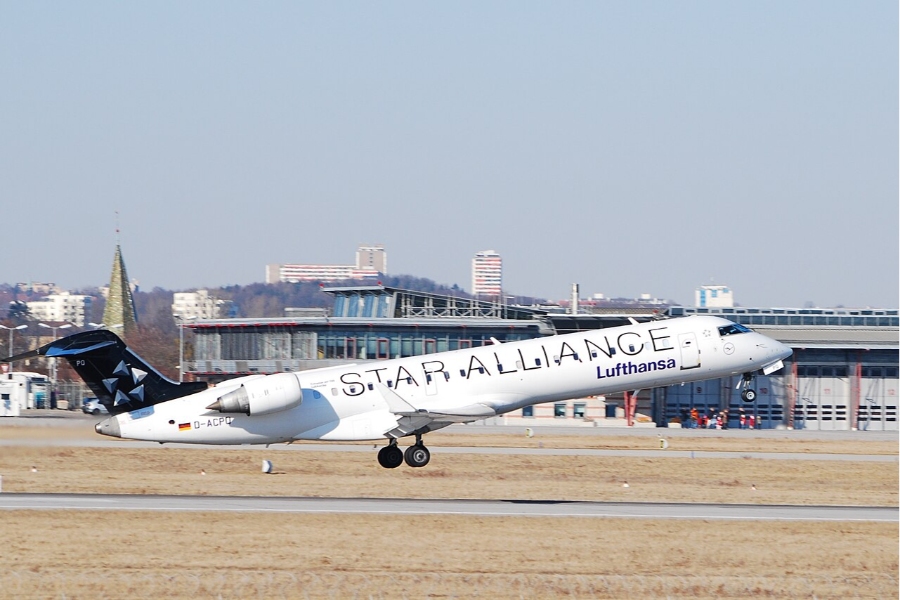
Terminal 1 handles the largest share of scheduled traffic, including Lufthansa, SWISS, and United Airlines. Its public area also holds the Taxi-Auto-Zentrale Stuttgart office and the barry’s café.
Terminal 3 is the busiest hub for leisure and low-cost carriers, with Eurowings, TUI fly Deutschland, Condor, and SunExpress among the operators. Turkish Airlines and KLM also route passengers through the T1 to T3 range depending on schedule.
- Terminal 1: legacy network carriers and long-haul partners
- Terminal 2: additional check-in capacity, used at peak times
- Terminal 3: charter, low-cost, and holiday airlines
- Terminal 4: compact terminal for seasonal and charter traffic
Terminal 2 and Terminal 4
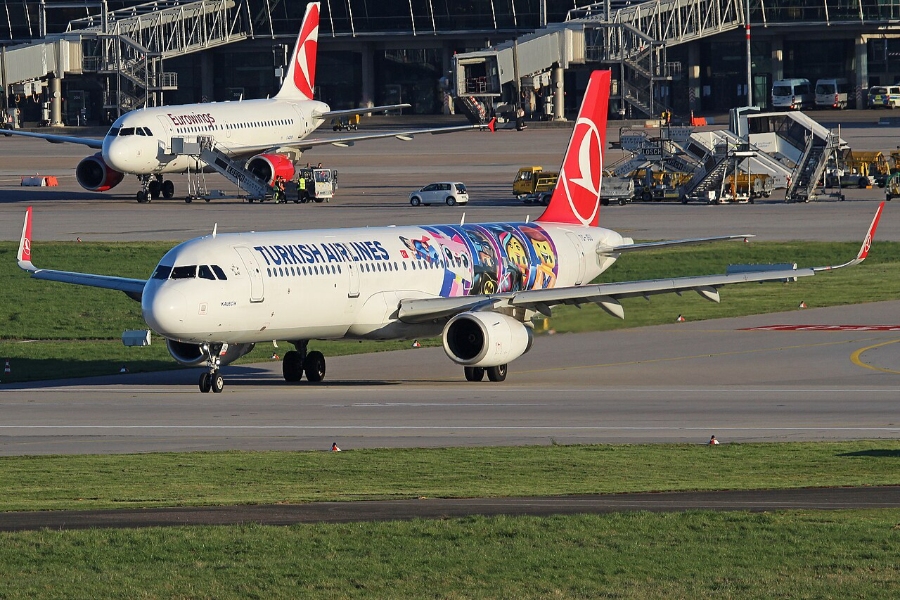
Terminal 2 supplements check-in capacity during summer peaks and school-holiday departures. Terminal 4 is the smallest of the four and handles seasonal charter flights.
Because terminal assignments shift with the season, airlines confirm the correct building on the booking confirmation and boarding pass. Checking that letter-number combination the night before saves a walk across the concourse.
Gates, Jet Bridges, and Bus-Boarding Stands

STR mixes jet bridges with bus-boarding stands. Gates in the higher-numbered ranges frequently use apron buses, which means boarding starts earlier and involves a short ride to the aircraft.
Travelers with reduced mobility should flag bus boarding with their airline at booking. Families with strollers also benefit from knowing in advance, since bus gates add a step to the process.
What Should Travelers Know Before Departure or After Arrival?

Stuttgart Airport recommends online check-in plus self-service bag drop, and it offers a bookable time slot for its Smart Lane security channel. Both steps shorten the wait during the summer holiday rush, when the Filder terminals run at their fullest.
Check-In, Online Check-In, and Bag Drop
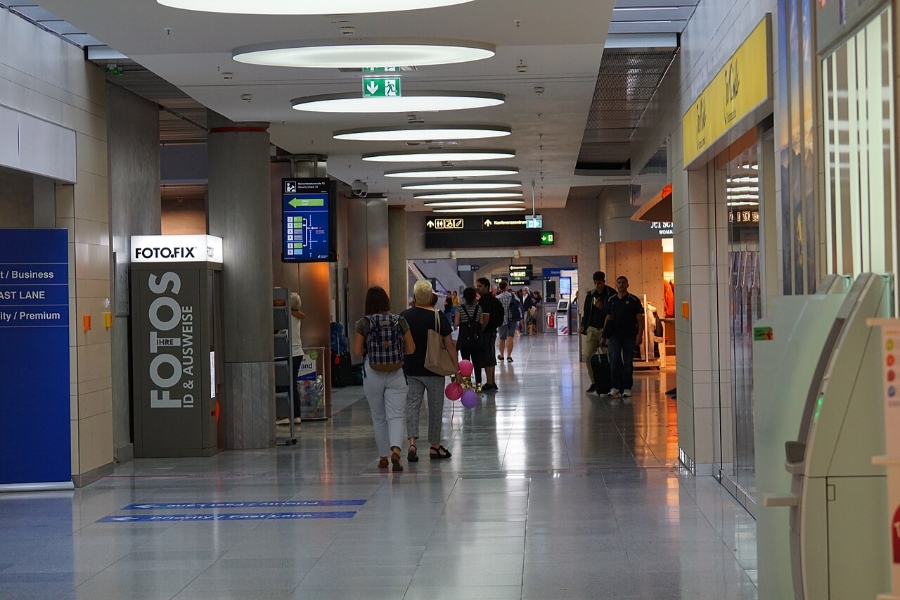
Passengers can check in three ways at STR: online with the airline, at self-service kiosks, or at staffed airline counters.
- Online check-in: usually opens 24 to 48 hours before departure
- Self-service bag drop: print a tag at the kiosk, then leave the bag at the automated belt
- Counter check-in: required for oversized items, pets, and some visa checks
Dropping luggage at the self-service belt after checking in online is the fastest route through the departures hall.
Security Check and Smart Lane Reservations
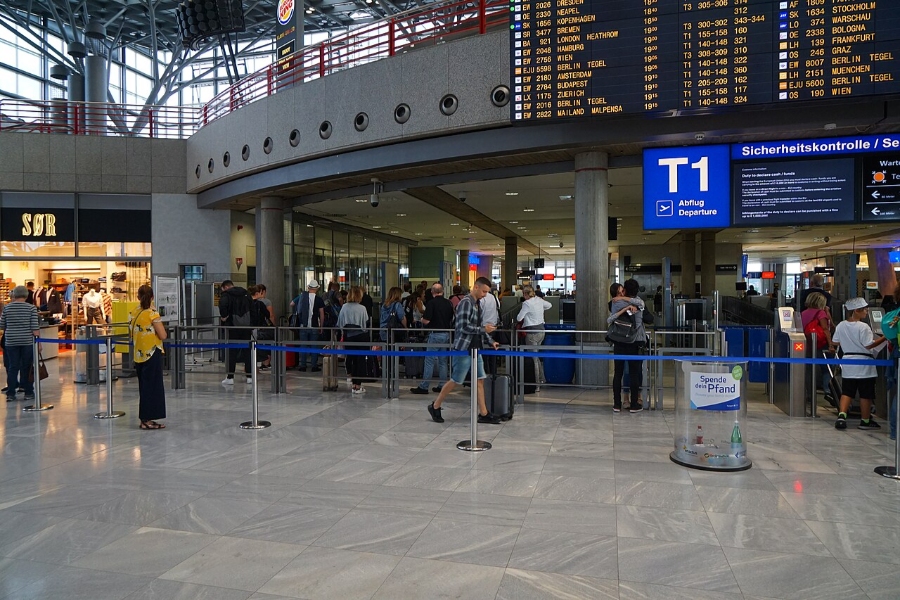
The airport asks passengers to book a time slot for the Smart Lane to avoid queues at the security check. Slot holders enter through a dedicated lane at their reserved time.
Standard liquid and electronics rules apply. Reviewing baggage rules before packing prevents the most common cause of secondary screening, which is a forgotten bottle in a carry-on.
Flight Status, Departures, and Arrivals
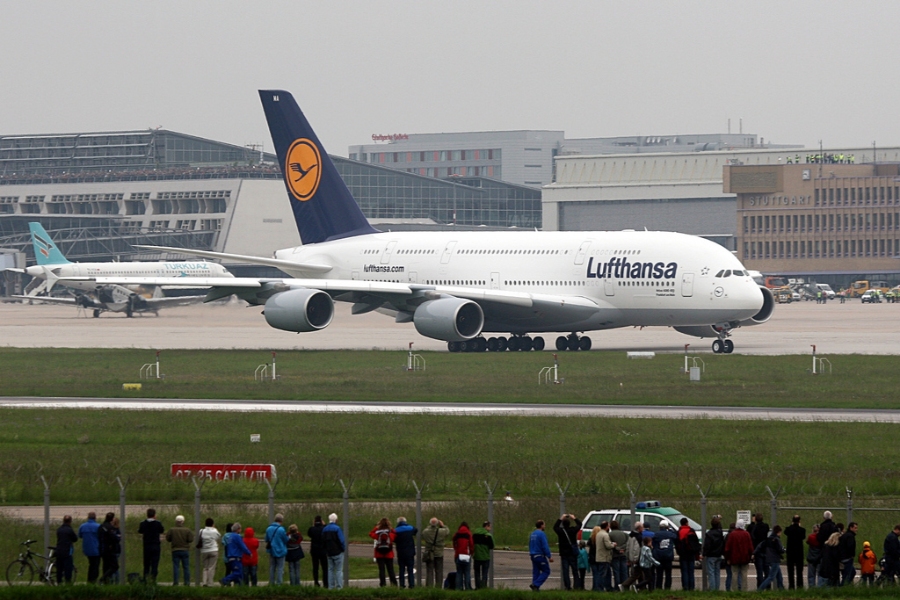
Live departures and arrivals are published on the airport’s own flight-status pages and inside the Stuttgart Airport app. The app also carries the STRplus program, which bundles vouchers and retail offers.
- Real-time gate and terminal changes
- Belt numbers for arriving baggage
- Push alerts for delays on saved flights
Domestic and International Flight Considerations
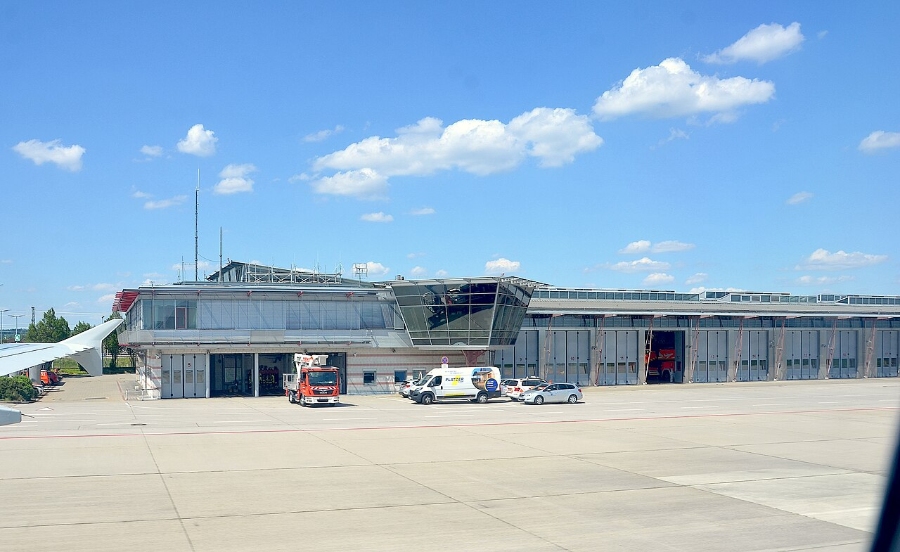
For flights inside the Schengen Area, arriving two hours before departure covers check-in and security. For international flights that require passport control, three hours is the recommended window, extending to three and a half hours during peak periods.
Non-Schengen arrivals pass through border control before baggage reclaim. First-time visitors will find broader entry guidance in the Everything About Germany travel tips for new travelers.
Which Airlines and Destinations Fly From Stuttgart?
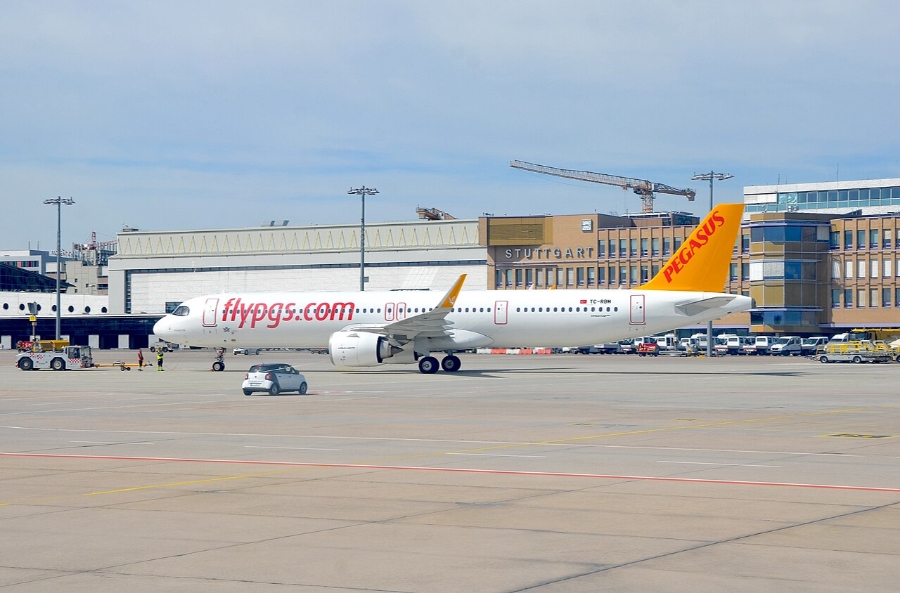
STR offers nonstop service to more than 100 destinations, with figures ranging from 118 to 132 routes depending on the season and the counting method, served by roughly 25 to 31 airlines. Eurowings, TUI fly, and SunExpress carry the largest share of leisure traffic, while Lufthansa and SWISS feed connecting hubs.
German and European City Connections
Domestic and short-haul European service dominates the weekday schedule, with about 1,226 weekly departures across the network.
| Route type | Sample destinations |
|---|---|
| German cities | Hamburg (HAM), Berlin (BER), Munich |
| Central Europe | Vienna (VIE), Zurich, Warsaw, Budapest (BUD) |
| Western Europe | Amsterdam (AMS), London, Copenhagen, Barcelona, Valencia |
Amsterdam and Munich act as the main connecting points for onward long-haul travel. Anyone comparing German gateways can also review Munich Airport and Hamburg Airport schedules before booking.
Mediterranean and Holiday Routes

Summer traffic at STR skews strongly toward Mediterranean beach airports, especially in Turkey, Greece, and Spain.
- Turkey: Istanbul (IST), Istanbul Sabiha Gökçen (SAW), Antalya, Bodrum, Edremit (EDO)
- Greece: Heraklion (HER), Rhodes (RHO), Thessaloniki, Kavala
- Spain and Italy: Palma de Mallorca, Naples (NAP), Cagliari (CAG)
- Other: Hurghada, Mostar (OMO)
Many of these routes operate seasonally, running from spring through October.
Using the Flugplan to Confirm Your Reiseziele
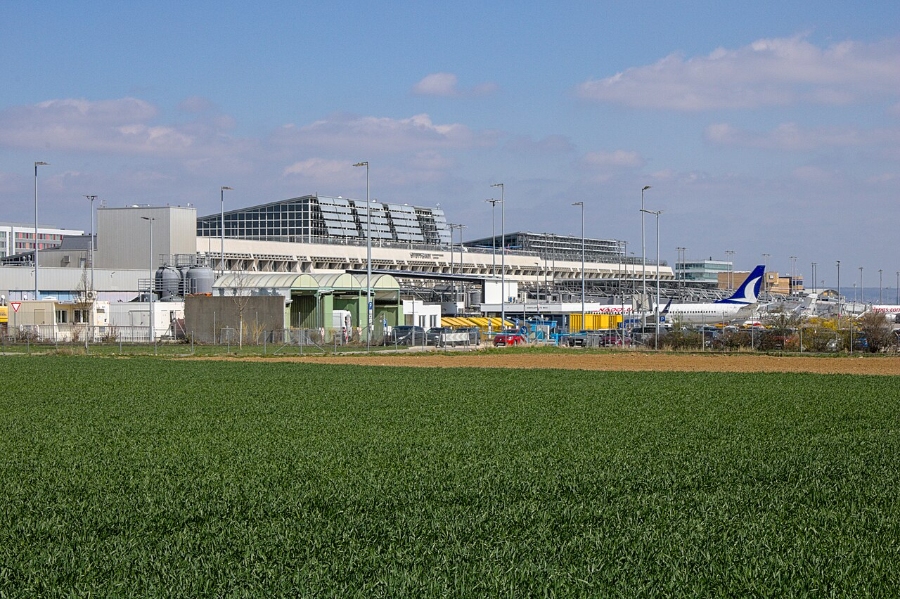
The airport publishes a Flugplan (flight schedule) listing every Reiseziel (destination) with the operating carrier and days of service. Checking it confirms whether a route runs year-round or only in summer.
Route lists from third-party trackers vary because they count seasonal and charter services differently. The airport’s own Flugplan is the figure to trust when planning dates.
How Do You Get There, Park, and Use Airport Services?
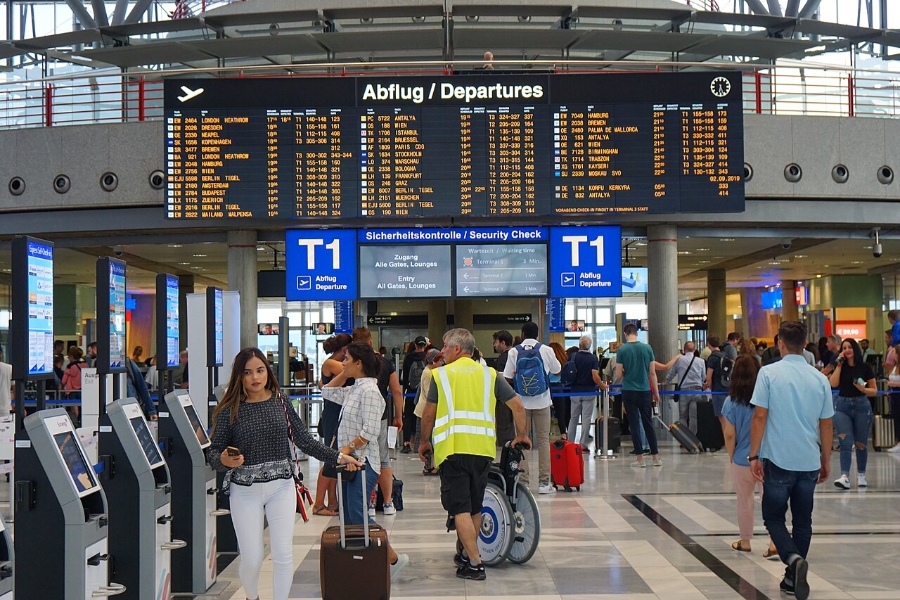
Stuttgart Airport connects to the city by S-Bahn from a station directly beneath the terminals, and it operates nine parking garages bookable online from €29. Food, retail, and travel-agency services cluster in the public areas of Terminals 1 and 3.
S-Bahn, Bus, Taxi, and Car Connections to the City Centre
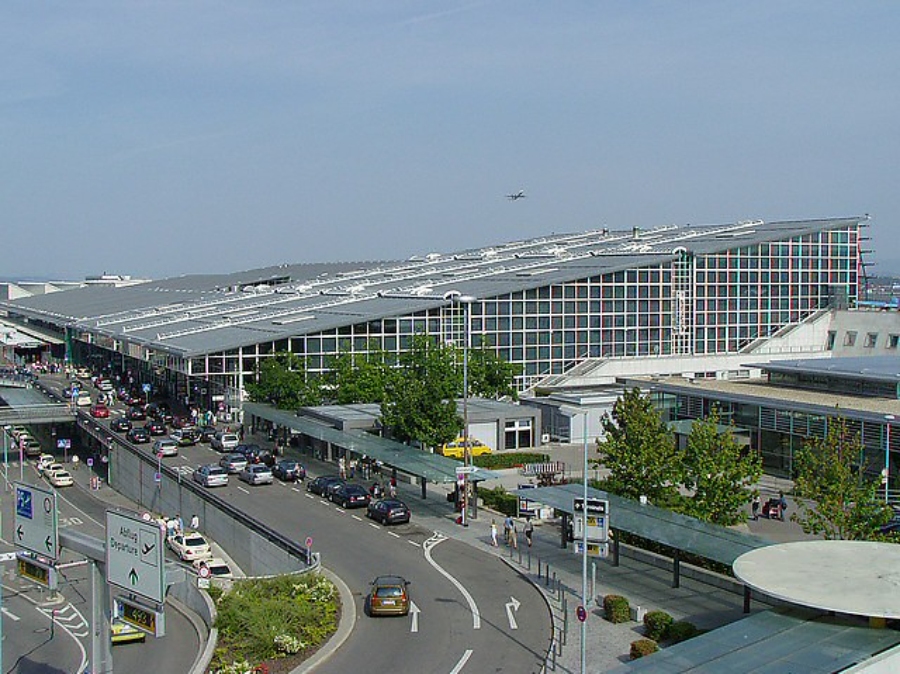
The station sits under the terminal complex, so no shuttle is needed between the platform and check-in.
- S-Bahn S2 and S3: direct to Stuttgart Hauptbahnhof, roughly 27 to 30 minutes
- Regional and long-distance buses: stops directly at the terminal forecourt
- Taxi: ranks outside Terminal 1 and Terminal 3; Taxi-Auto-Zentrale Stuttgart has an office in Terminal 1
- Kiss & Fly: eight minutes free of charge for drop-off in front of the terminal
- Car hire: desks on site for onward travel into Baden-Württemberg
Public transport fares fall under the VVS zone system. Travelers touring the region by rail should compare regional day ticket options before buying single fares.
Parking Garages and Advance Booking
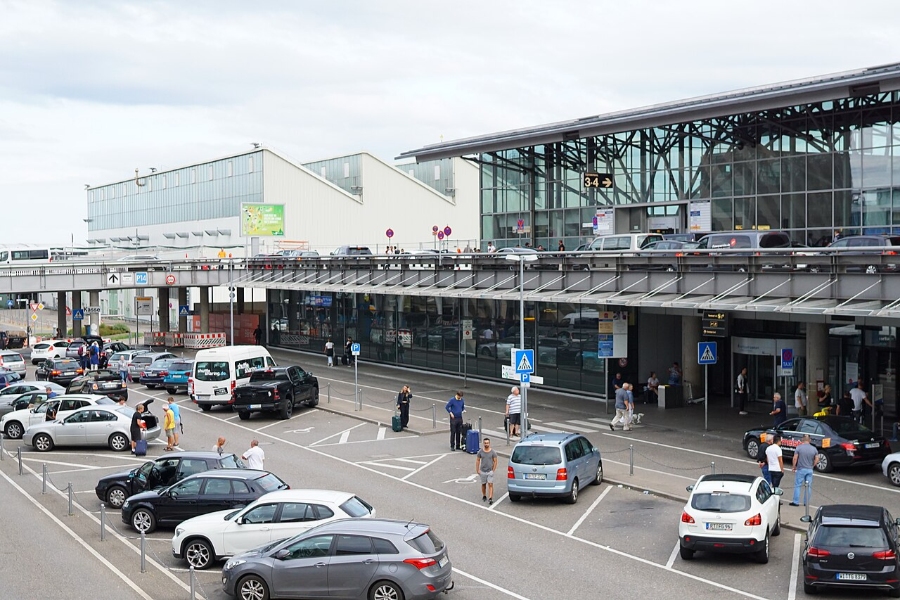
Nine garages serve the airport: P0, P2, P3, P4, P5, P6, P12, P14, and P26. Online reservations start at €29, and all garages sit within walking distance of the terminals.
Seasonal rates appear as Summer-Special, Autumn-Special, and Weekend-Special offers. Prepaid bookings are binding; unused time is not refunded, so travelers should confirm dates before paying.
Food, Shops, and Travel Services Across the Terminals
Dining and retail run on staggered hours, with the earliest openings serving 4:00 a.m. departures.
| Outlet | Location | Hours |
|---|---|---|
| McDonald’s | Outdoor area, public | 7:00 to 2:00 |
| Fly Bagel | Terminal 3, public | 3:00 to 19:00 |
| barry’s | Terminal 1, non-public | 4:30 to 21:30 |
| Post im FLY Kiosk | Terminal 3, public | 4:00 to 22:00 |
| Reisecenter Alltours | Terminal 3, public | 9:00 to 18:00 |
| Violeta’s Blumen | Terminal 3, public | 9:00 to 21:00 |
When Frankfurt Airport May Be an Alternative
Frankfurt Airport (FRA) makes sense for long-haul routes that STR does not serve nonstop, particularly to North America and Asia. The ICE train from Stuttgart Hauptbahnhof reaches the FRA long-distance station in about 75 minutes.
Compare total travel time before choosing. Details on that hub are covered in the Frankfurt Airport guide.
Frequently Asked Questions
How do I get from Stuttgart Airport to the city centre?
Take the u003cstrongu003eS-Bahn S2u003c/strongu003e or u003cstrongu003eS3u003c/strongu003e from the station directly beneath the terminals to Stuttgart Hauptbahnhof, a ride of about 27 to 30 minutes. Taxis and hire cars are available outside Terminals 1 and 3, and the Kiss u0026amp; Fly zone allows eight minutes of free drop-off time.
Which terminal should I use at Stuttgart Airport?
Check the terminal number printed on the boarding pass, since assignments change by airline and season. Terminal 1 serves Lufthansa, SWISS, and United Airlines, while Terminal 3 handles most Eurowings, TUI fly Deutschland, Condor, and SunExpress flights.
What airlines fly from Stuttgart Airport?
About 25 to 31 airlines operate at STR, led by Eurowings, TUI fly Deutschland, and SunExpress. Lufthansa, Turkish Airlines, KLM, Condor, SWISS, and United Airlines also serve the airport, together reaching more than 100 nonstop destinations.
How early should I arrive for a flight from Stuttgart Airport?
Arrive two hours before a Schengen flight and three hours before an international flight that requires passport control. During peak summer weeks, three and a half hours is the safer target, and booking a u003cstrongu003eSmart Laneu003c/strongu003e slot shortens the security wait.
Is Stuttgart Airport a large airport?
Stuttgart Airport is mid-sized, ranking sixth busiest in Germany with a peak of 11,832,634 passengers and a single runway. Its four terminals stand in one connected building, so transfers on foot take only a few minutes.