Bamberg
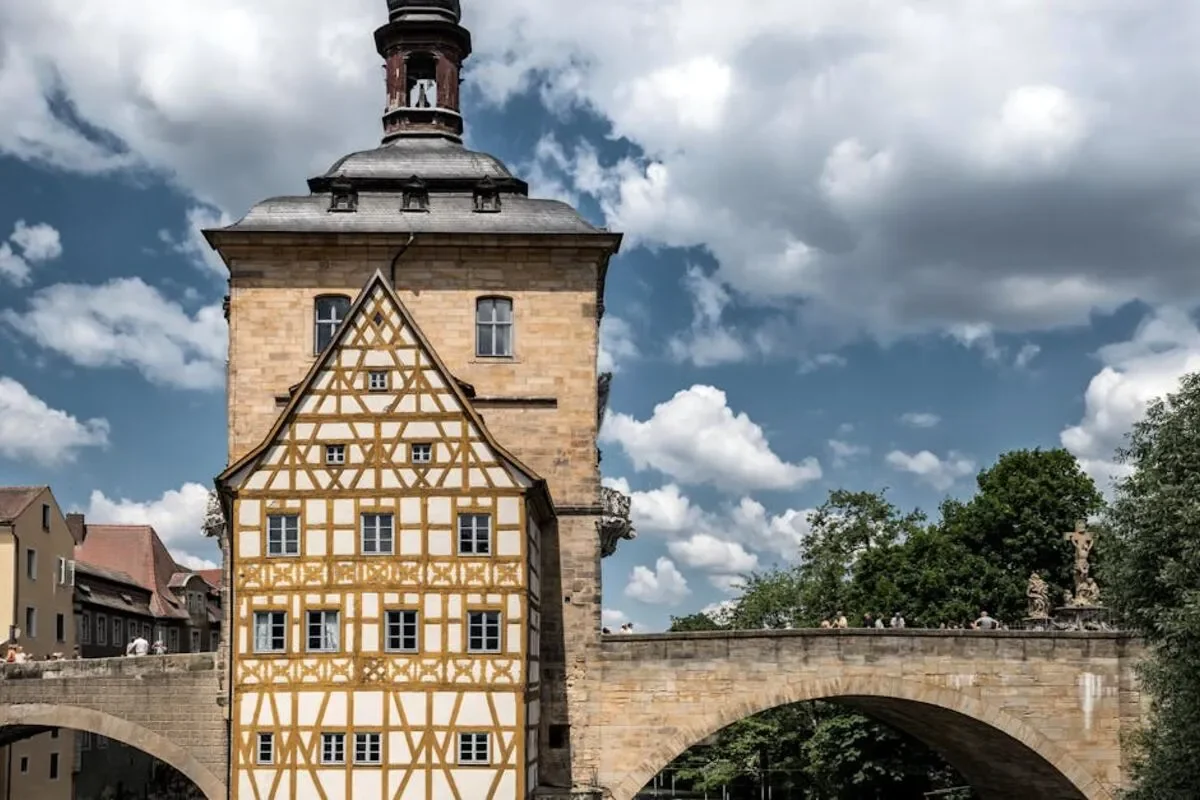
Bamberg is a compact city in Upper Franconia, Bavaria, built across seven hills and a river island. Its Old Town became a UNESCO World Heritage Site in 1993, and more than 1,300 listed buildings still survive there.
Locals and historians have long called it the “Franconian Rome,” a nickname inspired by those seven hills and the dense cluster of churches crowning them. The city also has one of Europe’s highest concentrations of small breweries, including the smoked-beer taverns that put Bamberg on the map for beer travelers.
A first-time visitor can cover Bamberg’s headline sights in a single well-planned day, though two days leave time for the cathedral hill, the riverside quarters, and an evening in a brewery tavern after the day-trippers have gone.
What follows gives readers the historical background they need to understand what they’re seeing, along with the routes, rail links, and lodging areas useful for planning the trip.
Key Takeaways
- Bamberg’s Old Town earned UNESCO status in 1993 for its intact medieval and Baroque layout across cathedral hill, the island city, and the gardeners’ district.
- The city’s brewing tradition centers on Rauchbier (smoked beer), served in family-run taverns such as Schlenkerla and Brauerei Spezial.
- Direct regional trains from Nuremberg and Würzburg reach Bamberg in roughly 55 minutes, making it a practical day trip or overnight stop.
Why Is Bamberg a UNESCO World Heritage City?
UNESCO listed Bamberg in 1993 because its Old Town preserves an early medieval town plan almost intact, along with Romanesque, Gothic, Renaissance, and Baroque buildings layered over it. War never leveled the city, and planners never rebuilt it on a modern grid.
Two factors helped preserve it: nearly 800 years of rule by prince-bishops who invested in monumental architecture, and Bamberg’s escape from serious destruction during the Second World War.
From Henry II to the Prince-Bishops
Bamberg’s rise began in 1007, when Henry II, later Holy Roman Emperor, founded a diocese here and made the city the center of his imperial ambitions. He and his wife Kunigunde are both buried in Bamberg Cathedral, and both were later canonized.
After Henry’s death, authority passed to the bishops of Bamberg, who held spiritual and worldly power as prince-bishops. They governed a small state from the hill above the river and funded the cathedral, palaces, abbeys, and churches that still define the skyline.
That double role explains the city’s scale. A town of Bamberg’s size wouldn’t otherwise have a cathedral, two episcopal palaces, and a hilltop abbey within a fifteen-minute walk.
The Seven Hills and the City’s Historic Districts
Bamberg divides into three historic zones. Recognizing them makes navigation much easier.
| District | Character | Key sights |
|---|---|---|
| Bergstadt (hill city) | Ecclesiastical and aristocratic quarter on the hills | Cathedral, Neue Residenz, Alte Hofhaltung, Michaelsberg |
| Inselstadt (island city) | Merchant and civic center between the Regnitz arms | Altes Rathaus, Grüner Markt, Lange Straße, Klein Venedig |
| Gärtnerstadt (gardeners’ district) | Working market-gardening quarter east of the island | Long garden plots, low houses, Gärtner- und Häckermuseum |
The Gärtnerstadt is the least visited of the three, and it explains why UNESCO’s citation covers more than pretty facades. Market gardeners have grown vegetables on these plots since the Middle Ages, and they still do.
How the Holy Roman Empire and Reformation Shaped Bamberg
Bamberg stayed Catholic through the Reformation while much of Franconia around it turned Protestant. That continuity shaped everything that followed. Nuremberg, less than 40 miles south, became a Lutheran city, but Bamberg’s prince-bishops held their ground.
The result was centuries of uninterrupted church patronage. When Baroque architecture arrived in the 17th and 18th centuries, the bishops had both the motive and the money to build on a grand scale, adding the Neue Residenz and remodeling church interiors.
The prince-bishopric ended in 1802, when Bamberg passed to Bavaria during the collapse of the Holy Roman Empire. By then, the architectural record was complete, which accounts for much of what visitors see today.
What Are the Essential Things to Do in Bamberg?
Bamberg’s core sights sit within a 25-minute walk of one another, split between the cathedral hill and the island city below. The essential stops include the cathedral with its famous equestrian statue, the half-timbered Old Town Hall standing mid-river, and the former fishermen’s houses along the Regnitz.
Walking between them means dealing with cobblestones and a steady climb to the hill, so comfortable shoes matter more here than in flatter German cities.
Bamberg Cathedral, the Bamberg Horseman, and Domplatz
Bamberg Cathedral (Bamberger Dom) is the city’s anchor, a four-towered building consecrated in 1237 after two earlier churches on the site burned. Inside are the tombs of Henry II and Kunigunde, carved by Tilman Riemenschneider, and the only papal grave in Germany north of the Alps, that of Clement II.
The cathedral’s most discussed artwork is the Bamberg Horseman (Bamberger Reiter), a life-size stone rider carved around 1235. No one knows for certain who the figure represents, and theories range from a Hungarian king to an idealized Christian knight.
Domplatz, the square outside, is framed by the cathedral, the Alte Hofhaltung, and the Neue Residenz. It forms one of the most complete architectural ensembles of its kind in Germany.
Altes Rathaus and Obere Brücke on the Regnitz River
The Altes Rathaus (Old Town Hall) stands on an artificial island in the middle of the Regnitz River, with the Obere Brücke bridge passing through it. Legend says the bishop refused to grant citizens land for a town hall, so they drove piles into the river and built on the water.
The building carries elaborate Baroque frescoes on its facades, including a painted cherub’s leg that projects into real three-dimensional space. It also houses the Ludwig Collection of porcelain and faience.
From the Obere Brücke, you can look upriver toward the fishermen’s houses or downriver toward the weir.
Klein Venedig and the Former Fishermen’s Quarter
Klein Venedig (Little Venice) is a row of half-timbered fishermen’s houses along the eastern bank of the Regnitz. Each has a small garden or terrace running down to the water. The houses date largely from the 17th century onward and once served as homes and workshops for the river’s fishing families.
The best vantage point is from the opposite bank near Am Leinritt, or from one of the gondola-style boat trips that run in warm months. Boat operating seasons vary from year to year, so check the local schedule.
Fishing has faded as a livelihood, but the quarter still hosts the Fischerstechen water jousting during the Sandkerwa festival.
Neue Residenz, Rosengarten, and Alte Hofhaltung
The Neue Residenz is the prince-bishops’ Baroque palace on Domplatz, built between 1697 and 1703. Roughly 40 state rooms are open to visitors, with the imperial hall as the centerpiece. The palace also holds part of the Bamberg State Library and a branch of the Bavarian State Painting Collections.
Behind the palace sits the Rosengarten (rose garden), a formal Baroque garden with around 4,500 roses and a terrace looking north over the rooftops to Michaelsberg. Entry to the garden is separate from the palace tour.
Across the square, the Alte Hofhaltung (Old Court) is the earlier residence, a timber-framed courtyard complex that now houses the Historical Museum.
Michaelsberg Abbey, Altenburg, and Quieter Viewpoints
Michaelsberg Abbey sits on the hill west of the cathedral. This former Benedictine monastery, founded in 1015, has a church ceiling painted with 578 medicinal plants. The terrace in front offers one of the widest views over the Old Town.
Altenburg, a castle on Bamberg’s highest hill, is about a 45-minute uphill walk or a short drive from the center. You can climb the keep, while the courtyard restaurant looks out over the Steigerwald hills.
Both sites see far fewer visitors than Domplatz, making them good afternoon choices when the island city is busiest.
How Should You Experience Bamberg’s Beer and Food Culture?
Bamberg has around ten breweries within the city and roughly 70 more in the surrounding Bamberg district, giving it one of the world’s highest brewery densities. The style that defines it is Rauchbier (smoked beer), and two family breweries, Schlenkerla and Spezial, have kept it alive for centuries.
Franconian beer culture runs on brewery taverns, hillside cellars, and hearty food. Learning a few basics about how German beer is classified helps make sense of what’s on the board.
What Makes Rauchbier Different?
Rauchbier gets its flavor from malt dried over open beechwood fires, leaving a smoky character in the finished beer. Before industrial kilns, brewers dried all malt this way, so Bamberg’s version preserves an older method that disappeared almost everywhere else.
The taste is often compared to smoked ham or a campfire. First-timers often find the first sip strange and the third excellent, so it’s worth ordering a full glass before deciding.
Bamberg brewers also produce a smoked Bockbier, a stronger seasonal version usually poured in autumn and winter. The background on Rauchbier explains how the malting process shapes the flavor.
Schlenkerla, Spezial, and Traditional Brewery Taverns
Aecht Schlenkerla Rauchbier is the best-known producer. It serves beer at its historic tavern on Dominikanerstraße, where the Märzen comes straight from wooden casks. The low-ceilinged rooms fill early in the evening, and tables are shared.
Brauerei Spezial on Obere Königstraße is the quieter alternative, a smaller operation with its own smoked Lagerbier and an attached guesthouse. Locals often say its smoke tastes gentler than Schlenkerla’s.
Other city breweries worth visiting include Mahrs Bräu, Klosterbräu (Bamberg’s oldest, founded 1533), Fässla, and Keesmann. Most serve food only during set kitchen hours, so arriving before 8 p.m. is safer if you want a full meal.
Beer Cellars and Beer Gardens
Franconia distinguishes between a Keller (cellar) and a Biergarten (beer garden), and the difference is historical. People dug cellars into hillsides to store beer at a stable temperature, then planted trees above them for shade. Over time, drinking areas grew on top of the storage caves.
Bamberg’s best-known cluster sits on Stephansberg. Spezial-Keller, Wilde Rose Keller, and Greifenklau are within walking distance of one another and look out over the city.
Most open seasonally and only in dry weather. Franconian custom lets guests bring their own food to many traditional cellars while buying the beer on site. Broader beer garden traditions across Bavaria follow similar rules.
Franconian Cuisine to Try With Local Beer
Franconian food is pork-heavy, filling, and built to pair with dark lager. The regional plate to order is Schäufele, a roasted pork shoulder with crackling, served with a potato dumpling and dark gravy.
Other dishes appear on almost every tavern menu:
- Bamberger Hörnla (Bamberg croissant-shaped roll) and local sourdough breads
- Zwiebelkuchen, a savory onion tart served in autumn
- Bratwürste grilled over beechwood, smaller and finer than Nuremberg’s
- Blaue Zipfel, bratwurst poached in vinegar and onion broth
- Bamberger Zwiebel, an onion stuffed with minced pork and braised in beer
Bamberg also protects its own vegetable varieties through the Gärtnerstadt, including Bamberg horseradish and the Bamberger Hörnchen potato.
How Do You Plan a One- or Two-Day Visit?
One day covers the cathedral hill, the island city, and Klein Venedig at a brisk pace, with time for one brewery meal. Two days add Michaelsberg or Altenburg, a museum, the Gärtnerstadt, and an evening in a hillside cellar after day visitors leave.
Distances are short, but the climb from the river to Domplatz gains about 50 meters over cobbled lanes. That slows most groups more than they expect.
A Practical One-Day Bamberg Walking Route
This route starts from Bamberg Hauptbahnhof and runs roughly six to seven hours with stops.
- Walk from the station along Luitpoldstraße toward the island city, about 15 minutes.
- Grüner Markt and Lange Straße for the market stalls and St. Martin’s Church.
- Obere Brücke and Altes Rathaus, with a detour to the Klein Venedig viewpoint at Am Leinritt.
- Climb to Domplatz via Karolinenstraße; visit the cathedral and the Bamberg Horseman.
- Rosengarten behind the Neue Residenz for the panorama, then the Alte Hofhaltung courtyard.
- Lunch or late lunch at a brewery tavern such as Schlenkerla or Klosterbräu.
- Michaelsberg terrace if energy allows, then descend for a beer at a Stephansberg cellar.
Reversing the order works well in summer heat, since the hill is cooler in the morning.
How to Build a Slower Two-Day Itinerary
A second day changes the character of the visit, mostly because most tour groups arrive and depart within a five-hour window. Staying overnight gives the island city back to residents by around 6 p.m.
Day one: the island city, Domplatz, cathedral, Neue Residenz, and an early brewery dinner.
Day two: Michaelsberg Abbey in the morning, the Gärtnerstadt and its museum at midday, then Altenburg or a boat trip on the Regnitz in the afternoon.
Add the Historical Museum or the Diocesan Museum on a rainy day. Readers building a longer route through the region can use the wider Germany travel guide to slot Bamberg into a Bavaria itinerary.
Best Time to Visit Bamberg and Annual Events
Late April through early October gives the most reliable weather, with beer cellars and boat trips operating and long evening light on the hills. May, June, and September balance mild temperatures with lighter crowds than July and August.
Two events dominate the calendar:
- Sandkerwa (late August): Bamberg’s largest street festival, centered on Sandstraße, with Fischerstechen water jousting on the Regnitz. Accommodation books out months ahead.
- Bamberg Christmas Market (late November to December): stalls on Maximiliansplatz and around the cathedral, plus a large nativity trail through the churches.
Winter brings short daylight and frequent grey skies, though smoked Bockbier season and the seasonal markets compensate for some travelers.
Getting Around the Altstadt and Beyond
Walking handles almost everything inside the Altstadt, since the Old Town measures roughly one mile across. Cars are restricted in much of the center and street parking is limited, so the multi-storey garages at Geyerswörth and Am Heumarkt are the practical options.
City buses run under the VGN (Verkehrsverbund Großraum Nürnberg) fare network, which also covers regional trains toward Nuremberg. The same ticket types work across the network, and a day pass makes sense for anyone combining a Bamberg visit with a regional trip.
Bus line 910 links the station and the Old Town for those who’d rather not walk. Cobblestones and slopes make the hill district demanding for wheelchair users and strollers, and the city tourist office publishes accessibility details for individual sites.
How Do You Get to Bamberg and Where Should You Stay?
Bamberg sits on the main Nuremberg-Würzburg and Nuremberg-Erfurt rail corridors, with direct regional trains from Nuremberg and Würzburg taking about 55 minutes each. Deutsche Bahn ICE services also stop here, putting Munich, Berlin, and Frankfurt within reach for a longer approach.
Most visitors stay either in the island city, within walking distance of every major sight, or near the Hauptbahnhof for cheaper rates and quick departures.
Arriving at Bamberg Hauptbahnhof by Train
Bamberg Hauptbahnhof (main train station) sits about 1.2 miles northeast of the Old Town, a 15 to 20 minute walk or a short bus ride. The route runs along Luitpoldstraße and crosses the Regnitz’s eastern arm, so first-time arrivals can reach the island city without a map.
The station has lifts to the platforms, luggage lockers, and a small retail area. Deutsche Bahn publishes current platform and accessibility information for the station, which is worth checking if you’re arriving with heavy bags.
Taxis wait at the front of the station, and the ride into the center takes under ten minutes outside rush hour.
Rail and Bus Connections From Nuremberg, Munich, Berlin, and Frankfurt
| From | Fastest rail time | Typical service |
|---|---|---|
| Nuremberg | ~40 min (ICE), ~55 min (RE) | Direct, frequent |
| Würzburg | ~55 min | Direct regional (RE20/RE54) |
| Munich | ~2 h | ICE via Nuremberg |
| Berlin | ~2 h 30 min | Direct ICE |
| Frankfurt | ~2 h 15 min | ICE, usually one change |
Frankfurt Airport has its own long-distance station, so international passengers can board an ICE without leaving the terminal complex. FlixBus also serves Bamberg from several German cities at lower fares and longer journey times, stopping near the Hauptbahnhof.
Travelers combining Bamberg with Nuremberg can use a VGN day ticket covering both cities. Schedules change with each timetable revision, so confirm times with Deutsche Bahn before travel.
Choosing a Base in the Old Town or Near the Station
Staying in the Altstadt means walking to the cathedral in ten minutes and having the island city to yourself after dark. Hotel Nepomuk occupies a former half-timbered mill on the Regnitz, while the Welcome Hotel Residenzschloss Bamberg sits in a Baroque palace on the river’s eastern bank.
Ibis Bamberg Altstadt gives a budget option on the edge of the center, while Best Western Hotel Bamberg suits drivers who want easy parking and direct road access.
Brewery guesthouses such as Brauerei Spezial and Fässla offer simple rooms above their taverns, usually the cheapest way to sleep inside the Old Town. Sandkerwa week and the Christmas market period fill the city, so booking early matters then.
Day Trips to Franconia and Nearby Historic Cities
Bamberg makes a useful base for exploring Upper Franconia. Several notable cities sit within 90 minutes by train.
- Bayreuth (about 1 hour): Wagner’s festival city and home to the UNESCO-listed Margravial Opera House.
- Coburg (about 1 hour): Veste Coburg fortress and a large Renaissance market square.
- Rothenburg ob der Tauber (about 2 hours with changes): a walled medieval town on the Romantic Road.
- Würzburg (about 55 minutes): the Residenz palace and Franconian wine country.
- Erfurt (about 1 hour 20 minutes by ICE): Thuringia’s capital, with the Krämerbrücke and cathedral hill.
Bamberg also sits on the Main-Danube Canal. River cruise itineraries between Nuremberg and the Rhine often stop here for half a day.
Frequently Asked Questions
Is Bamberg, Germany worth visiting?
Yes, especially if you’re interested in medieval and Baroque architecture or beer culture. The Old Town contains more than 1,300 listed buildings in a UNESCO-protected ensemble, while the city’s brewery density ranks among the highest anywhere.
Is one day enough for Bamberg?
One day covers the cathedral, Domplatz, the Altes Rathaus, Klein Venedig, and a brewery meal at a steady pace. Two days give you time for Michaelsberg, Altenburg, the Gärtnerstadt, and an evening in the Old Town after the day visitors leave.
What is Bamberg famous for?
Bamberg is known for its UNESCO-listed Old Town, its cathedral and Bamberg Horseman statue, the half-timbered Altes Rathaus standing in the Regnitz, and Rauchbier smoked beer. Its seven hills and many churches also earned it the nickname “Franconian Rome.”
How do I get from Nuremberg to Bamberg?
Direct regional trains (RE14 or RE19) take about 55 minutes, while ICE services cut the journey to roughly 40 minutes. A VGN day ticket covers the route and local buses in both cities, making it convenient for a round trip with sightseeing at both ends.
Which is better for a visit, Bamberg or Rothenburg ob der Tauber?
Bamberg is larger, with an active resident population and a wider choice of museums and breweries. Rothenburg ob der Tauber preserves a complete medieval town wall on a smaller scale.
Bamberg works well for an overnight stay, especially if you want to dine out in the evening. Rothenburg suits a shorter visit as part of a Romantic Road route.
💡 Essential Travel Tips
Explore the historic Old Town (Altstadt) on foot and use the local S-Bahn/U-Bahn network.
🥨 Local Insights & Food Culture
Purchase a 24-hour transit day pass (Tageskarte) for unlimited city travel.
🎟️ Top Activities & Experiences in Bamberg
Discover curated walking tours, museum passes, and authentic experiences in Bamberg with instant confirmation.