Margravial Opera House Bayreuth
Historic baroque opera house designed by Giuseppe Galli Bibiena, built 1745-1750
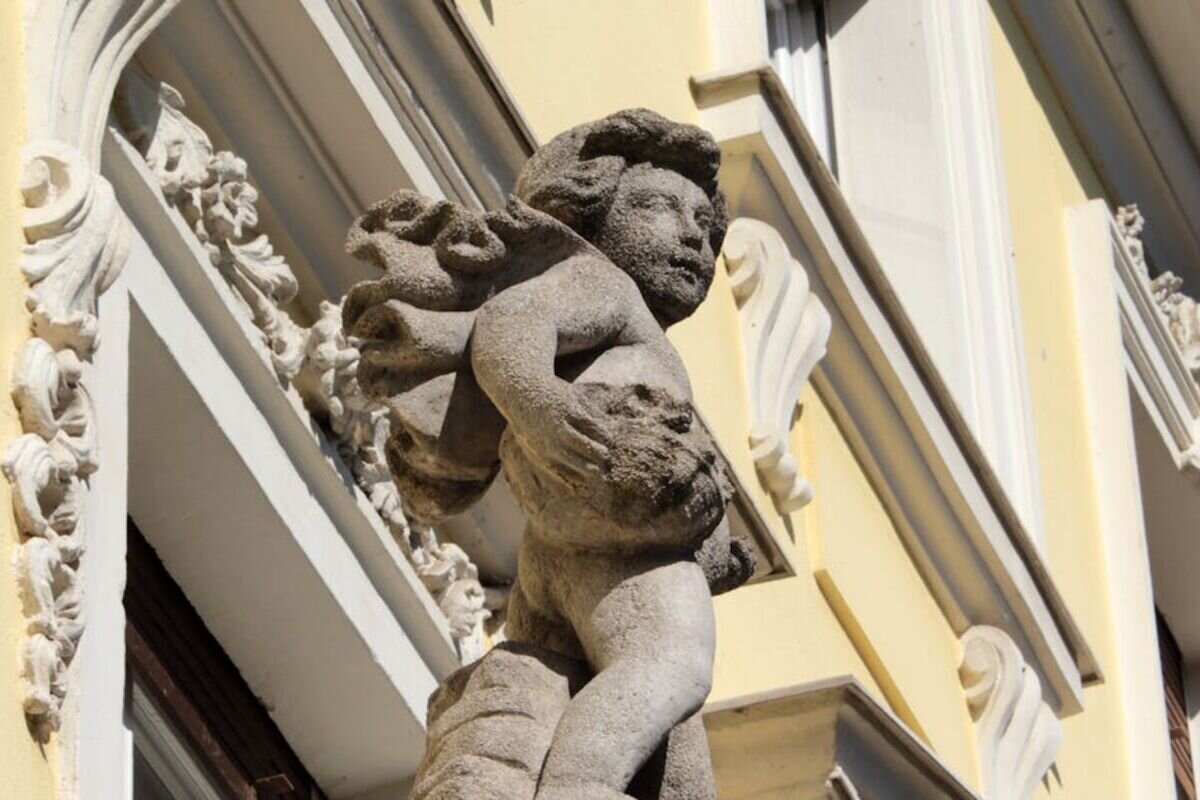
Bayreuth is a small but culturally extraordinary city in Upper Franconia, northern Bavaria. It is home to Germany’s most celebrated opera festival, a UNESCO World Heritage Baroque theatre, and a rich legacy shaped by Margravine Wilhelmine and composer Richard Wagner. Whether you come for the music, the Baroque palaces, the Franconian beer gardens, or the beautiful old town, Bayreuth rewards visitors in every season.
| Detail | Information |
|---|---|
| Location | Upper Franconia, Bavaria, Germany |
| Population | ~75,000 |
| UNESCO World Heritage | Margravial Opera House (since 2012) |
| Famous For | Bayreuth Festival, Richard Wagner, Baroque architecture |
| Nearest Major City | Nuremberg (~80 km south) |
| Best Time to Visit | May–September (festival season: late July–August) |
| Language | German (Franconian dialect locally) |
| Currency | Euro (€) |
Bayreuth has roots dating to the 12th century, when it emerged as a small Franconian market town. It grew significantly under the rule of the Margraves of Brandenburg-Bayreuth, who transformed it into a flourishing court city during the 18th century. The most remarkable chapter of this period was driven by Margravine Wilhelmine of Prussia (1709–1758), the talented and cultured sister of Frederick the Great, who corresponded with Voltaire, composed music, wrote verse, and oversaw Bayreuth’s transformation into a centre of Baroque art and architecture.
Under Wilhelmine’s patronage, Bayreuth gained the Margravial Opera House, the New Palace, the Hermitage gardens, and a distinctive cityscape that still defines the historic city centre today. Over a century later, composer Richard Wagner chose Bayreuth as the site for his own festival theatre — the Festspielhaus — opened in 1876, cementing the city’s global reputation in the world of classical music. These two towering cultural legacies give Bayreuth a depth that far exceeds its modest size.
The Margravial Opera House is Bayreuth’s most important landmark and the city’s only UNESCO World Heritage Site. Built between 1745 and 1750 by leading Baroque theatre architect Giuseppe Galli Bibiena and his son Carlo, it was commissioned by Margravine Wilhelmine as a venue for opera seria and inaugurated on 12 September 1748 with the premiere of Johann Adolf Hasse’s opera Artaserse. Its interior — constructed almost entirely of painted wood — features extraordinary trompe l’oeil murals, tiered loggias, and ornate Rococo decoration that has remained virtually unchanged since the 18th century.
UNESCO inscribed it in 2012 as “a unique monument of Baroque festival and music culture in Europe” and a masterwork of Baroque theatre architecture. Guided tours run approximately 45 minutes and are available from April to September (9 am–6 pm). The opera house is located at Opernstraße 16, 95444 Bayreuth.
Richard Wagner himself designed and supervised the construction of the Festspielhaus — the Festival Theatre — which opened in 1876 with the world premiere of the complete Ring cycle. Wagner chose Bayreuth precisely because the stage dimensions at the Margravial Opera House inspired his vision, though the city would need a purpose-built venue for his ambitious operas. The Festspielhaus remains the home of the annual Bayreuth Festival, held each summer from late July through the end of August. Tickets are notoriously difficult to obtain, with waiting lists stretching years, but the building itself is open for guided tours outside festival season.
Villa Wahnfried was Richard Wagner’s home in Bayreuth, where he lived from 1874 until his death in 1883. Today it houses the Richard Wagner Museum, which traces the composer’s life, work, and enormous influence through original manuscripts, letters, costumes, and multimedia exhibits. Wagner and his wife Cosima are buried in the garden behind the villa. The museum sits beside the Hofgarten (Court Garden), making it easy to combine both on a single afternoon walk through the city centre.
After the Old Palace burned down, Margravine Wilhelmine oversaw construction of the New Palace (Neues Schloss) from 1754 onwards as the new residence of the Margraves. Its state rooms are exquisite examples of Rococo interior design, featuring mirrored halls, Chinese-style lacquered rooms, and finely crafted period furniture. The palace is managed by the Bavarian Palace Administration and includes access to the adjacent court garden (Hofgarten), a peaceful green space at the heart of the old town.
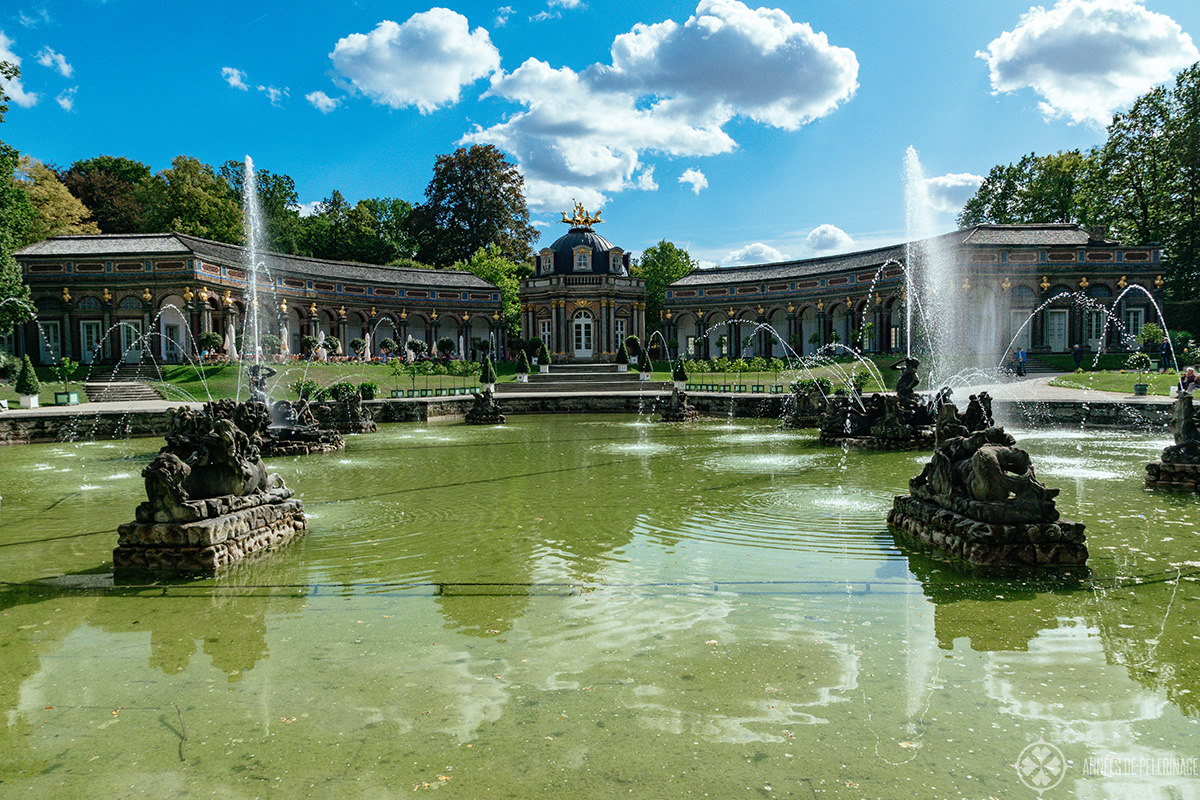
A few kilometres outside Bayreuth’s city centre, the Hermitage is one of the most romantic and visually striking sights in all of Upper Franconia. The complex combines the Old Palace — transformed into a masterpiece of Rococo architecture by Margravine Wilhelmine — with the spectacular New Palace featuring its famous Sun Temple. The surrounding park is filled with baroque fountains, cascades, grottos, and woodland walks. The water features, including the iconic fountain jets visible from the palace forecourt, make this a favourite destination for photography and leisurely exploration.
Bayreuth’s compact old town is ideal for walking. The pedestrianised Maximilianstraße forms the main spine of the Altstadt, lined with historic buildings, cafés, and independent shops. Look out for the Stadtkirche Heilig Dreifaltigkeit (City Church of the Holy Trinity), the Old Palace (Altes Schloss), and the ornate town hall. A self-guided walking tour through the old town takes around 90 minutes; the tourist office on Jean-Paul-Platz offers free maps and guided walking tour bookings.
Beer is an essential part of Franconian culture, and Bayreuth has long been a city of breweries. Maisel’s Beer Experience World (Maisel’s Bier-Erlebnis-Welt) is one of Germany’s largest brewery museums, located on the site of Brauerei Maisel, which has been producing Bayreuth’s famous wheat beer since 1887. The self-guided tour leads through historic brewing halls, an enormous collection of vintage steins, and original machinery from the brewing process. A tasting in the historic taproom at the end is highly recommended.
The Bayreuth Festival (Bayreuther Festspiele) is one of the world’s most prestigious and exclusive classical music events. Founded by Richard Wagner in 1876, it takes place annually at the Festspielhaus every summer from late July through the end of August. Every production performed at the festival is one of Wagner’s operas — from the four-evening Ring cycle to Parsifal, Tristan und Isolde, Die Meistersinger von Nürnberg, and others. The festival is still directed by Wagner’s descendants through the Wagner family foundation.
Demand for tickets is extraordinary. Waiting lists have historically run five to ten years, though the system has been modernised with an online ballot. If attending a performance is beyond reach, visitors can still tour the Festspielhaus by guided tour from September through April, when the theatre is closed for the season. During festival weeks, Bayreuth’s restaurants, beer gardens, and hotels fill with opera lovers from across the world — an atmosphere worth experiencing even without a ticket.
What makes Bayreuth unusual among German cities of its size is the extraordinary concentration of 18th-century Baroque and Rococo architecture. Margravine Wilhelmine was not simply a patron — she was herself a composer, writer, and designer who shaped the aesthetic character of every major project she undertook. The result is a city with palaces, opera houses, and garden ensembles that rival far larger European court cities. Visitors interested in Baroque architecture can trace Wilhelmine’s vision across the Margravial Opera House, the New Palace, the Hermitage, and the court garden — all within or just outside the city centre.
Bayreuth’s Baroque heritage is collectively recognised under the “Bayreuth – Wilhelmine’s Dream” brand by Bavarian tourism and forms part of a broader network of Franconian cultural sites. The University of Bayreuth, founded in 1975, has further shaped the city into a lively academic and cultural environment that complements its historic identity.
Bayreuth sits firmly in Franconian culinary territory, which means hearty meat dishes, exceptional freshwater fish from local streams, and some of Germany’s finest beer. The region is home to more breweries per square kilometre than almost anywhere else in the world — Upper Franconia has over 200 independent breweries. In Bayreuth itself, the local beers to seek out include Bayreuther Bier and Maisel’s wheat beer. Beer gardens (Biergärten) are a Franconian institution; the best ones in Bayreuth offer tree-shaded benches, cold Kellerbier (cellar beer) served straight from the barrel, and simple food like Obatzda (a creamy cheese spread) and pretzels.
For a sit-down meal, look for restaurants serving Schäuferla (braised pork shoulder), Sauerbraten (marinated pot roast), or Forelle blau (freshly cooked trout). The old town’s Maximilianstraße and the streets around the market square have the best concentration of traditional Franconian restaurants and wine bars. Franconian wine from the nearby region of Franken — typically served in the distinctive flat Bocksbeutel bottle — is a worthy companion to a traditional meal.
Bayreuth is well connected to the wider German rail and road network despite its size. The main train station (Hauptbahnhof) is located a short walk south of the old town. Direct or one-change rail services connect Bayreuth to Nuremberg (approximately 1 hour), from where high-speed ICE trains reach Munich, Frankfurt, and Berlin. By car, Bayreuth sits on the A9 Autobahn corridor linking Munich with Berlin, making it straightforward to reach from either direction.
The nearest international airports are Nuremberg Airport (NUE), approximately 80 km south, and Munich Airport (MUC), around 230 km away. Flying into Nuremberg and continuing by train or car is the most practical option for international visitors. Within Bayreuth, the compact city centre is best explored on foot; the main attractions are all within walking distance of one another or reachable by local bus.
Bayreuth has accommodation options across all price ranges, from budget guesthouses to mid-range business hotels and a small selection of boutique properties. The best location for most visitors is within or immediately adjacent to the old town, which puts the Margravial Opera House, New Palace, and Richard Wagner Museum within easy walking distance. During the Bayreuth Festival weeks in July and August, prices rise sharply and availability drops significantly — book well in advance if visiting during this period. Outside the festival season, rates are reasonable by German city standards and rooms are generally easy to find.
Bayreuth’s location in northern Bavaria makes it an excellent base for exploring the wider region. Nuremberg, one of Germany’s most historically significant cities, is just an hour away by train and well worth a full day for its medieval castle, vibrant market, and German National Museum. The Franconian Switzerland nature reserve (Fränkische Schweiz), a landscape of dramatic limestone cliffs, forested valleys, and medieval castle ruins, begins just west of Bayreuth and rewards hiking, cycling, or a leisurely drive. The spa town of Bad Berneck and the castle town of Kulmbach — home to the Plassenburg fortress and the famous Kulmbacher brewery — are also easily reached within 30 minutes.
Bayreuth is a rewarding destination year-round, but the experience changes significantly by season. Late spring (May–June) brings mild temperatures, open gardens at the Hermitage and New Palace, and no festival crowds — making it arguably the best time for sightseeing at a relaxed pace. Summer (July–August) is festival season: the Bayreuth Festival transforms the city, bringing energy, cultural events, and an international atmosphere, but also higher prices and competition for accommodation. Autumn is pleasant for walking and beer garden visits. Winter brings a quieter Bayreuth with Christmas market charm in December.
Yes. Bayreuth offers a rare combination of UNESCO World Heritage Baroque architecture, the world-famous Wagner Festival, excellent Franconian food and beer, and a compact, walkable old town. It rewards both day-trippers from Nuremberg and visitors who stay for several days.
Bayreuth is most famous for two things: the annual Bayreuth Festival, which presents Richard Wagner’s operas each summer at the purpose-built Festspielhaus, and the Margravial Opera House, a UNESCO World Heritage Site and one of the finest surviving Baroque theatres in Europe.
Tickets are allocated through an official online ballot at bayreuther-festspiele.de. Demand far exceeds supply, and waits of several years are common. The ballot opens annually; applicants register online and are notified if selected. Corporate and sponsor tickets also exist through partner organisations.
Two full days are sufficient to cover the main highlights: the Margravial Opera House, Haus Wahnfried (Richard Wagner Museum), the New Palace, and a visit to the Hermitage. Three to four days allows a more relaxed pace and time for day trips into Franconian Switzerland or Nuremberg.
The easiest option is by direct regional train from Nuremberg Hauptbahnhof to Bayreuth Hauptbahnhof, which takes approximately one hour. Trains run regularly throughout the day. By car, the A9 Autobahn connects the two cities in about 45 minutes depending on traffic.
Look for Schäuferla (slow-braised pork shoulder), Sauerbraten (marinated pot roast), Obatzda (Franconian cheese spread with pretzels), and Forelle blau (freshly cooked trout). Pair these with a local Kellerbier or Maisel’s wheat beer for an authentic Franconian meal.
Explore the historic Old Town (Altstadt) on foot and use the local S-Bahn/U-Bahn network.
Purchase a 24-hour transit day pass (Tageskarte) for unlimited city travel.
Discover curated walking tours, museum passes, and authentic experiences in Bayreuth with instant confirmation.