Autobahn
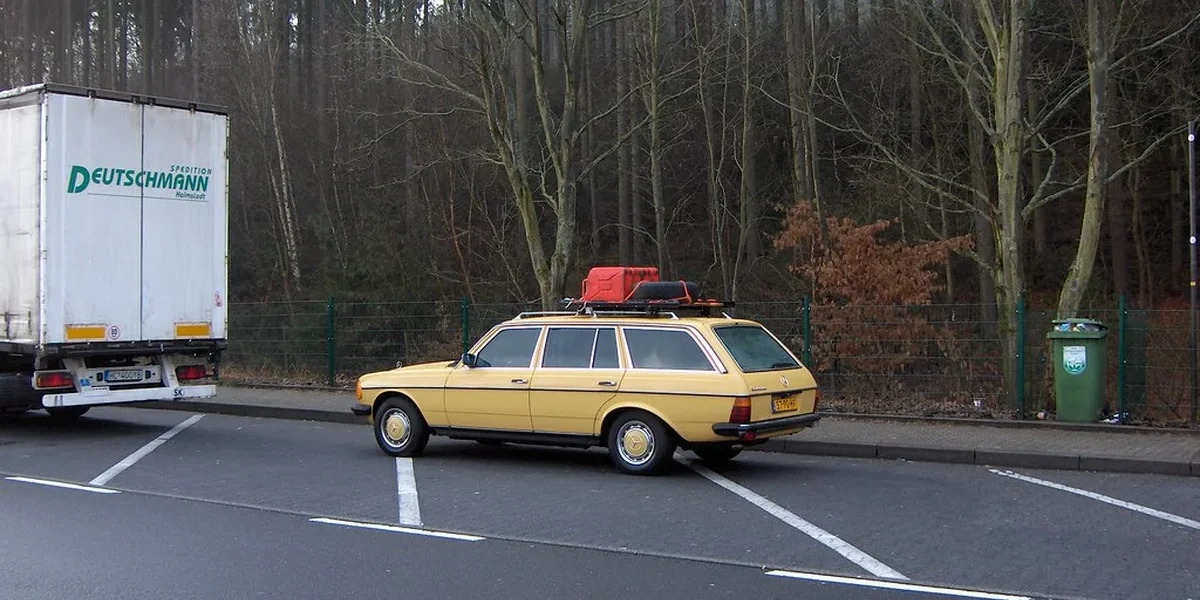
No piece of infrastructure defines Germany’s national self-image quite like the Autobahn. More than a highway network, it is a cultural artifact — a symbol of engineering precision, personal freedom, and the country’s uneasy romance with speed. Officially the Bundesautobahn, this system of over 13,000 kilometers of controlled-access roads carries the mystique of the derestricted lane, where a driver in the correct circumstances can legally push a car to its mechanical limits. Yet the Autobahn is also deeply misunderstood abroad: it is not a lawless speedway but a highly engineered, tightly regulated system with its own etiquette, history, and regional character.
Historical Origins & Founding Lore
Contrary to popular myth, the Autobahn was not invented by Adolf Hitler. The concept predates the Third Reich: the world’s first purpose-built limited-access road for cars, the AVUS in Berlin, opened in 1921 as a test track and racing venue. The first true intercity Autobahn, connecting Cologne and Bonn, opened in 1932 under the leadership of Cologne’s mayor at the time, Konrad Adenauer — who would later become West Germany’s first chancellor.
The Nazi regime, however, seized on the project after 1933 for propaganda purposes, branding it “Hitler’s roads” and using mass construction as both an employment program and a symbol of technological triumph. Fritz Todt was appointed Inspector General to oversee rapid expansion, and by 1938 over 3,000 kilometers were open. Forced laborers were later used extensively during wartime expansion, a dark chapter often omitted from the romanticized founding story. After 1945, both East and West Germany continued and expanded the network separately, unifying it fully only after 1990.
Cultural Significance in German Daily Life & Society
The Autobahn occupies a peculiar place in the German psyche, tied closely to the country’s love of automotive engineering and its export-driving car industry (Mercedes-Benz, BMW, Volkswagen, Porsche, Audi). For many Germans, the absence of a blanket speed limit is treated as a matter of personal liberty on par with civil rights debates elsewhere — proposals for a general Tempolimit reliably ignite fierce political and media debate every few years, most recently amid climate policy discussions.
Despite its speed-demon reputation, most of the network today carries advisory limits (Richtgeschwindigkeit) of 130 km/h, and only around 30% of the total Autobahn length remains genuinely unrestricted. Congestion, especially around Frankfurt, the Ruhr area, and Munich, is a constant reality; the ADAC (Germany’s automobile club) logs hundreds of thousands of traffic jam kilometers (Staus) annually. The Autobahn is also central to logistics — a huge share of European freight moves along it — and to family culture, with the summer Reiseverkehr (holiday traffic) toward Austria and Italy a near-ritual seasonal jam.
Regional Variations & Local Twists Across Germany
- Bavaria (A8, A9, A99): Dense, fast, heavily used by Munich commuters and Alpine holiday traffic; notorious summer backups toward Salzburg and the Austrian border.
- Ruhr Area (A40, A42, A2): One of the world’s densest motorway networks, stitching together the old industrial cities of Dortmund, Essen, and Duisburg.
- Former East Germany: Many stretches (like parts of the A9 and A4) were rebuilt after 1990 to modern standards, though older concrete sections still betray their GDR-era origins with their distinctive rumble.
- A7: Germany’s longest Autobahn, running nearly 963 km from the Danish border to Austria, cutting through the country’s spine.
- Rhineland (A3, A61): Famous for heavy freight traffic and some of the most persistent congestion in the country.
How It Is Practiced: Rules, Signage & Driving Culture
The Autobahn operates on strict, unwritten and written codes. The left lane is strictly for overtaking — lingering there is both illegal and a serious social faux pas, often triggering aggressive flashing headlights from BMW drivers behind you. Undertaking (passing on the right) is illegal. Speed limits are marked in circular signs with red borders; a white circle with diagonal grey bars signals the end of a restriction. Blue rectangular signs indicate Autobahn entries, and the iconic “Autobahn” nomenclature always starts with an “A” followed by a number (A1, A7, A9, etc.).
Rest stops, called Raststätten, are a cultural institution in themselves, offering everything from bratwurst stands to full hotels; the Autobahnkirche (motorway chapels) found along some routes offer a quieter, distinctly German counterpoint to the speed outside.
German Vocabulary, Idioms & Etiquette Rules
- Richtgeschwindigkeit – advisory (non-mandatory) speed of 130 km/h.
- Stau – traffic jam, a near-mythic feature of German road life.
- Raststätte / Autohof – motorway service station.
- Kavalierstart – a “gentleman’s start,” slang for flooring the accelerator from a standstill.
- Drängler – a tailgater, one of the most despised figures on German roads.
- Etiquette: never linger in the left lane, use turn signals decisively, and expect flashing lights as a warning, not aggression (though it often feels aggressive).
Where to Experience the Best of the Autobahn
For visitors wanting the genuine derestricted experience, stretches of the A2 in Lower Saxony, parts of the A5 near Karlsruhe, and sections of the A81 near Stuttgart remain among the more reliably open unlimited zones — though always check current signage, as limits shift due to construction and traffic management. Car enthusiasts should visit the Nürburgring in the Eifel region, technically not part of the Autobahn network but spiritually its racing cousin, or the AUTOMUSEUM VOLKSWAGEN in Wolfsburg to understand the deep bond between German car culture and its roads. Renting a high-performance vehicle in Munich or Stuttgart (both home to major manufacturers) and driving a genuinely unrestricted stretch remains a bucket-list experience for automotive travelers, though caution, an international license, and full insurance are essential.