Sauerbraten
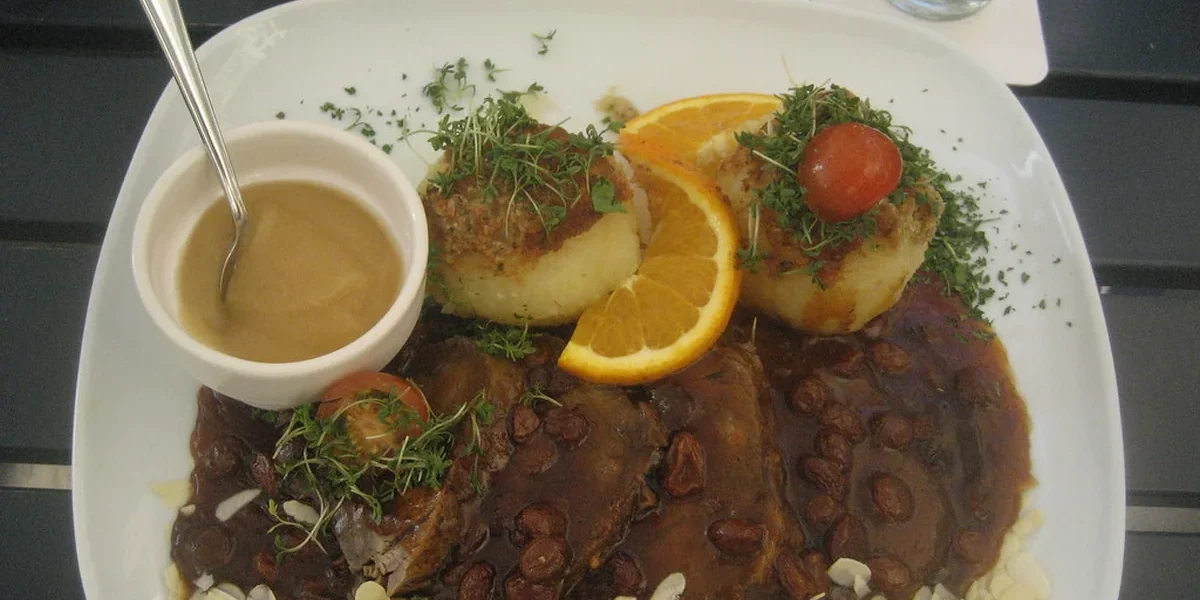
Few dishes carry the soul of German home cooking quite like Sauerbraten. Literally translating to “sour roast,” this pot roast is marinated for days in a tangy blend of vinegar, wine, and spices until the tough cut of meat transforms into something meltingly tender, then simmered low and slow into a rich, dark gravy that gets a distinctive sweet-sour finish from crushed gingerbread or raisins. It’s the dish grandmothers still argue about, the centerpiece of Sunday family tables, and a genuine contender for Germany’s unofficial national dish alongside Schnitzel and Currywurst.
Historical Origins & Founding Lore
Sauerbraten’s origins stretch back to the medieval period, when marinating meat in vinegar or wine wasn’t a culinary flourish but a necessity. Long before refrigeration, acidic marinades helped preserve meat and tenderize the notoriously tough cuts available to most households. Legend credits Julius Caesar with introducing the practice of marinating meat to the Rhineland during Roman occupation, though most food historians treat this as charming myth rather than documented history. A more credible account ties Sauerbraten’s rise to Charlemagne, who supposedly received a gift of pickled meat from the Pope and enjoyed it so much he demanded his cooks replicate it across the empire.
What’s certain is that by the late Middle Ages, Rhineland households were regularly preparing meat this way, and by the 19th century Sauerbraten had become firmly associated with Rhenish and Franconian regional cooking, appearing in early German cookbooks as a dish of substance reserved for special Sunday dinners rather than everyday fare.
Cultural Significance in German Daily Life & Society
Sauerbraten occupies a special place in the German culinary hierarchy as a Sonntagsessen — a Sunday roast dish requiring patience and planning rather than weeknight convenience. Because the meat needs to marinate for anywhere from three to ten days, preparing Sauerbraten is an act of domestic forethought, historically the domain of the Hausfrau who planned the week’s menu around it. It remains a fixture of Gasthaus and Wirtshaus menus throughout Germany, often served on weekends, and shows up at family celebrations, especially in the Rhineland where it holds near-sacred status.
The dish also carries a certain generational weight. Many Germans associate Sauerbraten with visiting grandparents, and recipes are frequently passed down as closely guarded family secrets, with fierce debates over whether raisins, gingerbread (Lebkuchen), or plain flour should thicken the gravy.
Regional Variations & Local Twists Across Germany
- Rheinischer Sauerbraten (Rhineland): The most famous version, made with beef marinated up to ten days, gravy thickened and sweetened with crushed Printen (spiced gingerbread) and raisins, giving a distinctly sweet-sour profile.
- Fränkischer Sauerbraten (Franconia): Often uses horsemeat traditionally (though beef is now common), with a marinade leaning more sour than sweet.
- Schwäbischer Sauerbraten (Swabia): Frequently paired with Spätzle instead of potato dumplings, and the marinade tends to include more root vegetables.
- Sauerbraten from Saxony and Silesia: Historically made with pork or venison, reflecting local hunting traditions, with a milder vinegar profile.
- Hessian versions: Sometimes use horsemeat and a shorter marinating time, producing a lighter tang.
How It Is Made
Traditional Sauerbraten begins with a tough, well-marbled cut such as beef rump, chuck, or bottom round — cuts that benefit from long marination and slow cooking. The meat is submerged in a marinade of red wine vinegar, red wine or water, onions, carrots, juniper berries, cloves, bay leaves, and peppercorns, then refrigerated for three to ten days, turned daily to ensure even penetration.
Once marinated, the meat is patted dry, seared until browned, then braised for two to three hours in a portion of the strained marinade along with stock. Near the end of cooking, the gravy is enriched and thickened — in the Rhenish style, with crumbled Lebkuchen or Printen and a handful of raisins, producing that signature sweet-tart depth. The dish is traditionally served with Kartoffelklöße (potato dumplings) or Spätzle, braised red cabbage (Rotkohl), and a generous ladle of the dark gravy.
| Step | Duration |
|---|---|
| Marinating | 3–10 days |
| Searing | 10–15 minutes |
| Braising | 2–3 hours |
| Resting & gravy finishing | 15–20 minutes |
German Vocabulary, Idioms & Etiquette Rules
- Sauerbraten — literally “sour roast”
- Bratensoße — the roast gravy, considered the heart of the dish
- Klöße / Knödel — potato dumplings, the classic accompaniment
- Rotkohl — braised red cabbage, the traditional side
- Einlegen — the verb for marinating the meat
- Etiquette tip: it’s considered good form to sop up leftover gravy with bread (“Brot in die Soße tunken”) — a compliment to the cook rather than a faux pas.
Where to Experience the Best in Germany
Cologne and the wider Rhineland remain the spiritual home of Sauerbraten, and traditional Brauhaus establishments there serve it as a menu staple, typically priced between €14 and €22. Look for it at classic Cologne brewery restaurants such as Früh am Dom or Peters Brauhaus, where it’s often paired with a local Kölsch beer. In Düsseldorf, old-town Altbier taverns like Zum Uerige and Füchschen serve robust versions alongside their house-brewed beer.
Beyond the Rhineland, traditional Gasthäuser and Wirtshäuser throughout Bavaria, Franconia, and Swabia frequently feature regional Sauerbraten as a Sunday special, and Christmas markets occasionally offer Sauerbraten sandwiches (Sauerbraten-Brötchen) as a hearty street-food alternative to sausages. For the full experience, seek out family-run restaurants that advertise “Hausgemacht” (homemade) Sauerbraten, as the multi-day marination process is a mark of genuine culinary commitment rather than shortcuts.