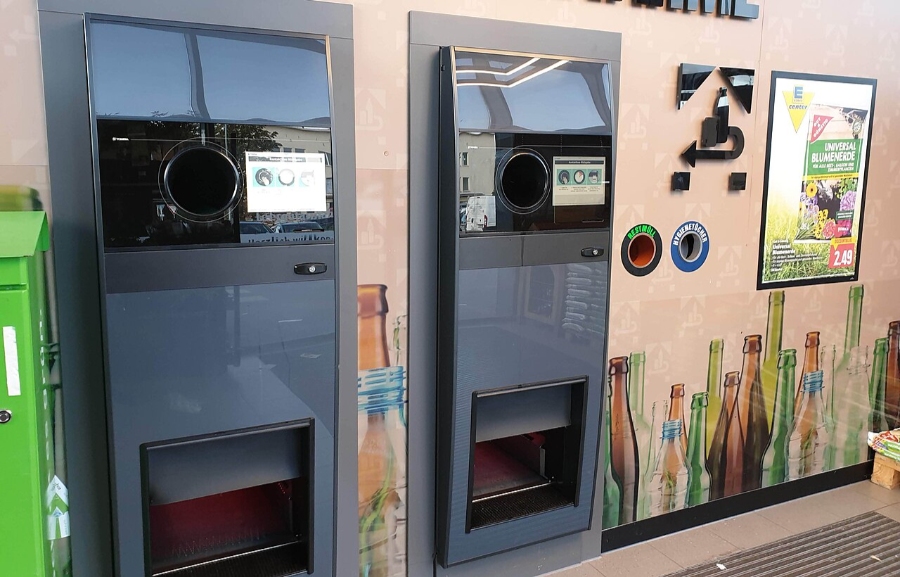
Pfand is a refundable deposit you pay on most drink containers in Germany, from €0.08 to €0.25 per bottle or can. You get every cent back when you return the empty container to a store.
Skip the return, and you’ve handed over free money.
Key Takeaways
- Single-use bottles and cans carry €0.25; reusable glass bottles carry €0.08 or €0.15.
- Look for the DPG logo or the word “Mehrweg” to know if a container is refundable.
- Feed empties into a machine one at a time, take the printed receipt, and redeem it at the checkout the same day.
What Are the Different Pfand Deposit Amounts in Germany?
Deposits fall into three price points: €0.25 for single-use packaging, €0.15 for most reusable plastic and glass, and €0.08 for standard beer bottles. The amount printed on your receipt at purchase is exactly what you get back.
Einweg: The €0.25 Deposit on Single-Use Containers
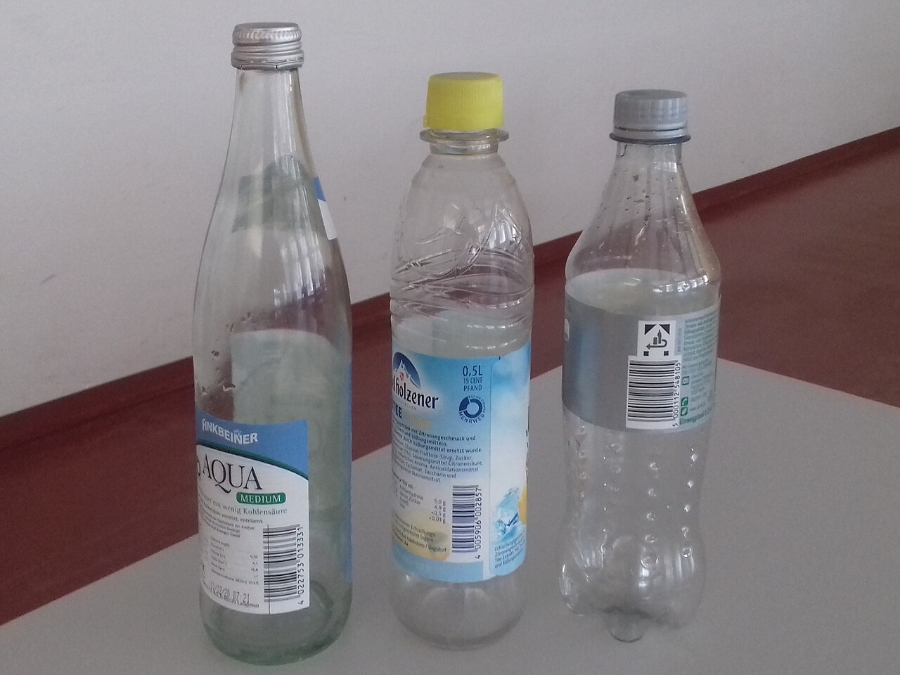
Einweg means single-use. Einwegpfand is a flat €0.25, no matter the size or brand.
This covers single-use plastic bottles (PET), beverage cans, and single-use glass. A 0.33L can of cola and a 1.5L water bottle both carry the same quarter-euro deposit.
Since 2024, the rule has also covered single-use plastic bottles for milk and milk-based drinks.
Mehrweg: €0.08 and €0.15 Deposits on Reusable Bottles
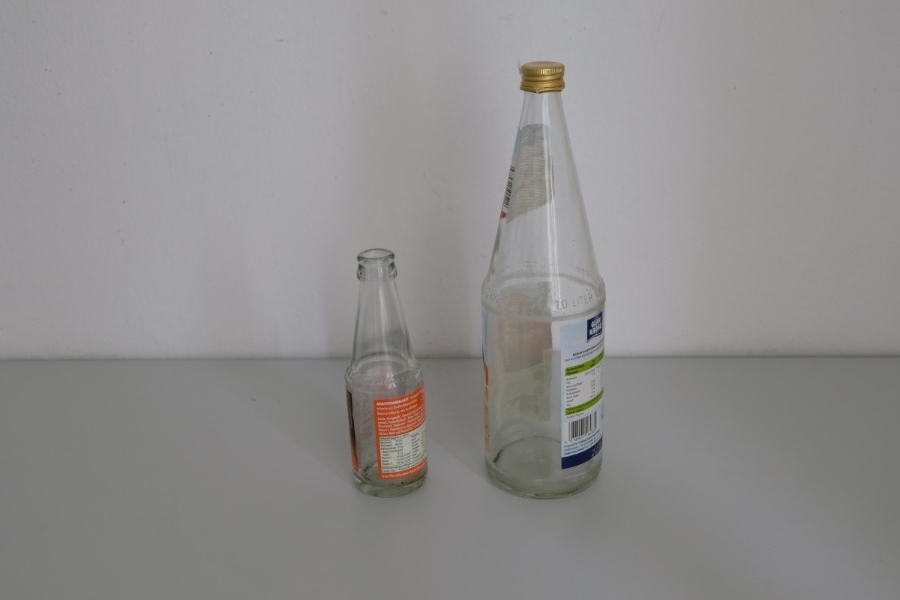
Mehrweg means multi-use. These bottles get washed and refilled, sometimes dozens of times.
| Container | Deposit |
|---|---|
| Standard beer bottle (0.33L / 0.5L) | €0.08 |
| Reusable soft drink glass bottle | €0.15 |
| Reusable thick PET bottle | €0.15 |
| Swing-top beer bottle | €0.15 |
| Reusable glass milk bottle | €0.15 |
| Yogurt glasses (Mehrweg) | €0.15 |
Reusable water bottles and juice bottles usually sit at €0.15. If you enjoy German beer by the bottle, €0.08 is the rate you’ll see most often.
Bottle Crates and Other Less Common Deposit Amounts
Bottle crates (Kästen) carry their own deposit, usually €1.50 for the plastic crate. Buy a 20-bottle crate of beer and you pay €1.50 for the crate plus €0.08 per bottle, or €3.10 in deposit alone.
A few specialty crates cost €3.00. Some regional dairy and juice producers use €0.15 jars and glasses with their own return arrangements, so check the shelf label.
How Do You Identify Pfand Bottles and Cans?
Two markings tell you nearly everything: the DPG logo on single-use packaging and the word “Mehrweg” on reusable containers. Anything with neither is pfandfrei, meaning you paid no deposit and won’t receive a refund.
What the DPG Logo Means on Einweg Packaging
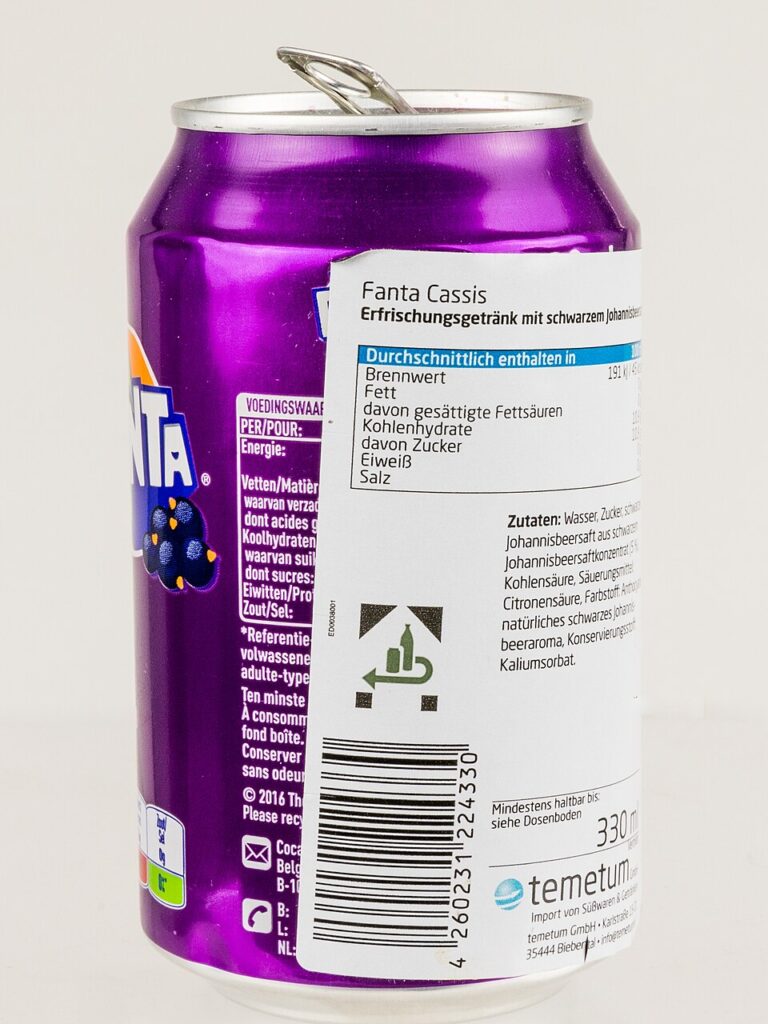
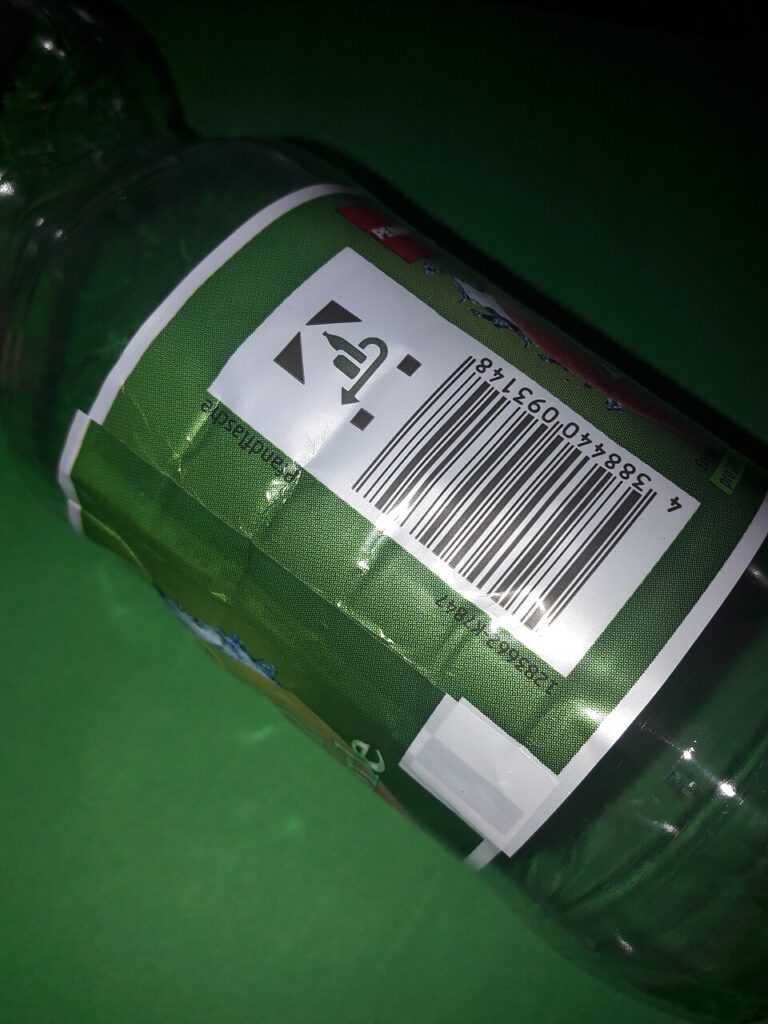
DPG stands for Deutsche Pfandsystem GmbH, the company that runs the single-use deposit network. Its logo is a small rectangle with a stylized bottle and can inside an arrow loop, printed next to a special barcode.
Look for it near the main barcode on plastic bottles and cans. The logo means €0.25, every time. Return machines read the DPG mark and barcode together, so the label needs to stay intact.
How to Recognize Mehrweg and Pfand-Glas Containers
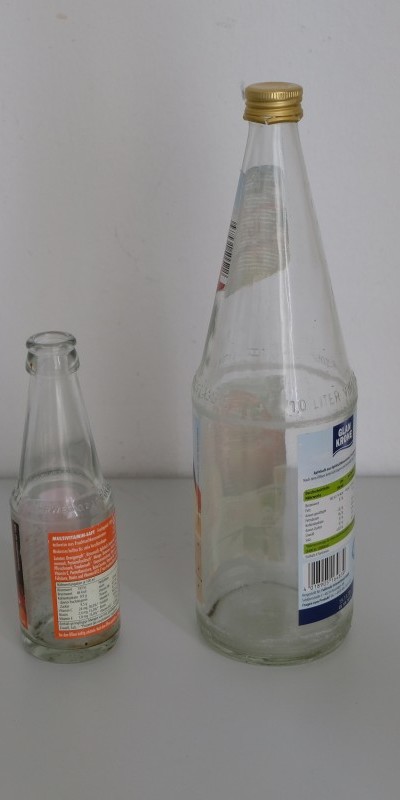
Reusable containers say so in plain text: “Mehrweg”, “Mehrwegflasche”, or “Mehrweg-Pfandflasche” on the label or embossed in the glass. They don’t have a DPG barcode.
Pfand-Glas feels heavier and thicker than single-use glass. Standard German beer bottles come in a small number of shared shapes, so machines and staff can recognize them without a special code.
Which Bottles and Cartons Are Pfandfrei?
These carry no deposit:
- Wine bottles and sparkling wine bottles
- Spirits and liquor bottles
- Milk cartons and juice cartons (Tetra Pak)
- Food jars for sauces, pickles, and jam
- Oil and vinegar bottles
- Many imported beers and specialty drinks
Pfandfrei packaging still gets recycled. Cartons and plastic wrap go in the yellow recycling bin (marked with the Grüne Punkt system), while wine bottles go in glass recycling bins sorted by color.
How Do You Return Pfand Bottles to Get Your Money Back?
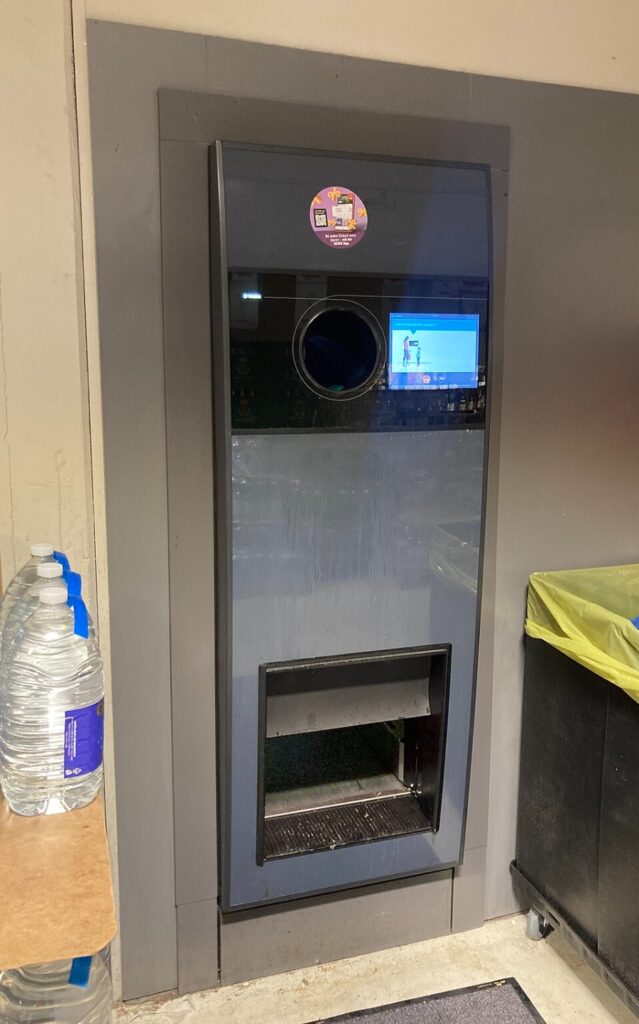
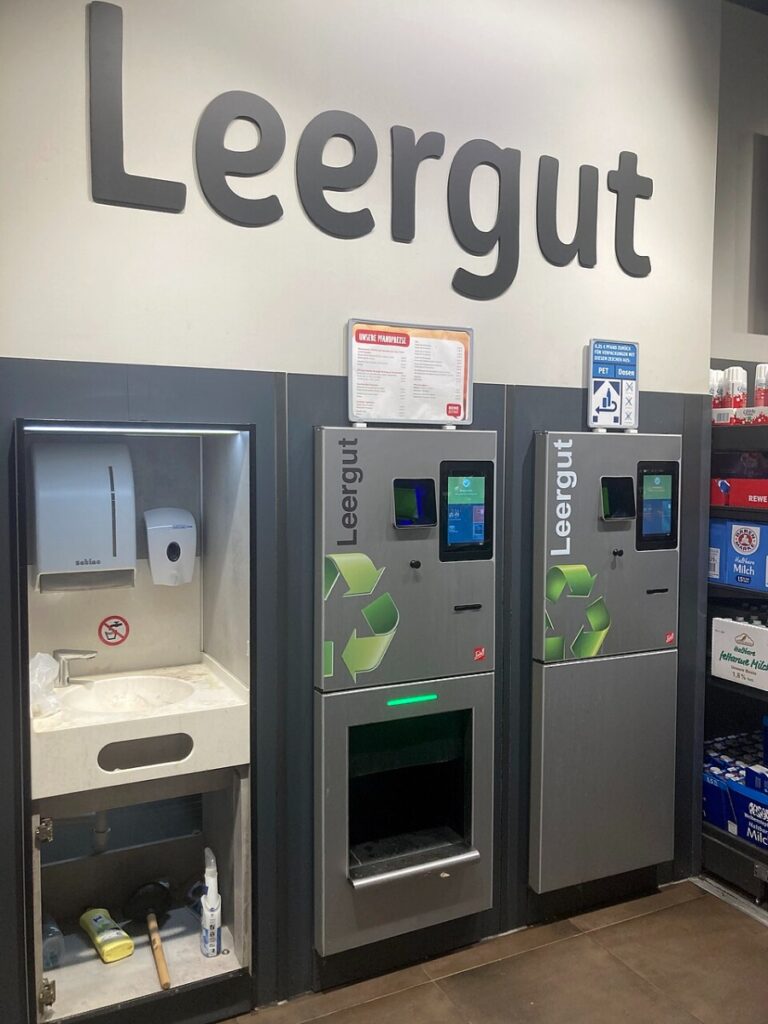
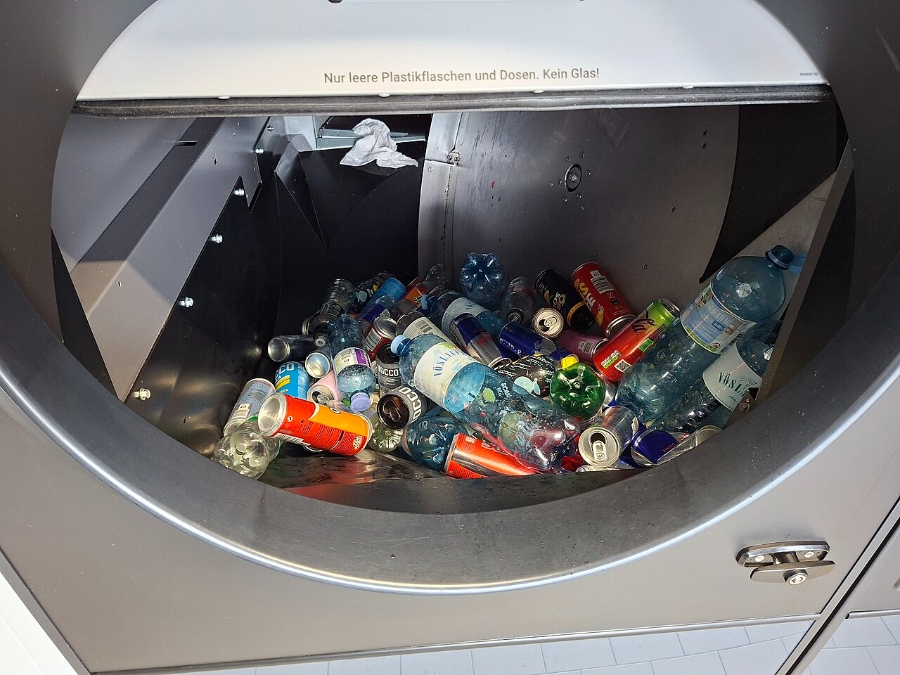
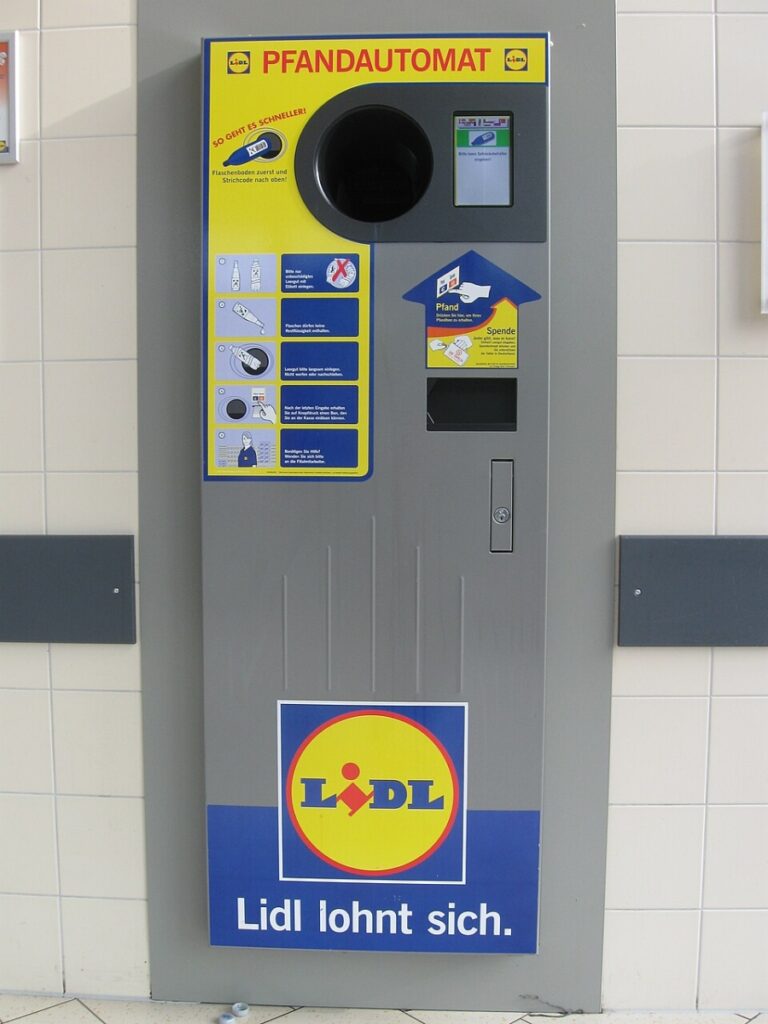
You return empties at a Pfandautomat, the reverse vending machine near the entrance of nearly every German supermarket. The machine prints a Pfandbon, which you hand to the cashier for cash or shopping credit.
How to Use a Pfandautomat Step by Step
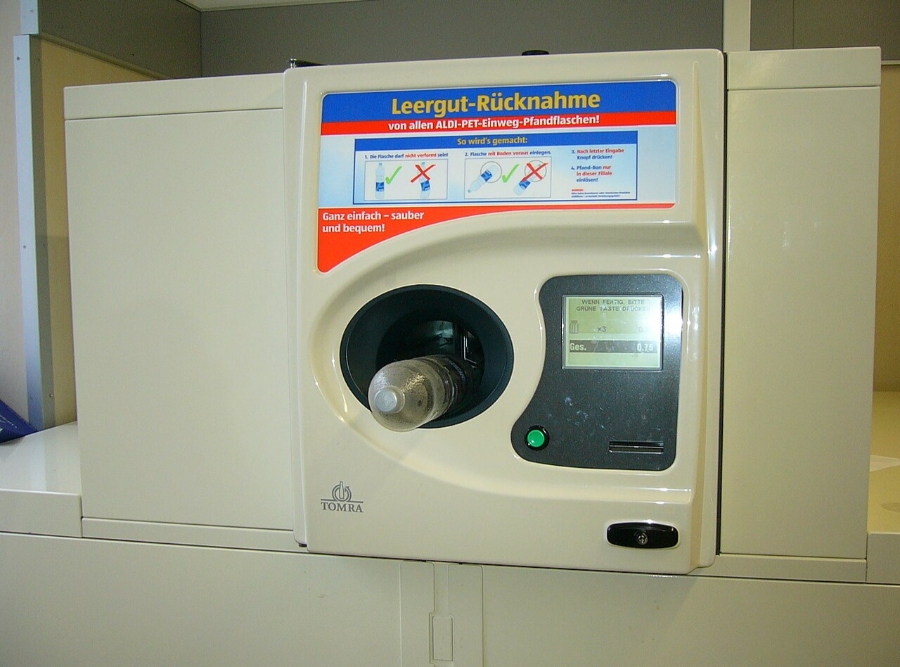
- Find the machine, often signposted “Leergut” (empties) or “Leergutautomat”, near the store entrance.
- Check the sticker on the front to see which container types it accepts.
- Insert one container at a time, lying flat on its side, with the opening pointing into the machine.
- Let the rollers spin the bottle so the barcode passes the scanner.
- Wait for the counter on the screen to tick up. A crushing sound means the machine accepted a single-use container.
- Repeat until your bag is empty.
- Press the green button (labeled “Bon” or “Quittung”) to print your Pfandbon.
- Take the slip. Without it, the credit is gone.
Rinse sticky bottles first and leave the caps off. Wet or sugary containers can jam the rollers.
Which Stores Accept Bottles, Cans, and Crates?
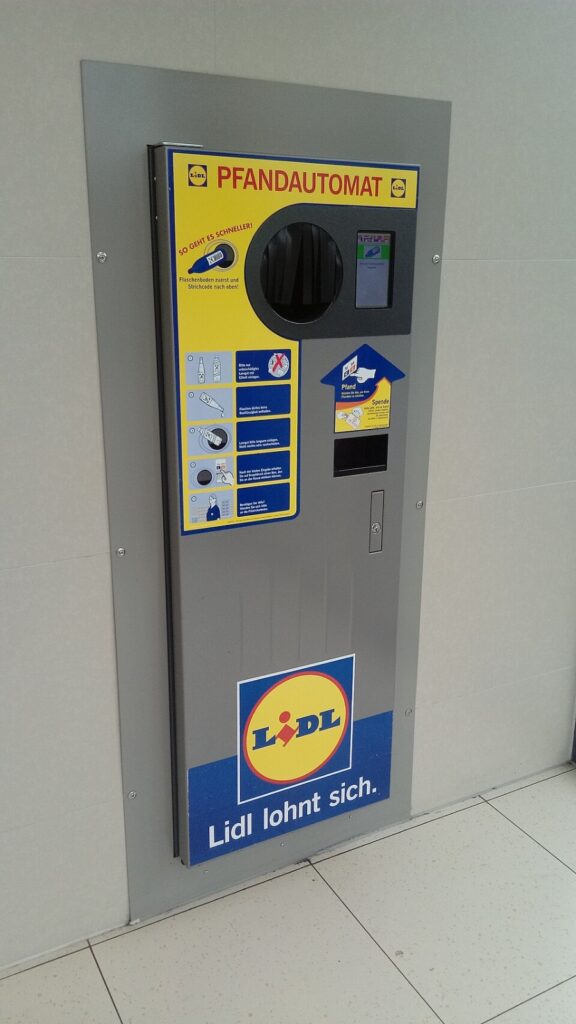
Any shop that sells drinks must take back the packaging types it sells. A store that sells cans has to accept cans.
- Rewe, Edeka, Kaufland: wide acceptance, often with several machines, making them good for mixed loads.
- Aldi, Lidl, Penny, Netto: always take single-use DPG containers; Mehrweg acceptance is narrower and may be limited to brands they stock.
- Getränkemarkt (beverage store): the best option for crates and large quantities.
- Gas stations, kiosks, and Spätis: small machines or manual returns, sometimes for cans only.
Shops smaller than 200 square meters only have to take back the brands they sell.
How to Redeem a Pfandbon for Cash or Store Credit
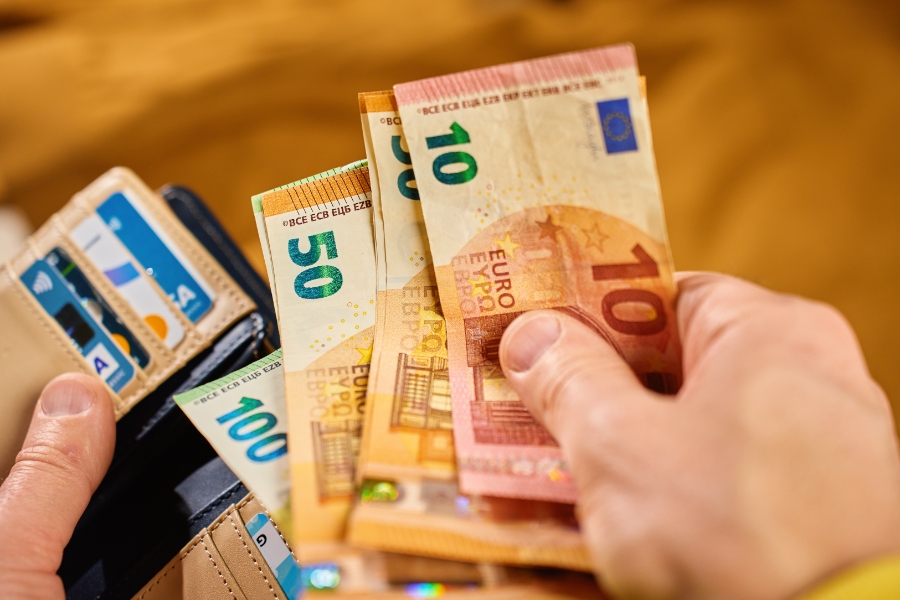
Hand the Pfandbon to the cashier before scanning your groceries, and the cashier deducts the total from your bill. If you’re buying nothing, hand it over at any register and ask for cash.
Redeem it the same day at the same store. Some chains print an expiry date, and the slip has no value anywhere else. A few stores route Pfandbons through self-checkout instead, so scan the barcode there.
What Should You Do if the Pfand Machine Rejects Your Bottle?
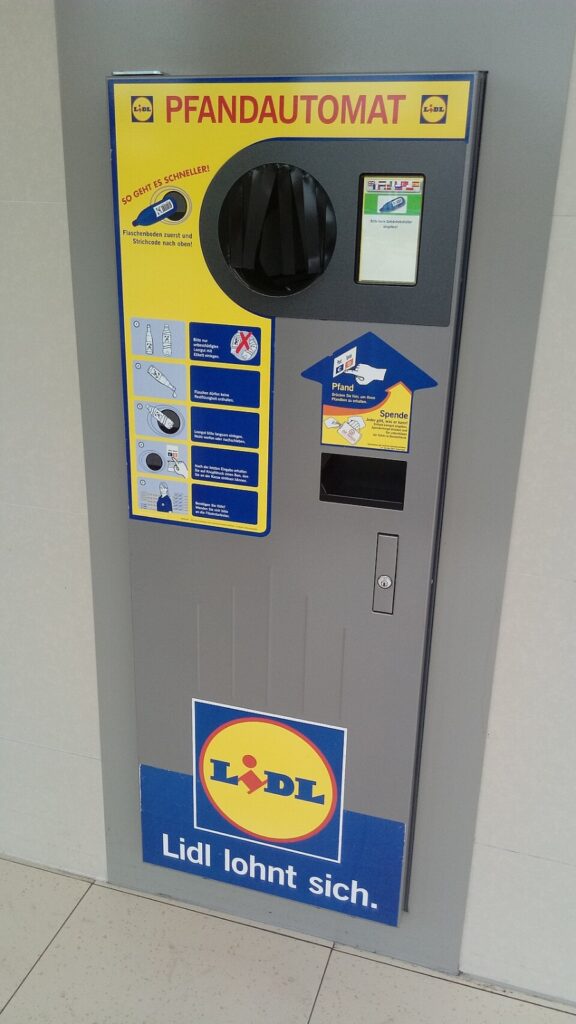
A rejected container usually fails for one of three reasons: physical damage, a barcode outside the German system, or a store limit on that brand. Take it back and check it before assuming it’s worthless.
Damaged, Crushed, or Label-Free Containers
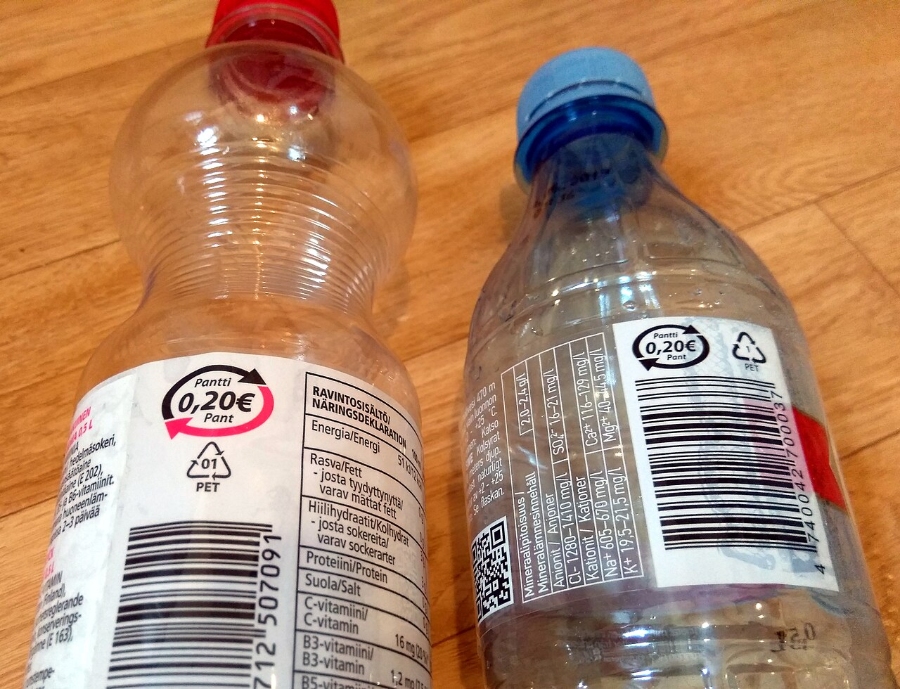
A Pfandautomat identifies containers by their shape and barcode. Crushing a can or squashing an Einwegflasche removes the shape the scanner expects.
If the label is torn, wet, or peeled away from the barcode, the machine has nothing to read. Turn the bottle so the code faces up and feed it in again. You can show badly deformed containers to the service desk, though the store decides whether to accept them.
Foreign Bottles and Non-Participating Packaging
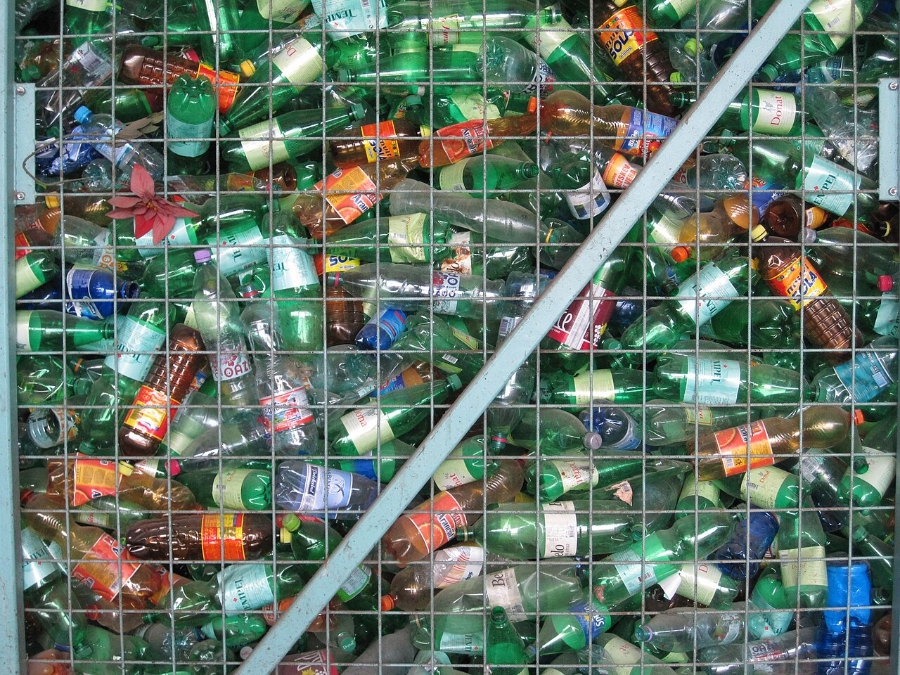
German machines only refund containers registered in the German deposit system. A bottle bought in Austria, Poland, or the Netherlands carries a foreign barcode and gets rejected, even if it looks identical.
Imported drinks sold inside Germany carry a DPG mark, so check for the logo before carrying a bag across town. No DPG logo and no “Mehrweg” text means no deposit was paid, and the machine is right to refuse it.
When a Store Can Refuse a Mehrweg Return
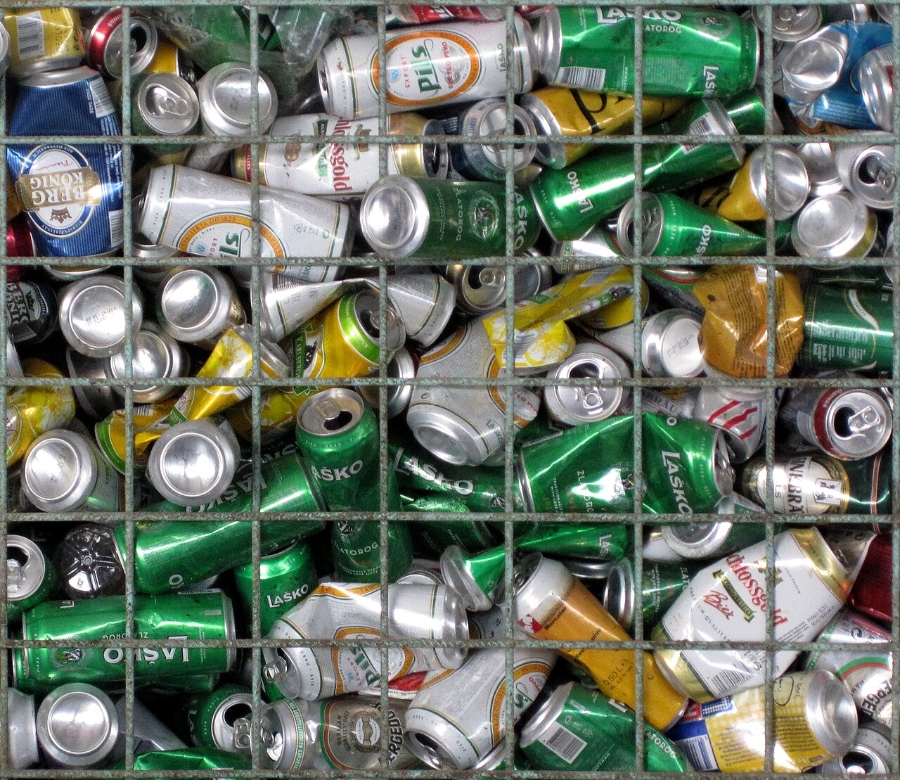
Mehrweg has no nationwide clearing system, so each retailer decides which reusable bottles it handles. A discounter may reject a Mehrwegflasche from a regional brewery it never sells.
Take beer bottles and crates to a Getränkemarkt or to the shop that sold them. If one supermarket’s machine rejects a reusable bottle, another chain a few streets away may take it.
What Is the Cultural Etiquette for Pfand in Germany?
People treat deposit containers as money, and Germany has a shared habit of leaving them for others. Single-use bottles and cans have return rates above 90%, partly because so few refundable containers reach landfills.
What “Pfand Gehört Daneben” Means
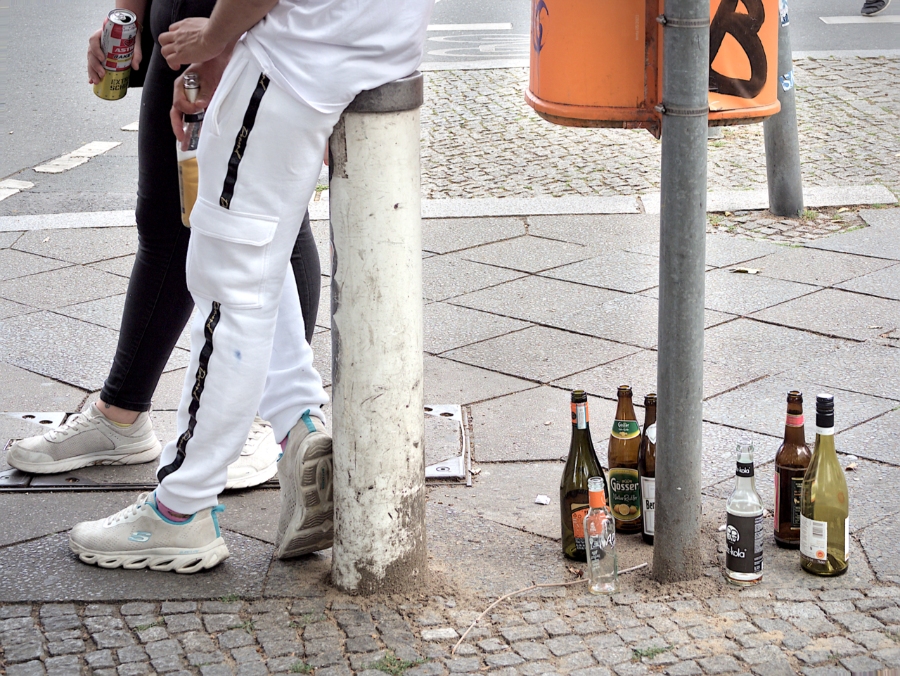
Pfand gehört daneben translates to “deposit belongs beside it.” The phrase asks you to place empty bottles and cans next to a public trash bin instead of dropping them inside.
You’ll see stickers with the slogan on bins in Berlin, Hamburg, and other cities. Some bins now have built-in rings or shelves that hold empties at hand height.
When to Leave Bottles for Pfandsammler
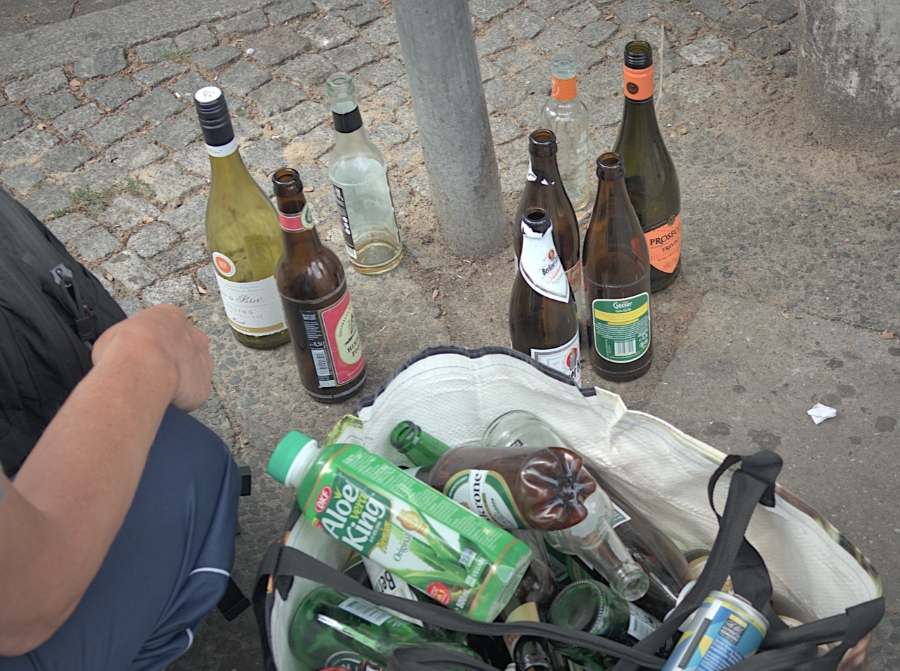
Pfandsammler are people who collect abandoned deposit containers for the refund money. In parks, at train stations, and after concerts or football matches, they search bins for anything with a DPG logo.
Frequently Asked Questions
Do you get Pfand back in cash?
Yes. Take your Pfandbon to any cashier in the store and ask for the amount in cash. Most people apply it to their shopping instead, and the cashier deducts it from the total.
Can I return crushed cans or bottles in Germany?
Crushed containers are usually refused because the machine needs a readable barcode and a recognizable shape to process the return. Keep cans and single-use bottles intact until you reach the machine. A service desk employee may sometimes accept a damaged container manually.
Is there a deposit on wine bottles in Germany?
Standard wine and spirits bottles don’t carry Pfand. Put them in the public glass recycling bins, sorted by clear, green, or brown glass. A small number of regional producers use Mehrweg bottles with a deposit. These bottles say u0022Mehrwegu0022 on the label.
Do milk bottles have a Pfand deposit?
Reusable glass milk bottles carry €0.15, while single-use plastic milk bottles have carried €0.25 since January 2024. Milk cartons and Tetra Pak packaging have no deposit and belong in the yellow recycling bin.
Can tourists return Pfand bottles in Germany?
Yes. Nobody checks who bought the container, and you don’t need an ID or receipt to use a machine. If you are visiting Germany for the first timeu003c/au003e, returning a few bottles a day can recover a euro or two you already paid.
When did the German Pfand system start?
Germany has used reusable bottle deposits for decades. The mandatory deposit on single-use bottles and cans took effect on January 1, 2003. The DPG clearing system behind today’s €0.25 refunds launched in 2006.