Leipzig/Halle Airport (ARRAY)
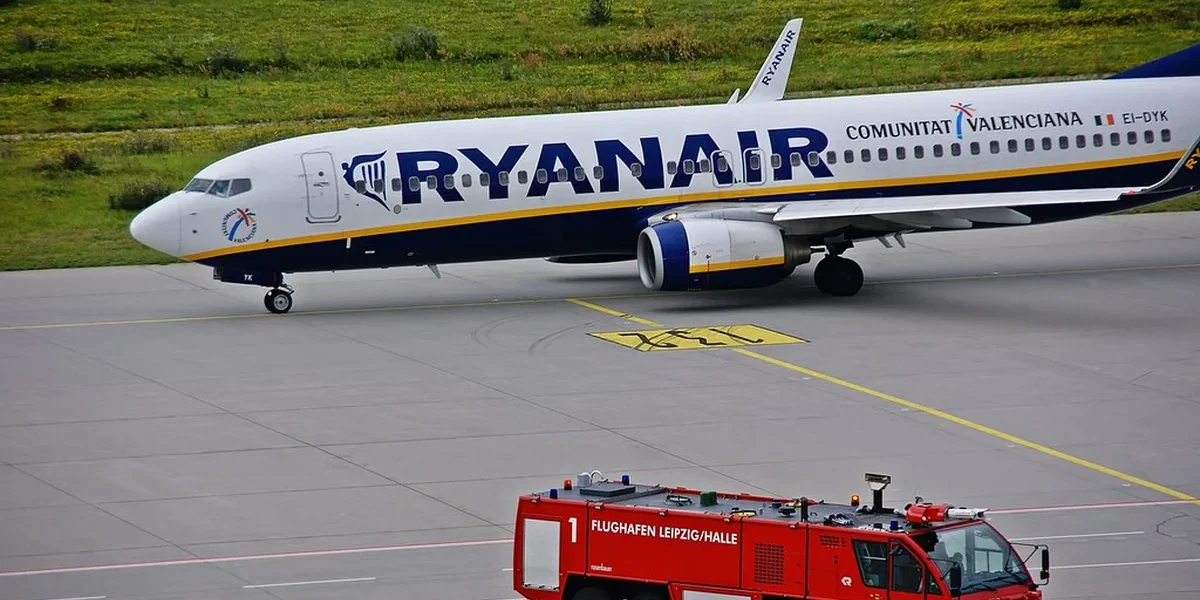
Leipzig/Halle Airport (LEJ) is Germany’s second-busiest cargo airport and DHL Aviation’s main European hub, handling roughly 1.39 million tonnes of freight and about 2.1 million passengers a year. It sits in Schkeuditz, midway between Leipzig and Halle, with its own railway station directly beneath the terminal — 14 minutes from Leipzig Hbf and 10 minutes from Halle (Saale) Hbf by S-Bahn.
Leipzig/Halle Airport at a glance
| Detail | Information |
|---|---|
| IATA / ICAO code | LEJ / EDDP |
| Location | Schkeuditz, Nordsachsen, Saxony — between Leipzig and Halle |
| Address | Terminalring 11, 04435 Schkeuditz, Germany |
| Opened | 1927 (as Flugplatz Schkeuditz) |
| Passengers | approx. 2.12 million (2025); 2,200,981 (2024) |
| Cargo | approx. 1.39 million tonnes — 2nd in Germany, 4th in Europe |
| Terminals | Terminal A and Terminal B, joined by a central check-in hall |
| Runways | Two parallel concrete runways, both 3,600 m (08L/26R, 08R/26L) |
| Operating hours | 24 hours for cargo; passenger flights concentrated in daytime |
| Rail station | Leipzig/Halle Flughafen, directly under the check-in area |
| Owner / operator | Mitteldeutsche Flughafen Holding AG / Flughafen Leipzig/Halle GmbH |
Where the airport is and who it serves
Despite the name, LEJ lies in neither city. It occupies flat farmland in Schkeuditz, about 22 km northwest of Leipzig city centre and roughly 20 km east of Halle (Saale), which is why the two cities share the airport and its name. The site is unusual in Europe: the terminal complex bridges both the A14 motorway and the Leipzig–Halle railway line, so trains and cars pass literally beneath the check-in hall.
For travellers, that geography has one practical consequence worth planning around. LEJ is a compact leisure and business-feeder airport bolted onto an enormous freight operation, so its passenger schedule is thin compared with Berlin, Frankfurt or Munich. If you need a wide choice of long-haul connections, you will usually route via Frankfurt or Munich rather than fly point-to-point from Leipzig.
Terminals and layout
The passenger side has two terminals, A and B, linked by a shared central check-in area on level 2. Terminal B, completed in 1996, is the modern main building and feeds a pier with six jet bridges plus several walk-out apron stands. Terminal A, the older 1991-modernised structure, handles overflow, charter operations and some handling offices.
- Walking distances are short. The compact design means most gates are only a few minutes from security, which is why 60–75 minutes is usually enough for a domestic or Schengen departure.
- Passport control exists, but transfers are limited. There are immigration facilities for non-Schengen flights, yet no dedicated international transfer area — plan on clearing into Germany rather than connecting airside on non-Schengen itineraries.
- Everything stacks vertically. Rail platforms sit below, arrivals and check-in above, with lifts running straight from the platform to the check-in level.
- Facilities are modest. Expect a handful of cafés, bakeries, a duty-free shop, car rental desks and a 24-hour information desk (+49 341 224 1155) rather than a large retail concourse.
Getting to and from the airport
By train (the fastest option)
Leipzig/Halle Flughafen station sits directly under the terminal, and it is the reason most locals never drive here. S-Bahn Mitteldeutschland lines S5 and S5X call every 30 minutes during the day, taking about 14 minutes to Leipzig Hauptbahnhof and about 10 minutes to Halle (Saale) Hauptbahnhof. Long-distance Intercity services on the Dresden–Magdeburg–Hanover–Cologne axis (IC 55 and IC 56) also stop at the airport, so you can reach Magdeburg, Hanover or Dresden without changing in either city.
Tickets are issued by the MDV regional tariff, not by the airport, and a single adult airport-to-city fare has typically run in the €5–6 range. Buy from the machines on the platform level or in the MDV/DB app before boarding, because there are no ticket sales on board.
By car
LEJ is one of the best-connected airports in eastern Germany for drivers, with direct access from the A14 (Halle 20 km, Dresden and Magdeburg roughly 130 km each) and the A9 (Berlin about 180 km, Nuremberg 280 km, Munich 430 km). Signage from both motorways points to “Flughafen Leipzig/Halle” and the Terminalring loop road.
By bus and taxi
FlixBus serves the airport stop on the Terminalring, with roughly twice-daily runs in each direction to Dresden, Göttingen and Kassel and a daily service towards Dortmund and Cologne. Regional bus line 217 links the airport with the surrounding Schkeuditz area, and taxis and ride-hailing pick up in front of the central terminal — a taxi into central Leipzig is far more expensive than the S-Bahn and rarely faster in daytime traffic.
Parking at Leipzig/Halle Airport
The airport has more than 5,500 parking spaces spread across roughly ten numbered car parks, and since 1 January 2026 the whole parking and mobility operation has been run by Goldbeck Parking Services GmbH on behalf of the airport. Rates change seasonally, so treat the figures below as structure rather than fixed prices, and book online in advance where discounts of up to about 30% are advertised.
- Parkhaus (multi-storey): the only covered parking, closest to check-in, departures and arrivals — best for short stays and bad weather.
- P1 and P3: terminal-adjacent short-stay and business parking billed hourly; P1 also offers a short free drop-off window.
- P6: premium, camera-monitored parking between Terminals A and B, under a minute’s walk from the terminal.
- P11: in front of the central check-in, intended for drop-off and pick-up, and where the fast EV chargers are located.
- P2, P14, P21: longer-stay lots at lower rates, with P20, P4 and P15 typically opening seasonally from roughly March to October.
- Kiss & Fly (lane 3): the terminal driveway for brief stops, charged after the free minutes elapse.
- Long-stay pricing: weekly rates have started at around €70 for the outer lots with shuttle transfer.
Accessibility and barrier-free travel
The vertical layout works in favour of reduced-mobility passengers: a lift runs from the railway platform straight to the check-in area on level 2. Designated spaces for blue EU parking card holders are provided on the second floor of the multi-storey car park (step-free to check-in), in P1, in P2 and in Kiss & Fly lane 3.
Holders of a blue EU parking permit or a German severely-disabled pass marked aG, H, B or Bl can park free for up to three hours in the short-term zones. The discount is not automatic — after parking, visit the parking control centre in Terminal B with your disability pass and ID to have the three hours credited. As at all EU airports, request assistance through your airline at least 48 hours before departure.
Airlines and where you can fly
LEJ’s passenger network is overwhelmingly leisure-focused, aimed at Mediterranean beaches, the Canary Islands, Egypt and Turkey, plus two hub feeders. The picture shifted sharply in the mid-2020s: Ryanair pulled out of Leipzig/Halle entirely in October 2024 citing German operating costs, and in October 2025 Condor — long the airport’s biggest passenger carrier — closed its base with immediate effect and passed a slimmed-down network to sister airline Marabu.
- Hub feeders: Lufthansa to Frankfurt (the key connection for worldwide onward travel) and Austrian Airlines to Vienna.
- Marabu: the largest leisure operator, with seasonal service to Palma de Mallorca, Heraklion, Chania, Corfu, Kos, Rhodes, Fuerteventura, Gran Canaria, Tenerife-South, Funchal and Hurghada.
- Turkey: Pegasus Airlines and Corendon to Antalya, SunExpress to Antalya (with Dalaman announced for 2027), AJet seasonally to Bodrum, plus Freebird charters.
- Egypt and Tunisia: Air Cairo and BH Air to Hurghada, Nouvelair seasonally to Djerba and Monastir.
- Other: Eurowings to Palma de Mallorca, plus seasonal charter programmes to Bulgaria (Burgas, Varna) and Greece sold through tour operators.
Because so much capacity is charter or seasonal, schedules can be published late and change between summer and winter. Check the airport’s own timetable rather than relying on last year’s route map, particularly for anything flying between November and March.
Why LEJ matters: the DHL cargo hub
The freight operation, not the passenger terminal, is what makes Leipzig/Halle nationally significant. DHL Aviation moved its European hub here from Brussels in 2008, and volumes climbed from around 100,000 tonnes in 2007 to more than 1.38 million tonnes by 2024 — second in Germany behind Frankfurt and fourth in Europe. LEJ also records the highest number of freight-only aircraft movements anywhere in the European Union.
- Unrestricted night flying. A 24-hour cargo permit is the hub’s core competitive asset, supporting up to roughly 170 night take-offs and landings.
- Multiple based operators. Beyond DHL, the airport is a hub for AeroLogic (the DHL–Lufthansa Cargo joint venture), Amazon Air and Antonov Airlines.
- Global reach. Scheduled freighters connect to about 60 destinations, including Hong Kong, Shanghai-Pudong, Shenzhen, Singapore, Seoul-Incheon, Tokyo-Narita, Delhi, Mumbai, Bengaluru, Dubai, Cincinnati, New York-JFK, Los Angeles and Mexico City.
- Outsize freight specialism. Antonov’s presence makes LEJ one of Europe’s go-to airports for oversized and project cargo, plus NATO and EU military charter movements.
- Local employment. DHL’s site alone accounts for several thousand jobs, making the hub one of the largest employers in the Leipzig–Halle region.
The controversies worth knowing
Two long-running criticisms shape local politics around the airport. First, aircraft noise: residents in the Saale district and surrounding villages have campaigned for years to have night-flight charges raised so that nocturnal freight movements carry a real cost. Second, public finance: because take-off and landing fees have historically not covered operating costs, the state-owned holding company recorded operating losses reported at roughly €800 million between 2000 and 2020 — losses critics link directly to the low fees that make the DHL hub attractive.
Security has become a newer concern. On 4 August 2026, an incident involving an explosive drone forced the closure of the airport, an event German officials characterised as a hybrid-warfare scenario and which triggered an investigation by the Federal Prosecutor. Travellers should expect continued visible security measures as a result.
A short history
Built from scratch between 1926 and 1927 as Flugplatz Schkeuditz, the airport was deliberately sited between the two cities and renamed Flughafen Halle/Leipzig in 1928 before the order of the names flipped. By the outbreak of the Second World War it was Germany’s fourth-busiest commercial airport with more than 40 daily departures — until the Luftwaffe took it over entirely and Allied bombing largely destroyed it on 16 April 1944.
- GDR era: rebuilt as an industrial airfield, given a 2,500 m runway between 1957 and 1960, and used intensively twice a year for the Leipzig Trade Fair with Interflug service; year-round operation only began in 1972.
- Concorde in the East: Air France flew Concorde to Leipzig for the Leipzig Book Fair from 18 March 1986, with British Airways following two days later — making Leipzig the only airport in the Eastern Bloc served by Concorde.
- Post-reunification: Terminal A was modernised in 1991, passengers passed one million in 1992, Terminal B opened in 1996, a new control tower followed in 2000, and the second 3,600 m runway was completed in 2003.
- The DHL era: the 2008 arrival of DHL’s European hub transformed the airport’s economics, followed by major freight-terminal expansions from 2016 onward.
Two curiosities sit within the airport’s footprint. Kursdorf is a ghost village trapped between the two runways, gradually emptied as the airport expanded around it. And the terminal has doubled as a stand-in for Berlin on screen, appearing in Flightplan (2005), Unknown (2011), Netflix’s Inventing Anna, and most visibly as the battleground airport in Captain America: Civil War (2016).
Practical tips for flying from LEJ
- Arrive two hours early for charter flights. Security queues at LEJ are driven by a handful of simultaneous holiday departures, so the airport can feel empty at 09:00 and congested at 05:30.
- Take the S-Bahn unless you have a reason not to. Two lines, a 30-minute frequency, a sub-15-minute run to Leipzig Hbf and a fare under €6 beat both parking and taxis for solo travellers.
- Book parking online in advance. Advance booking discounts are meaningful, and the cheapest outer lots close outside the summer season.
- Do not plan tight non-Schengen connections. With no international transfer area, a non-Schengen arrival means clearing immigration before continuing.
- Use Frankfurt as your long-haul gateway. The Lufthansa shuttle to FRA is the practical route to intercontinental flights from Central Germany.
- Eat before security. Airside catering is limited, especially for very early departures.
- Combine the trip with Leipzig itself. Fourteen minutes from the terminal you are in a city of Bach, the Leipzig Trade Fair, the Spinnerei art district and the Völkerschlachtdenkmal.
Frequently asked questions
How do I get from Leipzig/Halle Airport to Leipzig city centre?
Take S-Bahn line S5 or S5X from the station directly beneath the terminal. The journey to Leipzig Hauptbahnhof takes about 14 minutes, trains run every 30 minutes during the day, and a single adult ticket costs roughly €6.
Which city is Leipzig/Halle Airport actually in?
Neither. The airport lies in Schkeuditz in the Nordsachsen district of Saxony, about 22 km from Leipzig city centre and about 20 km from Halle (Saale), which is why both cities share the name.
How many terminals does Leipzig/Halle Airport have?
Two: Terminal A and Terminal B, connected by a central check-in hall. Terminal B is the main modern building with six jet bridges. Walking distances are short because of the compact layout.
Is Leipzig/Halle Airport open 24 hours?
Cargo flights operate 24 hours a day, which is what makes the airport DHL’s European hub. Passenger flights are concentrated in daytime hours, and terminal services follow the passenger schedule rather than the freight schedule.
Where can I fly direct from Leipzig/Halle Airport?
Mostly leisure destinations plus two hub feeders. Lufthansa serves Frankfurt and Austrian Airlines serves Vienna, while Marabu, Pegasus, SunExpress, Corendon, Eurowings, Air Cairo and Nouvelair fly to Spain, Greece, Turkey, Egypt, Tunisia, Portugal and the Canary Islands, largely seasonally.
How early should I arrive at Leipzig/Halle Airport?
Allow two hours for charter and non-Schengen departures and about 90 minutes for Schengen flights. The terminal is small, but simultaneous early-morning holiday departures can create long security queues.
How much does parking cost at Leipzig/Halle Airport?
Rates vary by car park and season, with long-stay lots starting around €70 per week and hourly billing in P1, P3 and the multi-storey car park. Booking online in advance can save up to about 30 percent.