Magdeburg Cathedral

Rising above the rooftops of Magdeburg on a bluff overlooking the Elbe River, Magdeburg Cathedral (Dom zu Magdeburg, formally the Cathedral of Saints Catherine and Maurice) holds a singular claim: it is the first Gothic cathedral built on German soil, and at roughly 104 meters, its twin spires make it the tallest cathedral towers in eastern Germany. For a city that was flattened by fire in 1631 during the Thirty Years’ War and again devastated by Allied bombing in 1945, the cathedral’s survival feels almost improbable — and that endurance is central to its identity today.
Construction began in 1209 under Archbishop Albrecht I, replacing an earlier Ottonian basilica founded by Emperor Otto I in 955 — whose tomb still lies within the choir, making this one of the few places in Germany where a Holy Roman Emperor is physically interred. Building continued for over 300 years, finally completing in 1520, which explains the fascinating blend of late-Romanesque foundations, French-influenced early Gothic naves, and richly decorated Gothic facades. The cathedral is Lutheran today, having been among the first major churches to embrace the Reformation in the 1560s, and it remains an active parish church as well as a museum-grade cultural monument.
Top Highlights & Architectural Wonders

The cathedral rewards slow, deliberate exploration — its stonework tells centuries of stylistic evolution in a single walk from nave to crypt.
- Tomb of Otto the Great: The marble sarcophagus of Emperor Otto I (d. 973) sits behind the high altar, one of Germany’s most significant imperial burial sites.
- The Twelve Virgins Portal: A Gothic sculptural ensemble depicting the parable of the wise and foolish virgins, celebrated for its emotional expressiveness.
- The Magdeburg Rider (replica): An equestrian statue believed to depict Otto I, an early masterpiece of Gothic sculpture (the medieval original is preserved in the Kulturhistorisches Museum nearby).
- War memorial by Ernst Barlach: A haunting 1929 anti-war sculpture group installed in the north transept, one of the most powerful WWI memorials in Germany.
- The cloister (Kreuzgang): A tranquil transitional Romanesque-Gothic courtyard, often overlooked by visitors rushing through the main nave.
- Crypt and choir stalls: Intricately carved medieval woodwork and the atmospheric burial vault beneath the altar.
Practical Visitor Information

The cathedral is generally open daily, though hours shift seasonally and access can be restricted during services.
| Season | Opening Hours |
|---|---|
| April – October | Mon–Sat 10:00–18:00, Sun 11:30–18:00 |
| November – March | Mon–Sat 10:00–16:00, Sun 11:30–16:00 |
Entry to the cathedral is free, though a donation of €2–3 is encouraged and genuinely helps fund ongoing restoration. Climbing the south tower (available seasonally, typically April–October, weather permitting) costs around €4 for adults and offers sweeping views over the Elbe and Old Town — check locally as tower access depends on volunteer staffing. Guided tours in German run regularly for around €5–6 per person; English tours can be arranged in advance through the cathedral office.
How to Get There

Magdeburg Hauptbahnhof is well connected via DB regional and InterCity services, with direct trains from Berlin (roughly 1h20), Hannover (about 1h30), and Leipzig (around 1h15). From the Hauptbahnhof, the cathedral is a 20-minute walk through the old town, or take tram lines 1, 2, 4, 6, or 10 to the “Dom” stop, just steps from the entrance. Drivers can use the Damaschkeplatz or Domplatz parking areas (roughly €1.50–2/hour); the historic center is compact and best explored on foot once parked.
Best Time to Visit & Seasonal Events
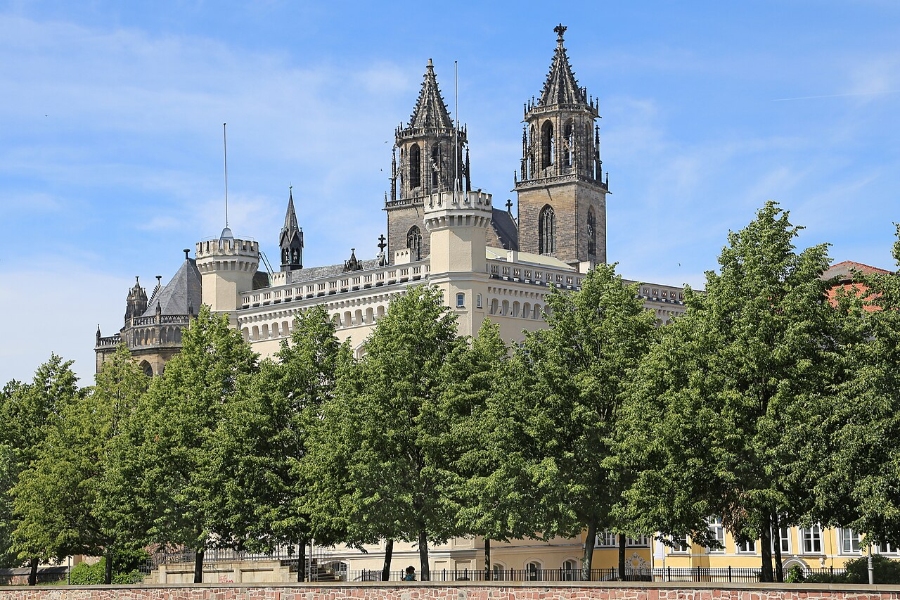
Late spring through early autumn (May–September) offers the best combination of long daylight hours, tower access, and pleasant riverside walks along the Elbe promenade behind the cathedral. The Magdeburger Dom hosts an atmospheric Christmas market period in December, and organ concerts and choral evensong are staged periodically throughout the year — check the cathedral’s website for the current concert calendar. Winter visits reward those seeking a quieter, contemplative atmosphere, with far fewer visitors and dramatic light through the stained glass.
Local Insider Tips

- Arrive right at opening time to have the nave largely to yourself before tour groups arrive mid-morning.
- The Barlach war memorial is easy to miss — it sits in a side transept rather than the main aisle, so seek it out deliberately.
- Café Central and the eateries along Breiter Weg, a five-minute walk away, offer solid lunch options with fewer tourist markups than spots directly on Domplatz.
- Combine your visit with the nearby Kulturhistorisches Museum to see the original Magdeburg Rider statue and deepen context on Otto I.
- Sunday mornings involve active worship services — plan sightseeing for early afternoon instead.
Nearby Excursions & Day Trips

Magdeburg makes an easy base for exploring Saxony-Anhalt. The Grüne Zitadelle, Friedensreich Hundertwasser’s final architectural project, is a colorful ten-minute walk away. Water enthusiasts should visit the nearby Wasserstraßenkreuz Magdeburg, an extraordinary bridge where a canal crosses over the Elbe River. Further afield, Quedlinburg‘s UNESCO-listed half-timbered old town (about an hour by train) and the Harz Mountains offer excellent day-trip pairings for travelers building a longer Saxony-Anhalt itinerary.
💡 Visitor Tips & Best Experience
Visit at opening for quiet nave time; seek out the Barlach memorial in the side transept; combine with the Kulturhistorisches Museum for the original Magdeburg Rider statue
🚆 How to Get There & Public Transit
Tram lines 1, 2, 4, 6, 10 to 'Dom' stop; 20-minute walk from Magdeburg Hauptbahnhof
🎟️ Popular Tours & Tickets for Magdeburg Cathedral
Compare tickets and guided experiences. Check available dates, what is included, and the provider's cancellation terms before booking.