Saxony
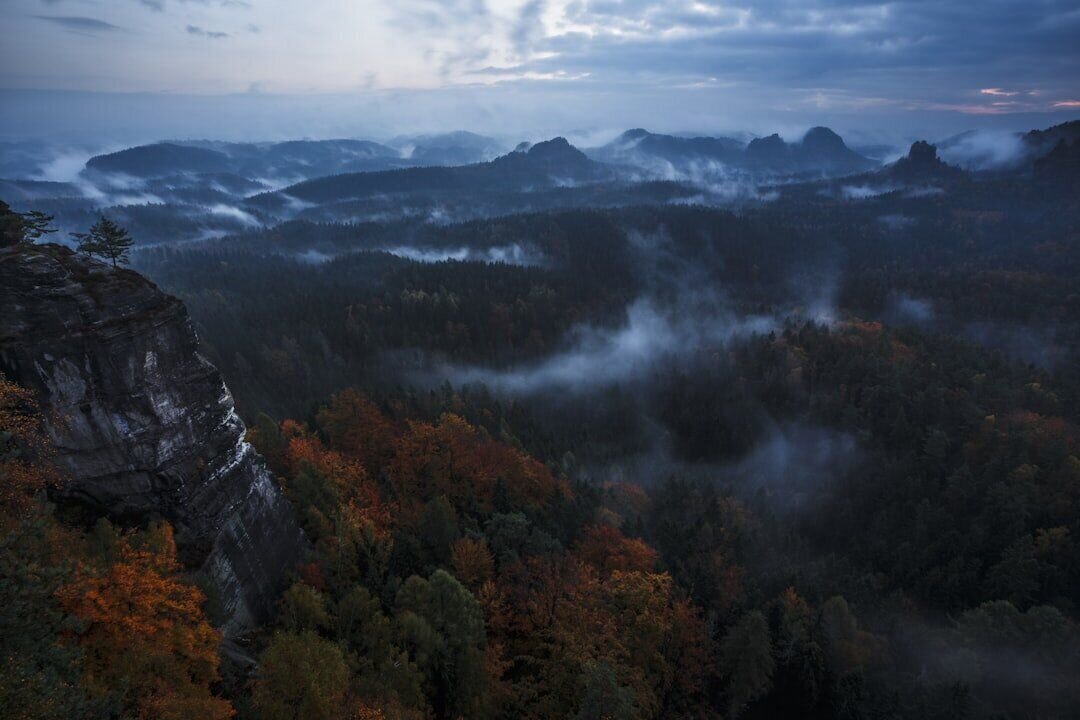
Saxony (Sachsen) is a federal state in eastern Germany with about 4.1 million residents across roughly 18,450 square kilometers. It borders Poland and the Czech Republic. Its capital, Dresden, sits on the Elbe River among Baroque palaces and river terraces, while Leipzig, an hour northwest by train, is home to the church where Johann Sebastian Bach worked for 27 years.
The state’s identity grew from centuries of Saxon court patronage, mining wealth in the Ore Mountains, and a manufacturing history that continued from the Kingdom of Saxony through East Germany and beyond. Sandstone cliffs, porcelain workshops, and Sorbian villages in Upper Lusatia all sit within a two-hour rail radius of either major city.
Most travelers can cover Dresden, Leipzig, and Saxon Switzerland comfortably in five to seven days using regional trains alone, with no rental car required. That compact geography makes Saxony work well as a rail-based trip: short hops between cities, a UNESCO World Heritage mining landscape shared with the Czech Republic, and day-trip castles reachable by paddle steamer or S-Bahn.
Key Takeaways
- Dresden and Leipzig anchor any trip, and regional trains connect them to castles, cliffs, and craft towns within two hours.
- Saxon Switzerland National Park delivers the state’s most dramatic scenery, with the Bastei bridge and the 116-kilometer Malerweg trail as highlights.
- Meissen porcelain, Ore Mountain woodcraft, and Upper Lusatia’s Sorbian towns add depth beyond the two big cities.
How Should You Plan a Saxony Itinerary?
Base yourself in Dresden and Leipzig, then treat everything else as a day trip. The two cities lie about 70 minutes apart by fast regional service, and both sit within dense local rail networks that reach the sandstone cliffs, the porcelain town of Meissen, and the Ore Mountains without a car.
Choosing Between a Long Weekend and a Week
A three-night long weekend works best with two nights in Dresden and one in Leipzig, or the reverse. That gives you time for the Zwinger and Frauenkirche, an afternoon in Leipzig’s old town, and one half-day excursion.
Five to seven days opens up more possibilities. A workable frame:
| Days | Base | Focus |
|---|---|---|
| 1-2 | Dresden | Old town, royal collections, Elbe terrace |
| 3 | Dresden | Saxon Switzerland or Meissen day trip |
| 4-5 | Leipzig | Bach sites, Spinnerei galleries, museums |
| 6-7 | Either | Görlitz, Chemnitz, or the Ore Mountains |
Ten days or more lets you spend a night in Bad Schandau for hiking and another night in Upper Lusatia.
Best Time to Visit Saxony
May through September brings the most reliable hiking and cycling weather, along with wine festivals along the Elbe in September and open-air concerts. Late November through December focuses on Christmas markets, when Dresden and the Ore Mountain towns draw their largest winter crowds.
Winter suits skiing in the Erzgebirge and museum-heavy city stays. The shoulder months of April and October bring thinner crowds, although some mountain lifts and smaller castle museums keep reduced hours. Check published opening times before committing to a specific site.
Getting Around by Train, and Bicycle
Deutsche Bahn operates the intercity links, while Saxony’s regional trains and the Dresden and Leipzig S-Bahn networks handle nearly every day trip. Leipzig Hbf is one of Europe’s largest terminal stations by floor area and serves as the northern gateway. Leipzig/Halle Airport and Dresden Airport both connect to their city centers by S-Bahn.
The Sachsenticket, priced at €33, covers one day of regional travel for up to five adults. Cyclists can follow the Elberadweg (Elbe Cycle Path) along the river through vineyards and river towns, and both cities run app-based bike rental schemes. Broader logistics for a multi-region trip are covered in our resources on planning a trip to Germany.
What Makes Dresden Essential to a Saxony Visit?
Dresden holds the densest concentration of Baroque architecture and royal art collections in eastern Germany. Most of it was rebuilt after the February 1945 bombing destroyed the historic center. Augustus the Strong, Elector of Saxony and King of Poland, commissioned much of what visitors see, and the reconstruction stretched from the 1950s into the 2020s.
The Frauenkirche, Zwinger, and Royal Collections
The Frauenkirche (Church of Our Lady) stood as a ruin for more than 50 years after World War II and reopened in 2005. Builders used original stones wherever they could identify them. Its dome viewing platform gives the clearest overview of the old town’s layout.
The Zwinger, a Baroque courtyard complex framed by pavilions with sculpture by Balthasar Permoser, houses the Old Masters Picture Gallery and the Porcelain Collection. Extensive restoration work has returned the full ensemble to public access.
The Dresden State Art Collections also run the Green Vault (Grünes Gewölbe) in the Royal Palace, a treasury of jeweled court objects. The Historic Green Vault requires timed-entry tickets in limited numbers, so book ahead.
Music, Museums, and the Elbe Riverfront
The Semperoper Dresden presents opera and classical music in a hall rebuilt to its 19th-century design and reopened in 1985. Guided tours run on non-performance days.
Along the river, the Brühl Terrace walkway looks across the Elbe Valley toward the Neustadt district. Dresden’s museums extend well beyond the old town, including the Albertinum’s modern collection and the transport museum in the Johanneum.
In December, the Dresden Striezelmarkt runs as one of Germany’s oldest documented Christmas markets, first recorded in 1434. Its name comes from Striezel, the local term for Stollen, the fruit-and-almond bread that Dresden bakers produce in vast quantities each winter.
Palaces and River Excursions from Dresden
Pillnitz Palace sits upriver in a park of Chinoiserie pavilions and formal gardens, reachable by S-Bahn, bus, or Elbe paddle steamer. The Saxon Paddle Steamer Company operates the world’s oldest and largest paddle steamer fleet, and its river cruises stop at Pillnitz and Pirna.
Moritzburg Castle, a Baroque hunting palace on an artificial island northwest of the city, takes about 30 minutes by regional train and bus. Pirna, upstream, works as a base for onward travel into the national park.
Why Visit Leipzig for Music and Contemporary Culture?
Leipzig combines four centuries of classical music history with a contemporary gallery scene inside former factories. Its walkable center is ringed by a park promenade. The city was also where the Peaceful Revolution gained mass momentum in autumn 1989, when Monday demonstrations at the Nikolaikirche grew into marches of hundreds of thousands.
Following Bach and Leipzig’s Classical Music Legacy
Johann Sebastian Bach served as cantor at St. Thomas Church (Thomaskirche) from 1723 until his death in 1750, and his grave lies inside the church. The Thomanerchor, the boys’ choir he once directed, still sings there.
The Leipzig Music Trail (Leipziger Notenspur) links original sites across the city on a marked walking route. It connects the Mendelssohn House, where Felix Mendelssohn lived, with residences tied to Robert Schumann and Richard Wagner, who was born in Leipzig in 1813.
The Gewandhaus orchestra, founded in 1743, performs in a hall on Augustusplatz. Each June, the Bach Festival Leipzig fills churches and concert halls with his works.
Creative Districts, Galleries, and Industrial Reuse
The Spinnerei galleries occupy a former cotton mill in Plagwitz that was once the largest in continental Europe. Roughly a hundred artist studios and a cluster of commercial galleries operate across the brick complex, with coordinated open days twice a year.
Plagwitz and Lindenau hold much of the city’s independent bar and studio culture. Leipzig’s canal network stretches across some 250 miles of waterways, and a harbor near the center supports kayaking and boat tours toward the New Lakeland, a chain of lakes formed in flooded open-cast mines.
Museums, Festivals, and Family Attractions
The Zeitgeschichtliches Forum documents life in the GDR and the path to 1989, while the Stasi Museum in the former district headquarters preserves offices left largely as found. The Panometer stages large-scale 360-degree panoramas in a disused gasometer.
Leipzig Zoo is among Europe’s most ambitious zoo redevelopments, with the Gondwanaland tropical hall as its centerpiece. The Leipzig Book Fair draws publishers and readers each spring, while Wave-Gotik-Treffen brings tens of thousands of goth and dark-wave visitors over the Pentecost weekend.
Where Can You Experience Saxony’s Outdoors?
Saxon Switzerland National Park delivers Saxony’s most striking landscape: eroded sandstone towers, table mountains, and gorges rising above the Elbe roughly 30 kilometers southeast of Dresden. Along the Czech border, the Ore Mountains (Erzgebirge) offer a second outdoor region, with forest hiking in summer and modest ski terrain in winter.
Saxon Switzerland National Park and the Bastei
The Bastei is a sandstone formation about 194 meters above the Elbe, crossed by the Bastei Bridge, a stone span built in 1851 to replace an earlier wooden structure. S-Bahn service from Dresden to Rathen, followed by a ferry and a climb, gets you there in about an hour.
The site draws heavy visitor numbers between May and October. Arriving early or visiting on a weekday helps ease congestion on the bridge, and parking near Lohmen fills quickly in high season.
Königstein, Bad Schandau, and the Malerweg
Königstein Fortress occupies a table mountain 240 meters above the river. It ranks among Europe’s largest hilltop fortifications, with 9.5 hectares of ramparts and buildings. It served as a state prison and a wartime depository for art.
Bad Schandau functions as the park’s main service town, with a historic elevator, a spa, and trailheads. The Malerweg (Painters’ Way), a 116-kilometer route in eight stages, follows paths walked by Romantic artists including Caspar David Friedrich. His paintings shaped how Europe imagined this terrain. The trail marks its 20th anniversary in 2026.
Ore Mountains Activities in Summer and Winter
Fichtelberg, at 1,215 meters, is Saxony’s highest peak and the center of its winter sports. A cable car runs from Oberwiesenthal, while cross-country trails follow the Czech Republic border. Snow reliability varies from year to year.
In summer, the range offers mountain biking, a three-day road cycling route, and access to the cross-border UNESCO World Heritage mining landscape. EURORANDO 2026, Europe’s largest hiking festival, runs from 20 to 27 September 2026 in this region.
Which Towns, Crafts, and Regional Flavors Add Depth?
Saxony’s smaller towns carry the state’s craft and industrial history: Meissen for porcelain, Seiffen for wooden Christmas figures, Zwickau for automobiles, and Görlitz for an intact old town that escaped wartime destruction. Fourteen towns lie within 90 minutes of Dresden, Leipzig, or Chemnitz by train.
Meissen Porcelain and the Saxon Wine Route
Meissen produced Europe’s first true hard-paste porcelain in 1708, and the Meissen Porcelain Manufactory has operated since 1710. Its visitor center features live throwing and painting demonstrations alongside a historical collection.
Above the town, Albrechtsburg Castle housed the original secret workshop from 1710 to 1863. The handcraft traditions behind that work still continue in Saxon workshops today.
The Saxon Wine Route runs 35 miles through the Elbe valley, taking in Radebeul and Meissen. Steep terraces produce Riesling and rarer varieties. September wine festivals in Meissen and Radebeul open local cellars to visitors.
Upper Lusatia: Bautzen, Görlitz, and Zittau
Bautzen is the cultural center of the Sorbs, a Slavic minority with its own language, visible on bilingual street signs. Its old town contains medieval towers and a cathedral shared by Catholic and Protestant congregations.
Görlitz, Germany’s easternmost city, faces Zgorzelec in Poland across the Neisse. Some 4,000 protected buildings span the Gothic period through Art Nouveau, making the city a frequent film location.
Zittau provides access to the Zittau Mountains, a small sandstone range with a narrow-gauge steam railway.
Mining Heritage and Christmas Craft Traditions
Freiberg’s silver mines funded Saxon court spending for centuries, and its Reiche Zeche visitor mine takes groups underground. Annaberg-Buchholz preserves the Frohnauer Hammer forge and St. Anne’s Church.
Seiffen in the Ore Mountains is the origin of turned wooden Christmas figures: Nutcrackers, Räuchermännchen (incense smokers), and Schwibbögen (candle arches). Workshops sell directly to visitors, and regional Christmas markets and festivals showcase the craft each Advent.
Saxon cuisine leans hearty, with Sauerbraten, potato soup, and Eierschecke, a Dresden cake made in three layers from quark, egg custard, and sponge.
Chemnitz, Zwickau, and Central Saxony Day Trips
Chemnitz, called Karl-Marx-Stadt from 1953 to 1990, retains a 7-meter Karl Marx bust and combines industrial museums with technology and design collections. It served as a European Capital of Culture in 2025.
Zwickau is Robert Schumann’s birthplace and the place where Audi’s founder August Horch began building cars. The August Horch Museum occupies the original works.
Grimma sits on the Mulde and has a rebuilt town center. Colditz Castle, known abroad for Allied officer escape attempts during World War II, is a 20-minute drive away. Everything About Germany’s wider regional coverage sets these palaces and towns in national context.
Frequently Asked Questions
What is Saxony, Germany, known for?
Saxony is known for Dresden’s Baroque architecture and royal art collections, Leipzig’s musical history under Bach, Meissen porcelain, and the sandstone cliffs of Saxon Switzerland. The state also has a strong mining, automotive, and GDR-era history, including its role in the 1989 Peaceful Revolution.
How many days do you need for a Saxony itinerary?
Five to seven days covers Dresden, Leipzig, and one nature excursion at a reasonable pace. A three-night long weekend fits both cities if you skip day trips, while ten days allows time for Upper Lusatia, the Ore Mountains, and overnight hiking.
Can you visit Saxon Switzerland as a day trip from Dresden?
Yes. S-Bahn trains from Dresden reach Rathen, Königstein, and Bad Schandau in 30 to 50 minutes, putting the Bastei and Königstein Fortress within an easy day trip. You can combine both in one day, but you’ll have little time for longer trails.
What are the major cities in Saxony?
Leipzig and Dresden are the largest, each with roughly 600,000 residents, followed by Chemnitz at around 250,000. Zwickau, Görlitz, Plauen, and Freiberg are the notable mid-sized cities, all connected by regional rail.
When are Saxony’s Christmas markets held?
Most Saxon Christmas markets run from late November through 23 or 24 December. Some continue into early January. Dresden’s Striezelmarkt usually opens during the week before the first Sunday of Advent, but check each market’s exact dates and opening hours before you travel.
Recommended Local Attractions, Events & Cultural Guides
- Rakotzbrücke (Devil’s Bridge) — Comprehensive visitor guide, logistics, and insider recommendations.