
Bastei Bridge
The Bastei Bridge is Germany's most photographed natural landmark, a spectacular stone bridge weaving…
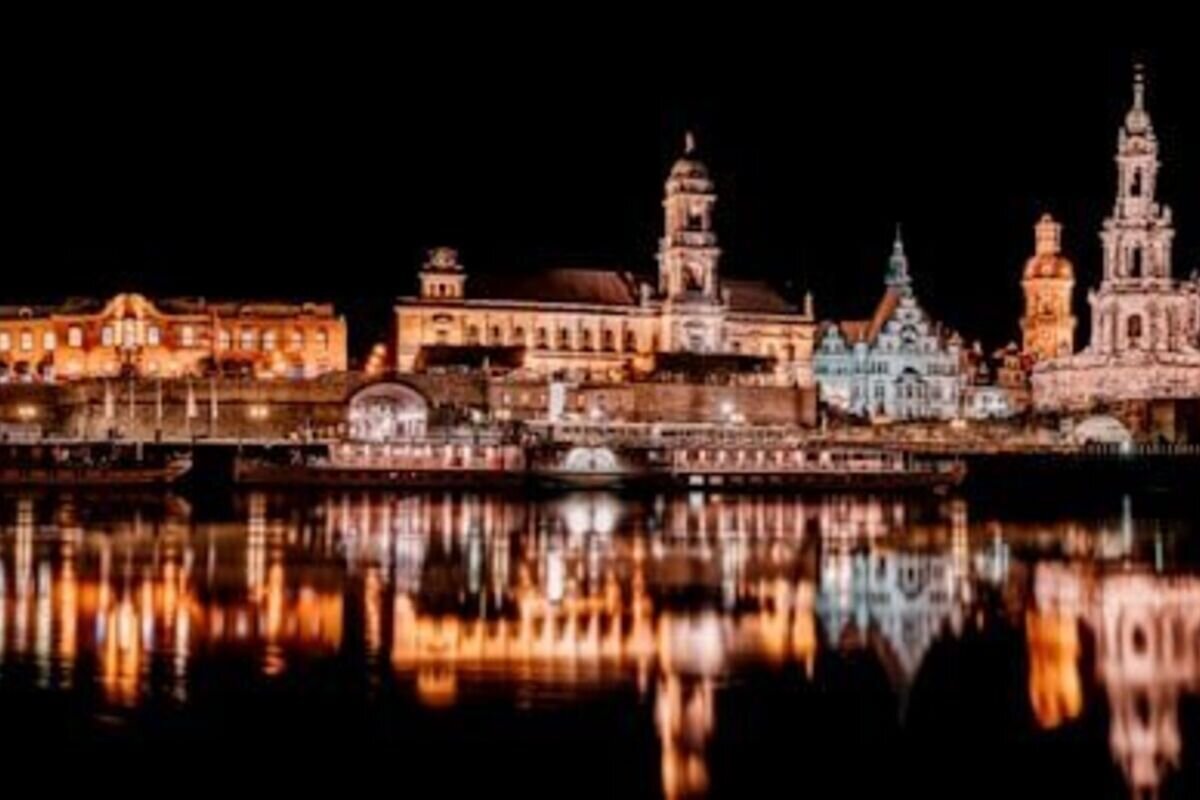
Dresden, capital of the German state of Saxony, sits along a wide curve of the Elbe River roughly 200 kilometers south of Berlin. Known historically as “Elbflorenz” (Florence on the Elbe) for its Italian-influenced baroque skyline, the city was one of Europe’s great cultural and artistic centers under the Saxon electors and kings, particularly Augustus the Strong in the 18th century. On the night of February 13-14, 1945, Allied bombing raids destroyed most of the historic center, killing tens of thousands of civilians in one of the war’s most controversial air campaigns. What visitors see today is largely the result of decades of painstaking reconstruction, much of it completed only after German reunification in 1990. The rebuilt Altstadt, anchored by the Frauenkirche’s golden dome, stands as one of Europe’s most remarkable examples of historical restoration, while the Neustadt across the river offers a completely different, gritty and creative counterpoint.
The Frauenkirche is Dresden’s emotional centerpiece. Reduced to rubble in 1945 and left as a war memorial by the East German government, it was rebuilt between 1994 and 2005 using thousands of original stones, identifiable by their darker, fire-scarred color against the new sandstone. Climbing to the dome gallery rewards visitors with sweeping views over the city and the Elbe valley.
| Site | Opening Hours | Entry Fee |
| Frauenkirche | Daily 10:00–12:00, 13:00–18:00 (varies with services) | Free; dome climb €8 |
| Zwinger / Old Masters Gallery | Tue–Sun 10:00–18:00, closed Mon | €14 (combo ticket available) |
| Green Vault | Tue–Sun 10:00–18:00, timed entry | €14 (advance booking essential) |
| Semperoper (guided tour) | Varies by performance schedule | From €13 |
Book Green Vault tickets online well in advance (skd.museum) as daily entry is capped with timed slots and frequently sells out, especially in summer. The Dresden Museums Card (around €35) covers most state museums over two days and is worthwhile if visiting three or more sites.
ℹ️ 45-minute building and interior tour, not an opera performance ticket.
We may earn a commission when you book through these links, at no extra cost to you.Dresden Hauptbahnhof has excellent ICE connections: roughly 2 hours from Berlin, 2 hours from Leipzig, and about 1 hour 40 minutes from Prague, making Dresden an easy addition to a Central European itinerary. Dresden Airport, 9 km from the center, connects via the S-Bahn (S2) directly to the Hauptbahnhof in about 20 minutes. Within the city, trams run frequently and a single ticket costs around €2.50, with day tickets around €7. Driving is straightforward via the A4 and A17 autobahns, though parking in the Altstadt is limited and expensive (€2–3/hour); park-and-ride lots on the city edge are more economical.
Late spring (May-June) and early autumn (September) offer mild weather and manageable crowds. Dresden’s Christmas Market (Striezelmarkt), running late November through Christmas Eve, is Germany’s oldest documented Christmas market (since 1434) and draws large crowds to the Altmarkt. Summer brings the Filmnächte am Elbufer, open-air cinema screenings on the riverbank, and the Dresden Music Festival in May-June. Winter visits mean shorter museum queues but some outdoor terraces and river cruises pause operations.
Saxon Switzerland National Park, roughly 40 minutes by S-Bahn (S1) to Kurort Rathen, offers dramatic sandstone formations including the Bastei Bridge. Meissen, 30 minutes by train, is the birthplace of European porcelain and home to Meissen Castle. Moritzburg Castle, a baroque hunting palace on a lake, is reachable by a combination of train and vintage narrow-gauge railway, the Lößnitzgrundbahn. Pillnitz Palace, accessible by Elbe steamer or bus, features an English and Chinese-inspired garden landscape well suited to a half-day trip.
Book Green Vault tickets online in advance; visit major sites before 10 AM; dine in Neustadt for better value; take an Elbe steamer cruise for skyline views
Purchase a 24-hour transit day pass (Tageskarte) for unlimited city travel.


Discover curated walking tours, museum passes, and authentic experiences in Dresden with instant confirmation.