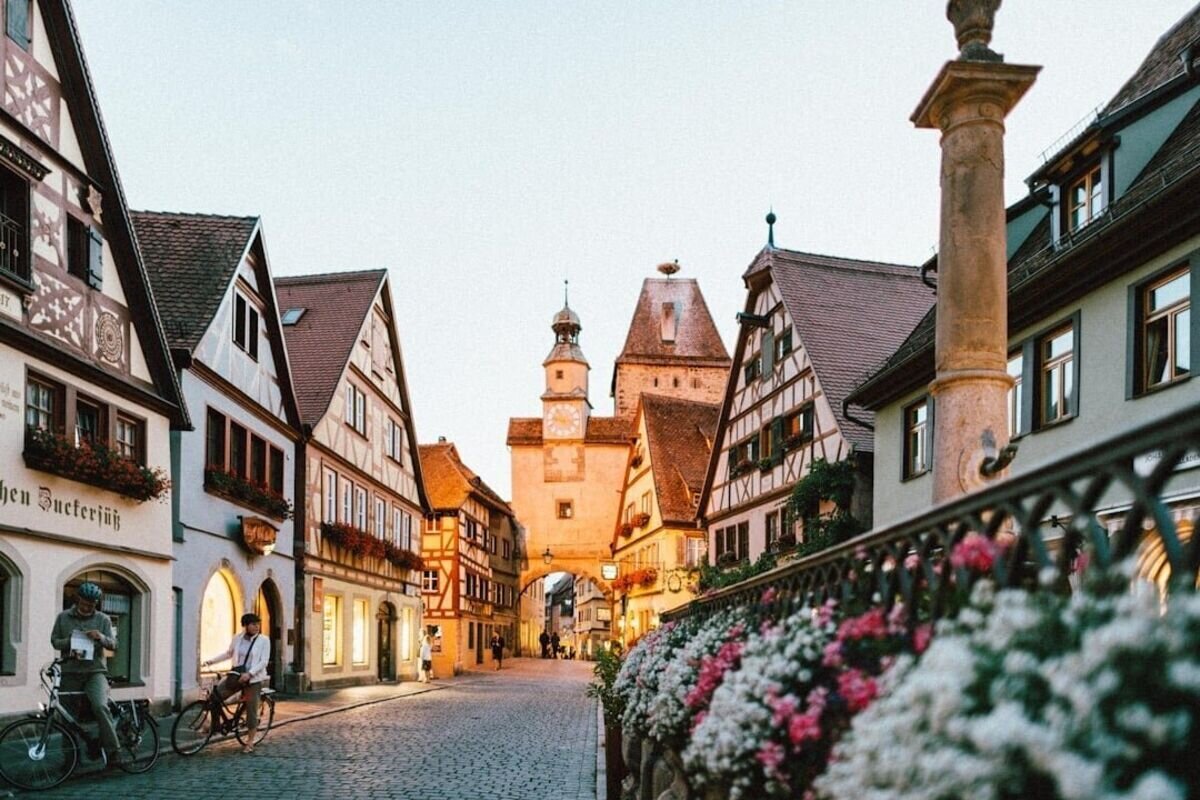
Lübeck
The Queen of the Hanseatic League preserves its medieval merchant glory in a UNESCO-listed…
Schleswig-Holstein is Germany’s northernmost state, framed by the North Sea to the west, the Baltic Sea to the east, and Denmark along its northern border. It sits between Hamburg and Denmark, making it the only German region that touches two seas at once. That geography shapes nearly everything visitors experience here, from tidal flats and island ferries to Hanseatic brick towns and Viking-era ruins.
Coastal holidaymakers, cyclists, and history-minded travelers each find their own territory within this compact state. A well-planned route through Schleswig-Holstein can combine North Sea mudflats, Baltic beach towns, and centuries of Danish and Hanseatic history within a single week.
The flat terrain makes the state approachable by bike or rail, and its short distances mean coastal contrasts are never far apart. Still, it helps to understand the difference between the North Sea and Baltic Sea sides before booking anything.
The two coasts have different beaches, weather patterns, and local cultures, shaped by trade, fishing, and centuries of shifting borders with Denmark.
Schleswig-Holstein’s identity comes from its position between two seas and two nations. The state grew from the historical Duchy of Schleswig and the Duchy of Holstein, regions with separate legal and cultural histories.
They came together under Prussian, and later German, rule after conflicts with Denmark in the 19th century.
Schleswig-Holstein is the only German state bordering both the North Sea and the Baltic Sea. This gives it two coastal identities in one region: a western side shaped by tides, wind, and shifting mudflats, and an eastern side with calmer beaches and Hanseatic harbor towns.
Neighboring states include Hamburg to the south, Lower Saxony farther south, and Mecklenburg-Western Pomerania to the east.
Denmark’s influence is embedded in the region’s culture, not just its map. A recognized Danish minority lives in the border area, where Danish-language schools, churches, and bilingual place names remain common.
This connection traces back to the “Schleswig-Holstein Question,” a 19th-century diplomatic dispute over whether the duchies belonged to Denmark or the German states. The conflict was so complicated that European statesmen of the era famously struggled to summarize it.
Between the coasts, the land is flat and green, dotted with lakes, farmland, and small waterways. The inland lake district around Holstein Switzerland contrasts with the exposed, wind-shaped North Sea coast.
Both coastal landscapes and inland lakes support cycling, birdwatching, and slow-paced countryside travel.
Schleswig and Holstein were historically separate territories, with Holstein tied more closely to the German Confederation and Schleswig linked to Denmark. Tensions over their status led to the Second Schleswig War in 1864, when Prussia and Austria defeated Denmark and took control of both duchies.
Prussia later annexed the territory outright, folding it into the German Empire in 1871. The region endured further upheaval through World War I and World War II, including a 1920 plebiscite that redrew part of the Danish-German border based on local votes.
Schleswig-Holstein’s coastline splits into two very different experiences. The North Sea side centers on the Wadden Sea’s tidal flats and island ferries, while the Baltic side offers sandy beaches, resort towns, and a lake-filled interior known as Holstein Switzerland.
The Schleswig-Holstein Wadden Sea National Park protects one of the world’s largest tidal flat systems, recognized as a UNESCO World Heritage Site. Twice a day, the North Sea retreats and exposes miles of seabed, known in German as Watt.
The flats support migratory birds, seals, and specialized plant life. The North Frisian Islands and low-lying Halligen islets sit within this tidal zone, connected to the mainland by causeways, ferries, or seasonal mudflat paths.
Sylt is the largest and best known of the North Frisian Islands, with dunes, sandy beaches, and the resort town of Westerland as its main hub. Föhr offers a quieter alternative with a more traditional Frisian character.
The Halligen are small, unprotected islets that flood periodically, and their few permanent residents live on raised mounds called Warften. Ferries to the islands typically depart from mainland ports such as Dagebüll, Husum, and Büsum.
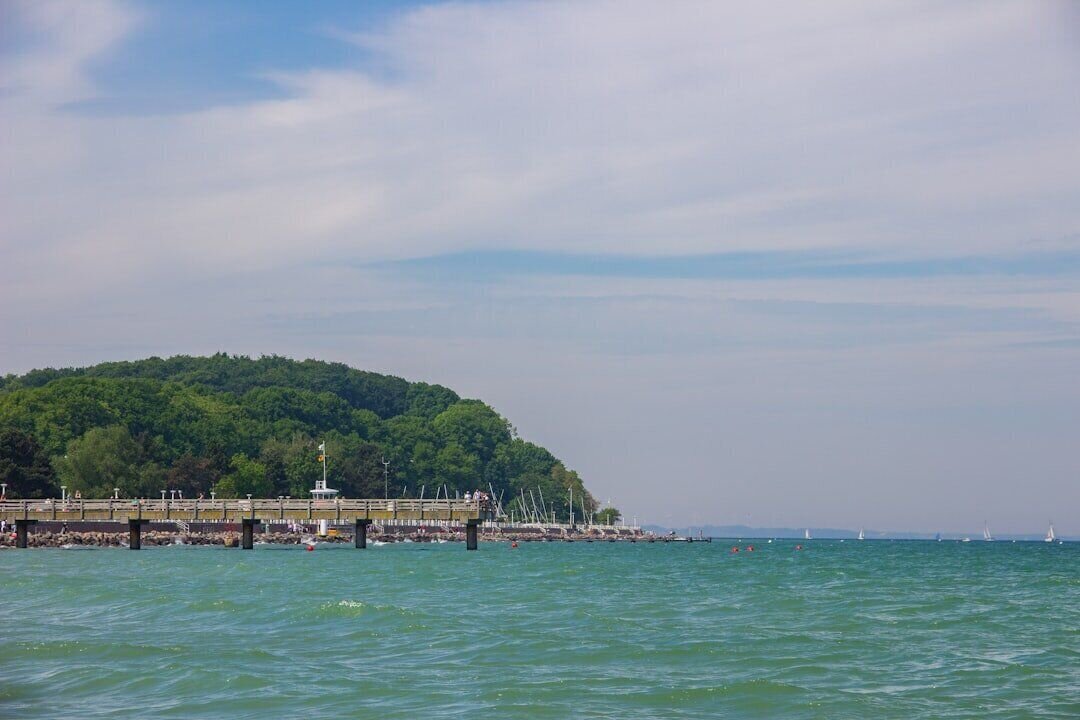
The Baltic coast has calmer water and wide sandy beaches, with Travemünde serving as Lübeck’s seaside district and cruise port. Fehmarn, an island connected by bridge, has beach resorts and a ferry terminal at Puttgarden linking to Denmark.
This coast attracts families and swimmers more than the tidal North Sea side because of its gentler surf and steadier shoreline.
Holstein Switzerland is an inland lake district with rolling hills, forests, and more than 200 lakes, despite a name that has nothing to do with the actual Swiss Alps. Plön and Eutin anchor the region, both known for lakeside castles and walking trails.
Nature reserves throughout the area support birdwatching and quiet hiking away from the coast.
Schleswig-Holstein’s cities each represent a different chapter of northern German history. Kiel reflects modern maritime industry, Lübeck carries the legacy of the Hanseatic League, Schleswig preserves Viking-era heritage, and Flensburg retains strong Danish ties.
Kiel is the state capital and a working sailing city, built around the Kiel Canal, one of the world’s busiest artificial waterways connecting the North Sea and Baltic Sea. Every June, the city hosts Kieler Woche (Kiel Week), one of the largest sailing events in the world, drawing racing crews and visitors to the harbor.
Maritime museums along the waterfront document the city’s shipbuilding and naval history.
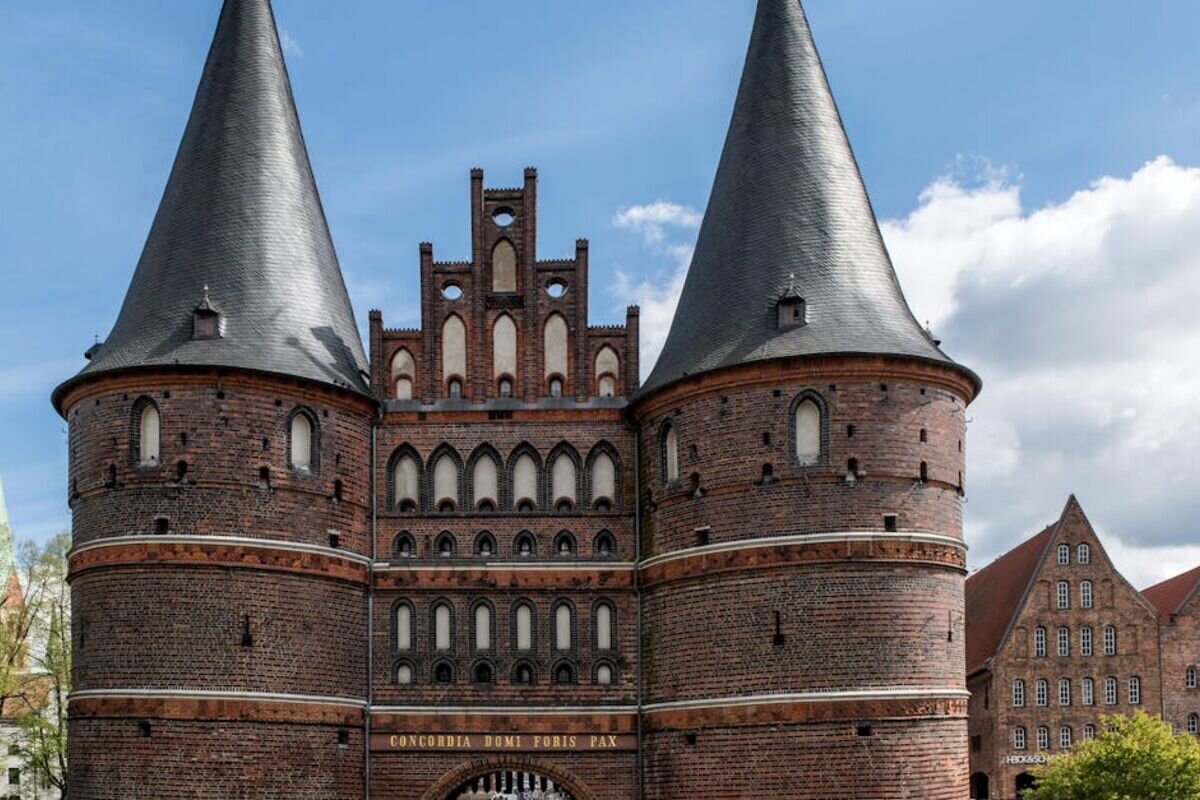
Lübeck was the leading city of the Hanseatic League, a medieval trading alliance that once controlled commerce across northern Europe. Its old town, a UNESCO World Heritage Site, is built almost entirely from red brick in the Brick Gothic style, with the twin-towered Holstentor gate as its most recognized landmark.
Lübeck is also the historic home of marzipan production, and several shops still sell it using traditional recipes.
Schleswig sits on the Schlei fjord and gives the state its name. Nearby, the Haithabu archaeological site preserves the remains of a major Viking Age trading settlement, now recognized as a UNESCO World Heritage Site alongside the medieval Danevirke defensive earthworks.
Gottorf Castle in Schleswig houses regional museums that cover this history in detail.
Flensburg sits on the Flensburg Fjord near the Danish border and retains visible Danish cultural influence in its shops, schools, and street life. The city’s maritime heritage includes a history of rum trading and a working harbor still active with fishing and pleasure boats.
Smaller towns round out the region’s historic character. Ratzeburg and Eutin have lakeside castles, Bad Segeberg is known for open-air theater, and Lauenburg has a preserved old town on the Elbe.
Friedrichstadt, with its Dutch-style canals, and the tiny island town of Holm add architectural variety beyond the major cities.
Things to do in Schleswig-Holstein center on the water, whether that means sailing on the Baltic, walking exposed tidal flats on the North Sea, or cycling flat coastal roads between the two.
Sailing has deep roots in Schleswig-Holstein, most visibly during Kieler Woche each June. Windsurfing draws strong followings on Sylt, where autumn winds support competitive events on the island’s western beaches.
Both coasts offer sailing schools and rental operators for visitors with varying levels of experience.
Flat terrain makes Schleswig-Holstein well suited to cycling, with marked routes connecting coastal towns to inland lakes and farmland. Hiking trails through Holstein Switzerland and along both coastlines range from short countryside walks to multi-day routes.
Guided mudflat walks across the Wadden Sea let visitors see tidal life up close, though the tides make careful timing and local guidance necessary for safety. Birdwatching is strong throughout the year.
Migratory seasons bring large numbers of shorebirds to the tidal flats and nature reserves.
Fresh seafood defines the coastal food scene, particularly North Sea shrimp and Baltic fish served in harbor towns. Lübeck’s marzipan remains a signature regional product, and Dithmarschen’s cabbage harvest anchors a well-known fall food festival.
Christmas markets appear in towns across the state each winter, with Eutin’s illuminated market square drawing particular attention during the season known locally as the “City of Lights.”
Beyond Kieler Woche, the state hosts seasonal festivals, including gourmet events from fall through spring, open-air theater in Bad Segeberg, and nature and film festivals along the coast. Autumn brings kite festivals, torchlight beach walks, and harvest celebrations tied to the region’s agricultural and maritime traditions.
Most visitors reach Schleswig-Holstein through Hamburg, then travel north by train, car, or ferry depending on the coast they plan to visit. Deutsche Bahn regional trains connect the state’s main cities efficiently, while camping and holiday apartments suit longer coastal stays.
Hamburg Airport is the primary international gateway for the region, with Lübeck Airport offering limited additional flight connections. From Hamburg, regional trains and highways run directly into Kiel, Lübeck, and Flensburg.
Ferry routes at Puttgarden connect to Denmark and onward to Scandinavia, while Dagebüll serves as a mainland departure point for the North Frisian Islands.
Deutsche Bahn’s regional network links the state’s cities and coastal towns, supplemented by local bus routes in areas without direct rail access. Rail travel works well for city-to-city trips, though reaching smaller coastal villages or specific beaches sometimes requires a connecting bus or rental car.
It’s worth checking current schedules before traveling, since regional timetables shift with the seasons.
A North Sea base near Husum or Büsum suits travelers focused on the Wadden Sea and islands. A Baltic base near Kiel or Lübeck works better for combining Hanseatic history with beach time.
Flensburg suits those prioritizing Danish border culture and fjord scenery. For broader context on planning a Germany-wide itinerary, Everything About Germany’s travel guide covers how northern regions fit into a longer trip.
Summer suits beach visits and major events like Kieler Woche, while fall brings harvest festivals, illuminated Baltic coastal towns, and fewer crowds. Winter draws visitors to Christmas markets, and spring offers milder weather for cycling and countryside travel before peak season begins.
Camping is widespread along both coasts, from tent sites to RV parks and houseboats on inland lakes. Holiday apartments are common in coastal towns and often get booked well ahead of the summer months.
North Sea weather and tides can change quickly, so check ferry schedules, mudflat walk times, and opening hours directly with local operators before you travel.
Schleswig-Holstein is part of Germany and forms the country’s northernmost state. It borders Denmark directly, and the region has a documented history of Danish rule before Prussia and Austria took control after the Second Schleswig War in 1864.
Schleswig-Holstein is known for its position between the North Sea and Baltic Sea, its Wadden Sea tidal flats, and cities such as Lübeck, with its Hanseatic old town. It also has strong Viking-era heritage around Schleswig and Haithabu, as well as a recognized Danish minority near the northern border.
A five- to seven-day trip gives you time to explore one coast in depth, along with Lübeck and one or two smaller cities. If you want to visit both the North Sea islands and the Baltic coast thoroughly, plan closer to ten days.
German is the primary language throughout the state, but a recognized Danish minority near the northern border speaks Danish and maintains Danish-language schools and institutions. In parts of this border region, bilingual place names reflect the area’s shared history with Denmark.
The “Schleswig-Holstein Question” was a 19th-century dispute over whether the duchies of Schleswig and Holstein belonged to Denmark or the German Confederation. The conflict grew into several wars, including the 1864 Second Schleswig War. Prussia and Austria took control afterward, though Prussia later annexed the territory outright.