Werner Karl Heisenberg
⭐ Historical Significance
Pioneer of quantum mechanics whose uncertainty principle transformed physics; controversially led Nazi Germany's wartime nuclear research program
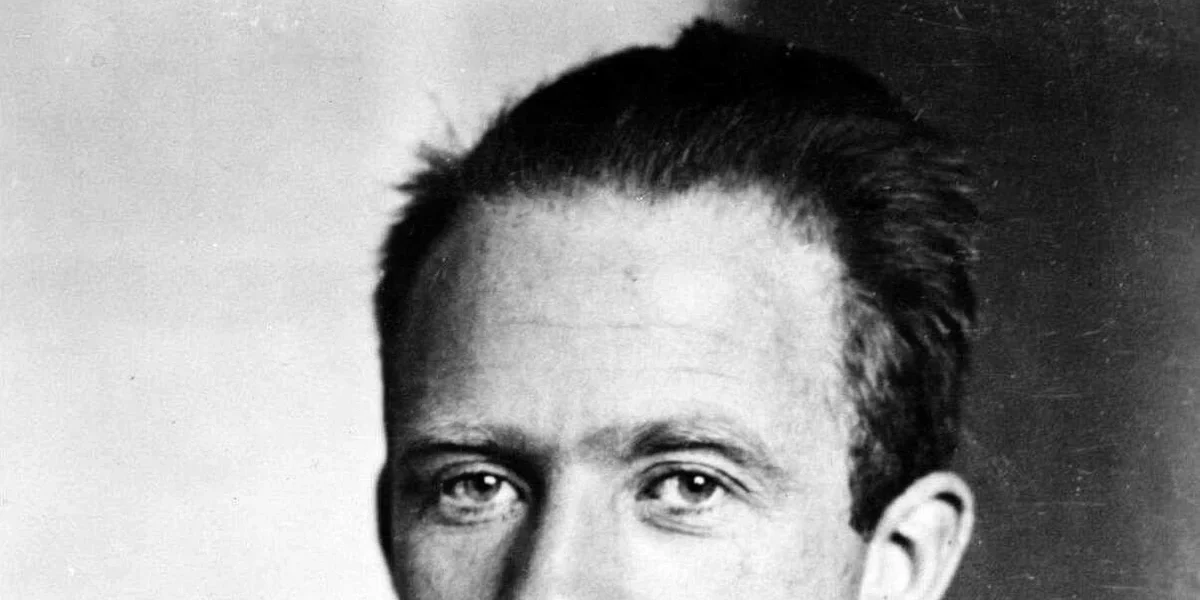
Werner Karl Heisenberg stands among the towering minds of twentieth-century science, a physicist whose 1925 formulation of matrix mechanics helped launch the quantum revolution and whose name became permanently attached to one of nature’s strangest laws: the uncertainty principle. Yet Heisenberg’s life cannot be told through equations alone. As the scientific leader of Nazi Germany’s wartime nuclear research program, he remains one of history’s most debated figures — a genius whose intellectual legacy is inseparable from questions of moral responsibility, national loyalty, and the terrifying possibilities unleashed by the atomic age.
Early Life, Upbringing & Education
Werner Heisenberg was born on 5 December 1901 in Würzburg, Bavaria, the son of a Byzantine studies professor. The family later moved to Munich, where young Werner attended the Maximiliansgymnasium and showed early brilliance in mathematics. Germany’s collapse after the First World War shaped his adolescence; he briefly served in a Bavarian youth militia during the turbulent revolutionary period of 1919, an experience that instilled in him a lasting, complicated patriotism.
Heisenberg entered the University of Munich in 1920, studying theoretical physics under Arnold Sommerfeld, one of the era’s great teachers. He later worked with Max Born at Göttingen and Niels Bohr in Copenhagen — the two intellectual centers where quantum theory was being forged. This trio of mentorships placed Heisenberg at the absolute center of the emerging revolution in physics before he had even turned twenty-five.
Major Breakthroughs, Works & Milestones
In 1925, while recovering from severe hay fever on the remote island of Helgoland, Heisenberg developed the mathematical framework now known as matrix mechanics — the first complete formulation of quantum mechanics. Working with Born and Pascual Jordan, he transformed abstract observations about atomic spectra into a rigorous theory describing subatomic behavior without relying on visualizable orbits.
Two years later, in 1927, Heisenberg published his uncertainty principle, demonstrating that a particle’s position and momentum cannot both be measured with arbitrary precision simultaneously. This was not a limitation of instruments but a fundamental feature of nature itself — a discovery that reshaped philosophy as much as physics. In 1932, at just 31, he received the Nobel Prize in Physics for the creation of quantum mechanics.
- 1925 — Formulated matrix mechanics on Helgoland
- 1927 — Published the uncertainty principle
- 1932 — Awarded the Nobel Prize in Physics
- 1939–1945 — Led the German nuclear fission research program (Uranprojekt)
- 1958 — Became director of the Max Planck Institute for Physics in Munich
Historical Context: Germany and Global Impact
Heisenberg’s scientific rise coincided with Germany’s political catastrophe. Unlike many Jewish colleagues who fled after 1933, Heisenberg chose to remain, believing he could protect German science from Nazi ideological interference. This decision placed him, by 1939, at the head of the Uranverein — Germany’s nuclear research effort during the Second World War.
Germany’s atomic program never came close to producing a working weapon, and historians continue to debate why: resource shortages, wartime chaos, theoretical miscalculations, or, as Heisenberg later claimed, deliberate reluctance to arm Hitler with such a weapon. His famous 1941 meeting with Niels Bohr in occupied Copenhagen — the subject of Michael Frayn’s play “Copenhagen” — remains one of the most analyzed and ambiguous encounters in the history of science.
Complex Legacy, Ethical Debates & Controversies
After the war, Heisenberg was detained by the Allies at Farm Hall in England alongside other German scientists, where secret recordings captured his reaction to the news of Hiroshima — reactions that scholars still parse for evidence of genuine surprise or performance. He later argued that German physicists had morally avoided building a bomb; critics contend the program simply failed technically and that Heisenberg’s postwar narrative was self-serving.
Despite this shadow, Heisenberg rebuilt German physics after 1945, championing peaceful nuclear energy research and advocating against nuclear armament for West Germany. He remains a case study in the entanglement of brilliant science with authoritarian politics — a reminder that genius offers no immunity from moral ambiguity.
Memorials, Museums & Where to Experience This History Today
- Deutsches Museum, Munich — exhibits on quantum physics and the German nuclear program
- Max Planck Institute for Physics, Munich — Heisenberg’s postwar research base, bearing his intellectual legacy
- Werner-Heisenberg-Gymnasium schools across Germany named in his honor
- Helgoland island — informal pilgrimage site for physicists marking the birthplace of matrix mechanics
- Farm Hall, England — the historic detention site, though not open to the public, remains a touchstone in Cold War and nuclear history literature
Key Facts Summary
| Fact | Detail |
|---|---|
| Born | 5 December 1901, Würzburg |
| Died | 1 February 1976, Munich |
| Profession | Theoretical Physicist |
| Key Achievement | Matrix mechanics & uncertainty principle (Nobel Prize, 1932) |
| Controversial Role | Scientific head of Nazi Germany’s nuclear program |