Kiel Canal
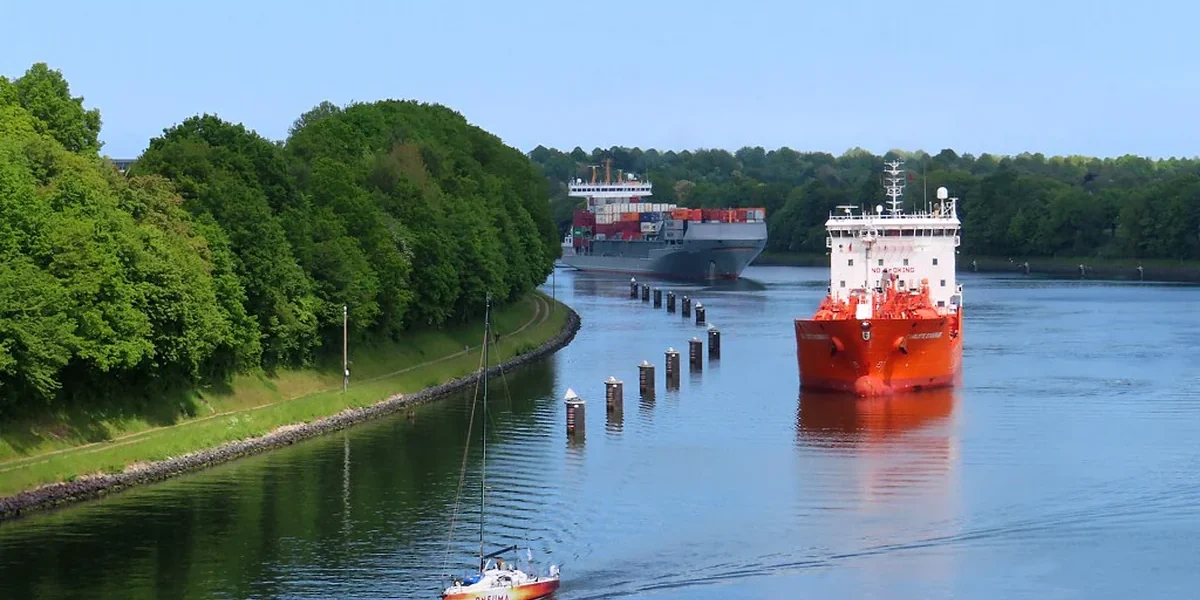
The Kiel Canal (Nord-Ostsee-Kanal, or NOK to locals) is the world’s busiest artificial waterway, and yet most travelers to Germany have never heard of it. Slicing 98 kilometers through the state of Schleswig-Holstein, it links the North Sea at Brunsbüttel to the Baltic Sea at Kiel-Holtenau, saving ships a detour of roughly 250 nautical miles around the Jutland peninsula. Over 30,000 vessels pass through annually — more than the Suez and Panama Canals combined — making it a fascinating, free, and largely overlooked spectacle of maritime engineering.
Opened in 1895 as the Kaiser-Wilhelm-Kanal, the canal was originally built for strategic and commercial reasons under Wilhelm II, allowing the German Imperial Navy to move warships between the Baltic and North Sea without sailing around Denmark. It was widened in the 1900s–1910s to accommodate larger battleships and again modernized throughout the 20th century. Today it’s a civilian shipping lifeline, carrying container ships, ferries, tankers, and pleasure yachts alike, all lock-free along its length except at the two sea entrances.
Top Highlights & Engineering Wonders
- Kiel-Holtenau Locks: The eastern entrance, where the canal meets the Kiel Fjord. Watch enormous ships rise and fall in the old (1895) and new (1914) lock chambers — free public viewing platforms line both sides.
- Brunsbüttel Locks: The western gateway to the North Sea, equally impressive and less crowded than Kiel.
- Rendsburg High Bridge (Rendsburger Hochbrücke): A dramatic 1913 railway bridge 42 meters above the canal, featuring a rare transporter car (Schwebefähre) that ferries cars and pedestrians across beneath the tracks.
- Canal-side cycling path: A nearly unbroken bike route runs the entire 98 km length, popular with cyclists doing multi-day North Sea-to-Baltic tours.
- Ship-spotting at Kiel-Holtenau lighthouse and Sehestedt: Excellent free vantage points for photographing tankers and cruise ships gliding past farmland.
Practical Visitor Information
The canal itself is free and open-air, viewable at any time — there are no gates, tickets, or opening hours for the waterway. The main paid experience is a canal boat tour, and passenger ferries across the canal are inexpensive.
| Activity | Price | Notes |
|---|---|---|
| Canal viewing platforms (Kiel-Holtenau, Brunsbüttel) | Free | Open 24/7 |
| Canal boat tour (Kiel departure, ~3 hrs) | €20–28 | Operators: Adler-Schiffe, Fördeschifffahrt |
| Rendsburg transporter bridge crossing (pedestrians/cyclists) | Free | Cars slightly more; runs frequently |
| Canal ferries (various crossing points) | Free for pedestrians/cyclists | Operated by WSV, runs day and night |
How to Get There
Kiel is the easiest base: regular DB regional trains (RE/RB lines) connect Hamburg Hauptbahnhof to Kiel Hauptbahnhof in around 1 hour 15 minutes (from roughly €20–30, cheaper with a Schleswig-Holstein-Ticket). From Kiel Hauptbahnhof, bus lines or a 20-minute taxi/bike ride reach the Kiel-Holtenau locks.
For Rendsburg, direct trains from Hamburg or Kiel take about 40–60 minutes. Brunsbüttel is best reached by car (around 1 hour from Hamburg via the A23), as train connections are limited. Drivers will find free or low-cost parking near all major viewing points, though summer weekends at Holtenau can fill up.
Best Time to Visit & Seasonal Events
Late spring through early autumn (May–September) offers the best weather for canal-side cycling and outdoor viewing, plus longer daylight hours to catch ship traffic. The Kieler Woche (Kiel Week) in late June is Germany’s largest sailing event and brings extra maritime activity to the canal’s eastern end. Winter viewing is still possible and often quieter, though shorter days and North Sea coastal winds make it a colder outing — dress accordingly at the exposed lock platforms.
Local Insider Tips
- Download a ship-tracking app (like MarineTraffic) before you go — you can time your visit to catch a large container ship or cruise liner passing through the locks.
- The Holtenau locks get busy with tour buses in summer; Sehestedt and the stretch near Rendsburg offer equally good views with far fewer people.
- Grab fish rolls (Fischbrötchen) from a canal-side kiosk near Kiel-Holtenau — a proper Schleswig-Holstein tradition while ship-watching.
- Cyclists can rent bikes in Kiel and ride the canal path toward Rendsburg, stopping at village bakeries along the way.
- The transporter bridge in Rendsburg is a great budget photo-op — the loop-shaped railway approach is one of Europe’s most photographed rail curiosities.
Nearby Excursions & Day Trips
Combine your canal visit with Kiel‘s waterfront museums (the Maritime Museum and U-boat U 995 at Laboe), or head north to the Baltic beach resorts around Eckernförde. History enthusiasts can visit the Viking-age UNESCO site of Haithabu near Schleswig, about 45 minutes north. For a full North Sea contrast, Brunsbüttel sits close to the Wadden Sea National Park coastline, another UNESCO World Heritage Site worth an extra day.
💡 Visitor Tips & Best Experience
Use a ship-tracking app to time visits, avoid crowded Holtenau locks in peak summer by visiting Sehestedt instead, and try a Fischbrötchen at a canal-side kiosk.
🚆 How to Get There & Public Transit
DB regional trains from Hamburg to Kiel (~1h15) or Rendsburg (~40-60 min); car via A23/A7; local ferries and cycling paths along the canal
🎟️ Popular Tours & Tickets for Kiel Canal
Compare tickets and guided experiences. Check available dates, what is included, and the provider's cancellation terms before booking.