German Beer Purity Law (Reinheitsgebot)
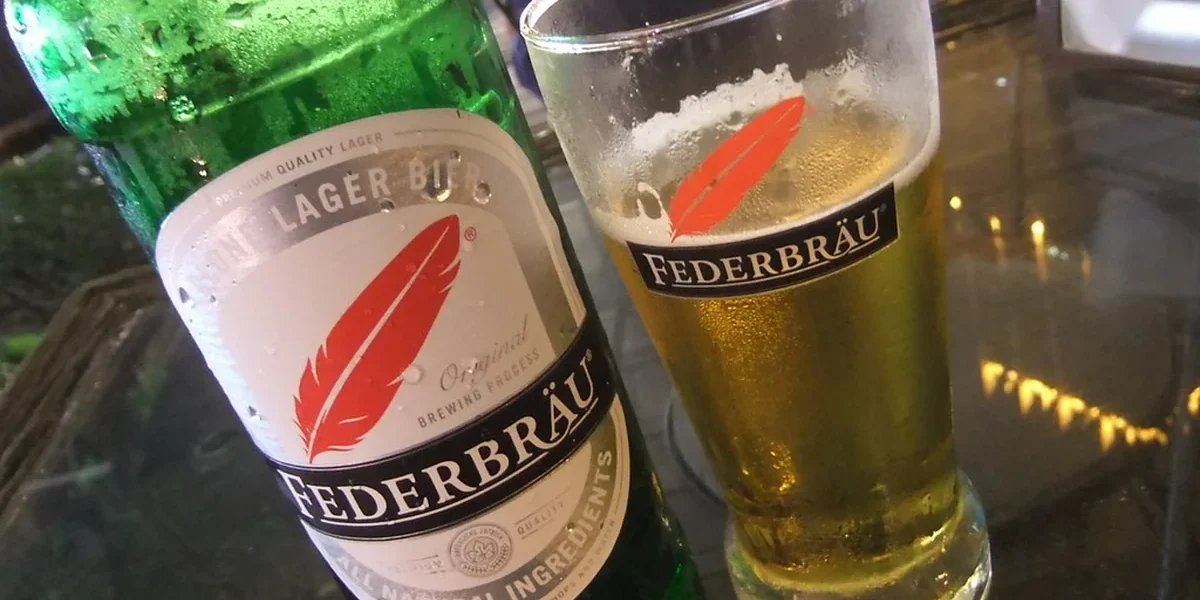
The Reinheitsgebot, or German Beer Purity Law, is a 500-year-old brewing regulation first issued in Bavaria on 23 April 1516, limiting beer to barley, hops, and water. Today it survives in modified form as Germany’s Vorläufiges Biergesetz (Provisional Beer Law), which permits barley malt, hops, yeast, and water in bottom-fermented beer, with additional allowances for top-fermented styles.
Reinheitsgebot at a Glance
| Attribute | Detail |
|---|---|
| German name | Reinheitsgebot (“purity order”) |
| First issued | 23 April 1516, Ingolstadt, Duchy of Bavaria |
| Issued by | Dukes Wilhelm IV and Ludwig X of Bavaria |
| Original permitted ingredients | Barley, hops, water |
| Yeast added | 1906, once fermentation science was understood |
| Extended nationwide | 1906, across the German Empire |
| Struck down for imports | 12 March 1987, European Court of Justice, Case 178/84 |
| Current statute | Vorläufiges Biergesetz (re-issued 1993) |
What the 1516 Law Actually Said
The 1516 decree was not a standalone beer statute. It was one section of a broader Landesordnung, a general code of law adopted by the Bavarian state diet, under the heading “How beer shall be served and brewed in summer and winter in the countryside.” Only a single sentence addressed ingredients at all.
We especially wish that, from this point on and everywhere in the countryside as well as in the towns and marketplaces, nothing is to be added to or used in beer other than barley, hops and water.
Bavarian Landesordnung, 23 April 1516
The remainder of the text was economic regulation. It fixed the maximum retail price of beer per Maß (a Bavarian measure of roughly one liter) according to season and beer type, capped innkeepers’ profit margins, and authorized confiscation of non-compliant barrels. In practice, price control occupied more of the document than purity did.
Why It Was Enacted
Historians generally identify three overlapping motives, only one of which resembles modern food safety law.
- Protecting the bread supply. Wheat and rye were staple food grains. A growing appetite for pale, crisp wheat beers was pushing grain prices up, so restricting brewers to barley — a grain less suited to baking — reserved the better grains for bakers and kept bread affordable.
- Price and tax control. Standardized recipes and fixed prices made beer easier to tax and harder for innkeepers to manipulate, a significant revenue interest for the Wittelsbach dukes.
- Blocking dubious additives. Without refrigeration or reliable preservation, spoiled beer was routinely masked with herbs, spices, and adulterants. The German Brewers’ Association lists rosemary, caraway, henbane, thorn-apple, wood shavings, roots, soot, and even pitch among substances used before the law.
The Law Had Predecessors
The 1516 order was not the first of its kind. Its most influential ancestor was adopted in the Duchy of Bavaria-Munich in 1487, and comparable municipal brewing rules existed across the territories of the Holy Roman Empire. What 1516 accomplished was scale: after Bavaria was reunited, the Munich rule was applied to the entire duchy at once.
Crucially, the decree bound only Bavarian breweries. It had no force over brewers in Cologne, Hamburg, or Saxony, and its spread across German-speaking Europe took nearly four centuries.
From Bavarian Rule to German Icon
The name “Reinheitsgebot” is far younger than the law. Before the twentieth century, Germans simply called the 1516 provision the Surrogatverbot — the “ban on substitutes” — a label that captured its actual purpose of excluding adjuncts, not guaranteeing purity. The purity framing, and the marketing power that came with it, was largely a twentieth-century construction.
The Bavarian standard was extended across the German Empire in 1906, the same year yeast was formally added to the permitted ingredient list. Scholarship on the law’s modern reputation traces its rise from “Bavarian oddity to German icon” to postwar market protectionism, as Bavarian brewers used purity rhetoric in integration disputes between the 1950s and 1970s. Until the mid-twentieth century, the law was relatively obscure and unevenly enforced.
The 1987 European Court Ruling
By the twentieth century the purity rules sat in the Biersteuergesetz (Beer Tax Act). Sections 9 and 10 restricted permitted ingredients and reserved the word “Bier” for products made from malted barley, hops, yeast, and water — which meant imported beers brewed with maize or rice could not legally be sold under that name in Germany. French and other foreign brewers argued the rules were protectionism dressed as health policy.
On 12 March 1987, in Commission v Germany (Case 178/84), the European Court of Justice agreed. It declared that by prohibiting the marketing of beer lawfully manufactured in another member state, Germany had breached Article 30 of the EEC Treaty on the free movement of goods. The Court reviewed international scientific research, the work of the EU’s scientific committee for food, and the UN and WHO Codex Alimentarius, and concluded that the additives at issue posed no public-health risk. It also noted Germany’s own inconsistency: additives were permitted in other German beverages. Germany was ordered to pay costs.
The ruling did not abolish the Reinheitsgebot. It removed the import barrier. German domestic brewers remained bound by German law, so the practical effect was a two-track market: foreign beers could enter freely, while beer brewed in Germany still had to comply.
What German Law Requires Today
The operative statute is the Vorläufiges Biergesetz, re-issued in the Federal Law Gazette in August 1993. Its Section 9 is more permissive than the popular “four ingredients” shorthand suggests, and it treats the two main fermentation families differently.
| Beer type | Permitted ingredients under §9 |
|---|---|
| Bottom-fermented (untergärig, e.g. lager, pilsner) | Barley malt, hops, yeast, water only |
| Top-fermented (obergärig, e.g. weissbier, kölsch, altbier) | Same base, plus other malts and technically pure cane, beet, or invert sugar, starch sugar, and colorings derived from those sugars |
The statute also regulates process details. Hop extracts may only be added before or during the wort boil, and clarifying agents for wort and beer must act mechanically or by adsorption and be removed again except for technically unavoidable residues that are harmless in health, aroma, and taste. This is why German wheat beer legally exists at all: wheat malt is permitted in top-fermented brewing, even though the 1516 text pointedly excluded it.
Where Modern Brewers Push Back
The law constrains styles that are unremarkable elsewhere. Fruit beers, spiced ales, coriander-and-orange witbiers, and many barrel-aged or adjunct-heavy craft products fall outside §9 and cannot be labeled simply “Bier” when brewed in Germany. Producers typically use alternative designations such as Bierspezialität or a beer-based mixed drink category instead.
The most cited flashpoint is Klosterbrauerei Neuzelle in Brandenburg, whose signature beer — brewed to a monastic recipe traced to 1410 — ran afoul of the purity rules and drew a legal fight over whether the product could be sold as beer. Cases like it fuel a recurring argument among German craft brewers: that a rule marketed as a guarantee of quality functions in practice as a barrier to innovation, while imported beers face no such limit.
Common Misconceptions
- “It is the world’s oldest food safety law.” It is frequently described this way, but the 1516 text is primarily a price and trade ordinance; the food-safety reading is a later interpretation.
- “It has been unchanged for 500 years.” Yeast was added in 1906, the scope went national in 1906, the import ban fell in 1987, and the current text dates to 1993.
- “It applied to all of Germany from the start.” It bound Bavarian breweries only, and Germany as a unified state did not yet exist.
- “It always allowed four ingredients.” The original list had three: barley, hops, water.
Frequently Asked Questions
Is the Reinheitsgebot still law in Germany?
Yes, in modified form. The 1516 decree itself is no longer in force, but its ingredient restrictions continue through the Vorläufiges Biergesetz, which still governs what beer brewed in Germany may contain.
Why was yeast not in the original list?
Fermentation was not understood in 1516 and yeast was not deliberately added by brewers, who relied on ambient or carried-over yeast. Yeast was only written into the permitted ingredients in 1906.
Can foreign beers be sold in Germany if they break the rules?
Yes. Since the 1987 European Court of Justice ruling, beer lawfully produced in another member state cannot be blocked from the German market for failing to meet German purity requirements.
Does the law explain why German beer tastes the way it does?
Partly. Restricting adjuncts pushed German brewing toward all-malt beers and rewarded refinement within a narrow ingredient set, which is one reason German lagers and wheat beers developed such consistent house characters. It also narrowed the stylistic range available to domestic brewers.
When is the anniversary celebrated?
23 April, marked in Germany as German Beer Day. The 500th anniversary in 2016 drew nationwide brewery celebrations, particularly in Bavaria.