Holy Roman Empire
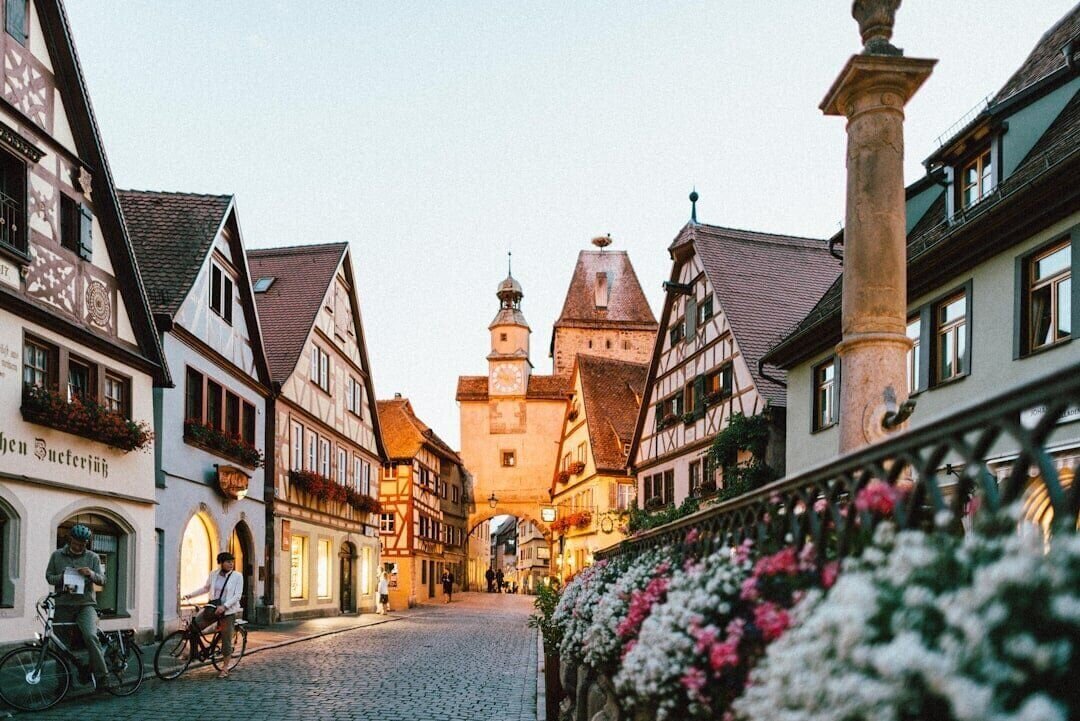
The Holy Roman Empire was a loose federation of German-speaking kingdoms, duchies, bishoprics, and free cities that existed from 962 to 1806. At its peak it covered most of modern Germany, Austria, the Czech Republic, Switzerland, the Low Countries, eastern France, Slovenia, and northern Italy. Its ruler, the Holy Roman Emperor, was elected rather than born into the office, and he governed through negotiation with hundreds of semi-independent princes instead of ruling by decree. Understanding the Empire is the single most useful shortcut to understanding why Germany unified so late, why it remains a federal country, and why so many small German cities still have palaces, cathedrals, and town halls far grander than their size suggests.
Historical Overview
The Holy Roman Empire was a complex political entity that existed in Central Europe from 962 to 1806. It was neither holy, nor Roman, nor an empire in the traditional sense, but rather a decentralized collection of kingdoms, principalities, and free cities under the nominal authority of the Holy Roman Emperor. That decentralization was not a flaw the Empire failed to fix — it was the operating system. Power flowed upward from territorial rulers who guarded their own courts, laws, coinage, and armies, and the emperor’s authority depended on how much of it they were willing to lend him.
This agglomeration which was called and which still calls itself the Holy Roman Empire was neither holy, nor Roman, nor an empire.
Voltaire, 1756
Voltaire’s jab is quoted constantly, and it is witty rather than fair. The Empire was “holy” in that emperors claimed to protect Latin Christendom, “Roman” in that they claimed continuity with the Caesars through Charlemagne, and an “empire” in that it outlasted almost every centralized state in Europe. It survived roughly 844 years — longer than the Roman Republic, the Byzantine dynasty that followed Justinian, or any German state since.
Key dates at a glance
| Year | Event | Why it mattered |
|---|---|---|
| 800 | Charlemagne crowned Emperor of the Romans in Rome | Created the precedent later emperors claimed as their inheritance |
| 843 | Treaty of Verdun divides the Carolingian realm | East Francia — the seed of Germany — becomes a separate kingdom |
| 955 | Battle of Lechfeld | Otto I’s victory over Hungarian raiders unites the German duchies behind him |
| 2 February 962 | Pope John XII crowns Otto I emperor in Rome | Conventional founding date of the Holy Roman Empire |
| 1076–1122 | Investiture Controversy and Concordat of Worms | Papal conflict permanently weakens imperial control over the German church |
| 1356 | Golden Bull of Charles IV | Fixes seven prince-electors and the election procedure for four centuries |
| 1495 | Imperial Reform at the Diet of Worms | Creates the Imperial Chamber Court and a perpetual public peace |
| 1517–1555 | Reformation and Peace of Augsburg | Splits the Empire confessionally; each prince sets his territory’s religion |
| 1618–1648 | Thirty Years’ War and Peace of Westphalia | Devastates German lands and confirms territorial sovereignty |
| 1663 | Diet becomes permanent at Regensburg | The Empire acquires a standing parliament rather than a travelling one |
| 1740–1763 | Austro-Prussian wars over Silesia | Two great powers inside one Empire make it ungovernable |
| 1803 | Imperial Recess (Reichsdeputationshauptschluss) | Abolishes most church states and free cities; guts the Empire’s institutions |
| 12 July 1806 | Confederation of the Rhine founded | Sixteen German states secede under Napoleon’s protection |
| 6 August 1806 | Francis II abdicates and dissolves the Empire | Prevents Napoleon from claiming the imperial title |
Origins: from Charlemagne to Otto the Great
The Empire’s story begins with borrowed legitimacy. On Christmas Day 800, Pope Leo III crowned the Frankish king Charlemagne “Emperor of the Romans,” reviving an imperial title that had been vacant in the West for more than three centuries. When Charlemagne’s realm was divided at Verdun in 843, the eastern portion — East Francia, roughly the German-speaking lands — went its own way, and the imperial title drifted and then lapsed entirely by the early 900s.
It was revived by a Saxon. Otto I built his authority the hard way: he crushed rebellious dukes, then destroyed a Hungarian invasion force at the Battle of Lechfeld near Augsburg in 955, which convinced the German duchies that his kingship was worth supporting. Pope John XII, needing a military protector against rivals in Italy, crowned Otto emperor in Rome on 2 February 962. Eleven days later the two men agreed the Privilegium Ottonianum, a treaty defining how emperor and pope would coexist.
That single ceremony set the Empire’s permanent dilemma. From 962 onward, German kings were entangled in Italian and papal politics, and the emperor’s crown was something a pope conferred — which meant a pope could also dispute it.
Why 962 and not 800?
Historians disagree, and both dates appear in reputable sources. Choose 800 and you emphasise Carolingian continuity, making the Empire roughly 1,005 years old. Choose 962 and you emphasise the German institution that actually persisted, giving it 844 years. Most German-language scholarship and most museums use 962, which is why this guide does too.
How the Empire actually worked
Forget the model of a king issuing orders to obedient provinces. The Empire was closer to a chartered association of rulers with a shared court system, a shared parliament, and an elected chairman who happened to wear a crown.
- The Emperor was elected, not born. He was first titled King of the Romans, and historically became Emperor only after a papal coronation — a step that fell away after the 1500s.
- The prince-electors chose him. Seven of them from 1356, later eight and then nine, each with a hereditary ceremonial court office attached to the vote.
- The Imperial Diet (Reichstag) was the assembly of imperial estates, split into three colleges: electors, princes, and free imperial cities. From 1663 it sat permanently in Regensburg.
- The Imperial Chamber Court (Reichskammergericht, founded 1495) and the Imperial Aulic Council let a small count sue a powerful duke — a genuinely unusual guarantee for the period.
- The Imperial Circles (Reichskreise, from 1500) grouped territories regionally to raise taxes, keep the peace, and organise defence.
- The territories numbered in the hundreds: secular principalities, prince-bishoprics and abbeys, some fifty-odd free imperial cities, and around 1,500 imperial knights holding estates answerable to the emperor alone.
This is the mechanism behind a fact that puzzles first-time visitors to Germany: why do towns like Bamberg, Würzburg, Weimar, and Schwerin have full-scale palaces, opera houses, and court churches? Because each was a capital. Hundreds of sovereign courts competing for prestige produced hundreds of architectural and musical centres — a cultural dividend of political fragmentation.
The Golden Bull of 1356 and the seven electors
Contested elections had repeatedly torn the Empire apart, so Emperor Charles IV pushed a decree through the imperial diets of Nuremberg and Metz in 1356/57. The Golden Bull named the electors, set a majority-vote rule, made electoral territories indivisible, and removed the papacy from the selection process. It governed imperial elections for more than four hundred years.
| Elector | Type | Court office |
|---|---|---|
| Archbishop of Mainz | Ecclesiastical | Archchancellor of Germany |
| Archbishop of Cologne | Ecclesiastical | Archchancellor of Italy |
| Archbishop of Trier | Ecclesiastical | Archchancellor of Burgundy |
| King of Bohemia | Secular | Arch-Cupbearer |
| Count Palatine of the Rhine | Secular | Arch-Steward |
| Duke of Saxony-Wittenberg | Secular | Arch-Marshal |
| Margrave of Brandenburg | Secular | Arch-Chamberlain |
Note the geography. Three of the seven votes sat on the Rhine in the hands of archbishops, which is why Mainz, Cologne, and Trier accumulated wealth and cathedral architecture out of all proportion to their populations. Brandenburg’s seat is the ancestor of Prussia’s rise, and Bohemia’s is why Prague spent a stretch of the 14th century as an imperial capital.
The Habsburg century and Charles V
From 1438 until 1806, with a single brief interruption in the 1740s, the House of Habsburg held the imperial title almost continuously. The office remained formally elective, but the electors kept choosing the same family, which gave the Empire a hereditary feel without hereditary rules.
Charles V, elected in 1519, ruled the largest European inheritance since Charlemagne: the Empire, Spain, the Netherlands, southern Italy, and Spain’s American colonies. He also faced Martin Luther at the Diet of Worms in 1521 and spent decades failing to reverse the Reformation. His abdication in 1556 split the Habsburg lands into Austrian and Spanish branches, and his career is the clearest evidence of the Empire’s limits: the most powerful monarch in the world could not compel his own German princes to change religion.
Reformation, war, and Westphalia
The Reformation turned the Empire’s decentralisation into a confessional fault line. The Peace of Augsburg in 1555 produced the principle later summarised as cuius regio, eius religio — the ruler of a territory determined whether it was Catholic or Lutheran. It bought peace for two generations without resolving anything, and it left Calvinists outside the settlement entirely.
The Thirty Years’ War (1618–1648) began as an imperial constitutional crisis in Bohemia and ended as a continental war fought largely on German soil, drawing in Denmark, Sweden, France, and Spain. Estimates of population loss in German lands range from roughly 20 to 40 percent, with some regions far worse. The Peace of Westphalia in 1648 recognised Calvinism, confirmed the territorial rulers’ near-sovereignty in foreign and religious affairs, and acknowledged the independence of the Dutch Republic and the Swiss Confederation.
After 1648 the Empire functioned less as a state and more as a legal and diplomatic framework — a supranational structure with courts, a parliament, and dispute-resolution machinery, holding together territories that acted like independent countries. Some modern historians describe it, carefully, as a distant institutional cousin of the European Union.
Why the Holy Roman Empire collapsed in 1806
The Empire did not fade quietly; it was dismantled in about three years, and the sequence matters.
- Structural rot (18th century). Austria and Prussia both grew into European great powers with territory outside the Empire, and fought each other repeatedly inside it. No framework could contain two members stronger than the institution.
- Territorial losses (1801–1803). Defeats by revolutionary France cost the Empire all its lands west of the Rhine. The 1803 Imperial Recess compensated the surviving princes by abolishing most prince-bishoprics and nearly all free imperial cities — destroying the Empire’s Catholic and civic power base in a single act.
- Austerlitz (December 1805). Napoleon’s defeat of the Austrian and Russian armies removed Francis II’s ability to resist.
- Secession (July–August 1806). Sixteen German states formed the Confederation of the Rhine under French protection and proclaimed their withdrawal from the Empire on 1 August.
- Abdication (6 August 1806). Francis II laid down the imperial crown, declared the bond between emperor and imperial estates dissolved, and released all imperial officials and states from their oaths.
The abdication was a defensive move, not a surrender of vanity. Napoleon was positioning himself as a new Charlemagne, and an empire with a vacant throne could have elected him. By dissolving the institution rather than resigning from it, Francis denied Napoleon the title and reduced his own risk of becoming a French vassal. He had already hedged in 1804 by creating the hereditary title Emperor of Austria, so he stepped down as Francis II and continued as Francis I.
What the Empire left behind in modern Germany
- Federalism. Germany’s sixteen federal states with their own parliaments, police, schools, and cultural policy follow a pattern of regional self-government that predates the nation by centuries.
- Cultural polycentrism. Germany has no single dominant capital for art, music, publishing, or finance, because the Empire never had a single capital.
- Religious geography. The Catholic south and west versus the Protestant north and east still traces the settlement lines of 1555 and 1648.
- The First Reich label. Nationalist and later Nazi propaganda numbered the Empire as the “First Reich,” the 1871–1918 German Empire as the second, and the Nazi state as the third. Historians avoid the framing; it retrofits a nationalist logic the Empire never had.
- Legal culture. Written charters, codified privileges, and courts as an alternative to force were normal imperial practice long before modern German legalism.
Where to see the Holy Roman Empire today
This is the part most encyclopedia entries skip. The Empire is unusually visitable, because its institutions were spread across dozens of cities rather than concentrated in one destroyed capital.
| Place | Imperial connection | What to look for |
|---|---|---|
| Aachen Cathedral | Charlemagne’s palace chapel; coronation church of German kings for roughly 600 years | The marble royal throne and Charlemagne’s shrine |
| Imperial Castle, Nuremberg | Every emperor from the 11th to 16th century stayed here; the Golden Bull required a first diet in the city | The double chapel and the Sinwell Tower view |
| Römer, Frankfurt | Election city from 1356 and coronation city from 1562 | The Kaisersaal with portraits of the emperors |
| Old Town Hall, Regensburg | Seat of the Perpetual Imperial Diet from 1663 to 1806 | The preserved Reichstag chamber and its seating hierarchy |
| Speyer Cathedral | Burial church of Salian emperors | The imperial crypt, one of Europe’s largest Romanesque interiors |
| Imperial Palace, Goslar | 11th-century imperial residence near the Rammelsberg silver mines that funded it | The reconstructed great hall |
| Bamberg | Prince-bishopric and imperial foundation of Henry II | The cathedral, the Bamberg Horseman, and the Old Court |
| Imperial Treasury, Hofburg, Vienna | Holds the imperial regalia the Habsburgs took with them | The Imperial Crown, the Holy Lance, and the coronation mantle |
A practical routing note: Aachen, Frankfurt, Speyer, and Mainz form a workable Rhine-corridor loop by train, while Nuremberg, Bamberg, and Regensburg cluster tightly in northern Bavaria. Vienna is the outlier, and it is also where the actual crown is — Germany’s imperial crown jewels live in Austria because Francis II’s dynasty kept them.
Five misconceptions worth correcting
- “It was just medieval Germany.” It included Bohemia, northern Italy, the Low Countries, Switzerland, and Burgundian lands; conversely, East Prussia lay outside it.
- “The emperor ruled it.” He presided over it. Taxation, armies, and law-making largely belonged to the territories.
- “It was a continuation of ancient Rome.” The claim was ideological. Institutionally it was a Frankish-German creation with Roman branding.
- “Voltaire proved it was fake.” Voltaire was writing satire in 1756, at the Empire’s weakest and most decorative stage, not delivering a verdict on eight centuries.
- “It fell because it was weak.” It survived the Reformation, the Thirty Years’ War, and Ottoman sieges. It fell to Napoleon, who dismantled it deliberately.
Frequently asked questions
Who was the first Holy Roman Emperor?
Otto I of Saxony, crowned by Pope John XII in Rome on 2 February 962, is conventionally counted as the first Holy Roman Emperor. Some historians instead start the line with Charlemagne, crowned Emperor of the Romans in 800.
Was the Holy Roman Empire the same as Germany?
No. It covered most German-speaking lands but also included Bohemia, northern Italy, the Low Countries and Switzerland, while some German territories such as East Prussia lay outside it. Germany as a unified nation-state was only founded in 1871.
How long did the Holy Roman Empire last?
Counting from Otto I’s coronation in 962 to Francis II’s abdication on 6 August 1806, it lasted 844 years. Counting from Charlemagne’s coronation in 800 gives roughly 1,005 years.
Why did the Holy Roman Empire end?
Napoleon dismantled it. After Austria’s defeat at Austerlitz in 1805 and the secession of sixteen states into the Confederation of the Rhine in July 1806, Emperor Francis II abdicated on 6 August 1806 and dissolved the Empire to stop Napoleon from claiming the imperial title.
Who were the prince-electors?
The Golden Bull of 1356 named seven: the archbishops of Mainz, Cologne and Trier, the King of Bohemia, the Count Palatine of the Rhine, the Duke of Saxony-Wittenberg and the Margrave of Brandenburg. Later additions brought the number to eight and then nine.
Where can I see the Holy Roman Empire’s crown jewels?
The imperial regalia, including the Imperial Crown and the Holy Lance, are displayed in the Imperial Treasury at the Hofburg in Vienna, Austria, where the Habsburg dynasty retained them after 1806.
Prominent Historical Figures of This Era
- Elise Meitner — Discover key achievements, life history, and cultural impact.
- Carl Zeiss — Discover key achievements, life history, and cultural impact.
- Johann Carl Friedrich Gauss — Discover key achievements, life history, and cultural impact.
- Alexander von Humboldt — Discover key achievements, life history, and cultural impact.
- Karl Marx — Discover key achievements, life history, and cultural impact.
- Otto von Bismarck — Discover key achievements, life history, and cultural impact.
- Maximilian Carl Emil Weber — Discover key achievements, life history, and cultural impact.