Black Forest Cake (Schwarzwälder Kirschtorte)
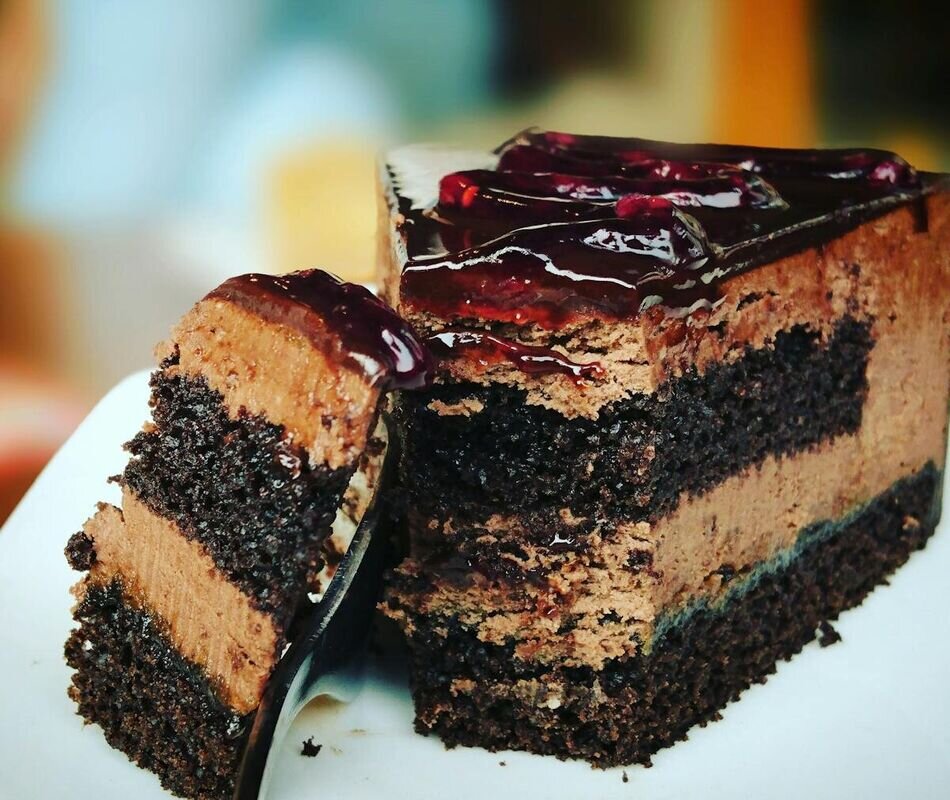
Few desserts carry a name as evocative as Schwarzwälder Kirschtorte — Black Forest Cherry Cake. Layered with dark chocolate sponge, whipped cream, sour cherries, and a generous splash of Kirschwasser (cherry brandy), it is Germany’s most internationally recognized cake, and one that still divides opinion between purists and modernizers back home. Ask any German baker about the “real” recipe and you’ll get a passionate, slightly different answer every time.
Historical Origins & Founding Lore
Despite its name, the cake’s precise birthplace is disputed and is not actually the Black Forest region itself, but rather the ingredients that define it. The cake takes its name from Schwarzwälder Kirsch(wasser), the clear cherry brandy distilled in the Black Forest since the 16th century, which is used to soak the sponge layers and flavor the cream.
The cake as we know it — chocolate sponge, cherries, cream, and Kirsch — is generally credited to confectioner Josef Keller, who claimed to have created it in 1915 at Café Ahrend in Bad Godesberg, near Bonn. However, the recipe wasn’t formally documented and standardized until 1927, when it appeared in a German confectioners’ trade publication, cementing both its name and technique for bakeries nationwide. By the 1930s it had spread across Germany and, after WWII, became one of the country’s signature culinary exports, appearing on dessert menus from London to Tokyo by the 1970s.
Cultural Significance in German Daily Life & Society
In Germany, Schwarzwälder Kirschtorte is a fixture of Kaffee und Kuchen — the sacred afternoon coffee-and-cake ritual observed on Sunday afternoons and at birthdays, confirmations, and family gatherings. It’s a Konditorei (patisserie) showpiece rather than an everyday snack: elaborate, rich, and meant to be shared slowly over conversation, not eaten on the run.
The cake also functions as a point of national pride abroad — many Germans encounter surprisingly poor imitations (canned cherries, artificial flavoring, no actual Kirsch) while traveling and take it as a point of honor to explain what a proper version should taste like: boozy, not cloyingly sweet, with real dark chocolate shavings and fresh sour cherries (Sauerkirschen), never sweet cherries.
Regional Variations & Local Twists Across Germany
- Black Forest region (Baden-Württemberg): The most traditional versions use locally distilled Kirschwasser with higher alcohol content and visible Kirsch-soaked cherries as decoration.
- Berlin & northern Germany: Bakeries often tone down the alcohol for broader appeal and use a lighter whipped cream-to-sponge ratio.
- Bavaria: Some versions add a thin layer of buttercream beneath the whipped cream for extra richness and stability, popular at wedding celebrations.
- Modern/international bakeries: Reduced-sugar and alcohol-free (“kinderfreundlich,” child-friendly) versions using cherry juice instead of Kirschwasser are common for children’s birthday parties.
How It Is Made
A proper Schwarzwälder Kirschtorte requires several distinct components assembled with precision:
- Three to four layers of dark chocolate sponge (Schokoladenbiskuit)
- Kirschwasser syrup brushed generously onto each layer
- A filling of stewed or macerated sour cherries
- Freshly whipped cream (never stabilized artificial cream, by tradition)
- A finish of chocolate shavings or curls and whole cherries on top
The cake is typically assembled a day ahead so the sponge can absorb the Kirsch and flavors meld, then finished with cream and chocolate shortly before serving to keep the cream from weeping.
German Vocabulary, Idioms & Etiquette Rules
- Kaffee und Kuchen — “coffee and cake,” the afternoon ritual where this cake is typically served
- Konditorei — a traditional patisserie/cake shop, the proper place to buy an authentic slice
- Sauerkirschen — sour cherries, the correct variety (not sweet cherries)
- ein Stück Torte, bitte — “a slice of cake, please,” useful phrase at any bakery counter
- Etiquette: cake is eaten with a small fork, never hands; it’s polite to compliment the Konditor (pastry chef) if dining at a bakery café
Where to Experience the Best in Germany
For the most authentic experience, head to the Black Forest itself. Café König and Café Schäfer in Triberg im Schwarzwald are famous local institutions, with Café Schäfer even claiming to bake from the “original” 1915 recipe lineage. In Baden-Baden, the elegant Café König offers a refined take amid a spa-town setting. In major cities, look for long-established Konditoreien rather than chain bakeries — Café Kranzler in Berlin and Café Rischer in Freiburg are solid options.
| Location | Notable Spot | Approx. Price |
|---|---|---|
| Triberg | Café Schäfer | €4.50–€5.50/slice |
| Baden-Baden | Café König | €6–€7/slice |
| Freiburg | Café Rischer | €4–€5/slice |
| Berlin | Café Kranzler | €5–€6/slice |
Best visited in autumn during cherry harvest season for the freshest fruit, though most bakeries serve it year-round using preserved sour cherries. Pair it with a strong German coffee (Kaffee) — never with more alcohol, as the cake already carries plenty of Kirsch.