Bremen
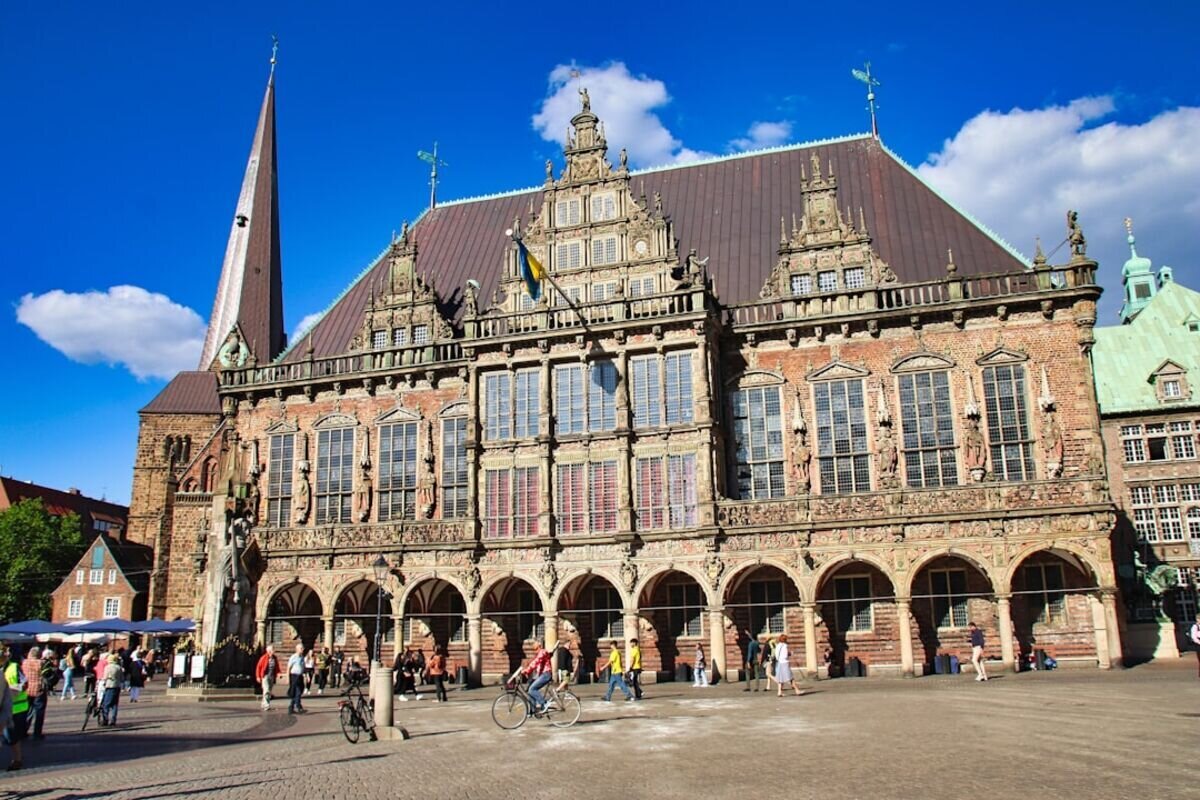
Bremen is Germany’s smallest federal city-state, a proud Hanseatic republic that has governed its own affairs since the Middle Ages while punching well above its weight in maritime trade, architecture, and quirky civic legend. Sitting on the River Weser roughly 60 km from the North Sea, Bremen built its fortune on shipping, coffee, and cotton, and that Hanseatic wealth still shows in the gabled merchant houses of the Schnoor quarter and the UNESCO-listed Rathaus. Together with its port satellite Bremerhaven, the city-state has around 577,000 inhabitants in Bremen proper, making it a compact, walkable destination that rewards a two- or three-day visit far more than its size suggests.
A City Built on Trade and Legend
Founded in 787 AD as a bishopric, Bremen joined the Hanseatic League in 1358 and became one of its most powerful members, a status reflected in its motto “Buten un binnen – wagen un winnen” (Outside and inside – dare and win). The city has been a free imperial city and later a free state within Germany for centuries, retaining its own parliament and senate to this day. Its most famous cultural export is fictional: the Brothers Grimm tale of the Town Musicians of Bremen, whose bronze statue outside the Rathaus is now the city’s most photographed landmark, even though the donkey, dog, cat, and rooster never actually reached Bremen in the story.
Top Highlights & Architectural Wonders
- Bremen Rathaus and Roland Statue: UNESCO World Heritage since 2004, this Gothic-Renaissance town hall (1405–1410, remodeled 1608–1612) stands beside the 5.5-meter Roland statue from 1404, a symbol of civic freedom and market rights.
- Böttcherstraße: A narrow Expressionist-era lane built between 1902 and 1931 by coffee magnate Ludwig Roselius, lined with brick façades, the Paula Modersohn-Becker Museum, and a glockenspiel that chimes several times daily.
- Schnoorviertel: Bremen’s oldest surviving quarter, a maze of 15th- to 18th-century fishermen’s cottages now home to galleries, cafés, and craft shops.
- St. Petri Dom (Bremen Cathedral): A striking twin-towered cathedral with a Bleikeller (lead cellar) crypt containing naturally mummified bodies.
- Universum Bremen: A science center shaped like a giant mussel shell, popular with families and space-technology enthusiasts, reflecting Bremen’s role as a hub for aerospace firms like OHB and Airbus.
- Weserpromenade (Schlachte): A riverside strip of restaurants and beer gardens along the Weser, ideal for evening strolls.
Practical Visitor Information
| Rathaus Guided Tour | €8 adults, €5 concessions (German/English tours several times daily) |
| Böttcherstraße Museums Ticket | €12 combined entry |
| Universum Bremen | €19.50 adults, €14.50 children (4-19), free under 3 |
| Bremer Dom | Free entry to church; Bleikeller €1.50; tower climb €2 |
| General Opening Hours | Most museums Tue–Sun 10:00–18:00; closed Mondays |
Book Rathaus tours in advance through the Bremen Tourist Information office at Böttcherstraße 4 or online, especially during summer weekends and Christmas market season, when slots fill quickly.
How to Get There
Bremen Hauptbahnhof is a major stop on DB’s ICE network, with direct trains from Hamburg (about 1 hour), Hannover (1 hour), and Cologne (roughly 3 hours). Bremen Airport (BRE) lies just 3.5 km from the city center, connected by tram line 6 in under 15 minutes. Drivers can reach Bremen via the A1 or A27 autobahns; parking garages cluster around the Altstadt, with rates around €2–3 per hour. Once in town, the compact historic core is entirely walkable, and Bremen’s extensive tram and bus network (BSAG) covers outlying sights affordably with day tickets around €7.50.
Best Time to Visit & Seasonal Events
Late spring through early autumn (May–September) brings mild weather and long daylight hours ideal for riverside walks and outdoor cafés. Bremen’s Freimarkt, held for over two weeks in mid-to-late October, is one of Germany’s oldest folk festivals, dating to 1035, with rides, beer tents, and fireworks along the Bürgerweide. The Christmas market, running from late November through December 23rd around the Rathaus and Domshof, is considered among the country’s most atmospheric, with a dedicated Schlachte-Zauber medieval market along the river.
Local Insider Tips
- Visit the Rathaus and Marktplatz before 9:30 am to photograph the square without tour groups.
- Rub the donkey’s legs on the Town Musicians statue for good luck, a tradition locals still practice.
- Skip touristy Böttcherstraße restaurants and head to the Viertel (Ostertorsteinweg area) for authentic, affordable dining and independent bars.
- Try a Bremer Kaffeekanne or the regional dish Kohl und Pinkel (kale with smoked sausage), best enjoyed in the colder months.
- The Kunsthalle Bremen, with works by Dürer, Delacroix, and German Expressionists, is often overlooked by day-trippers yet ranks among northern Germany’s finest art museums.
Nearby Excursions & Day Trips
Bremerhaven, roughly 55 minutes away by regional train, offers the German Emigration Center and Climate House museums, plus a working harbor atmosphere. The Teufelsmoor and artist village of Worpswede, about 45 minutes northeast, provided the moody landscapes that inspired painter Paula Modersohn-Becker and remains a haven for galleries and thatched-roof cafés. Hamburg is under an hour away by ICE, making a combined weekend itinerary entirely feasible for visitors flying into either city.
💡 Essential Travel Tips
Visit Marktplatz before 9:30am to avoid crowds; rub the donkey statue's legs for luck; dine in the Viertel instead of Böttcherstraße; visit during Freimarkt (October) or Christmas markets (Nov-Dec)
🥨 Local Insights & Food Culture
Purchase a 24-hour transit day pass (Tageskarte) for unlimited city travel.
🎟️ Top Activities & Experiences in Bremen
Discover curated walking tours, museum passes, and authentic experiences in Bremen with instant confirmation.