German Reunification
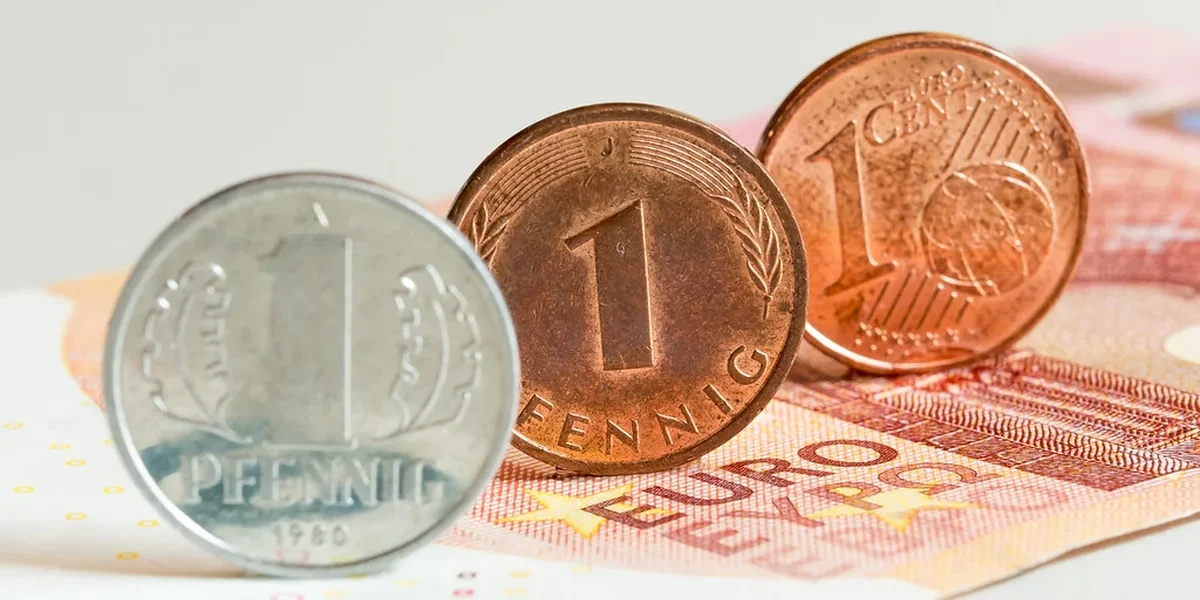
German reunification was the process that re-established Germany as a single sovereign state. It began with the opening of the Berlin Wall on 9 November 1989 and culminated at midnight on 3 October 1990, when the German Democratic Republic dissolved itself and its five re-established states joined the Federal Republic of Germany. The whole thing took less than eleven months — a speed almost no one predicted when the Wall came down.
What Reunification Actually Was
Legally, reunification was not a merger of equals. East Germany acceded to the Federal Republic, dissolving itself as a state, while West Germany’s constitution, currency, legal code, and alliance memberships carried forward largely unchanged. This is why some historians describe the event as an expansion of the Federal Republic rather than the creation of a new country.
East Berlin merged with West Berlin to form a single reunited city, which became the capital of the enlarged state. Because East Germany joined an existing member, the former GDR territory entered the European Economic Community and NATO automatically — no separate accession process was needed.
Timeline of Events, 1989 to 1994
The pace of the eleven months between the Wall and Unity Day is the single most striking fact about the process.
| Date | Event |
|---|---|
| 9 November 1989 | The Berlin Wall is opened; the reunification process effectively begins |
| 28 November 1989 | Chancellor Helmut Kohl presents his ten-point programme for German unity |
| 22 December 1989 | The Brandenburg Gate reopens |
| 13 February 1990 | The two Germanys and the four wartime powers agree to the “two plus four” framework |
| 18 March 1990 | East Germany’s first free elections return a pro-unification government |
| 18 May 1990 | The monetary, economic, and social union treaty is signed in Bonn |
| 1 July 1990 | Monetary union takes effect; the Deutsche Mark becomes East Germany’s currency |
| 16 July 1990 | Gorbachev agrees at Arkhyz in the Caucasus that a united Germany may choose its own alliances |
| 31 August 1990 | The Unification Treaty is signed by both German governments |
| 12 September 1990 | The Two Plus Four Treaty is signed in Moscow |
| 1 October 1990 | The four powers suspend their remaining rights in a joint declaration in New York |
| 3 October 1990 | Germany is reunited at 00:00 CEST; the GDR ceases to exist |
| 2 December 1990 | The first all-German federal elections since 1932; Kohl becomes chancellor of united Germany |
| 15 March 1991 | The Two Plus Four Treaty enters into force, restoring full sovereignty |
| 31 August 1994 | The withdrawal of Soviet, then Russian, troops is completed |
The Two Legal Instruments
Reunification required solving two separate problems at once: how the two German states would fuse internally, and how the four powers that had occupied Germany since 1945 would relinquish their rights. Each got its own treaty.
| Unification Treaty | Two Plus Four Treaty | |
|---|---|---|
| Full name | Treaty on the Establishment of German Unity | Treaty on the Final Settlement with Respect to Germany |
| Signed | 31 August 1990 | 12 September 1990, in Moscow |
| Parties | The Federal Republic and the GDR | Both Germanys plus the USA, USSR, UK, and France |
| Purpose | Internal terms of accession — law, property, institutions, states | External and security settlement; end of Four Power rights |
| Effect | In force 3 October 1990 | In force 15 March 1991 |
The Two Plus Four Treaty was signed by foreign ministers Hans-Dietrich Genscher, Roland Dumas, Eduard Shevardnadze, Douglas Hurd, and James Baker, with Lothar de Maizière signing for the GDR. UNESCO added it to the Memory of the World Register in 2011, alongside documents recording the construction and fall of the Berlin Wall.
What Germany Gave Up to Get Unity
The Two Plus Four Treaty was as much a set of German concessions as a grant of sovereignty. In ten articles it settled the questions that had made a united Germany unacceptable to its neighbours for four decades.
- Final borders. United Germany comprises the territory of the Federal Republic, the GDR, and all of Berlin, with those external borders declared definitive and no territorial claims on any other state.
- The Polish border. Germany reconfirmed the existing frontier in the German–Polish Border Treaty of 1990, explicitly renouncing claims to East Prussia, most of Silesia, and the eastern parts of Brandenburg and Pomerania.
- A capped military. German armed forces were limited to 370,000 personnel.
- No weapons of mass destruction. Germany renounced the manufacture, possession, and control of nuclear, biological, and chemical weapons, and renounced wars of aggression.
- Soviet withdrawal, with conditions. All Soviet troops were to leave eastern Germany by the end of 1994, after which only German NATO forces — not foreign troops — could be stationed there.
- Freedom of alliance. In exchange, Germany kept the right to choose its alliances, meaning NATO membership for the whole country.
That last point was the hinge of the entire negotiation. Gorbachev conceded it at his meeting with Kohl and Genscher in the Caucasus on 16 July 1990, and everything else fell into place within eight weeks.
The Five New States
East Germany had abolished its federal states in 1952 in favour of centralised districts. Reunification required re-establishing them so they could accede as constituent states of the Federal Republic.
- Brandenburg
- Mecklenburg-Western Pomerania
- Saxony
- Saxony-Anhalt
- Thuringia
Berlin was handled separately, with the two halves of the city merging into a single state and national capital. Together these five states plus Berlin are still referred to in German political shorthand as the neue Bundesländer, the new federal states.
Monetary Union and Its Consequences
Economic union arrived three months before political union. The treaty signed on 18 May 1990 took effect on 1 July, replacing the East German mark with the Deutsche Mark and extending West German economic and social law eastward overnight.
Politically it was necessary — East Germans were emigrating westward in numbers that threatened to depopulate the country. Economically it was brutal. East German firms suddenly had to compete at hard-currency prices with wage costs they could not support, and industrial employment collapsed across the region, producing unemployment and out-migration that shaped eastern German politics for a generation.
The Long Tail of Unity
Several strands of reunification took years or decades to finish, which is why the process is often described as continuing well past 1990.
- Sovereignty, 1991. The Two Plus Four Treaty only entered into force on 15 March 1991, after ratification.
- Troop withdrawal, 1994. The last Russian forces left eastern Germany on 31 August 1994, four and a half years after the Wall opened.
- Capital relocation, 2000. Moving the federal government from Bonn to Berlin was only completed at the turn of the millennium.
- Economic convergence, ongoing. Wage, productivity, and wealth gaps between east and west narrowed substantially but never fully closed.
Reunification also reshaped Europe beyond Germany’s borders. It put a formal legal end to the Second World War, guaranteed Poland’s western frontier, and gave direct impetus to deeper European integration — the Maastricht negotiations followed almost immediately, with a reunified Germany at the centre of them.
Why 3 October and Not 9 November
The fall of the Wall is the more emotionally powerful date, but 9 November is also the anniversary of the 1938 Kristallnacht pogrom and the failed 1923 Munich putsch — a day too freighted to serve as a national holiday. Germany therefore observes the Tag der Deutschen Einheit, German Unity Day, on 3 October, the legal date of accession.
Frequently Asked Questions
When did German reunification happen?
Germany was officially reunited at 00:00 CEST on 3 October 1990. The wider process began on 9 November 1989 with the opening of the Berlin Wall and was not fully complete in legal terms until the Two Plus Four Treaty entered into force on 15 March 1991.
What is the Two Plus Four Treaty?
It is the Treaty on the Final Settlement with Respect to Germany, signed in Moscow on 12 September 1990 by both German states and the four wartime powers. It settled Germany’s borders, capped its armed forces, and ended Four Power rights, granting full sovereignty.
Who were the two plus four?
The two were the Federal Republic of Germany and the German Democratic Republic. The four were the Second World War victorious powers — the United States, the Soviet Union, the United Kingdom, and France.
How did East Germany legally join West Germany?
The GDR presented a declaration of accession and dissolved itself, with its five re-established states joining the Federal Republic under the Unification Treaty signed on 31 August 1990. West German law, currency, and alliances carried forward.
Which states joined Germany in 1990?
Brandenburg, Mecklenburg-Western Pomerania, Saxony, Saxony-Anhalt, and Thuringia. East Berlin merged with West Berlin to form a reunited Berlin as the capital.
Who was the chancellor during German reunification?
Helmut Kohl. He presented a ten-point unity programme on 28 November 1989 and, following the all-German elections in December 1990, became the first chancellor of reunified Germany.
What did Germany agree to in exchange for reunification?
Definitive borders with no territorial claims, confirmation of the border with Poland, armed forces capped at 370,000, renunciation of nuclear, biological, and chemical weapons and of wars of aggression, and Soviet troop withdrawal by 1994. In return, Germany kept the right to choose its alliances and remained in NATO.
When did Soviet troops leave Germany?
The withdrawal of Soviet, later Russian, forces from eastern Germany was completed on 31 August 1994.
Why is German Unity Day on 3 October?
Because 3 October 1990 is the legal date on which the GDR acceded to the Federal Republic. The date of the Wall’s fall, 9 November, also marks the 1938 Kristallnacht pogrom, making it unsuitable as a national celebration.
Did reunification change Germany’s borders with Poland?
No — it confirmed them. Germany recognised the existing frontier in the German–Polish Border Treaty of 1990 and explicitly renounced any claim to former eastern territories including East Prussia and most of Silesia.
Prominent Historical Figures of This Era
- Stefanie Maria Graf — Discover key achievements, life history, and cultural impact.
- Johann Sebastian Bach — Discover key achievements, life history, and cultural impact.
- Hans Florian Zimmer — Discover key achievements, life history, and cultural impact.
- Johann Wolfgang von Goethe — Discover key achievements, life history, and cultural impact.
- Ludwig van Beethoven — Discover key achievements, life history, and cultural impact.
- Sophia Magdalena Scholl — Discover key achievements, life history, and cultural impact.
- Wernher Magnus Maximilian Freiherr von Braun — Discover key achievements, life history, and cultural impact.