The Holocaust
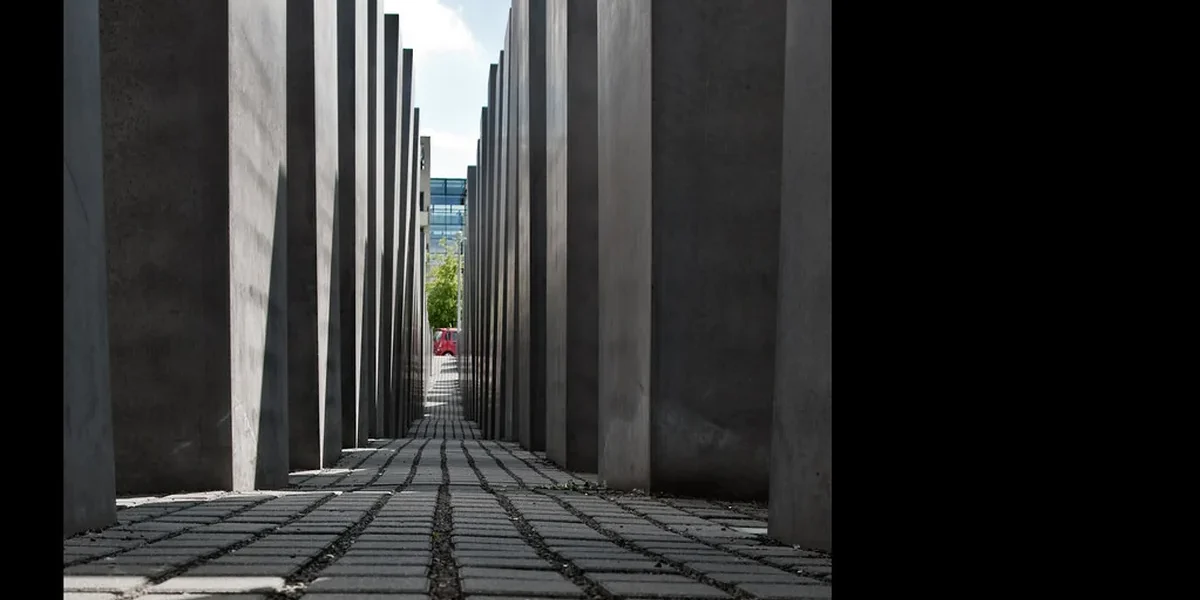
The Holocaust (in Hebrew, Shoah, “catastrophe”) stands as the most systematically documented genocide in human history: the state-organized murder of six million European Jews, alongside Roma and Sinti people, disabled individuals, Soviet prisoners of war, homosexuals, political dissidents, and other groups deemed “undesirable” by the Nazi regime. Carried out between 1933 and 1945 across Germany and Nazi-occupied Europe, it was not a spontaneous eruption of violence but a bureaucratic, industrialized process involving railways, chemical companies, civil servants, and ordinary citizens. Understanding this period is essential to understanding modern Germany itself, a nation that has built its postwar identity substantially around the act of remembering and confronting this history.
Origins: From Discrimination to State Policy (1933–1938)
When Adolf Hitler became Chancellor on 30 January 1933, antisemitism was rapidly transformed from social prejudice into codified law. Within months, the Nazi Party organized a nationwide boycott of Jewish businesses, and the April 1933 “Law for the Restoration of the Professional Civil Service” expelled Jews from government jobs. The Nuremberg Laws of September 1935 stripped German Jews of citizenship and criminalized marriage or sexual relations between Jews and “Aryans,” giving pseudo-scientific racial ideology the force of law.
Persecution escalated dramatically on the night of 9–10 November 1938 during Kristallnacht (“Night of Broken Glass”), when Nazi paramilitaries and civilians destroyed over 1,400 synagogues and Jewish-owned businesses across Germany and Austria, killing at least 91 people and sending 30,000 Jewish men to concentration camps. This pogrom marked the definitive shift from discrimination to open state-sanctioned violence.
Major Milestones: The Machinery of Genocide (1939–1945)
The invasion of Poland in September 1939 brought roughly two million Polish Jews under Nazi control and introduced ghettoization, most notoriously in Warsaw, where over 400,000 people were confined in appalling conditions. Mobile killing units called Einsatzgruppen followed the Wehrmacht into the Soviet Union after June 1941, murdering an estimated 1.5 million Jews and other victims in mass shootings, including the massacre of nearly 34,000 people at Babyn Yar near Kyiv in just two days.
At the Wannsee Conference of 20 January 1942, senior Nazi officials coordinated what they euphemistically called the “Final Solution to the Jewish Question”: the systematic deportation of European Jews to extermination camps. Purpose-built killing centers at Auschwitz-Birkenau, Treblinka, Sobibor, Belzec, Chelmno, and Majdanek used gas chambers to murder victims on an industrial scale. Auschwitz-Birkenau alone claimed approximately 1.1 million lives, roughly 90 percent of them Jewish, between 1940 and its liberation by Soviet forces on 27 January 1945.
- 1933: Nazi seizure of power; first boycotts and anti-Jewish laws
- 1935: Nuremberg Laws strip Jews of citizenship
- 1938: Kristallnacht pogrom
- 1939–1940: Ghettoization begins in occupied Poland
- 1941: Einsatzgruppen mass shootings begin in the USSR
- 1942: Wannsee Conference; extermination camps become operational
- 1943: Warsaw Ghetto Uprising crushed
- 1944–1945: Death marches as camps are evacuated ahead of Allied advance
- 27 January 1945: Liberation of Auschwitz-Birkenau
Historical Context: Germany and Global Impact
The Holocaust did not occur in a vacuum. It grew from centuries of European antisemitism, the trauma and economic collapse following World War I, and the Weimar Republic’s fragile democracy, which Nazi propaganda exploited ruthlessly. Crucially, it required the active or passive complicity of ordinary Germans: railway workers, clerks, doctors, and neighbors who reported, denounced, or simply looked away. It also depended on collaboration from occupied and allied nations across Europe, from Vichy France to Hungary and Croatia.
Globally, the Holocaust reshaped international law and human rights discourse. The Nuremberg Trials (1945–1946) established the legal precedent of “crimes against humanity.” The genocide directly influenced the 1948 United Nations Genocide Convention and the founding of the State of Israel in 1948, as survivors sought refuge from a continent that had failed to protect them.
Complex Legacy, Ethical Debates & Controversies
Postwar Germany’s reckoning with the Holocaust, known as Vergangenheitsbewältigung (“coming to terms with the past”), was neither immediate nor uniform. The immediate postwar decades saw widespread silence and denial of personal complicity; it was only from the late 1960s, driven by a new generation demanding answers, that Germany began confronting the genocide in schools, courts, and public memory in earnest.
Debates continue over comparative victimhood (the specificity of the Jewish genocide versus the persecution of Roma, disabled people, and others), the adequacy of reparations, the prosecution of aging perpetrators, and the rise of Holocaust distortion and denial online. Germany’s strict laws against Holocaust denial (Section 130 of the Criminal Code) and its extensive Holocaust education curriculum are often cited internationally as models, though critics argue that formal remembrance culture can sometimes become ritualized without deeper reflection on rising contemporary antisemitism.
Memorials, Museums & Where to Experience This History Today
Germany offers some of the world’s most significant sites for confronting this history directly. Visiting thoughtfully and quietly is essential; these are places of mourning, not tourist attractions.
- Memorial to the Murdered Jews of Europe, Berlin — 2,711 concrete stelae near the Brandenburg Gate; free entry, underground information center open Tue–Sun, 10:00–19:00 (last admission 18:15)
- Topography of Terror, Berlin — documentation center on the former Gestapo headquarters site; free entry, open daily 10:00–20:00
- Sachsenhausen Memorial and Museum, Oranienburg — former concentration camp near Berlin, reachable by S-Bahn; free entry, grounds open daily
- Dachau Memorial Site, near Munich — the first Nazi concentration camp, opened 1933; free entry, open daily 09:00–17:00
- Auschwitz-Birkenau Memorial and Museum, Oświęcim, Poland — the most visited site globally connected to the Holocaust; free entry with mandatory guided tour booking recommended in advance via visit.auschwitz.org
- Jewish Museum Berlin — comprehensive history of Jewish life in Germany before, during, and after the Holocaust; adult ticket approx. €8
- Stolpersteine (“Stumbling Stones”) — over 100,000 brass memorial plaques set into pavements across Germany and Europe, each marking the last freely chosen residence of a Nazi victim
Key Facts Summary
| Period | 1933–1945 |
| Primary victims | Approximately 6 million Jews; also Roma and Sinti, disabled individuals, Soviet POWs, political prisoners, homosexuals |
| Total deaths (all groups) | Estimated 11–17 million |
| Key turning point | Wannsee Conference, 20 January 1942 |
| Largest killing site | Auschwitz-Birkenau (approx. 1.1 million deaths) |
| Liberation of Auschwitz | 27 January 1945 (now International Holocaust Remembrance Day) |
| Legal reckoning | Nuremberg Trials, 1945–1946 |
For any visitor to Germany, engaging seriously with this history is not optional but foundational to understanding the country’s political culture, its memorial architecture, and its ongoing commitment to “Never Again” (Nie wieder) as a guiding national principle.
Prominent Historical Figures of This Era
- Carl von Ossietzky — Discover key achievements, life history, and cultural impact.
- Sezin — Discover key achievements, life history, and cultural impact.
- Friedrich Merz — Discover key achievements, life history, and cultural impact.
- Heidi Reichinnek — Discover key achievements, life history, and cultural impact.
- Richard Wagner — Discover key achievements, life history, and cultural impact.
- Martin Luther — Discover key achievements, life history, and cultural impact.